Back Pain With Numbness: Which Symptoms Change the Urgency of Care

Key Takeaways
- Back pain with numbness is often linked to nerve irritation, but not every case is an emergency.
- Numbness with weakness, trouble walking, or bladder and bowel changes needs urgent evaluation.
- The location of symptoms can help doctors tell whether the problem is coming from a nerve root, spinal canal, or another source.
- Imaging is not always the first step, but it becomes important when warning signs or persistent symptoms are present.
- Early treatment may include activity modification, pain relief, physical therapy, and targeted treatment of the underlying cause.
Medically reviewed by the Acıbadem clinical team — June 13, 2026
Back pain with numbness can point to irritation or compression of a nerve, and the urgency depends on where the numbness is, how quickly it develops, and whether other warning signs are present. Most causes are treatable, but certain symptoms need prompt medical assessment to protect nerve function.
Overview
Back pain is common; numbness makes the picture more specific. When pain is joined by tingling, reduced sensation, or a “dead” feeling in a leg, arm, or part of the trunk, clinicians think about irritation of a nerve pathway somewhere along the spine or nearby structures.
The important question is not simply whether numbness exists, but whether it is stable or changing. A symptom that stays mild and improves may be managed differently from numbness that spreads, becomes paired with weakness, or affects walking, balance, or bladder control.
For people deciding whether to seek care at home or travel for treatment, the pattern of symptoms matters. Understanding the warning signs can help patients choose the right level of urgency and avoid unnecessary delay.
Symptoms
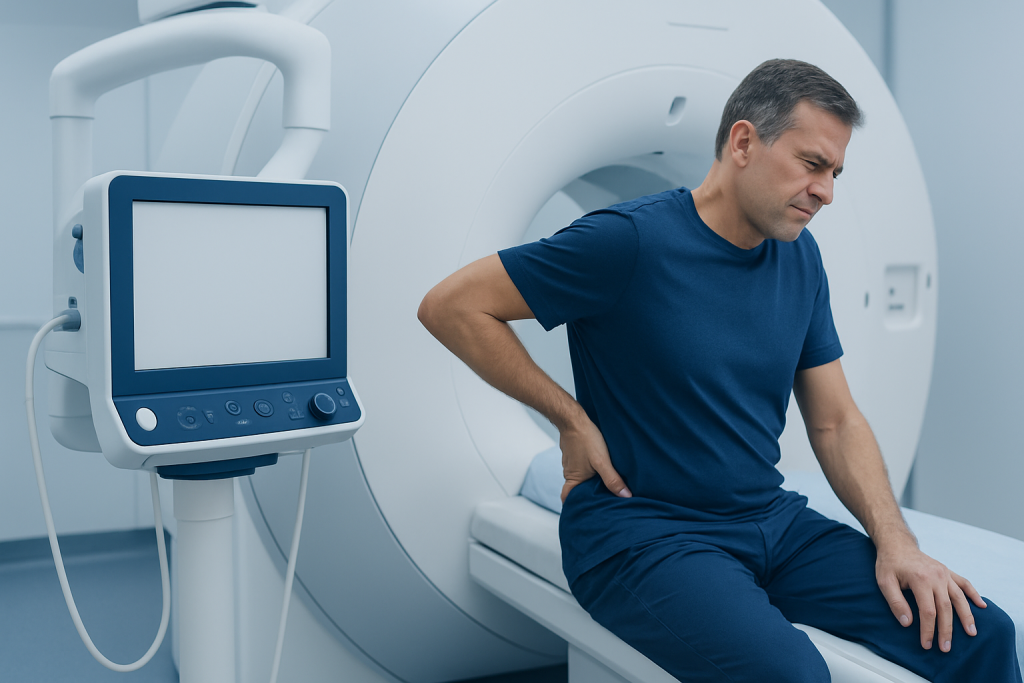
Back pain with numbness can feel different from one person to another. Some describe sharp pain that shoots into a leg or arm, followed by pins-and-needles, while others notice a dull ache in the back and a patch of reduced feeling in the thigh, foot, shoulder, or hand.
Symptoms often suggest which nerve structures may be involved. Pain that travels from the low back into one leg may fit nerve root irritation, while numbness in both legs, the groin, or around the inner thighs raises more concern for compression lower in the spinal canal. In the neck, symptoms may extend into an arm or hand.
Features that deserve closer attention include:
- New or worsening weakness in a limb
- Difficulty lifting the foot, gripping objects, or climbing stairs
- Changes in walking, balance, or coordination
- Numbness in the groin or “saddle” area
- Loss of bladder or bowel control, or trouble starting urination
- Severe pain after a fall, accident, or other injury
Symptoms that come and go with position changes may still need evaluation, especially if they are recurring or interfering with sleep, work, or daily movement. Even when the pain is not dramatic, persistent numbness should not be ignored.
Causes & Risk Factors

Nerve-related back pain can arise from several conditions. A herniated disc may press on a nearby nerve root, spinal stenosis can narrow the space around nerves, and inflammation or degeneration in the spine may create the same kind of compression over time.
Other possible causes include muscle spasm that indirectly irritates a nerve, vertebral fracture, spinal infections, autoimmune conditions, shingles, and less commonly tumors or bleeding around the spinal structures. In some cases, numbness that seems to come from the back may actually be due to a peripheral nerve problem or a condition elsewhere in the body.
Risk tends to rise with age, a history of back injury, heavy lifting, prolonged sitting, smoking, and certain physically demanding jobs. People with diabetes, osteoporosis, cancer history, immune suppression, or recent infection need especially careful assessment because their range of possible causes is broader.
Diagnosis
Diagnosis usually begins with a detailed discussion of how the symptoms started, where they travel, and whether they are getting better or worse. A clinician will ask about weakness, numbness patterns, fever, recent injury, weight loss, cancer history, and any urinary or bowel changes, because these clues guide the level of urgency.
A neurological examination often follows. This may include checking strength, reflexes, sensation, balance, and walking. The exam helps identify whether a particular nerve root, part of the spinal cord, or another structure is likely involved.
Imaging is not required for every episode of back pain, but it becomes more important when red flags are present or symptoms do not improve as expected. MRI is often the most informative test for nerves, discs, and the spinal cord, while X-rays can help assess alignment or fractures in selected situations. Blood tests may be added if infection, inflammation, or another systemic condition is suspected.
Treatment Options
Treatment depends on the cause, the degree of nerve involvement, and how urgently symptoms are changing. For many people, the first steps are conservative: short-term activity adjustment, pain relief strategies, and guided movement rather than complete bed rest.
If a nerve is compressed by a disc or narrowed spinal canal, doctors may recommend physical therapy, posture and movement changes, and medications that target pain or inflammation. In some situations, injections are considered to calm local irritation. When there is significant weakness, progressive numbness, or spinal cord or cauda equina compression, surgery may be recommended to relieve pressure on the nerves.
Patients traveling for care may benefit from a coordinated plan that includes imaging review, consultation with a neurologist or spine specialist, and follow-up arrangements before returning home. That continuity matters, because nerve symptoms sometimes improve gradually and need monitoring over weeks rather than days.
Prevention & Self-care
Not every cause of back pain with numbness can be prevented, but many flare-ups can be reduced by protecting the spine and noticing changes early. Regular walking, core-strengthening exercises, healthy weight management, and ergonomic sitting and lifting habits can all lower strain on the back.
At home, gentle movement is often better than prolonged rest unless a doctor advises otherwise. Heat or cold may help comfort, and patients should avoid activities that clearly worsen numbness or pain. A person recovering from a flare may also need to pace chores, travel plans, and work demands so symptoms do not escalate during the healing period.
Useful self-care steps include:
- Changing positions regularly during the day
- Using proper lifting technique and asking for help with heavy loads
- Keeping follow-up appointments if numbness has been documented
- Monitoring for new weakness, spreading numbness, or bladder and bowel changes
Because symptoms can evolve, self-care should never replace evaluation when warning signs are present.
When to See a Doctor
Prompt medical attention is recommended if back pain with numbness appears suddenly after injury, keeps worsening, or is accompanied by weakness. Numbness that affects both legs, the groin, or walking should be treated as urgent until a clinician has assessed it.
Immediate evaluation is especially important if there is loss of bladder or bowel control, trouble urinating, fever with back pain, severe unrelenting pain, confusion, or numbness that spreads quickly. These patterns may signal compression of important nerves or another serious condition that should not wait for routine care.
For patients managing symptoms from another country, it can help to seek care before travel if the condition is changing, rather than hoping it settles on its own. Acibadem Health Point’s multidisciplinary specialists and JCI-accredited hospitals diagnose and treat this condition for international patients, with evaluation and follow-up planned around the patient’s needs.
Living With the Symptoms While the Cause Is Being Clarified
Waiting for a diagnosis can be frustrating, especially when pain and numbness make everyday tasks uncertain. A practical approach is to track what the symptoms do over time: where the numbness is, whether it is spreading, what positions worsen it, and whether strength or balance is changing.
That symptom record can make consultations more efficient, whether the patient is seeing a local doctor, a neurologist, or a spine specialist after travel. It also helps distinguish a stable nerve irritation from a situation that needs faster action.
Most importantly, numbness is a sign to pay attention, not a reason for panic. With timely assessment, many underlying causes can be identified and treated in a way that protects function and helps patients return to normal movement more safely.
Frequently asked questions
Is back pain with numbness always a sign of a serious problem?
No, not always. It can happen with a strained back or a temporary nerve irritation, but numbness does mean a nerve may be involved. The key is whether the symptom is new, spreading, or paired with weakness or bladder and bowel changes.
What numbness symptoms need urgent medical attention?
Numbness with leg weakness, trouble walking, saddle numbness, or changes in urination or bowel control should be checked urgently. These symptoms can point to pressure on important nerves that should be evaluated without delay.
Can a slipped or herniated disc cause numbness?
Yes. A herniated disc can press on a nerve root and cause back pain that travels into an arm or leg, along with tingling or reduced sensation. The exact pattern depends on which level of the spine is affected.
Do people always need an MRI for back pain with numbness?
No. Many cases are first evaluated with a history and neurological examination, and imaging is reserved for warning signs, persistent symptoms, or suspected nerve compression. MRI is often preferred when doctors need a detailed look at the nerves and spinal cord.
What can a person do at home while waiting for assessment?
They can limit activities that worsen symptoms, keep moving gently if safe, and note any changes in numbness or strength. If symptoms are getting worse or any red flags appear, they should seek medical care promptly rather than waiting at home.
Can numbness improve on its own?
Yes, some mild nerve irritations improve with time and conservative treatment. However, numbness that persists or progresses should be reviewed by a doctor to make sure a more significant nerve problem is not being missed.
References
- National Institute of Neurological Disorders and Stroke
- Mayo Clinic
- American Academy of Neurology
- Merck Manual Professional Edition
- World Health Organization
This article is for general information only and is not a substitute for professional medical advice. Please consult a qualified doctor about your individual situation.