Audiologist: What They Do and When to See One

Key Takeaways
- Audiologists assess hearing and balance concerns using structured, noninvasive testing.
- They help people understand hearing loss, tinnitus, and communication difficulties.
- Treatment may include hearing aids, assistive listening devices, counseling, and referrals when needed.
- Early evaluation can make it easier to adjust to hearing changes and protect long-term communication.
- Audiology care can be important for travelers and international patients who need coordinated follow-up after returning home.
Medically reviewed by the Acıbadem clinical team — August 19, 2026
An audiologist is a hearing and balance specialist who helps identify, monitor, and manage hearing-related concerns across all ages. Their work can be especially valuable when communication becomes harder, sounds seem unclear, or balance symptoms begin to affect daily life.
Overview
An audiologist is a healthcare professional who focuses on hearing, listening, and balance. In practical terms, that means they help people understand why speech may sound muffled, why one ear may feel different from the other, or why a person may be missing sounds that used to be easy to hear. Their work is not limited to one age group; children, working adults, and older adults may all benefit from audiology care.
Unlike a quick screening, an audiology visit usually looks at the whole picture. The specialist asks about symptoms, noise exposure, ear infections, family history, medications, and the ways hearing changes affect everyday life. For international patients, this broader view can be especially useful when care needs to be planned around travel, time zones, and follow-up back home.
Audiologists often work alongside ENT specialists, neurologists, speech therapists, and primary care doctors. That team-based approach helps ensure that hearing concerns are not viewed in isolation, especially when ear symptoms are linked to dizziness, pressure, tinnitus, or sudden hearing changes.
Symptoms
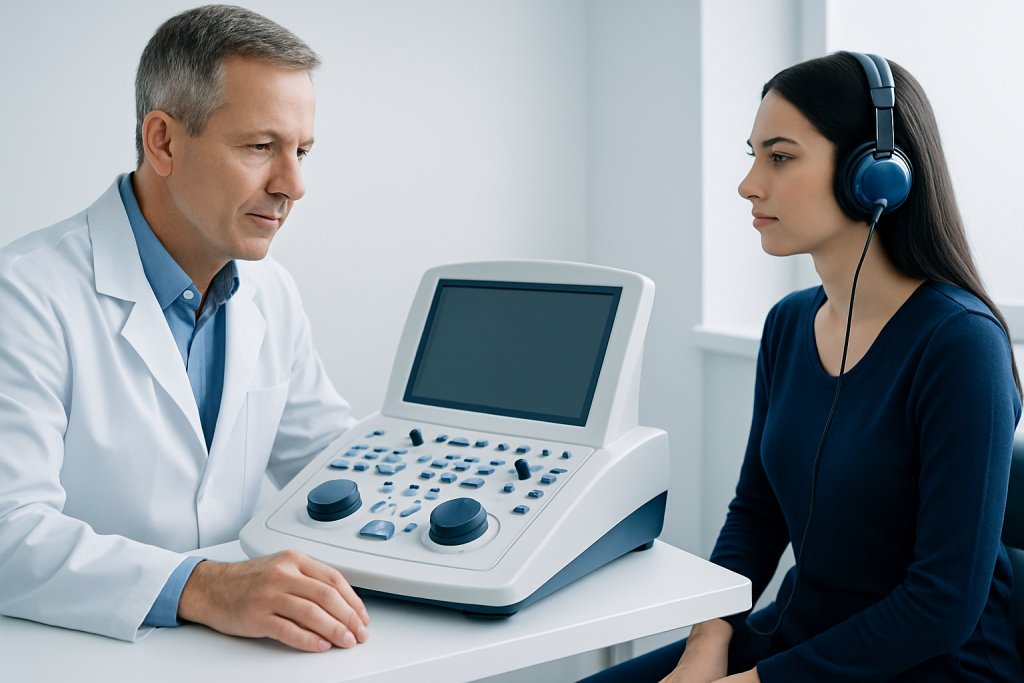
Hearing loss does not always begin with complete silence in one ear. More often, it appears as effort: asking others to repeat themselves, turning up the television, or feeling tired after conversations because listening takes more concentration than before. Some people notice that they can hear sounds, but cannot make out words clearly, especially in busy places.
Other symptoms may point toward a hearing or balance issue that deserves assessment. These can include ringing in the ears, sound sensitivity, fullness in the ears, difficulty following speech on the phone, or unsteadiness when walking. Children may seem inattentive, speak later than expected, or respond inconsistently to their name.
- Difficulty understanding speech, especially in noise
- Frequently increasing volume on devices
- Ringing, buzzing, or humming in the ears
- Feeling off-balance or dizzy
- Needing to watch faces closely to follow conversation
These symptoms do not always mean there is a serious problem, but they do suggest that a formal hearing evaluation may be helpful. A clear test can often replace guesswork with a practical plan.
Causes & Risk Factors

Hearing changes can develop for many reasons. Age-related hearing loss is common, but it is not the only cause. Repeated noise exposure, earwax blockage, infections, certain medications, head injury, and problems in the middle or inner ear can all affect hearing in different ways.
Some people have a higher likelihood of hearing concerns because of their daily environment or health history. People who work around loud machinery, musicians, military personnel, and frequent travelers exposed to long stretches of noise may face added risk. A family history of hearing loss can also matter, as can smoking, diabetes, cardiovascular disease, and untreated chronic ear problems.
Balance symptoms may have overlapping causes, since the inner ear plays a role in both hearing and stability. That is one reason audiologists often ask detailed questions before testing begins. The goal is not just to measure hearing, but to understand what may be contributing to the change.
Diagnosis
Audiology evaluation is usually comfortable and noninvasive. It often begins with a conversation about symptoms and a look at the ears, followed by tests that measure how well a person hears tones and speech. Depending on the concern, the visit may also include testing the middle ear, the inner ear, or the auditory nerve pathway.
Common assessments may include pure-tone audiometry, speech testing, tympanometry, and sometimes specialized balance or inner-ear studies. These tests help identify whether hearing loss is conductive, sensorineural, or mixed, which matters because each pattern may call for a different approach. In many cases, the results are reviewed the same day so the person can leave with a clearer understanding of the next step.
For someone traveling abroad for care, diagnosis may also include planning for continuity. That can mean obtaining a written summary, hearing test results, device recommendations, and follow-up instructions that can be shared with a local clinician at home. Good documentation helps prevent the feeling that care ends when the visit ends.
Treatment Options
Treatment depends on the cause and the degree of hearing change. Some issues, such as earwax buildup or an active ear infection, may improve once the underlying problem is addressed by the appropriate clinician. In other situations, particularly permanent hearing loss, the focus shifts toward improving communication and quality of life rather than restoring hearing completely.
Hearing aids are one of the most common audiology tools. They are designed to make speech and other useful sounds easier to hear, but they work best when carefully selected and adjusted. Audiologists also recommend assistive listening devices, alerting systems, captioning tools, and communication strategies that fit a person’s home, work, or school environment.
Management may also include counseling, hearing conservation advice, tinnitus support, and coordination with ENT or other specialists if medical or surgical treatment is needed. When balance concerns are part of the picture, therapy and additional evaluation may be recommended. A tailored plan is usually more effective than a one-size-fits-all solution, especially for people balancing recovery with travel or long-distance follow-up.
Prevention & Self-care
Not every form of hearing loss can be prevented, but many people can reduce avoidable strain on their ears. One of the simplest steps is limiting exposure to loud sounds and using hearing protection in noisy workplaces, concerts, or while operating machinery. Lowering the volume on headphones and taking listening breaks can also make a difference over time.
Self-care also includes paying attention to changes early. If conversation becomes harder, if tinnitus appears, or if one ear suddenly seems different from the other, it is better to seek assessment than to wait and adapt silently. Early action often gives more options, and it can make communication less exhausting for family members, colleagues, and the person experiencing the change.
- Use ear protection around loud noise
- Keep headphone volume at a safe, comfortable level
- Do not insert objects into the ear canal
- Manage chronic health conditions such as diabetes and high blood pressure
- Bring past hearing records to new appointments when possible
For international patients, it helps to plan ahead for batteries, charger compatibility, follow-up visits, and support at home. A little organization can make hearing care easier to continue once travel is over.
When to See a Doctor
Audiology care is worth considering when hearing changes start affecting work, school, conversations, or safety. It is also appropriate if others are noticing the problem before the person affected does. A hearing test can be useful even when symptoms seem mild, because early changes are sometimes easier to manage.
Some situations deserve prompt medical review rather than a routine appointment. These include sudden hearing loss, hearing loss in only one ear, ear pain with fever, drainage from the ear, a spinning sensation that is severe or persistent, or hearing changes after head injury. In those cases, an ENT doctor or emergency service may need to evaluate the person quickly, with audiology as part of the pathway.
People who already use hearing aids should also return for review if devices no longer seem helpful, if discomfort develops, or if communication becomes harder despite regular use. For international patients, a specialist team can often coordinate diagnosis and treatment before travel, while also providing a practical plan for follow-up after returning home.
At Acibadem Health Point, multidisciplinary specialists and JCI-accredited hospitals support the diagnosis and treatment of hearing-related concerns for international patients with coordinated care.
Living Well With Hearing Care
Hearing care is often a process rather than a single appointment. Once the hearing profile is known, many people benefit from gradual adjustment, education, and follow-up tuning of devices or strategies. That is normal; communication needs can change as work, family routines, and environments change.
Support from family and coworkers can make a meaningful difference. Speaking clearly, reducing background noise, facing the listener, and confirming key details in writing are small habits that can ease daily life. For people returning to another country after treatment, a written care plan can help make that support more consistent across settings.
When hearing concerns are addressed thoughtfully, people often feel less isolated and more in control of conversations again. The aim is not perfection; it is better access to the sounds, words, and relationships that matter most.
Frequently asked questions
What does an audiologist do during a first visit?
An audiologist usually begins by asking about symptoms, medical history, noise exposure, and daily communication challenges. They then perform hearing tests that help show how the ears are working and whether more evaluation is needed.
Is a hearing test painful?
No, hearing tests are generally painless and noninvasive. Most are done while the person sits comfortably and responds to sounds, words, or ear-related measurements.
Can an audiologist diagnose the cause of hearing loss?
An audiologist can identify the pattern and degree of hearing loss and often help narrow down possible causes. If a medical or surgical cause is suspected, they may refer the person to an ENT specialist for further assessment.
Do hearing aids cure hearing loss?
Hearing aids do not cure hearing loss, but they can improve access to speech and everyday sounds for many people. The benefit depends on the type of hearing loss and how well the devices are fitted and adjusted.
When should someone seek help for sudden hearing changes?
Sudden hearing loss should be assessed promptly, especially if it affects one ear or comes with dizziness, pain, or ringing. Early evaluation can be important because some causes need quick medical treatment.
Can children see an audiologist too?
Yes, audiologists regularly assess children of all ages, including infants and school-age children. Early hearing evaluation can support speech, learning, and social development when concerns are present.
References
- World Health Organization
- National Institute on Deafness and Other Communication Disorders
- American Speech-Language-Hearing Association
- Mayo Clinic
This article is for general information only and is not a substitute for professional medical advice. Please consult a qualified doctor about your individual situation.
Explore treatments in Turkey — costs, top hospitals & a free quote
JCI-accredited · board-certified surgeons · reply within 24h
Add us as a Preferred Source to see more of our trusted health content across Google Search, AI Overviews and Discover.