Humerus

Key Takeaways
- The humerus is the main bone of the upper arm and plays an essential role in arm movement.
- Humerus fractures can range from simple cracks to complex breaks involving nearby joints or nerves.
- Symptoms often include pain, swelling, bruising, weakness, and difficulty moving the arm.
- Diagnosis usually relies on a physical exam and imaging such as X-rays, with other scans used when needed.
- Treatment may involve a sling, brace, casting, surgery, and structured rehabilitation depending on the fracture pattern.
- Rehabilitation and follow-up are important to restore strength, motion, and everyday function safely.
The humerus is the long bone of the upper arm, connecting the shoulder to the elbow and helping the arm move, lift, and rotate. When it is injured or fractured, timely assessment can protect function and support a smoother recovery.
Overview
The humerus is the long bone that runs from the shoulder to the elbow. It serves as the main support structure for the upper arm and works with the shoulder, elbow, muscles, tendons, and nerves to make reaching, lifting, carrying, and rotating possible.
Because it sits between two highly mobile joints, the humerus is exposed to injuries from falls, sports, road traffic accidents, and direct blows. In some people, especially older adults with weaker bone density, even a low-energy fall can lead to a fracture. In younger people, a forceful injury is more often the cause.
Not every humerus problem is a fracture. Pain in this area may also come from tendon injuries, shoulder disorders, or nerve irritation. A clear diagnosis matters because treatment is different depending on whether the bone is cracked, displaced, or associated with joint or nerve involvement.
Symptoms
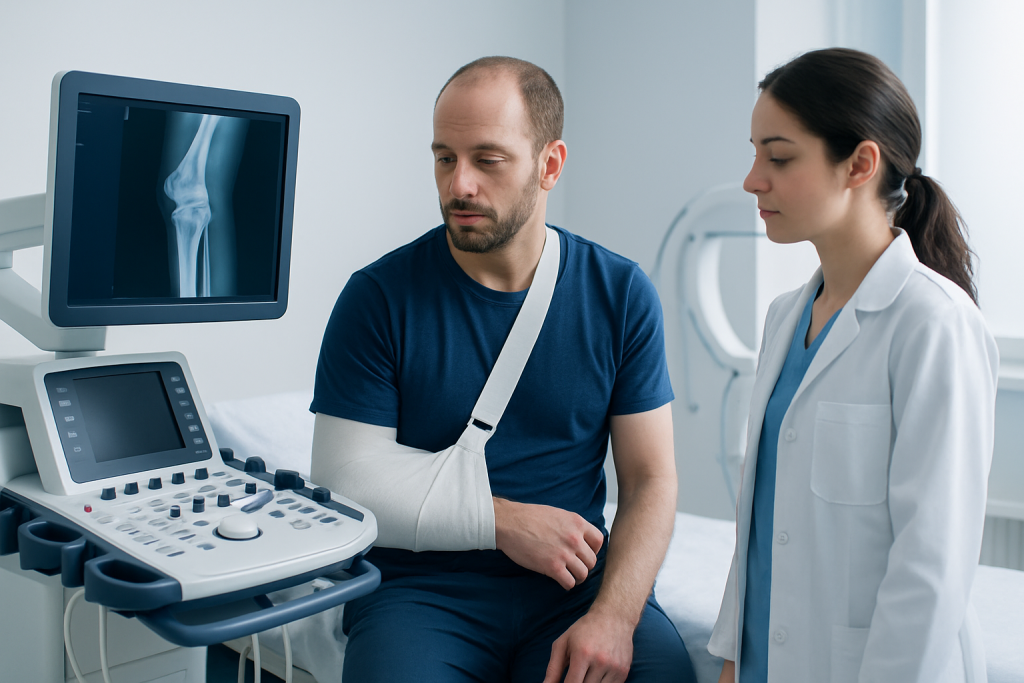
Humerus injuries commonly cause pain in the upper arm, shoulder, or elbow depending on the fracture location. The arm may feel tender to touch, swollen, bruised, or unusually weak. Some people notice that movement becomes difficult or impossible because the pain increases with even small motions.
A visible change in arm shape, a feeling of instability, or a cracking sensation at the time of injury can also point to a fracture. In more serious cases, the hand may feel numb, tingling, cold, or weak if nearby nerves or blood vessels are affected.
Symptoms can vary with the location of the fracture:
- Proximal humerus fractures may cause shoulder pain and trouble lifting the arm.
- Mid-shaft fractures often produce pain along the upper arm and weakness.
- Distal humerus fractures can affect the elbow and limit bending or straightening.
Because swelling may build gradually, the full extent of the injury is not always obvious immediately after the accident. A medical assessment is the safest way to understand what has happened.
Causes & Risk Factors
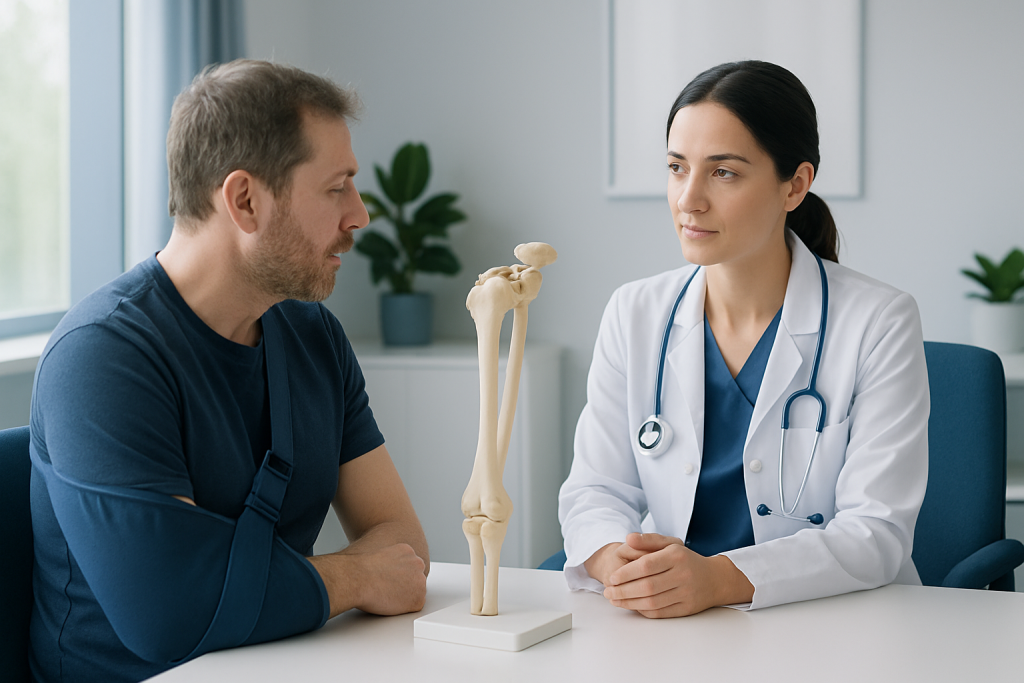
Most humerus fractures happen when enough force is transmitted through the arm to break the bone. Common causes include falls onto an outstretched hand, sports injuries, vehicle collisions, and direct impact to the arm. The exact pattern of fracture depends on the direction and intensity of the force.
Several factors can make a fracture more likely. Older age, osteoporosis, previous fractures, and conditions that reduce bone strength can lower the amount of force needed to break the bone. Repetitive stress or overuse may also contribute to some upper arm pain, although true stress fractures of the humerus are less common.
Risk is also influenced by everyday circumstances such as poor balance, slippery surfaces, limited vision, or certain medications that affect stability. In international patients, the injury may occur while traveling or exercising away from home, which can make early evaluation and coordination of care especially important.
Diagnosis
Diagnosis starts with a careful history and physical examination. A clinician will ask how the injury happened, where the pain is located, whether there was a fall or impact, and whether there are symptoms such as numbness or reduced hand strength. The arm, shoulder, elbow, and nearby nerves and blood flow are checked to look for complications.
X-rays are usually the first imaging test because they can show the location and shape of the fracture. If the break is complex, extends into a joint, or is not well seen on plain films, a CT scan may be recommended for a more detailed view. In some situations, especially when soft tissues are also a concern, MRI or other tests may be used.
For patients traveling from another country, early imaging and a clear written treatment plan can be especially helpful. It allows follow-up care to be shared more easily with local doctors at home and supports safer decisions about whether further treatment can wait or should happen promptly.
Treatment Options
Treatment depends on the fracture type, how far the bone ends have moved apart, the patient’s age, and whether nerves, blood vessels, or joints are involved. Some humerus fractures can heal well without surgery when the bone remains reasonably aligned. Others need surgical stabilization to restore position and function.
Non-surgical treatment may include a sling, brace, or cast to limit movement while the bone heals. Pain control, rest, and periodic follow-up visits are usually part of the plan. As healing progresses, gentle movement may be introduced under medical guidance to reduce stiffness.
Surgery may be recommended when the fracture is displaced, unstable, open, or affecting nearby structures. Common procedures include plates and screws, intramedullary nails, or other fixation methods chosen to match the fracture pattern. In selected cases, especially around the shoulder, joint replacement may be considered if the damage is extensive.
Rehabilitation is often a major part of treatment. Physiotherapy can help restore shoulder and elbow motion, build strength, and reduce stiffness after immobilization or surgery. Recovery is usually gradual, and return to daily activity is guided by pain, healing on imaging, and the clinician’s advice rather than by a fixed timetable alone.
Prevention & Self-care
Not every humerus fracture can be prevented, but several habits can lower risk. Maintaining bone health through balanced nutrition, regular weight-bearing activity, and medical care for osteoporosis can make bones more resilient. Fall-prevention steps at home also matter, especially for older adults.
Practical self-care after an injury focuses on protecting the arm and following the treatment plan closely. Keeping follow-up appointments, using the sling or brace as instructed, and avoiding lifting or twisting motions too early can all support healing. If swelling is present, elevation may be advised by the care team.
People recovering while traveling may benefit from carrying copies of imaging reports, clinic notes, and a rehabilitation plan. This makes it easier for another physician to continue care if the patient returns home before treatment is complete. A coordinated handoff can reduce confusion and help the recovery stay on track.
- Use stairs, showers, and walkways carefully to reduce fall risk.
- Ask a doctor whether bone density testing is appropriate.
- Do not remove a splint or brace unless advised.
- Attend physiotherapy sessions consistently if prescribed.
When to See a Doctor
Medical attention should be sought after any suspected humerus fracture, especially if the arm looks deformed, there is severe pain, or movement is not possible. Prompt evaluation is also important if the injury followed a significant fall, a sports collision, or a traffic accident.
Immediate care is needed if the hand becomes numb, weak, pale, cold, or increasingly swollen, as these may signal nerve or circulation problems. An open wound over the broken bone also requires urgent assessment because the risk of infection is higher.
Even when symptoms seem mild, persistent upper arm pain after an injury should not be ignored. A fracture that is not recognized early can heal in a poor position or lead to ongoing stiffness, which is why proper imaging and follow-up matter. Acibadem Health Point’s multidisciplinary specialists and JCI-accredited hospitals can diagnose and treat humerus injuries for international patients when coordinated orthopedic care is needed.
Recovery and Outlook
Recovery from a humerus fracture is shaped by the fracture pattern, the treatment chosen, and how well the arm can be protected during healing. Many people improve steadily over weeks to months, but it is normal for strength and motion to return more slowly than pain relief. The bone may heal before the shoulder or elbow feels completely normal.
Rehabilitation is often what turns bone healing into functional recovery. Gentle exercises may begin at the right time to prevent stiffness, and later stages usually focus on regaining range of motion, coordination, and endurance. Following the rehabilitation plan is especially important after surgery or when the fracture involved the shoulder or elbow joint.
Most people regain useful arm function with appropriate care, though some may need longer follow-up if the fracture was complex or if nerve irritation occurred. Regular reassessment helps the care team adjust activity levels and identify problems early, which is particularly valuable for patients continuing recovery across different countries or healthcare systems.
Frequently asked questions
What is the humerus?
The humerus is the long bone of the upper arm. It connects the shoulder to the elbow and helps the arm move, lift, and rotate.
How do people usually fracture the humerus?
It commonly happens after a fall, sports injury, direct blow, or traffic accident. In older adults, weaker bones can mean that even a minor fall causes a break.
What does a humerus fracture feel like?
It often causes sudden pain, swelling, bruising, and trouble moving the arm. Some people also notice weakness, deformity, or numbness if nearby nerves are affected.
Does every humerus fracture need surgery?
No. Some fractures heal well with a sling, brace, or cast, while others need surgery to keep the bone aligned. The decision depends on the fracture pattern and overall health of the patient.
How long does recovery take?
Recovery varies widely and can take weeks to months. The bone may heal before strength and motion fully return, which is why rehabilitation is an important part of care.
When should emergency care be sought?
Urgent care is needed if the arm is deformed, the pain is severe, the skin is broken, or the hand becomes numb, pale, cold, or weak. These signs can indicate a more serious injury that needs prompt assessment.
References
- American Academy of Orthopaedic Surgeons
- Mayo Clinic
- National Institute of Arthritis and Musculoskeletal and Skin Diseases
- NHS
- World Health Organization
This article is for general information only and is not a substitute for professional medical advice. Please consult a qualified doctor about your individual situation.