Angiokeratoma

Key Takeaways
- Angiokeratoma is typically benign, but it should be checked if the appearance is changing or the diagnosis is uncertain.
- The spots may be red, purple, blue, or black and can sometimes bleed if rubbed or scratched.
- A dermatologist usually diagnoses angiokeratoma by examining the skin; sometimes a biopsy is needed.
- Treatment is not always necessary, but bothersome lesions can be removed with procedures such as laser or cryotherapy.
- Any rapidly changing, painful, or bleeding skin lesion deserves medical assessment to rule out other conditions.
Angiokeratoma is a usually harmless skin condition that causes small, dark, raised spots, often on the genitals, thighs, or lower body. Because it can resemble other skin changes, a careful medical evaluation helps confirm the diagnosis and guide the right care.
Overview
Angiokeratoma refers to a small cluster of blood vessels near the surface of the skin with an overlying thickened skin layer. The result is often a tiny, dark, dome-shaped spot that can look surprising at first glance, especially when it appears on the genital area, inner thighs, abdomen, or lower legs.
Most angiokeratomas are benign and do not indicate cancer. Still, they matter because they can be mistaken for warts, moles, or other skin lesions. For people deciding whether to seek care at home or while traveling, the key question is not only what the spot looks like, but whether it is stable, painful, bleeding, or changing over time.
Some angiokeratomas occur as isolated lesions, while others appear in groups. A well-known pattern is angiokeratoma of Fordyce, which often affects the scrotum or vulva. Less commonly, angiokeratomas can be associated with an inherited condition such as Fabry disease, which is one reason a complete medical history is useful.
Symptoms
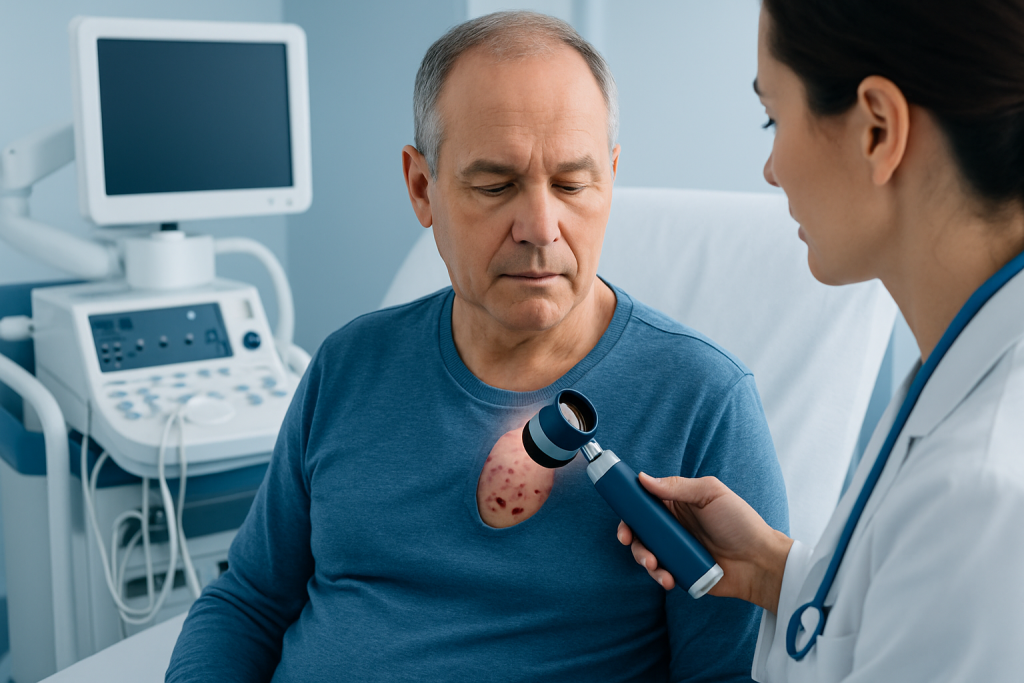
Angiokeratomas usually appear as small, firm bumps that may be red, purple, blue, or black. They often have a rough or warty surface and may range from a few millimeters in size to slightly larger lesions. Some people notice only one spot, while others see several clustered together.
Many angiokeratomas cause no symptoms at all. When symptoms do occur, they may include occasional itching, tenderness, or bleeding after friction, shaving, exercise, or scratching. Because the lesions can darken over time, people sometimes become concerned that the spot is a mole or another pigmented growth.
In a clinical setting, the appearance and location help guide the conversation. Lesions on the genital area can be especially distressing because patients may fear an infection or a sexually transmitted condition. A dermatologist can usually distinguish these possibilities with a careful examination and, when needed, additional testing.
Causes & Risk Factors

Angiokeratoma develops when superficial blood vessels enlarge and the skin above them becomes thickened. The exact reason this happens is not always clear, but local pressure, chronic irritation, minor trauma, and age-related skin changes may contribute in some cases.
Certain types have recognized patterns. Angiokeratoma of Fordyce is often seen in adults and may appear on the scrotum or vulva. Angiokeratoma circumscriptum tends to present earlier in life and may form a larger clustered patch. Fabry disease, a rare inherited metabolic disorder, can also include angiokeratomas among its features.
- Repeated friction or rubbing in the same area
- Chronic skin pressure or minor trauma
- Adult age in some common forms
- Inherited conditions such as Fabry disease in rare cases
- Individual variation in blood vessel and skin structure
Most people with angiokeratoma do not have an underlying systemic illness. Even so, a doctor may ask about other symptoms such as pain in the hands or feet, sweating changes, family history, or kidney or heart concerns when the pattern suggests a broader condition.
Diagnosis
Diagnosis usually begins with a visual examination by a dermatologist or another qualified clinician. The lesion’s color, surface, number, and location often provide important clues. In many cases, this is enough to make a confident diagnosis without invasive testing.
When a spot is atypical, changing, or difficult to distinguish from other skin conditions, the doctor may recommend dermoscopy or a small biopsy. These steps help separate angiokeratoma from melanoma, wart-like growths, vascular lesions, or pigmented moles. That distinction is important because treatment and follow-up can differ greatly.
For patients receiving care from another country, it can help to bring clear photos, a timeline of how long the lesion has been present, and any information about bleeding, discomfort, or related symptoms. This makes the consultation more efficient and may reduce unnecessary repeat testing during a short visit.
Treatment Options
Treatment is not always necessary. If an angiokeratoma is small, stable, and not causing symptoms, a doctor may recommend observation. This is often reassuring for patients who mainly want to know that the lesion is harmless and that no urgent procedure is required.
When treatment is desired for bleeding, irritation, cosmetic concerns, or diagnostic uncertainty, several procedural options may be considered. These can include cryotherapy, electrocautery, laser treatment, or surgical removal in selected cases. The best choice depends on the size and number of lesions, their location, and the clinician’s judgment.
If angiokeratomas are linked to Fabry disease, care focuses on the underlying disorder as well as the skin findings. In that situation, management may involve a broader team rather than a single procedure. Patients planning treatment abroad should ask how follow-up will be handled after they return home, especially if more than one session could be needed.
Prevention & Self-care
There is no guaranteed way to prevent angiokeratoma, particularly when it is related to skin structure or an underlying medical condition. However, gentle skin care can reduce irritation and help lower the chance that a lesion bleeds or becomes more noticeable.
A practical approach is to avoid unnecessary friction in the affected area. Loose clothing, careful shaving habits, and not picking or scratching the lesion can all help. If the lesion is in a location that rubs frequently, a doctor may suggest simple protective measures tailored to the area.
- Do not scratch, squeeze, or try to remove the lesion at home
- Use gentle cleansing and avoid harsh exfoliation
- Watch for changes in size, color, shape, or bleeding
- Seek a medical opinion before using topical treatments on a presumed diagnosis
- Keep a record or photo if the lesion is changing over time
For international patients, self-care also means planning practical follow-up. If a procedure is done during travel, ask what normal healing should look like and which symptoms should trigger a message to the clinic after returning home.
When to See a Doctor
A medical review is advisable if a new skin lesion appears and the diagnosis is not clear, especially when the spot is dark, raised, or located in the genital area. It is also sensible to seek evaluation if the lesion starts bleeding without obvious reason, becomes painful, or changes in shape or color.
People should arrange assessment sooner if several lesions appear at once, if there is a family history of Fabry disease, or if there are other symptoms such as burning pain in the hands and feet, heat intolerance, or kidney or heart concerns. These features do not mean something serious is certain, but they do justify a more complete look.
Acibadem Health Point’s multidisciplinary specialists and JCI-accredited hospitals can diagnose and treat angiokeratoma for international patients who prefer coordinated care during a short medical trip. A dermatologist can help confirm whether the lesion is angiokeratoma and discuss whether observation or removal is the most appropriate option.
Frequently asked questions
Is angiokeratoma cancerous?
Angiokeratoma is generally a benign skin condition and is not considered cancer. The reason it still deserves attention is that it can resemble other skin lesions, so a clinician may need to confirm the diagnosis. If a spot is changing or bleeding, it should be checked rather than assumed to be harmless.
Can angiokeratoma go away on its own?
Some lesions remain stable for a long time, but they usually do not disappear quickly on their own. If a spot is not bothering the person, observation may be reasonable. If it is symptomatic or cosmetically upsetting, a doctor can discuss removal options.
Why does angiokeratoma bleed so easily?
The surface of the lesion may be slightly thickened, but the vessels near the skin’s surface are delicate. Friction from clothing, shaving, or scratching can cause bleeding. This is one reason many clinicians advise avoiding picking at the area.
How is angiokeratoma different from a wart or mole?
Angiokeratoma often has a dark red, purple, or black color and may have a rough surface, which can make it look like a wart or mole. A dermatologist uses the lesion’s appearance, location, and sometimes dermoscopy or biopsy to tell them apart. Because similar-looking lesions can have different meanings, professional evaluation is useful.
Is treatment painful?
Treatment method and comfort level vary, but doctors usually discuss ways to keep the procedure manageable. Some options are quick office procedures, and local numbing may be used when appropriate. The best approach depends on the lesion’s size, location, and the person’s preferences.
Should people worry about angiokeratoma on the genitals?
Genital angiokeratomas are often benign, but they can be alarming because of their location and dark color. A clinician should confirm the diagnosis, since other conditions can look similar. Once confirmed, many cases need only reassurance unless bleeding or irritation is present.
References
- American Academy of Dermatology
- DermNet NZ
- Mayo Clinic
- National Organization for Rare Disorders
- National Institutes of Health
This article is for general information only and is not a substitute for professional medical advice. Please consult a qualified doctor about your individual situation.