Albinism
Key Takeaways
- Albinism is usually inherited and affects melanin production in the skin, hair, and eyes.
- Common concerns include very light coloring, sensitive skin, and vision differences such as reduced sharpness or light sensitivity.
- Diagnosis is based on physical findings, eye assessment, family history, and sometimes genetic testing.
- There is no cure, but care focuses on vision support, sun protection, skin monitoring, and practical daily adjustments.
- Children and adults with albinism benefit from coordinated follow-up with eye and skin specialists.
- Family planning and genetic counseling may be helpful for people who want to understand inheritance patterns.
Medically reviewed by the Acıbadem clinical team — August 19, 2026
Albinism is a group of inherited conditions that reduce the body’s production of melanin, affecting skin, hair, and eyes. With the right eye care, sun protection, and regular follow-up, many people with albinism can protect their health and vision and live well.
Overview
Albinism is a genetic condition in which the body makes less melanin than usual, or does not make it in the expected way. Melanin is the pigment that gives color to skin, hair, and eyes and also helps protect the skin from the sun. When melanin is reduced, a person may have very light coloring and a higher need for eye and skin care.
The term “albino” is often used in everyday speech, but medical professionals usually prefer “person with albinism.” This language reflects the fact that albinism is a condition a person has, not a label that defines them. It also helps distinguish albinism from other causes of lighter coloring, such as some skin disorders or changes after illness.
Albinism can be noticed at birth, while some eye features become clearer only as a child grows. The condition can affect people in different ways, even within the same family. For international patients, understanding the exact type of albinism can help shape practical care plans, including school support, travel preparation for eye visits, and skin protection advice suited to the climate they live in after returning home.
Symptoms
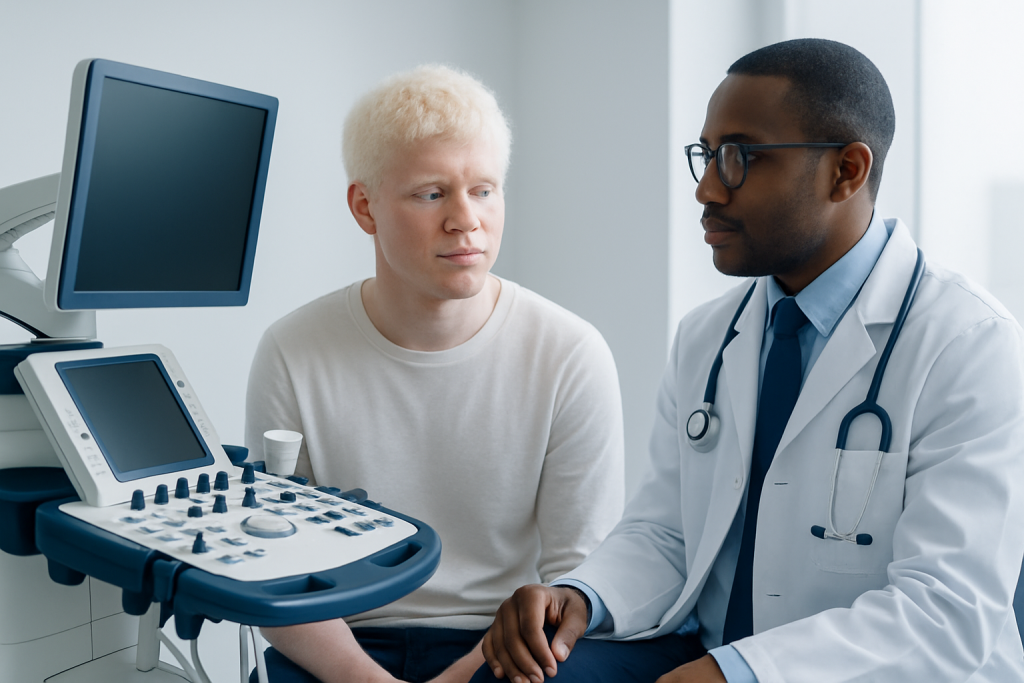
The most visible signs of albinism usually involve skin, hair, and eye color. Hair may be white, blond, or light brown, and skin may be very fair or appear lighter than that of family members. Some people also have freckles, or their skin may darken slightly with age or sun exposure, depending on the type of albinism.
Eye-related symptoms are very important and may affect daily life more than appearance does. Common features include reduced visual sharpness, involuntary eye movements, sensitivity to bright light, and eyes that may appear to move or look in different directions at times. Some people also have difficulty judging depth or seeing fine detail.
Not everyone has the same combination of features. A person may have milder coloring but more noticeable vision problems, or very light pigmentation with only moderate eye symptoms. In some forms of albinism, the skin and hair may be only slightly lighter than expected, which is why a careful medical evaluation matters.
- Very light skin, hair, or eyelashes
- Light sensitivity, also called photophobia
- Reduced visual acuity
- Nystagmus, or uncontrolled eye movement
- Strabismus, or eyes that do not line up
- Difficulty seeing in bright light or at distance
Causes & Risk Factors
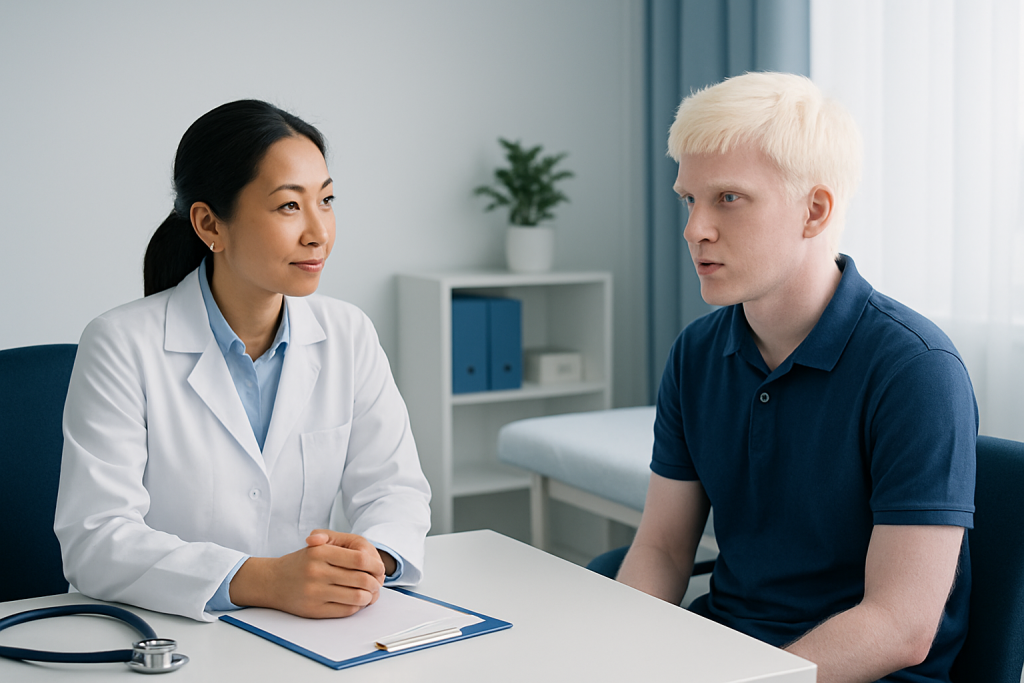
Albinism is caused by inherited changes in genes involved in melanin production or distribution. These genes are passed from parents to children, usually in predictable inheritance patterns. In many cases, both parents carry a changed gene even though they do not have albinism themselves.
There are different forms of albinism. Oculocutaneous albinism affects the skin, hair, and eyes. Ocular albinism mainly affects the eyes and vision. Some rare syndromic forms also involve other parts of the body, which is why doctors may ask about bleeding problems, immune issues, or developmental concerns when evaluating a child.
The main risk factor is family history. Parents who already have a child with albinism, or who know they carry a related gene change, may wish to discuss inheritance with a specialist before planning another pregnancy. Inheritance can be clarified with genetic counseling, which can be especially helpful for families living in different countries or navigating care across borders.
Diagnosis
Doctors usually begin with a physical examination and a review of symptoms, family history, and eye development. In infants and children, clues such as very light coloring, poor visual tracking, squinting, or unusual eye movements may prompt an earlier referral to an eye specialist or dermatologist.
An eye examination is a central part of diagnosis. It may include checking visual acuity, looking for nystagmus or strabismus, and examining the retina and optic nerve. Specialists may also test for refractive errors, because glasses or contact lenses can sometimes improve clarity even when albinism itself cannot be reversed.
Genetic testing may be offered to confirm the type of albinism or to support family planning questions. It is not always required to make the diagnosis, but it can be valuable when features are subtle or when families want a clearer picture of inheritance. For patients traveling for care, bringing previous eye records, photographs from infancy, and family medical information can make the consultation more efficient.
Treatment Options
There is no cure that restores normal melanin production, but treatment can greatly improve comfort, safety, and day-to-day functioning. The main goals are to protect the skin from ultraviolet light, support vision, and prevent avoidable complications from delayed diagnosis or poor follow-up.
For vision, doctors may prescribe glasses or contact lenses to correct refractive errors. Low-vision aids such as magnifiers, enlarged print, screen readers, or special lenses can help with reading and school or work tasks. In some cases, surgery may be considered for strabismus or to reduce the impact of certain eye muscle issues, although it does not correct the underlying pigment change.
Skin care is equally important. Broad-spectrum sunscreen, protective clothing, hats, and sunglasses help reduce sun damage. Regular skin checks are useful because people with less melanin may be more vulnerable to sunburn and long-term skin changes. When care is coordinated across specialties, the plan tends to be more practical and easier to maintain after the patient returns home.
- Prescription glasses or contact lenses
- Low-vision rehabilitation and assistive devices
- Sun-protective clothing, hats, and sunglasses
- Regular dermatology follow-up
- School or workplace accommodations for vision needs
- Genetic counseling when family planning is a concern
Prevention & Self-care
Albinism itself cannot usually be prevented once a child has inherited the relevant gene changes. However, many of its complications can be reduced with consistent self-care and sensible routines. Daily habits often matter more than occasional treatment, especially for skin and eye protection.
Sun protection should become part of ordinary life rather than something used only on holidays. That may include sunscreen, protective clothing, wide-brimmed hats, and planning outdoor activities around lower-intensity sunlight when possible. Regular skin self-checks can help people notice new spots, changes in moles, or areas that are not healing as expected.
For vision, simple adjustments can make a meaningful difference. Good lighting, seating near the front of a classroom or meeting room, large-print materials, and screen accessibility tools may reduce strain. Children may need help explaining their vision needs to teachers, while adults may need support arranging workplace accommodations. These practical changes can be especially important for people who are managing care between countries or adapting to a new climate after travel.
Families may also benefit from genetic counseling. Understanding how the condition is inherited can help parents make informed decisions and prepare for future pregnancies with realistic expectations and support.
When to See a Doctor
A medical review is worthwhile whenever a child is born with very light coloring, unusual eye movements, or vision that seems different from what is expected for age. Early assessment can lead to earlier support, which often helps children adapt better at school and at home.
Adults should also seek care if they notice worsening vision, frequent sunburn, new or changing skin lesions, or increasing difficulty with daily tasks such as reading or driving. People already diagnosed with albinism benefit from routine follow-up even when they feel well, because eye and skin needs can change over time.
Prompt evaluation is especially important if there is uncertainty about the diagnosis or concern that another condition may be involved. In some cases, albinism may be part of a broader syndrome, and a doctor can help decide whether additional tests are needed. Acibadem Health Point’s multidisciplinary specialists and JCI-accredited hospitals can diagnose and treat albinism for international patients who need coordinated eye and skin care during a planned trip for medical evaluation.
Living Well With Albinism
Albinism often requires practical adaptation, but it does not define a person’s abilities or future. Many children and adults do well once vision support, sun protection, and educational adjustments are in place. The most helpful care is usually the kind that fits daily life rather than adding complexity to it.
Families may find it useful to keep a simple care list that includes eye appointments, skin checks, replacement sunglasses, and any school or workplace accommodations. This can be especially helpful when care is shared between local clinicians and specialists abroad. Clear written notes make it easier to continue follow-up after returning home.
With early assessment, thoughtful protection, and regular specialist input, people with albinism can stay active and maintain their health with confidence.
Frequently asked questions
Is albinism the same as having very fair skin?
No. Very fair skin can run in families without albinism, while albinism is a specific genetic condition that affects melanin production. Doctors look at skin, hair, eye findings, and family history before making a diagnosis.
Can albinism affect vision even if the skin changes are mild?
Yes. Some people have subtle skin or hair differences but more noticeable eye problems. That is why an eye examination is important even when the appearance changes are not dramatic.
Does albinism get worse over time?
The condition itself does not usually “spread,” but some needs can become more noticeable with age, such as sun protection, eye strain, or the need for updated glasses. Regular follow-up helps address these changes early.
Is there treatment for the vision problems linked to albinism?
There is no cure for the underlying gene change, but vision can often be supported with glasses, low-vision tools, and sometimes surgery for certain eye alignment issues. An eye specialist can recommend the most suitable options for the individual.
Should children with albinism avoid the outdoors?
No, but they should use strong sun protection and sensible timing. Outdoor activity is usually healthy when hats, sunscreen, sunglasses, and shade are part of the routine.
Is genetic counseling useful for families affected by albinism?
Yes. Genetic counseling can explain inheritance patterns, recurrence risk, and testing options in a clear way. It can be especially helpful for parents planning future pregnancies or families coordinating care across countries.
References
- National Eye Institute
- American Academy of Dermatology
- Genetics Home Reference / MedlinePlus Genetics
- National Organization for Albinism and Hypopigmentation
- World Health Organization
This article is for general information only and is not a substitute for professional medical advice. Please consult a qualified doctor about your individual situation.
Hair transplant in Turkey — costs, graft counts & a free assessment
JCI-accredited · board-certified surgeons · reply within 24h
Add us as a Preferred Source to see more of our trusted health content across Google Search, AI Overviews and Discover.