Ingrown Toenail (Onychocryptosis): Symptoms and Treatment

Key Takeaways
- An ingrown toenail usually starts with local tenderness, redness, and swelling at the nail edge.
- Tight shoes, improper nail trimming, injury, and naturally curved nails can all contribute.
- Mild cases may improve with home care, but infection, severe pain, or repeated episodes need medical evaluation.
- A doctor can confirm the diagnosis, relieve pressure, and recommend the right procedure if the nail keeps growing inward.
- Simple habits such as straight nail trimming and roomy footwear can lower the chance of recurrence.
Medically reviewed by the Acıbadem clinical team — August 19, 2026
Onychocryptosis, commonly called an ingrown toenail, happens when the edge of the nail grows into the surrounding skin and triggers pain, redness, and swelling. Most cases are manageable, but recurring or infected toenails may need medical treatment to prevent ongoing discomfort and complications.
Overview
Onychocryptosis is the medical term for an ingrown toenail. It develops when the side or corner of a toenail presses into the nearby skin instead of growing cleanly beyond it. The big toe is affected most often, although any toenail can become problematic.
What begins as a small point of irritation can turn into a cycle of pain, swelling, and skin overgrowth around the nail edge. For many people, the condition is temporary and settles with careful foot care. For others, especially when it keeps returning, a clinician may need to step in to reduce discomfort and prevent infection.
For international patients planning care away from home, it helps to think of ingrown toenail treatment as a practical step-by-step process: confirm the cause, calm the inflamed tissue, and choose a plan that fits travel, work, and recovery needs. That approach is often straightforward, but it should still be guided by a qualified professional.
Symptoms
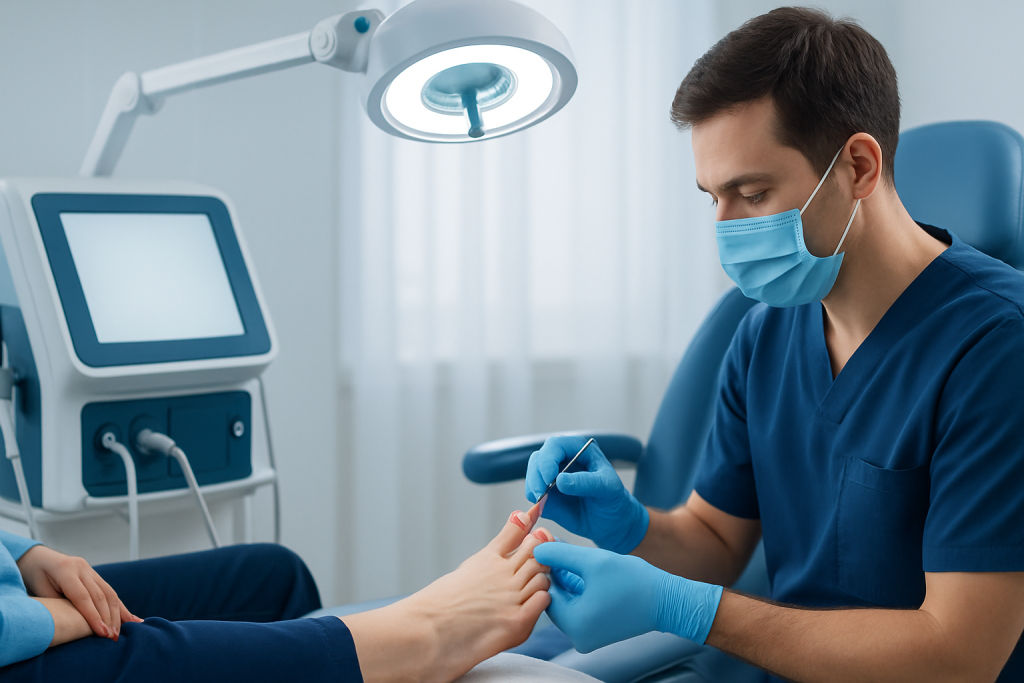
The first sign is often a tender spot along one side of the nail. The skin may look pink or red, feel warm, and become sore when pressure is applied from a shoe or a blanket. Walking, sports, and even ordinary daily movement can make the area more noticeable.
As the irritation continues, swelling can increase and the surrounding skin may become hard or overgrown. Some people notice drainage, a mild odor, or a small amount of pus if the area becomes infected. In more advanced cases, the toe may throb or make wearing shoes difficult.
Common symptoms include:
- Localized pain at the nail edge
- Redness and swelling around one side of the toenail
- Drainage or crusting
- Difficulty wearing closed shoes
- Sensitivity when the toe is touched
Symptoms can overlap with other toe problems, so persistent pain should not be dismissed as a simple nuisance. A short clinical assessment can clarify whether the nail itself is the main issue or whether another condition is contributing.
Causes & Risk Factors

An ingrown toenail usually forms when the nail shape, the way it is trimmed, or repeated pressure from shoes changes the direction of growth. Cutting nails too short or rounding the corners can leave sharp edges that dig into the skin as the nail grows out. Tight footwear and toe crowding add extra pressure that can push the nail margin inward.
Some people are more prone to onychocryptosis because of the natural shape of their nails. Curved, thickened, or unusually wide nails may be more likely to press into the skin. Repeated trauma also matters, which is why athletes, dancers, and people who spend long hours on their feet may notice the problem more often.
Risk factors can include:
- Improper toenail trimming
- Tight or narrow shoes
- Toe injury or repeated pressure
- Curved or thick nails
- Heavy sweating or moist skin around the toes
- Conditions that affect foot sensation or healing
In some people, the issue is not one single event but a combination of small pressures over time. Understanding the pattern is useful because prevention often depends on changing the daily habit that keeps the problem returning.
Diagnosis
Diagnosis is usually based on a physical examination. A clinician looks at the shape of the nail, the surrounding skin, and any signs of infection or tissue overgrowth. In many cases, no imaging or laboratory test is needed.
The medical visit is also the right time to ask about the pattern of symptoms. If the same toe keeps flaring up, if both sides of the nail are involved, or if the person has a condition that slows healing, the treatment plan may need to be adjusted. The clinician may also check for other causes of toe pain, such as a nail fold infection, trauma, or less commonly a foreign body.
For patients coordinating care from another country, diagnosis can often be completed in a single outpatient visit. That makes it easier to plan treatment, set expectations for recovery, and decide whether a simple procedure can be done before travel home or whether follow-up should continue locally.
Treatment Options
Treatment depends on how far the nail has grown into the skin and whether infection is present. Mild cases may improve with warm soaks, careful cleaning, pressure relief, and switching to shoes with a wider toe box. These steps can reduce inflammation while the nail grows forward.
If symptoms persist, a clinician may gently lift the nail edge, place a small support under it, or recommend a minor procedure to remove the problem portion of the nail. When the nail keeps recurring, a partial nail removal may be combined with treatment to the nail root so the same edge is less likely to grow back inward. The exact approach should be individualized.
If there are signs of infection, treatment may also include wound care and, in some cases, antibiotics when a clinician believes they are needed. However, antibiotics alone do not correct the nail problem if the nail edge is still pressing into the skin. Relieving that pressure is usually the key step.
Procedures are commonly done in an outpatient setting with local anesthetic. After treatment, patients are usually given instructions for cleaning the toe, protecting the site, and monitoring healing. International patients often appreciate having a clear written plan before leaving, especially if they will continue dressing changes or follow-up at home.
Prevention & Self-care
Prevention starts with giving the nail room to grow naturally. Toenails should generally be trimmed straight across rather than deeply rounded at the corners. Nails should be cut to a comfortable length, not so short that the skin folds over the edge.
Footwear also matters. Shoes with a roomy toe box reduce constant pressure on the nail folds, especially during walking or exercise. Keeping feet clean and dry can help protect the skin around the nail, particularly in people who sweat heavily or spend long hours in closed shoes.
Helpful habits include:
- Trim nails straight across
- Avoid digging into nail corners
- Choose shoes with enough toe space
- Change socks regularly if feet sweat
- Protect toes from repeated injury
- Watch early soreness before it becomes severe
At home, mild discomfort sometimes improves with a brief warm soak and pressure relief, but attempts to cut out the corner of the nail or dig under the skin can make the problem worse. Self-care should stay gentle. If the toe is becoming more painful instead of less, medical review is the safer next step.
When to See a Doctor
A doctor should evaluate the toe if pain is significant, if the skin is swollen or draining, or if the problem keeps coming back. Medical review is especially important when walking becomes difficult, when shoes can no longer be worn comfortably, or when the person has diabetes, poor circulation, or a condition that affects immunity or healing.
Prompt care is also wise if redness spreads beyond the nail fold, if there is fever, or if the toe seems increasingly infected. Those features do not always mean a serious complication, but they do signal that the toe needs professional attention rather than more home trimming or squeezing.
Acibadem Health Point supports international patients with multidisciplinary specialists and JCI-accredited hospitals that diagnose and treat conditions like onychocryptosis in a coordinated setting. That can be helpful for people who need a clear plan, efficient outpatient care, and sensible follow-up after returning home.
Living With Recurrence
Some people develop ingrown toenails repeatedly, especially when nail shape and footwear continue to create pressure. In those situations, the goal is not only to treat the current episode but also to reduce the chance of the next one. That may involve a small procedure, a change in trimming habits, and more practical shoe choices.
Recurrence is a good reason to revisit the diagnosis and treatment plan. A clinician can check whether the nail edge, local skin growth, or repeated trauma is driving the problem. When the cause is identified clearly, management becomes much more predictable and less frustrating.
For patients traveling for treatment, recurrence planning matters. A simple discussion about healing time, dressing changes, activity limits, and follow-up options can make it easier to move between countries without losing continuity of care.
Frequently asked questions
What is onychocryptosis?
Onychocryptosis is the medical term for an ingrown toenail. It means the nail edge grows into the nearby skin and causes irritation, pain, and sometimes infection.
Can an ingrown toenail heal on its own?
Mild cases sometimes improve if pressure is reduced and the nail is allowed to grow out normally. If pain, swelling, or drainage continues, medical care is usually needed.
What should a person not do with an ingrown toenail?
It is best not to dig into the nail corner, cut the skin, or try to remove the nail at home. These steps can worsen inflammation and increase the chance of infection.
Do antibiotics cure ingrown toenails?
Antibiotics may help if there is a clear infection, but they do not fix the nail edge pressing into the skin. Relieving the pressure is usually the most important part of treatment.
How can ingrown toenails be prevented?
Straight nail trimming, roomy shoes, and early attention to toe soreness can lower the risk. People with frequent episodes may need a clinician to review whether a minor procedure would help prevent recurrence.
When is surgery considered for an ingrown toenail?
A minor procedure may be considered when the nail keeps growing inward, symptoms are severe, or the problem returns after conservative care. The aim is to remove the painful nail edge and reduce the chance of repeat episodes.
References
- American Academy of Dermatology
- Mayo Clinic
- NHS
- Merck Manual Professional Edition
This article is for general information only and is not a substitute for professional medical advice. Please consult a qualified doctor about your individual situation.
Explore treatments in Turkey — costs, top hospitals & a free quote
JCI-accredited · board-certified surgeons · reply within 24h
Add us as a Preferred Source to see more of our trusted health content across Google Search, AI Overviews and Discover.