Achalasia: Symptoms, Causes and Treatment

Key Takeaways
- Achalasia affects how the esophagus moves food into the stomach, making swallowing progressively harder.
- Common symptoms include trouble swallowing, regurgitation of undigested food, chest discomfort, and weight loss.
- Diagnosis often uses endoscopy, barium swallow imaging, and manometry, which measures esophageal muscle function.
- Treatment may include procedures to relax or open the lower esophageal sphincter, such as dilation, myotomy, or POEM.
- Diet changes can ease symptoms, but they do not replace medical treatment.
- People with ongoing swallowing problems should seek medical evaluation rather than adapting around the problem for too long.
Medically reviewed by the Acıbadem clinical team — August 19, 2026
Achalasia is an uncommon swallowing disorder in which the lower esophageal sphincter does not relax normally and the esophagus loses its ability to move food toward the stomach. With timely evaluation, many people can reduce symptoms and improve eating comfort through targeted treatment and follow-up care.
Overview
Achalasia is a movement problem of the esophagus, the tube that carries food and liquids from the mouth to the stomach. In a healthy swallow, the esophagus pushes food downward while a muscle ring at the lower end, called the lower esophageal sphincter, opens at the right moment and then closes again. In achalasia, that coordination breaks down: the sphincter does not relax properly, and the esophagus loses the wave-like motion that helps move food along.
As a result, food can linger in the esophagus instead of passing smoothly into the stomach. That is why achalasia often feels like food is “sticking,” especially with solid foods at first and later sometimes with liquids too. The condition is not caused by poor eating habits, and it is not the same as ordinary heartburn or reflux, although the two can overlap in everyday experience.
Because achalasia develops gradually, people sometimes adjust by eating more slowly, drinking more with meals, or avoiding certain foods. These coping habits may help temporarily, but persistent swallowing difficulty deserves medical attention. For international patients, this can become especially important when symptoms start during travel or before a planned trip home, since eating safely and maintaining hydration can become more difficult away from familiar routines.
Symptoms

Swallowing difficulty is the most recognizable sign of achalasia, but the symptom pattern can vary from person to person. At first, many people notice trouble with solid foods, then later with liquids as well. Meals may take longer, and some people feel the need to wash food down with frequent sips of water.
Other common symptoms include regurgitation of undigested food, especially when bending over or lying down, chest discomfort, a sensation of fullness after only a small meal, and unintentional weight loss. Some people also notice coughing at night, hoarseness, or repeated throat irritation when food or saliva comes back up.
Symptoms may be subtle in the beginning and become more noticeable over months or years. Because the esophagus can gradually stretch, the condition may seem to “improve” at times while actually progressing. A pattern of slow eating, avoiding social meals, or needing to excuse oneself often during dinner can be an important clue for a doctor.
- Difficulty swallowing solids and, later, liquids
- Food coming back up without nausea
- Chest pressure or discomfort during meals
- Coughing, especially at night
- Gradual weight loss or reduced appetite due to eating difficulty
Causes & Risk Factors
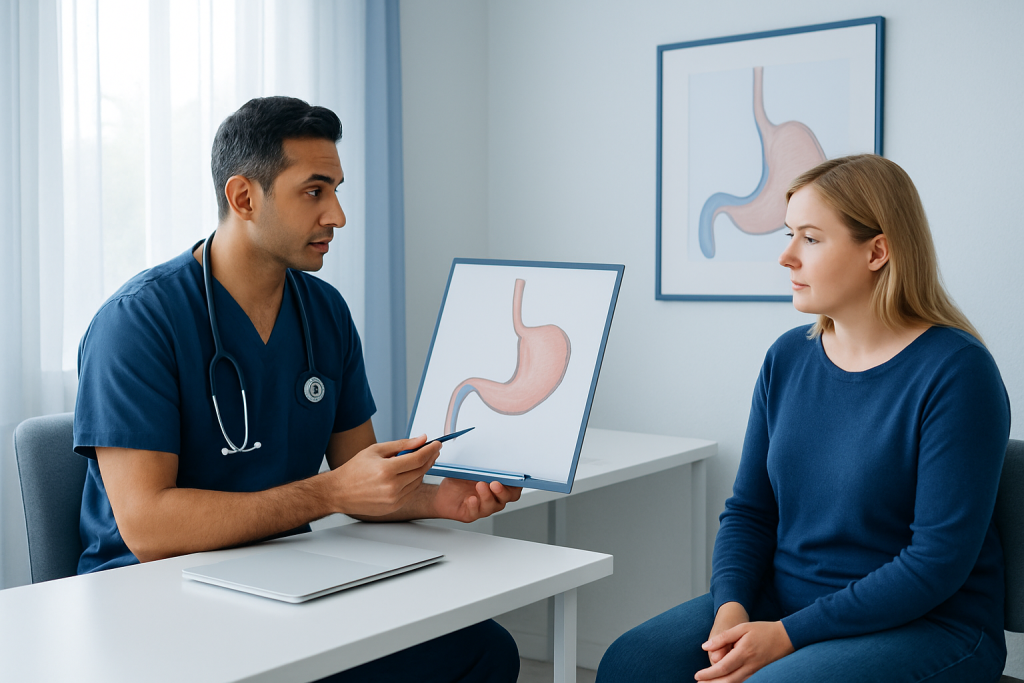
The exact cause of achalasia is not fully understood. In many cases, the nerve cells that control esophageal movement and lower esophageal sphincter relaxation are damaged or lost. Without those signals, the esophagus cannot generate normal coordinated contractions, and the lower valve remains too tight.
Researchers think several factors may contribute, including immune-mediated processes and, less commonly, infections or other triggers that affect the nerves of the esophagus. Achalasia is generally considered an acquired condition rather than one that results from diet or stress alone. It is not contagious.
Anyone can develop achalasia, but it is usually diagnosed in adults. Symptoms can sometimes resemble those of other digestive disorders, which is why medical evaluation matters. A doctor may also look for conditions that can mimic achalasia, including an obstruction at the gastroesophageal junction or, in some cases, pseudoachalasia related to another underlying disease.
- Loss or dysfunction of nerve cells in the esophagus
- Possible immune-related mechanisms
- Less commonly, infections or other triggers under study
- Adult age at presentation, although it can occur at any age
Diagnosis
Diagnosing achalasia usually begins with a careful history of swallowing symptoms, meal patterns, and weight change. A doctor will want to know whether the difficulty is with solids, liquids, or both; whether food comes back up; and how long the problem has been present. These details help distinguish achalasia from reflux disease, strictures, or other causes of dysphagia.
Several tests are often used together. Upper endoscopy helps the doctor look inside the esophagus and stomach to rule out blockage, inflammation, or another cause of narrowing. A barium swallow study can show a widened esophagus and delayed emptying, sometimes with a characteristic tapered appearance at the lower end. Esophageal manometry is the key test for confirming achalasia because it measures pressure and movement patterns in the esophagus.
For some patients, especially those traveling for care, the diagnostic process may be organized in a staged way so that imaging, endoscopy, and specialist review happen efficiently. This can reduce repeat testing and help the care team plan treatment based on the full picture rather than on a single result alone.
- History and physical examination
- Upper endoscopy to exclude structural causes
- Barium swallow imaging to assess esophageal emptying
- Esophageal manometry to confirm abnormal motility
Treatment Options
Treatment is aimed at helping food pass into the stomach more easily by reducing resistance at the lower esophageal sphincter. The best choice depends on age, overall health, the pattern of achalasia, and prior treatments. Because the problem is mechanical and functional, treatment usually focuses on opening or weakening the tight sphincter rather than on medicines alone.
One common option is pneumatic dilation, in which the lower sphincter is stretched using a special balloon during endoscopy. Another is Heller myotomy, a surgical procedure that cuts the muscle fibers of the lower sphincter so that it relaxes more easily. Peroral endoscopic myotomy, or POEM, is a minimally invasive endoscopic approach that accomplishes a similar goal from inside the esophagus.
Botulinum toxin injections into the lower esophageal sphincter may be used in selected patients who are not good candidates for more definitive procedures or who need temporary relief. Medicines that relax smooth muscle can sometimes be tried, but they usually provide limited benefit and are generally not the main long-term solution. Some people may also need treatment for reflux after a procedure, since opening the sphincter can sometimes allow stomach contents to move upward more easily.
A specialist team may discuss which option best fits a person’s medical history, recovery needs, and travel plans. For international patients, it can be helpful to think beyond the procedure itself and include the full pathway: pre-treatment evaluation, the stay needed for recovery, and the follow-up arrangement once home.
- Pneumatic dilation
- Heller myotomy, often with an anti-reflux procedure
- POEM
- Botulinum toxin injection in selected cases
- Supportive care and reflux management when needed
Prevention & Self-care
There is no proven way to prevent achalasia, because its underlying cause is not fully known. However, practical habits can make daily life safer and more comfortable while treatment is being planned or after it has been completed. The goal is to reduce the chance of food getting stuck and to support hydration and nutrition.
Smaller, slower meals often work better than large plates of food. Many people find that soft textures are easier to manage, and careful chewing makes a noticeable difference. Staying upright during and after meals can help reduce regurgitation, especially at night. If a doctor recommends it, avoiding late-evening meals may also limit nighttime symptoms.
People who have had a procedure may still need a period of adjustment. The care team may suggest stepwise food progression, reflux precautions, and follow-up visits to see how well swallowing is improving. It is wise to keep track of troublesome foods, symptom timing, and any weight change so that the treatment plan can be refined if needed.
- Eat slowly and chew food thoroughly
- Choose smaller, more frequent meals
- Stay upright after eating
- Use softer foods if swallowing is difficult
- Report persistent reflux, regurgitation, or weight loss to a doctor
When to See a Doctor
Ongoing swallowing difficulty should not be ignored. A doctor should evaluate symptoms that are persistent, worsening, or affecting nutrition and daily life. Even if a person has learned to work around the problem, achalasia can gradually make eating less efficient and increase the risk of dehydration or poor intake.
Medical attention is especially important if food frequently comes back up, if there is pain with swallowing, if weight is falling without explanation, or if chest symptoms are making meals stressful. Emergency care may be needed if food becomes completely stuck or if there are signs of dehydration, breathing difficulty, or severe chest pain. Those situations are less common but should be assessed promptly.
People who travel for treatment should also discuss follow-up before returning home. Knowing what symptoms are expected after a procedure, which warning signs require contact with the care team, and when the next review should occur can make recovery smoother and less uncertain.
In experienced centers, multidisciplinary teams can coordinate diagnosis, procedure selection, and aftercare for international patients. Acibadem Health Point is one place where specialists and JCI-accredited hospitals work together to diagnose and treat achalasia with attention to the full treatment journey.
Living With Achalasia
Achalasia often becomes easier to manage once the diagnosis is clear and treatment is tailored to the individual. Many people regain a more relaxed relationship with meals after the esophageal outlet is opened, although follow-up is still important because symptoms can return or reflux can emerge after treatment. The best outcomes usually come from combining the right procedure with sensible eating habits and ongoing medical review.
Because the condition can influence everyday routines in a quiet, cumulative way, patients often benefit from keeping a symptom diary. Notes about which foods are difficult, whether nighttime regurgitation occurs, and how quickly meals are completed can help the doctor decide whether treatment is working as intended. This is especially useful for patients coordinating care across countries, where continuity depends on clear communication.
Achalasia is a chronic condition, but it is also a treatable one. With proper evaluation and the right intervention, many people are able to eat more comfortably and return to ordinary activities with less uncertainty at mealtimes.
Frequently asked questions
Is achalasia the same as acid reflux?
No. Achalasia is a swallowing disorder caused by impaired movement of the esophagus and failure of the lower esophageal sphincter to relax properly. Reflux is mainly the backward flow of stomach acid into the esophagus, although some symptoms can feel similar.
Can achalasia go away on its own?
Achalasia usually does not resolve on its own. Symptoms may change over time, but the underlying motility problem generally needs medical assessment and, in many cases, procedural treatment.
What is the main test for achalasia?
Esophageal manometry is the key test because it measures how the esophagus squeezes and whether the lower sphincter relaxes normally. Doctors often also use endoscopy and a barium swallow to complete the picture.
Which treatments work best?
The most effective treatment depends on the person and the type of achalasia, but procedures that open the lower esophageal sphincter are commonly used. These include pneumatic dilation, Heller myotomy, and POEM.
Will I need to change my diet after treatment?
Many people need short-term diet adjustments after a procedure and may benefit from ongoing mindful eating habits. The care team usually gives step-by-step guidance based on how swallowing improves and whether reflux appears.
When should someone seek urgent help?
Urgent help is important if food becomes completely stuck, if swallowing suddenly worsens, or if there is trouble breathing, severe chest pain, or dehydration. These symptoms need prompt medical assessment.
References
- National Institute of Diabetes and Digestive and Kidney Diseases
- American College of Gastroenterology
- Mayo Clinic
- World Gastroenterology Organisation
- American Society for Gastrointestinal Endoscopy
This article is for general information only and is not a substitute for professional medical advice. Please consult a qualified doctor about your individual situation.
Persistent digestive symptoms? Get evaluated in Turkey
JCI-accredited · board-certified surgeons · reply within 24h
Add us as a Preferred Source to see more of our trusted health content across Google Search, AI Overviews and Discover.