Absence Seizure

Key Takeaways
- Absence seizures are short episodes of altered awareness, often mistaken for daydreaming or inattention.
- They commonly begin in childhood, but adults can have them too, especially if epilepsy persists or is diagnosed later.
- Diagnosis usually relies on a detailed history and an EEG, sometimes supported by video or home observations.
- Treatment often includes anti-seizure medicine and trigger management; many patients improve with consistent follow-up.
- Safety planning, school or workplace communication, and regular sleep support can reduce disruption in daily life.
An absence seizure is a brief interruption in awareness that can look like staring, pausing mid-sentence, or missing a few seconds of an activity. It is common in children, but it can also affect adults, and it is usually manageable with the right neurological evaluation and treatment plan.
Overview
An absence seizure is a brief neurological event in which a person suddenly stops responding for a few seconds, then returns to normal almost immediately. The episode can look deceptively simple: a blank stare, a pause in speech, a missed step in conversation, or a moment of stillness during a task. Because the person usually does not slump, fall, or appear confused afterward, these seizures are sometimes overlooked for months.
In children, absence seizures are a classic form of generalized epilepsy and may be noticed first by parents, teachers, or caregivers who see repeated “spacing out” spells. In adults, the pattern may be less expected, especially if the person has no known seizure history. For families arranging care from another country, the challenge is often not only confirming the diagnosis but also understanding whether the episodes are truly seizures, how they are affecting school or work, and what treatment is practical to continue after returning home.
Although the term “petit mal seizure” is still heard, health professionals more often use “absence seizure” because it is clearer and more precise. The outlook is frequently good when the condition is recognized early and the treatment plan is matched to the person’s age, seizure type, and daily routine.
Symptoms
Absence seizures are usually very brief, often lasting only a few seconds. During the event, the person may stare ahead, stop speaking in the middle of a sentence, or become unresponsive to name-calling. Some children continue an activity with a sudden pause, such as holding a pencil motionless, and then resume as if nothing happened.
Common signs can include:
- Blank staring or a fixed look
- Sudden interruption of speech or movement
- Not responding when spoken to
- Rapid return to normal awareness afterward
- Occasional eyelid fluttering or small hand movements
Unlike some other seizure types, absence seizures typically do not involve a fall, severe shaking, or a long recovery period. That said, repeated episodes can affect learning, work performance, and safety, especially if they happen during walking, crossing streets, using machinery, or taking part in sports. Because the episodes can be subtle, a short home video taken safely and shared with the neurologist can be very helpful during evaluation.
Causes & Risk Factors

Absence seizures are caused by abnormal electrical activity in the brain. They are usually linked to specific epilepsy syndromes, particularly childhood absence epilepsy, and may involve a strong genetic tendency. This does not mean that the condition is always inherited in a simple way, but family history of seizures or epilepsy can increase the likelihood.
Risk is shaped by several factors rather than one single cause. These may include a younger age at onset, certain epilepsy syndromes, and a personal or family history of seizures. Some people also notice that lack of sleep, stress, or flashing lights can make episodes more likely, although these triggers do not cause the epilepsy itself.
Absence seizures are more common in children than in adults, and they often begin between early school age and the early teen years. In adults, they may persist from childhood or be identified later when brief lapses in awareness are finally recognized as seizures. A neurologist may also look for related seizure types, because the treatment approach can change when absence seizures occur alongside other generalized seizures.
Diagnosis
Diagnosis starts with careful listening. A clinician will ask what the episodes look like, how long they last, how often they happen, whether the person can be interrupted, and what happens afterward. Observations from parents, teachers, partners, or coworkers can be especially valuable because the person having the seizure may not remember the event.
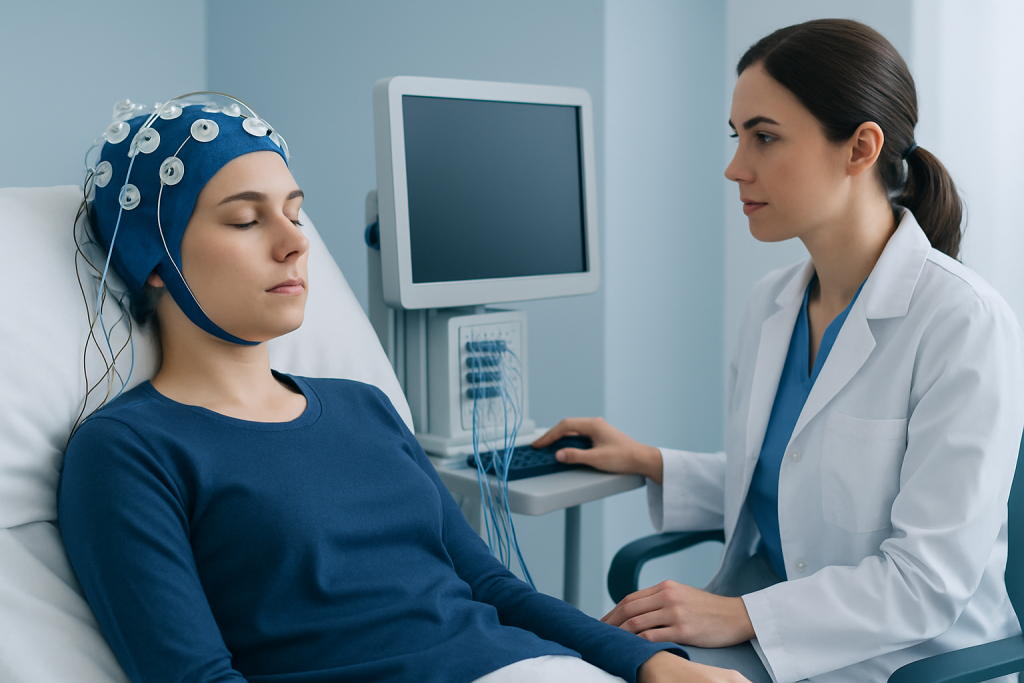
An electroencephalogram, or EEG, is usually the key test. It records brain electrical activity and may show a pattern that supports absence seizures. In some cases, the neurologist may ask the person to breathe deeply during the test because hyperventilation can bring out the pattern in a controlled setting. Other studies may be used if the diagnosis is unclear, if episodes might be related to attention problems or fainting, or if the clinician needs to rule out different seizure types.
For international patients, it is often useful to bring any prior records, medication lists, and written descriptions of episodes. If possible, timestamps of events, school reports, or phone videos can help the specialist distinguish absence seizures from daydreaming, tics, or focal seizures. A clear diagnosis matters because the treatment plan depends on the specific epilepsy type, not just the symptom of staring.
Treatment Options
Treatment is guided by the seizure type, age, overall health, and whether other seizure forms are present. Anti-seizure medicines are commonly used, and the neurologist will choose medication based on the person’s epilepsy pattern and tolerance. The goal is to reduce or stop seizures while keeping treatment practical for daily life and long-term follow-up.
When absence seizures are part of childhood epilepsy, treatment may continue for a period and then be reassessed over time. In adults, the plan may need to account for driving, work responsibilities, sleep schedules, and other medicines. If the person is traveling for care, the team may also discuss how to maintain treatment safely after discharge, how to obtain refills in the home country, and how to recognize side effects that should be reported promptly.
Medication is only one part of care. A good neurologic plan often includes regular follow-up, review of seizure frequency, and adjustments if the pattern changes. If a person has more than one seizure type, the neurologist may need to refine the diagnosis and treatment strategy, because absence seizures can behave differently from other generalized seizures.
Prevention & Self-care
Not every absence seizure can be prevented, but daily habits can reduce the chance of breakthrough episodes and make treatment work more smoothly. Consistent sleep is particularly important, since sleep deprivation can lower the seizure threshold. A regular routine for meals, rest, and medicine-taking can also help children and adults stay more stable.
Practical steps may include:
- Keeping a seizure diary with dates, times, and possible triggers
- Prioritizing enough sleep on school nights, workdays, and travel days
- Taking prescribed medicine exactly as directed by the treating clinician
- Limiting known triggers when possible, such as missed meals or excessive fatigue
- Sharing a simple seizure action plan with family, teachers, or colleagues
For families managing care across borders, self-care also means planning ahead for continuity. That can include carrying medication in original packaging, keeping a copy of the diagnosis and EEG results, and arranging a follow-up visit before the child returns to school or the adult resumes work. Clear communication reduces uncertainty and helps the person stay confident while adjusting to treatment in everyday life.
When to See a Doctor
Medical assessment is important whenever repeated staring spells, brief lapses in awareness, or unexplained pauses in speech are noticed. Even if the episodes seem harmless, they deserve evaluation because they may affect learning, safety, and quality of life. A doctor should also be consulted if a person has a known seizure diagnosis but the episodes change in frequency, last longer than usual, or are followed by new symptoms.
Urgent medical attention is needed if the person has a seizure with injury, trouble breathing, prolonged confusion, or a first-time event that is not quickly understood. Families should seek prompt care if episodes happen during swimming, driving, climbing, or other situations where a brief loss of awareness could cause harm. If the person is already being treated, a clinician should review any concerns about medication side effects, missed doses, or worsening seizure control.
People traveling for diagnosis or treatment may benefit from seeing a neurologist before and after the trip so that the plan remains consistent. Acibadem Health Point’s multidisciplinary specialists and JCI-accredited hospitals diagnose and treat this condition for international patients in a coordinated, supportive way. That continuity can be especially useful when care needs to continue smoothly across countries and care systems.
Living With Absence Seizures
Once the diagnosis is understood, daily life often becomes easier to manage. Children may need school staff to recognize what an absence seizure looks like so that episodes are not mistaken for inattentiveness or misbehavior. Adults may need to explain to employers or family members that the events are brief medical episodes, not forgetfulness or lack of concentration.
Emotional reassurance matters too. Repeated seizure events can make people worry about being judged or missing important moments, especially when the episodes are subtle and easy to dismiss. A calm, organized plan—one that includes medication review, school or workplace communication, and follow-up with a neurologist—helps many patients regain confidence and participate fully in routine activities.
For many people, the most important message is that absence seizures are real, recognizable, and often manageable. With accurate diagnosis, steady follow-up, and practical support at home and during travel, patients and families can focus less on uncertainty and more on everyday life.
Frequently asked questions
What does an absence seizure look like?
It often appears as a brief blank stare or a sudden pause in speech or activity. The person may not respond for a few seconds and then continue as if nothing happened. Because it is so short, it is easy to mistake for daydreaming.
Are absence seizures the same as daydreaming?
No. Daydreaming usually can be interrupted by calling the person’s name or touching them, while an absence seizure cannot. An EEG and a specialist’s evaluation help tell the difference.
Can adults have absence seizures?
Yes. Although they are more common in children, adults can have them too, especially if epilepsy began earlier in life or is only recognized later. Adult evaluation is important because treatment may need to be tailored to work, driving, and other responsibilities.
What triggers absence seizures?
Triggers do not cause the epilepsy itself, but lack of sleep, stress, missed medication, and sometimes flashing lights may make seizures more likely. A seizure diary can help identify patterns that matter for that person. A neurologist can suggest practical ways to reduce risk.
How are absence seizures diagnosed?
Doctors usually use a detailed history plus an EEG, which measures the brain’s electrical activity. Family members, teachers, or coworkers may provide helpful descriptions or videos. Sometimes additional testing is needed to rule out other causes of staring spells.
Can a person outgrow absence seizures?
Some children improve over time, but the course varies from person to person. The neurologist will reassess seizure control over time and decide whether treatment should continue or change. Regular follow-up is the safest way to guide that decision.
References
- Epilepsy Foundation
- National Institute of Neurological Disorders and Stroke
- International League Against Epilepsy
- Mayo Clinic
- World Health Organization
This article is for general information only and is not a substitute for professional medical advice. Please consult a qualified doctor about your individual situation.