Where Are Your Kidneys Located?

Key Takeaways
- The kidneys sit on both sides of the spine, in the upper back part of the abdomen, just below the rib cage.
- The right kidney is usually a little lower than the left because of the liver.
- Kidneys filter waste, help regulate blood pressure, balance fluids, and support red blood cell production.
- Kidney-related pain is often felt deeper and higher in the back or side, but many kidney problems cause no pain at first.
- Blood in the urine, swelling, fever, or persistent side pain should be assessed by a doctor.
- Imaging tests and urine or blood tests are commonly used to evaluate kidney problems.
The kidneys are two bean-shaped organs that sit high in the back of the abdomen, protected by the lower ribs and working quietly to filter blood and balance fluids. Understanding their location can help people tell the difference between back discomfort and possible kidney-related symptoms.
Overview
The question “where are your kidneys located?” often comes up when someone notices a dull ache in the back, a change in urine, or an unexpected finding on a scan. The answer is more specific than many people expect: the kidneys are paired organs positioned deep in the upper back part of the abdomen, one on each side of the spine.
They are tucked partly under the lower ribs, which helps protect them. The left kidney usually sits slightly higher than the right because the liver occupies space on the right side of the upper abdomen. In everyday life, this means the kidneys are not felt directly from the outside unless there is tenderness, enlargement, or another issue that brings them to attention.
For international patients planning care across borders, knowing this anatomy can be reassuring. It helps them describe symptoms more clearly during a consultation, especially when a doctor needs to distinguish kidney-related discomfort from muscle strain, digestive pain, or spinal problems.
What the kidneys do
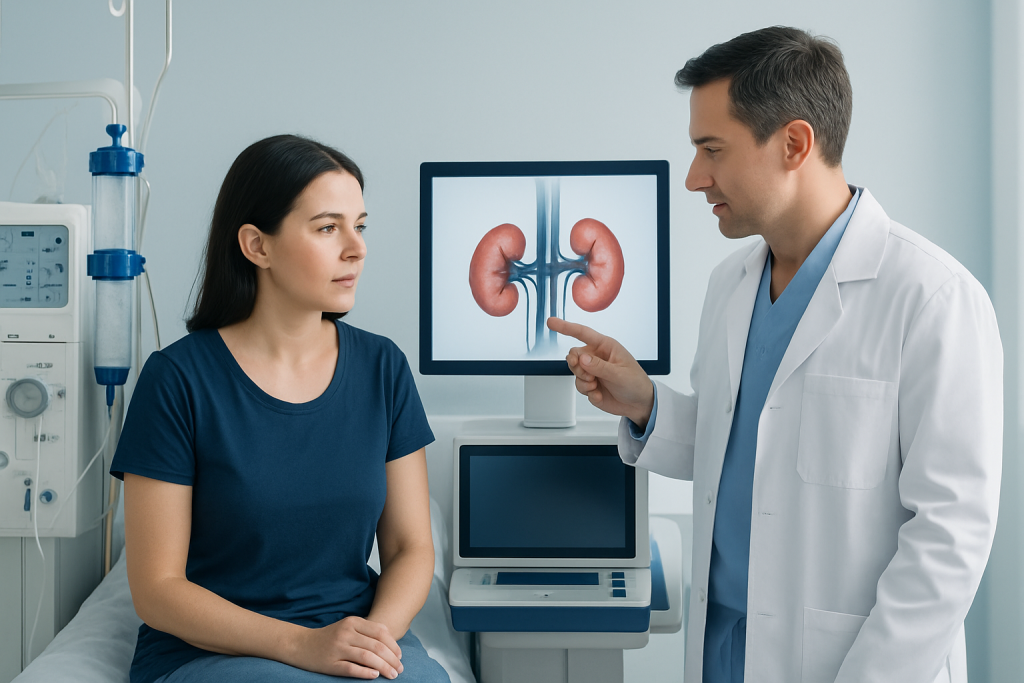
Location matters because it relates to function. The kidneys sit near the blood supply that reaches them continuously, allowing them to filter waste products, extra fluid, and certain minerals from the blood. Those filtered materials become urine, which then travels to the bladder through narrow tubes called ureters.
The kidneys also help the body keep a stable internal balance. They contribute to blood pressure regulation, support healthy levels of electrolytes such as sodium and potassium, and assist in making hormones involved in red blood cell production and bone health.
Because these roles are so broad, kidney conditions can show up in different ways. Some people feel flank discomfort, while others notice swelling, fatigue, foamy urine, or no symptoms at all until testing is done for another reason.
Anatomy and exact position

The kidneys are located in the retroperitoneal space, which means they lie behind the lining of the abdominal cavity rather than freely within it. They sit against the back muscles and are shielded partly by the lower ribs. On a body map, they are typically found around the area from the lowest rib down to just above the waistline, though exact position can vary slightly from person to person.
The right kidney usually rests a little lower than the left. This is a normal arrangement and does not indicate a problem. The kidneys are about the size of a large fist in adults, but their depth in the body means they are not usually visible or easy to palpate during a routine self-check.
Understanding this placement can help with symptom interpretation. Pain felt low in the back near the beltline is often muscular, while discomfort that is higher, deeper, and more toward the sides may raise the possibility of kidney involvement—especially if it comes with urinary symptoms or fever.
Symptoms that may point to a kidney problem
Kidney disorders do not always cause pain. In fact, many are discovered through blood or urine testing before a person feels unwell. When symptoms do appear, they may include pain in the flank, fever, nausea, changes in urination, swelling in the legs or around the eyes, or blood in the urine.
Some kidney pain is sharp and waves in intensity, such as with a kidney stone moving through the urinary tract. Other discomfort may be steady, dull, or one-sided. Pain from the kidneys is often felt deeper than a typical muscle ache, and it may not change much when the person moves or stretches.
- Blood in the urine
- Pain or burning when urinating
- Frequent urge to urinate or very little urine output
- Swelling in the hands, feet, or face
- Fever with side or back pain
- New high blood pressure or worsening blood pressure control
These symptoms are not specific to one diagnosis, which is why a doctor’s assessment is important. A careful history, physical examination, and simple tests often clarify whether the kidneys are involved.
Causes and risk factors of kidney pain or kidney disease
Problems affecting the kidneys can arise for many reasons. Some are temporary, such as dehydration or an infection, while others are chronic and develop slowly over time. Common causes include kidney stones, urinary tract infections that spread to the kidneys, chronic kidney disease, inherited conditions, and reduced blood flow to the kidneys from other medical issues.
Certain factors can increase the likelihood of kidney disease. Diabetes and high blood pressure are among the most important, along with a family history of kidney disease, recurrent urinary infections, smoking, obesity, and long-term use of some medicines that can affect kidney function. Age also plays a role, since kidney function may gradually decline over time.
Travel and cross-border care can add another layer to the story. People who have had kidney disease diagnosed elsewhere may arrive with old reports in another language or with incomplete records. Bringing prior test results, medication lists, and imaging reports helps the receiving team build a clearer picture more quickly.
How doctors diagnose kidney problems
Diagnosis usually begins with a conversation about symptoms, medical history, and any recent changes in urination, pain, fever, or swelling. A doctor may ask where the discomfort is felt, whether it moves, and whether anything makes it better or worse. This helps distinguish kidney-related pain from spinal or abdominal causes.
Urine testing is often one of the first steps. It can reveal blood, protein, signs of infection, or crystals. Blood tests may show how well the kidneys are filtering waste and whether there are signs of inflammation or dehydration. These tests are especially helpful because some kidney conditions are silent until laboratory changes appear.
Imaging may also be used. Ultrasound is commonly chosen to look for swelling, stones, cysts, or structural changes. In some cases, a CT scan or other imaging test is needed to get more detail. When care is being planned internationally, the ability to compare old and new scans can make decision-making smoother and avoid unnecessary repetition.
Treatment options
Treatment depends entirely on the cause. A kidney infection may require antibiotics and close follow-up, while kidney stones may be managed with fluids, pain relief, and observation or with a procedure if they are large or blocking urine flow. Chronic kidney disease is usually managed with attention to blood pressure, blood sugar, diet, medications, and regular monitoring.
Some people need specialist care from a nephrologist, a urologist, or both. If kidney function is significantly reduced, treatment may include plans to preserve remaining function, manage complications, and in advanced cases discuss dialysis or transplantation. The appropriate path depends on test results, symptoms, and the broader health picture.
When patients travel for treatment, coordination matters. A clear plan for pre-treatment testing, in-hospital care, discharge instructions, and follow-up is especially important when they will continue recovery in another country. In some settings, multidisciplinary teams and JCI-accredited hospitals, such as those at Acibadem Health Point, help international patients undergo diagnosis and treatment in a coordinated way.
Prevention and self-care
Not every kidney condition can be prevented, but several everyday habits support kidney health. Staying hydrated in a sensible way, controlling blood pressure and blood sugar, avoiding smoking, and using medicines only as directed all help reduce strain on the kidneys. People with known kidney disease may need more specific guidance about fluid intake or diet from their care team.
Self-care also includes paying attention to warning signs instead of waiting them out. A brief episode of flank discomfort after exercise may settle on its own, but persistent pain, fever, or urinary changes should not be ignored. Keeping a record of symptoms, medications, and test results can be especially useful if care is being shared between doctors in different countries.
For people who are planning medical travel, a little preparation goes a long way. Carrying a list of current medicines, allergies, past kidney stones or infections, and recent lab work helps clinicians avoid delays and build a treatment plan that reflects the whole history, not just the current complaint.
When to see a doctor
Medical assessment is advisable if kidney pain is suspected, because kidney conditions are often easier to manage when found early. A doctor should also be consulted for blood in the urine, burning urination, fever with side pain, swelling, unexplained fatigue, reduced urine output, or a known history of kidney disease with new symptoms.
Some situations need prompt care, such as severe pain, inability to keep fluids down, high fever, confusion, or very little urine. These symptoms do not automatically mean a serious diagnosis, but they do deserve timely attention so the cause can be identified and treated appropriately.
Understanding where the kidneys are located is a simple starting point. From there, the focus shifts to symptoms, testing, and a practical plan that fits the person’s overall health, whether care is local or part of an international journey.
Frequently asked questions
01Where exactly are the kidneys located in the body?
The kidneys sit high in the back part of the abdomen, on both sides of the spine, just below the rib cage. They are behind the abdominal lining rather than in the front of the abdomen. The right kidney is usually a little lower than the left.
02Can kidney pain be felt in the lower back?
Kidney discomfort is often felt in the flank, which is the side of the body between the ribs and the hip. Pain in the low back can sometimes be related to the kidneys, but it is more often caused by muscles, joints, or the spine. The pattern of pain and any urinary symptoms help doctors tell the difference.
03What does kidney pain usually feel like?
It may feel like a dull ache, pressure, or a sharper pain in the side or back. Kidney stones can cause waves of severe pain, while infections may cause tenderness with fever or burning urination. Many kidney problems cause little or no pain at first.
04How do doctors check whether pain is from the kidneys?
They usually start with a history and physical examination, then order urine and blood tests. Imaging such as ultrasound or CT may be used if needed. These tests help show whether there is infection, a stone, swelling, or another cause.
05Can someone have kidney disease without symptoms?
Yes. Early kidney disease often causes no obvious symptoms, which is why routine blood pressure checks and lab tests matter. Some people only learn about a kidney problem during testing for another health issue.
06When should a person get urgent medical help for possible kidney problems?
Urgent care is important for severe pain, high fever, confusion, very little urine, or pain with vomiting and inability to drink fluids. Blood in the urine or sudden swelling should also be assessed promptly. A doctor can determine how quickly treatment is needed.
This article is for general information only and is not a substitute for professional medical advice. Please consult a qualified doctor about your individual situation.
Joint and spine care in Turkey — expert assessment & treatment
JCI-accredited · board-certified surgeons · reply within 24h
Add us as a Preferred Source to see more of our trusted health content across Google Search, AI Overviews and Discover.