What Is Carpal Tunnel?

Key Takeaways
- Carpal tunnel syndrome happens when the median nerve is compressed at the wrist.
- Symptoms often include tingling, numbness, pain, and hand weakness, especially at night.
- Repetitive hand use can contribute, but pregnancy, diabetes, thyroid disorders, and other factors may also play a role.
- Diagnosis is usually based on symptoms, examination, and sometimes nerve testing.
- Treatment may include splinting, activity changes, medications, injections, or surgery in selected cases.
Carpal tunnel syndrome is a common condition caused by pressure on the median nerve as it passes through the wrist. It can lead to numbness, tingling, weakness, and pain in the hand, but many people improve with timely evaluation and treatment.
Overview
Carpal tunnel syndrome is one of the most familiar nerve problems in the hand, yet it is often misunderstood. It develops when the median nerve, which travels from the forearm into the hand, becomes compressed in a narrow passage at the wrist called the carpal tunnel.
That space is small by design, and even a little swelling can increase pressure inside it. When the nerve is crowded, the hand may begin to feel numb, prickly, weak, or painful. These symptoms often start gradually, which is why many people think they are simply “sleeping on the hand wrong” before realizing a nerve is involved.
For people who travel for medical care, the condition is usually straightforward to assess and treat, but the best plan depends on how long symptoms have been present, which fingers are affected, and whether hand strength has already changed. Early evaluation can help protect function and reduce the chance of long-term nerve irritation.
Symptoms
The earliest sign is often tingling or numbness in the thumb, index finger, middle finger, and part of the ring finger. Because the little finger is usually not involved, the pattern can help distinguish carpal tunnel syndrome from other hand or nerve problems.
Many people notice symptoms at night or when they wake up. Hands may feel stiff, swollen, or “asleep,” and shaking them out may bring temporary relief. Over time, the discomfort can appear during activities such as driving, holding a phone, typing, sewing, or gripping tools.
As compression continues, the hand may feel clumsy or weaker. Small objects can be harder to hold, buttons may be more difficult to fasten, and thumb strength may decline. In more advanced cases, the muscles near the base of the thumb can shrink, which is a sign that medical assessment should not be delayed.
- Tingling or numbness in the thumb and first three fingers
- Night-time hand symptoms or waking with numbness
- Pain that may travel into the forearm
- Weak grip or dropping objects
- Difficulty with fine hand movements
Causes & Risk Factors

Carpal tunnel syndrome is caused by pressure on the median nerve inside the wrist. Sometimes the reason is clear, such as repetitive wrist positions, prolonged tool use, or work that keeps the wrist bent for long periods. In many cases, however, there is no single obvious trigger.
Several factors can increase the likelihood of nerve compression. Pregnancy can lead to fluid retention that temporarily narrows the tunnel. Diabetes, thyroid disease, Arthritis: Joint Swelling, Blood Tests, and Early Treatment" class="ahp-ilk">rheumatoid arthritis, and other inflammatory conditions may also raise risk. Wrist injuries, fractures, cysts, and anatomical differences can contribute as well.
It is worth noting that common activities such as computer use are not the only cause. Symptoms often reflect a combination of nerve sensitivity, wrist mechanics, inflammation, and overall health. That is why treatment is usually tailored to the individual rather than based on one universal explanation.
- Repetitive hand or wrist motions
- Forceful gripping or vibrating tools
- Pregnancy and fluid retention
- Diabetes or thyroid disorders
- Rheumatoid arthritis or other inflammatory disease
- Prior wrist fracture, sprain, or swelling
Diagnosis
A clinician usually begins with a careful history and physical examination. The pattern of symptoms, the fingers involved, and whether symptoms worsen at night provide important clues. The doctor may gently test sensation, thumb strength, and hand position to see whether certain movements reproduce discomfort.
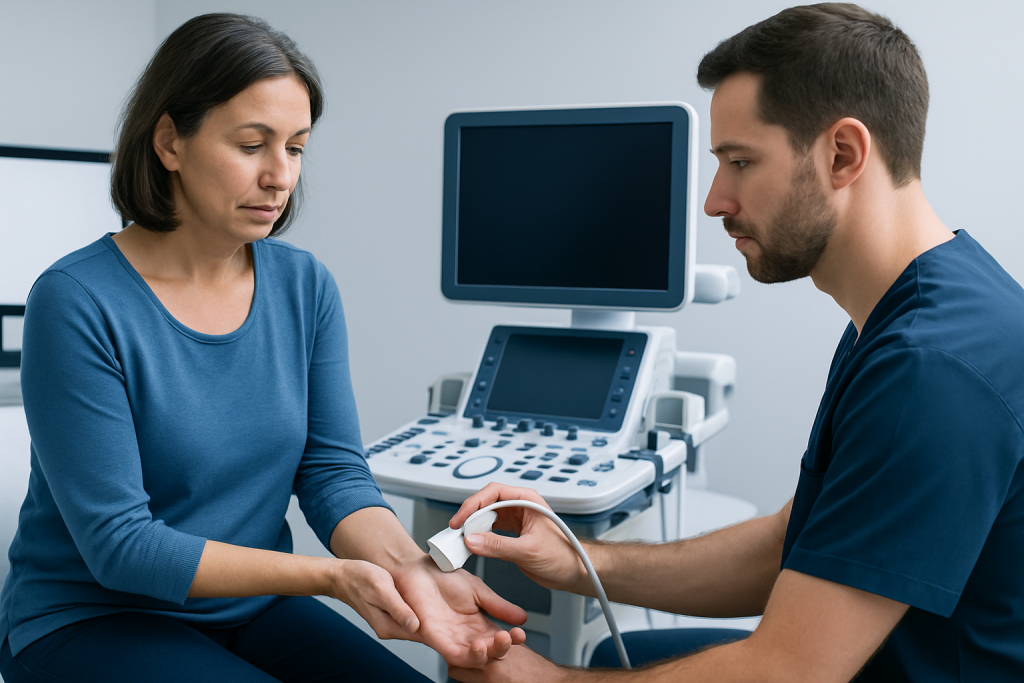
When the diagnosis is uncertain or symptoms are more than mild, nerve studies may be recommended. Nerve conduction testing and electromyography can help show whether the median nerve is slowed or irritated. In some cases, imaging tests are used to look for structural causes such as swelling, a cyst, or another wrist problem.
For international patients planning care abroad, this stage is often efficient because diagnosis and treatment planning can be coordinated together. A clear diagnosis matters, since similar symptoms can come from the neck, elbow, or other nerves, and those conditions require different treatment.
Treatment Options
Treatment depends on symptom severity and how much the nerve has been affected. For many people, conservative care is the first step. Wrist splints worn at night can keep the wrist in a neutral position and reduce pressure on the nerve while sleeping. Activity changes may also help, especially if a specific task repeatedly provokes symptoms.
Medication may be used to ease pain or inflammation, depending on the person’s overall health and the clinician’s advice. In some cases, a corticosteroid injection into the carpal tunnel can reduce swelling and relieve symptoms, sometimes for weeks or months. This option may be helpful when symptoms are persistent but surgery is not immediately necessary.
If symptoms continue, weakness progresses, or nerve testing suggests significant compression, surgery may be recommended. Carpal tunnel release creates more space for the median nerve by dividing the ligament that forms the roof of the tunnel. It is commonly done as an outpatient procedure, and recovery plans vary based on the surgical approach and the patient’s job, hand use, and travel needs.
- Night splinting to keep the wrist neutral
- Adjusting repetitive tasks and hand posture
- Anti-inflammatory or pain-relief strategies when appropriate
- Corticosteroid injection in selected cases
- Surgical release for ongoing or severe compression
Prevention & Self-care
Not every case can be prevented, but thoughtful habits may reduce strain on the wrist. Neutral wrist positioning during work, regular breaks, and avoiding prolonged pressure on the palm can all help. Ergonomic changes at a workstation may be useful, especially if symptoms tend to appear during computer or tool use.
Hand and forearm comfort also matters during recovery. Some people benefit from using larger grips on tools, keeping frequently used items within easy reach, and alternating tasks that require sustained gripping. If pregnancy or a medical condition is contributing, addressing the underlying issue with a clinician can sometimes improve symptoms.
Because nerve irritation can become harder to reverse if ignored, self-care should not replace assessment when symptoms persist. A practical approach is to note which activities worsen discomfort, whether symptoms wake the person at night, and whether the thumb feels weaker over time.
- Keep wrists straight rather than bent for long periods
- Take regular breaks from repetitive hand tasks
- Use splints if recommended by a clinician
- Optimize desk, keyboard, or tool setup
- Manage diabetes, thyroid disease, or inflammatory conditions
When to See a Doctor
Medical evaluation is wise when numbness or tingling lasts more than a short time, comes back frequently, or interferes with sleep, work, or daily tasks. Ongoing symptoms suggest the nerve may be under repeated pressure and may need more than simple rest.
A person should seek prompt assessment if hand weakness develops, objects are being dropped more often, or the thumb muscles appear to be shrinking. These changes can indicate that the nerve is being affected more seriously and that treatment may need to be escalated.
For someone traveling for care, it can be helpful to arrange follow-up before returning home, especially if surgery, splint use, or therapy is planned. Acibadem Health Point notes that its multidisciplinary specialists and JCI-accredited hospitals diagnose and treat carpal tunnel syndrome for international patients, which can make coordinated evaluation and recovery more manageable.
Living With Carpal Tunnel: Recovery and Follow-up
Recovery is usually guided by symptom severity and the chosen treatment. With conservative treatment, improvement may take days to weeks, and the wrist may need a period of reduced strain before the nerve settles. After surgery, hand use is often limited at first, then gradually increased as the clinician advises.
Follow-up is important because the goal is not only to reduce pain but also to preserve hand function. A doctor may check sensation, strength, scar healing, and return-to-work readiness. If symptoms do not improve as expected, the plan may need to be adjusted or another diagnosis considered.
Clear communication helps, especially for patients who are balancing recovery with long-distance travel. Sharing job demands, hobbies, and any remaining numbness or weakness makes it easier for the care team to recommend a realistic next step.
Frequently asked questions
01What part of the hand is usually affected by carpal tunnel syndrome?
Carpal tunnel syndrome usually affects the thumb, index finger, middle finger, and part of the ring finger. The little finger is typically spared, which can help distinguish it from other nerve problems.
02Can carpal tunnel go away on its own?
Mild symptoms sometimes improve with rest, splinting, or changes in activity, especially if the cause is temporary, such as pregnancy-related swelling. However, persistent symptoms should be evaluated because ongoing compression can damage the nerve over time.
03Is carpal tunnel caused only by typing?
No. Typing can contribute for some people, but it is not the only cause. Carpal tunnel syndrome may also be linked to pregnancy, diabetes, thyroid disease, arthritis, wrist injuries, and repetitive forceful hand use.
04How do doctors confirm carpal tunnel syndrome?
Doctors usually start with symptoms and a hand examination. If needed, nerve conduction studies or electromyography can confirm how well the median nerve is working and help rule out other causes.
05When is surgery considered?
Surgery is usually considered when symptoms are severe, weakness is developing, or conservative treatment has not helped enough. It may also be recommended when tests show significant nerve compression.
06Can someone travel for treatment and still recover safely?
Yes, many patients travel for evaluation and treatment, but timing matters. The care team should give clear guidance on splints, wound care, activity limits, and follow-up so recovery continues smoothly after returning home.
This article is for general information only and is not a substitute for professional medical advice. Please consult a qualified doctor about your individual situation.
Explore treatments in Turkey — costs, top hospitals & a free quote
JCI-accredited · board-certified surgeons · reply within 24h
Add us as a Preferred Source to see more of our trusted health content across Google Search, AI Overviews and Discover.