MCL Sprain: Symptoms, Causes and Treatment

Key Takeaways
- The MCL helps stabilize the inner knee and is commonly injured by a twist or a blow to the outer knee.
- Pain on the inner side of the knee, swelling, tenderness, and a feeling of looseness can suggest an MCL sprain.
- Diagnosis usually includes a physical exam and, when needed, imaging to rule out other injuries.
- Many MCL sprains heal without surgery, especially when treatment starts early and rehabilitation is followed closely.
- A gradual return to sport or daily activity is important to reduce the chance of reinjury.
An MCL sprain is an injury to the medial collateral ligament, one of the main stabilizers on the inner side of the knee. Most cases improve with appropriate rest, rehabilitation, and guided return to activity, but the exact plan depends on the grade of the injury and whether other structures are involved.
Overview
An MCL sprain involves the medial collateral ligament, a strong band of tissue along the inner side of the knee. Its job is to help keep the knee from bending inward too far, especially during walking, turning, and side-to-side movement. When the ligament is stretched or torn, the knee may feel painful, unstable, or difficult to trust during movement.
This injury is common in sports, but it can also happen during a fall, a sudden pivot, or an everyday accident such as twisting the knee while the foot is planted. The severity ranges from a mild stretch to a complete tear, and that difference matters because it shapes recovery time and treatment choices.
For patients who live far from the place where care will be provided, the diagnosis phase can be especially important. A clear plan early on helps with travel timing, brace use, and follow-up arrangements once the patient returns home.
Symptoms
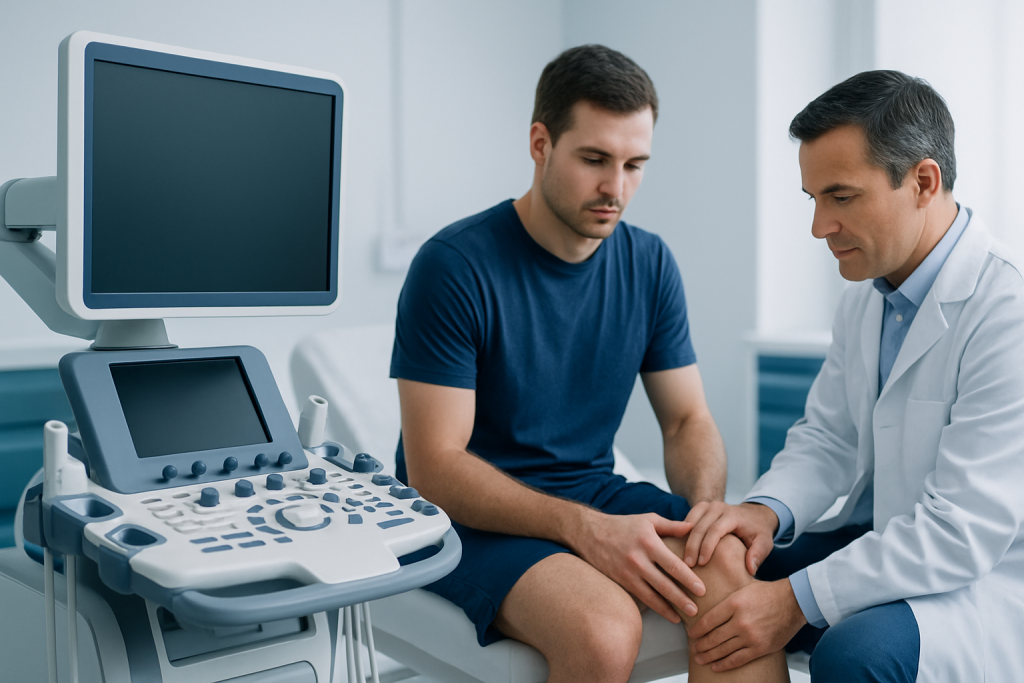
The most typical sign is pain along the inner side of the knee, especially after the leg is turned or pushed sideways. Some people notice swelling soon after the injury, while others feel discomfort mainly during walking, bending, or changing direction.
Depending on the extent of the sprain, the knee may feel stiff, weak, or as if it might give way. Tenderness when pressing on the inner knee is common, and some patients hear or feel a pop at the time of injury, although this does not always mean the ligament is badly torn.
- Inner-knee pain or tenderness
- Swelling around the knee
- Stiffness or reduced range of motion
- A sense of instability or looseness
- Pain with twisting, cutting, or side steps
Symptoms can overlap with other knee injuries, including meniscus or anterior cruciate ligament problems, so a careful assessment is often needed rather than assuming it is only a sprain.
Causes & Risk Factors

An MCL sprain usually occurs when a force pushes the knee inward while the foot remains planted. In sports, this may happen during contact, a sudden change of direction, or an awkward landing. Outside sports, slips, falls, and accidents can create the same stress on the ligament.
Some people are more exposed because their activities involve frequent pivoting, jumping, or physical contact. A previous knee injury can also increase vulnerability, especially if strength, balance, or technique have not fully recovered.
Common factors that raise risk include:
- Contact sports such as football, rugby, or hockey
- Skiing or sports with sudden rotational movements
- Weakness in the thigh and hip muscles
- Poor landing or cutting mechanics
- Prior knee injury or ligament laxity
For international patients, it is worth sharing the exact mechanism of injury with the treating team, including video or photos if available. Those details often help the specialist judge whether the MCL alone is involved or whether further evaluation is needed.
Diagnosis
Diagnosis usually begins with a medical history and a physical examination. The clinician will ask how the injury happened, where the pain is located, and whether the knee feels unstable. They may gently stress the knee in specific positions to assess how much the ligament has been stretched.
Imaging may be used when the exam suggests a more complex injury or when symptoms are severe. X-rays can help rule out a fracture or bone-related problem, while magnetic resonance imaging, or MRI, can show soft tissue injuries such as ligament damage, cartilage injury, or meniscus tears.
Because MCL sprains can occur with other knee injuries, diagnosis is not only about naming the ligament that hurts. It is also about understanding the full pattern of damage so that treatment is appropriate and the Knee Replacement Recovery Timeline: What to Expect" class="ahp-ilk">recovery timeline is realistic, especially for patients planning travel, work leave, or sports return.
Treatment Options
Most MCL sprains are treated without surgery. Early care often focuses on protecting the knee, limiting painful activity, reducing swelling, and restoring motion in a controlled way. A brace may be recommended for some injuries to support the knee while healing takes place.
Rehabilitation is usually a central part of recovery. A physiotherapist or orthopedic team may guide exercises to rebuild range of motion, strengthen the muscles around the knee, and improve balance and movement control. This step matters because a ligament may heal before the knee feels fully ready for sport or demanding daily activities.
Treatment may include:
- Relative rest and activity modification
- Ice, compression, and elevation in the early phase
- A knee brace if stability support is needed
- Physical therapy and progressive strengthening
- Pain relief measures recommended by a clinician
Surgery is less common and is generally reserved for selected cases, such as severe multi-ligament injuries or situations where the knee remains unstable despite appropriate conservative care. When surgery is considered, the decision depends on the injury pattern, the patient’s activity needs, and the presence of associated damage.
Prevention & Self-care
Not every MCL sprain can be prevented, but the risk can often be lowered by preparing the knee for sudden loads and awkward movements. Strong hips, thighs, and core muscles help control the leg during cutting, landing, and turning. Good technique in sports is also valuable, particularly in activities with frequent contact or rapid direction changes.
After an injury, self-care is less about pushing through and more about letting the knee heal in a structured way. Returning too quickly can delay recovery or lead to another sprain. It is usually safer to progress in stages, guided by symptoms and professional advice rather than by a fixed calendar alone.
- Warm up before exercise or sport
- Maintain strength in the quadriceps, hamstrings, hips, and calves
- Use proper footwear and safe training surfaces
- Follow rehabilitation plans consistently
- Resume running, cutting, or contact only when cleared
Patients recovering away from home may want to arrange follow-up before leaving the treatment country, including a written rehabilitation plan and clear instructions on when to seek review. That can make the transition back to work, school, or sport much smoother.
When to See a Doctor
Medical evaluation is advisable if knee pain is significant after an injury, if walking is difficult, or if the knee feels unstable. It is also important to seek assessment when swelling is marked, movement is limited, or the pain does not begin to improve over several days.
Prompt attention is especially useful if the injury happened during contact sports, a fall, or a twisting event and there is concern for additional damage. A doctor can determine whether the problem is a mild sprain that may settle with home care or a more complex injury that needs imaging and a structured treatment plan.
Acibadem Health Point’s multidisciplinary specialists and JCI-accredited hospitals diagnose and treat MCL sprains for international patients, with care plans that can be coordinated around travel and recovery needs.
Recovery and Follow-Up
Recovery from an MCL sprain depends on how much the ligament was injured and whether other knee structures were affected. Mild sprains often improve with conservative care, while more serious tears may require a longer rehabilitation period. In either case, the goal is not only pain relief but also restored confidence in the knee.
Follow-up visits help confirm that swelling is settling, strength is returning, and range of motion is improving. If a patient is traveling internationally, the care team may recommend a written summary of the diagnosis, imaging findings, rehabilitation milestones, and warning signs that should trigger reassessment at home.
Progress is usually measured by function: walking comfortably, climbing stairs, regaining balance, and eventually returning to sport-specific movements without pain or instability. That practical approach is often more useful than watching the calendar alone.
What to Expect Long Term
Many people with MCL sprains recover well and return to their usual routines. The knee may need time to rebuild trust, especially if the injury occurred during sport or if there was associated swelling and stiffness. A patient who follows rehabilitation closely often has a better chance of returning with good control and less lingering discomfort.
Some patients may notice intermittent soreness with heavy activity, particularly early in the return-to-play phase. This does not automatically mean the ligament has failed to heal, but it is a signal to slow down and revisit the plan with a clinician or physiotherapist. Careful pacing helps protect the knee while it continues to strengthen.
When the diagnosis is clear and the rehabilitation plan is well matched to the injury grade, the outlook is generally reassuring. The key is structured recovery, not rushing the knee before it is ready.
Frequently asked questions
01What exactly is an MCL sprain?
An MCL sprain is an injury to the medial collateral ligament, which runs along the inner side of the knee. The ligament may be stretched or partially torn, and in more severe cases it can be completely torn. The injury is graded according to how much damage has occurred.
02How can someone tell if it is an MCL sprain or something else?
Pain on the inner side of the knee is a common clue, but it is not specific to the MCL. Meniscus tears, other ligament injuries, and even bone injuries can feel similar. A clinician’s examination, and sometimes imaging, is the best way to sort out the cause.
03Does an MCL sprain always need surgery?
No. Many MCL sprains heal well without surgery, especially mild and moderate injuries. Surgery is considered only in selected situations, such as severe instability or additional ligament damage.
04How long does recovery take?
Recovery time varies with the grade of the sprain and whether other structures are injured. Mild injuries usually heal faster than partial or complete tears, and rehabilitation can influence how soon a person safely returns to activity. A doctor or physiotherapist can give a more individualized estimate after evaluation.
05Is it okay to walk on an injured knee?
That depends on the severity of the injury and how stable the knee feels. Some people can walk with mild discomfort, while others need support or temporary activity restriction. If walking is painful or the knee feels like it may give way, medical assessment is advisable.
06What helps the knee heal best at home?
Early protection, swelling control, and following the rehabilitation plan are usually the most helpful steps. It is important not to return to sport or heavy activity too quickly, even if the pain begins to settle. A gradual, guided return reduces the chance of reinjury.
This article is for general information only and is not a substitute for professional medical advice. Please consult a qualified doctor about your individual situation.
Joint and spine care in Turkey — expert assessment & treatment
JCI-accredited · board-certified surgeons · reply within 24h
Add us as a Preferred Source to see more of our trusted health content across Google Search, AI Overviews and Discover.