Thyroid Cancer in Women: Symptoms, Diagnosis and Outlook
Thyroid cancer in women symptoms can include a new lump in the front of the neck, voice changes, swallowing discomfort or enlarged neck lymph nodes, although many thyroid cancers cause no noticeable symptoms. Most thyroid cancers are highly treatable, especially when identified early, and care is tailored to the cancer type, stage and individual health needs.
Overview: thyroid cancer in women symptoms
Thyroid cancer begins when abnormal cells grow in the thyroid, a butterfly-shaped gland at the lower front of the neck. The thyroid makes hormones that help regulate energy use, temperature, heart rate and many other body functions. Thyroid cancer in women symptoms are often mild or absent at first; when symptoms occur, a new neck lump, a sense of pressure in the neck, persistent hoarseness or difficulty swallowing may be noticed.
Women are diagnosed with thyroid cancer more frequently than men. The reason is not fully understood, and having thyroid cancer is not a result of something a person did or did not do. The most common forms, papillary and follicular thyroid cancer, are called differentiated thyroid cancers and often respond well to treatment.
Importantly, thyroid nodules are common and the great majority are benign. A clinician can assess whether a nodule needs imaging, biopsy or follow-up. Thyroid cancer is best evaluated by a team familiar with thyroid imaging, pathology, surgery and endocrine care.
Symptoms women may notice
A thyroid cancer may be found during an examination or neck ultrasound performed for another reason. When it causes symptoms, the most common sign is a firm, usually painless lump in the thyroid area. A lump can also represent a benign nodule, enlarged lymph node, cyst or another noncancerous condition, so it should be assessed rather than assumed to be cancer.
Other possible symptoms include a visibly enlarged neck, a feeling of fullness or pressure, trouble swallowing, shortness of breath when lying down, a persistent cough not caused by a respiratory infection, or a voice that becomes hoarse or changes over time. Enlarged lymph nodes may feel like lumps along the side of the neck.
Most thyroid cancers do not cause the typical symptoms of an underactive or overactive thyroid. Tiredness, weight change, palpitations and temperature sensitivity are common symptoms with many possible causes and do not by themselves indicate thyroid cancer. Rapid enlargement of a neck mass, new breathing difficulty or significant swallowing difficulty needs prompt medical assessment.
Causes and risk factors

In most people, there is no single identifiable cause of thyroid cancer. Changes in genes within thyroid cells can allow the cells to grow uncontrollably. These changes are usually acquired during life rather than inherited, although certain inherited syndromes can raise risk in a small number of families.
Known risk factors include previous radiation exposure to the head or neck, especially in childhood; a family history of thyroid cancer or particular inherited conditions; and some thyroid disorders. Sex and age also affect patterns of diagnosis: thyroid cancer is more commonly diagnosed in women, while some aggressive forms are more likely to occur at older ages.
Having a risk factor does not mean cancer will develop, and many people with thyroid cancer have no known risk factors. Routine thyroid cancer screening is not recommended for people at average risk who have no symptoms. Those with a strong family history or a known inherited cancer syndrome should ask a doctor whether specialized counseling or surveillance is appropriate.
Diagnosis and staging
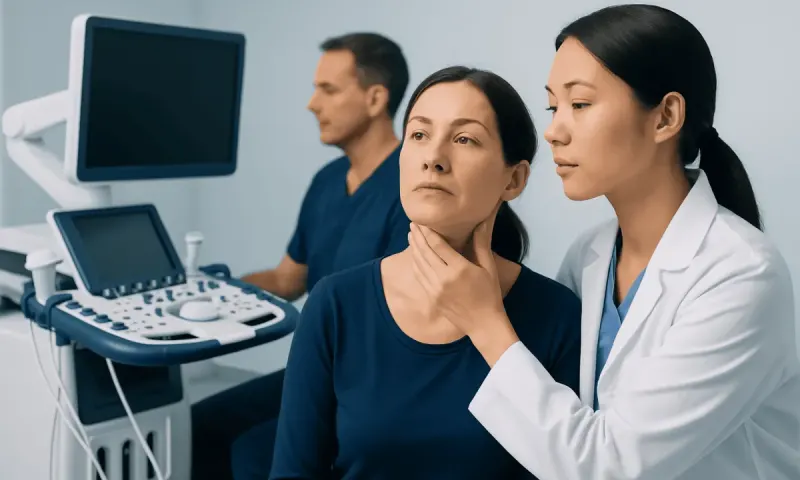
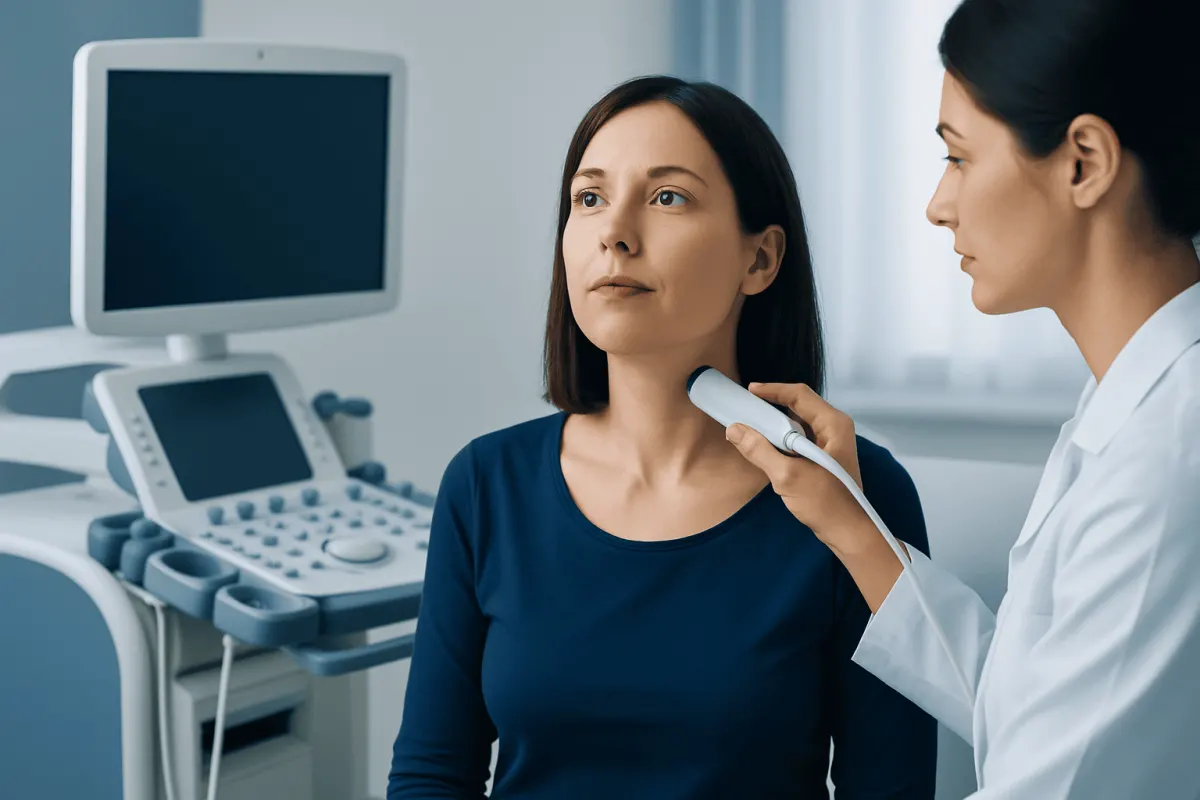
Assessment usually begins with a medical history and examination of the thyroid and neck lymph nodes. Blood tests, including thyroid-stimulating hormone, may help evaluate thyroid function, but they cannot confirm or exclude thyroid cancer. High-resolution neck ultrasound is the main imaging test used to examine a thyroid nodule and nearby lymph nodes.
If ultrasound features or nodule size suggest further evaluation, a clinician may recommend fine-needle aspiration biopsy. A thin needle is used to remove a small sample of cells, often with ultrasound guidance. Results may be benign, cancerous, suspicious or indeterminate. Some indeterminate results can be clarified with repeat biopsy, molecular testing or surgery, depending on the situation.
After cancer is diagnosed, staging considers the tumor type and size, whether it has grown beyond the thyroid, lymph node involvement, distant spread and the person’s age. Imaging such as CT, MRI or whole-body radioactive iodine scanning may be used selectively. Staging helps guide care, but the pathology type and the cancer’s biological behavior are also important in estimating outlook.
What are the treatment options for thyroid cancer?
Treatment is individualized according to the type of thyroid cancer, its size and location, whether it has spread, and the person’s preferences and overall health. Very small, low-risk papillary cancers may sometimes be monitored with active surveillance and regular ultrasound rather than treated immediately. This approach is only suitable for carefully selected cases with reliable follow-up.
Surgery is a common treatment. Depending on the cancer, surgeons may remove one thyroid lobe or the entire gland, and may remove involved lymph nodes in the neck. Thyroidectomy is planned with attention to protecting the voice nerves and parathyroid glands, which help regulate calcium levels. After total thyroid removal, lifelong thyroid hormone replacement is needed.
Radioactive iodine may be recommended after surgery for selected differentiated thyroid cancers. It can destroy remaining thyroid tissue and treat some cancer cells that take up iodine. Thyroid hormone treatment is used both to replace normal hormone and, in some situations, to reduce stimulation of remaining cancer cells. Cancers that are advanced, recurrent or no longer responsive to radioactive iodine may be treated with targeted therapy, other systemic medicines, external-beam radiation or clinical trial options.
Follow-up commonly includes examination, neck ultrasound, thyroid hormone testing and, after total thyroidectomy in appropriate cases, thyroglobulin blood testing. Ongoing surveillance is important because recurrence can occur years later, while also allowing clinicians to avoid unnecessary testing or treatment.
What does stage 4 thyroid cancer feel like?
Stage 4 thyroid cancer does not have one specific feeling, and some people may have few or no symptoms when it is diagnosed. Symptoms depend on where the cancer has grown or spread, the thyroid cancer type and the effects of treatment. A stage number should therefore never be used alone to predict how a person will feel or what their individual outcome will be.
If cancer affects structures in the neck, possible symptoms can include an enlarging neck mass, pressure, hoarseness, trouble swallowing or breathing changes. If cancer has spread to distant sites, symptoms may relate to that area, such as persistent bone pain or a new, ongoing cough or breathlessness. These symptoms are not specific to cancer and have many other potential causes.
Anyone with new or worsening breathing difficulty, inability to swallow liquids, rapidly increasing neck swelling, severe pain, coughing up blood or new neurological symptoms should seek urgent medical care. A specialist team can assess symptoms promptly and provide treatments that aim to control disease, preserve function and support comfort and quality of life.
What is the survival rate for thyroid cancer that has spread to lymph nodes?
There is no single survival rate that accurately describes thyroid cancer that has spread to lymph nodes. Outlook varies substantially by cancer type, age at diagnosis, tumor features, number and location of affected nodes, response to treatment and whether cancer has spread outside the neck. Population statistics cannot predict an individual person’s course.
For papillary and follicular thyroid cancers, spread to nearby lymph nodes is relatively common, especially in papillary thyroid cancer. It may increase the chance of local recurrence and influence treatment and follow-up, but it does not necessarily mean the cancer has spread to distant organs or that the outlook is poor. Many people with regional lymph node involvement are treated successfully and live for many years.
The treating clinician can give the most meaningful outlook after reviewing pathology, imaging and response to initial treatment. Asking about the cancer subtype, risk category, treatment goals and follow-up plan can help patients understand what their own findings mean.
What foods can be safely consumed on a diet to help with thyroid cancer?
No diet has been proven to cure thyroid cancer or prevent recurrence. In general, a safe and helpful eating pattern includes a variety of vegetables and fruits, whole grains, beans, nuts, lean protein sources and healthy fats, adjusted for personal medical needs. Adequate protein and calories can be especially important during recovery from surgery or other treatments.
Iodine is necessary for normal thyroid hormone production, but taking extra iodine, seaweed products or supplements without medical advice is not recommended. Before radioactive iodine treatment, a short-term low-iodine diet may be prescribed to improve treatment effectiveness. This is a specific medical preparation, not a long-term thyroid cancer diet, and patients should follow instructions from their oncology or nuclear medicine team.
After thyroid surgery, some people need short-term advice about calcium-rich foods or calcium supplements, particularly if calcium levels are low. A registered dietitian can help people manage appetite changes, swallowing difficulties, weight concerns or other dietary needs. Alcohol should be limited, tobacco should be avoided, and unregulated supplements should be discussed with the care team before use.
Acıbadem Health Point’s multidisciplinary specialists and JCI-accredited hospitals provide diagnostic assessment and treatment planning for international patients with thyroid cancer.
When to seek medical care
A person should arrange a medical appointment for a new neck or thyroid lump, persistent hoarseness, ongoing trouble swallowing, unexplained neck enlargement or enlarged lymph nodes that do not settle. Assessment is also advisable for people with a history of childhood head or neck radiation or a close family history of thyroid cancer who notice a neck change.
Urgent evaluation is appropriate for sudden or worsening breathing difficulty, rapidly enlarging neck swelling, severe difficulty swallowing or other symptoms that feel immediately concerning. These symptoms are not always caused by thyroid cancer, but prompt assessment is important.
For those already diagnosed, contacting the care team is appropriate when there are new neck symptoms, persistent bone pain, unexplained breathlessness, treatment side effects or concerns about thyroid hormone replacement. Regular follow-up helps support early identification of recurrence and management of long-term treatment needs.
Frequently asked questions
01Are thyroid cancer symptoms different in women than in men?
The physical symptoms of thyroid cancer are generally similar in women and men. Women are diagnosed more often, but a neck lump, voice change, swallowing difficulty and enlarged neck lymph nodes can occur in anyone. Many cases have no symptoms in the early stages.
02Can thyroid cancer cause fatigue or weight gain?
Thyroid cancer itself often does not change thyroid hormone levels, so fatigue or weight gain alone are not reliable signs. These symptoms are common and can result from many medical, lifestyle and hormonal factors. A clinician can check thyroid function and assess other possible causes when needed.
03Is a thyroid nodule usually cancerous?
No. Thyroid nodules are common, and most are benign. Ultrasound findings and, when appropriate, a fine-needle biopsy help clinicians determine whether a nodule needs monitoring or treatment.
04Can thyroid cancer be cured?
Many differentiated thyroid cancers can be treated successfully, particularly when they are localized. The possibility of cure and the chance of recurrence depend on the cancer type, stage, pathology findings and response to treatment. Long-term follow-up remains important even after successful treatment.
05Does thyroid cancer spread quickly?
The pace of growth varies by cancer type. Papillary and follicular thyroid cancers often grow slowly, while rarer types can behave more aggressively. A specialist can explain the expected behavior based on the biopsy and imaging results.
06Will thyroid cancer treatment affect fertility?
Surgery itself does not usually affect fertility. Radioactive iodine can require temporary precautions around pregnancy planning and breastfeeding, and timing should be discussed with an endocrinologist, oncologist and fertility specialist when relevant. Individual recommendations depend on the treatment plan and personal circumstances.
This article is for general information only and is not a substitute for professional medical advice. Please consult a qualified doctor about your individual situation.
Heart care in Turkey — expert evaluation and treatment
JCI-accredited · board-certified surgeons · reply within 24h
Add us as a Preferred Source to see more of our trusted health content across Google Search, AI Overviews and Discover.