Gum Cancer Symptoms, Diagnosis and Treatment Outlook
Gum cancer symptoms may include a sore, swelling, lump, unexplained bleeding, numbness, or a red or white patch on the gums that does not heal. Many gum changes are not cancer, but persistent symptoms should be examined promptly by a dentist or doctor.
Gum Cancer Symptoms: An Answer-First Overview
Gum cancer symptoms can include a non-healing sore on the gums, a growing lump or thickened area, persistent bleeding, pain, numbness, or a red or white patch. Symptoms can resemble common dental problems such as gum inflammation, an ulcer, infection, or irritation from a denture, so they do not automatically mean cancer. However, changes that persist for more than two weeks should be checked by a dentist, oral surgeon, or doctor.
Gum cancer is generally grouped within oral cavity cancers, also called mouth cancers. Most start in the thin, flat cells lining the mouth, known as squamous cells. Cancer may develop on the upper or lower gum, and it can sometimes affect nearby teeth, jawbone, cheek lining, floor of the mouth, or tongue as it grows.
Early diagnosis can make treatment more straightforward and may help preserve speech, swallowing, appearance, and oral function. Regular dental visits are useful because dental professionals can identify suspicious mouth changes, including changes a person may not notice themselves.
What Are the Early Stage Symptoms of Mouth Cancer?
Early stage mouth cancer may cause few symptoms and is not always painful. A persistent mouth ulcer or sore is one of the most important warning signs, particularly if it does not heal within two weeks. A white patch, called leukoplakia, or a red patch, called erythroplakia, also deserves assessment, especially when it does not rub away or has no clear explanation.
Other possible early symptoms include a small lump, thickened area, unexplained gum bleeding, ongoing tenderness, numbness, or a feeling that something is caught in the mouth. A tooth becoming loose without a clear dental reason, poorly fitting dentures, or a persistent change in chewing may also warrant a dental examination.
These symptoms are common and often result from non-cancerous conditions. Trauma from a sharp tooth, gum disease, fungal infection, canker sores, and dental appliances can all cause mouth changes. The key point is persistence: a clinician should examine any unexplained change that does not improve, worsens, or recurs in the same place.
- A sore, ulcer, lump, or swelling that lasts more than two weeks
- Red, white, or mixed red-and-white patches in the mouth
- Bleeding from the gums without an obvious cause
- Pain, numbness, or difficulty chewing or swallowing
- A loose tooth or denture fit change not explained by routine dental issues
Causes and Risk Factors for Gum Cancer

Gum cancer develops when cells in the oral lining acquire changes that allow them to grow abnormally. There is rarely one single cause. Tobacco exposure, including cigarettes, cigars, pipes, smokeless tobacco, and betel quid or areca nut products, is a major avoidable risk factor. Heavy alcohol use can also increase risk, and tobacco and alcohol together have a stronger combined effect.
Other factors may include long-term sun exposure for cancers affecting the lip, a previous mouth cancer, immune suppression, poor oral health, and dietary patterns low in fruits and vegetables. Human papillomavirus, or HPV, is more strongly associated with cancers of the oropharynx, such as the tonsil and base of the tongue, than with cancers arising on the gums. Nevertheless, an individual assessment considers the full clinical picture.
Gum cancer can occur in people who do not smoke or drink alcohol. Age increases risk, but younger adults can also be affected. A person should not delay evaluation because they do not fit a typical risk profile or because a lesion is painless.
Some gum tumors can look similar to severe gum disease or an infection around a tooth. This is why an oral health professional may recommend imaging or biopsy when a gum abnormality is unusual, persistent, or does not respond as expected to routine dental care.
How Gum Cancer Is Diagnosed and Staged
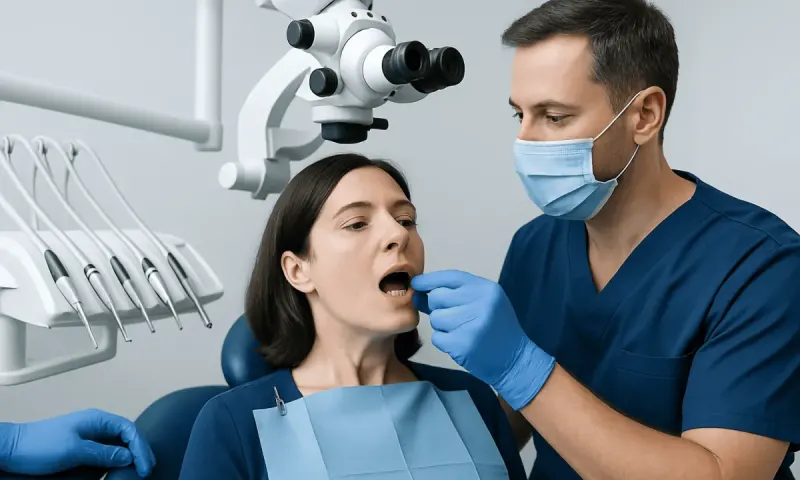
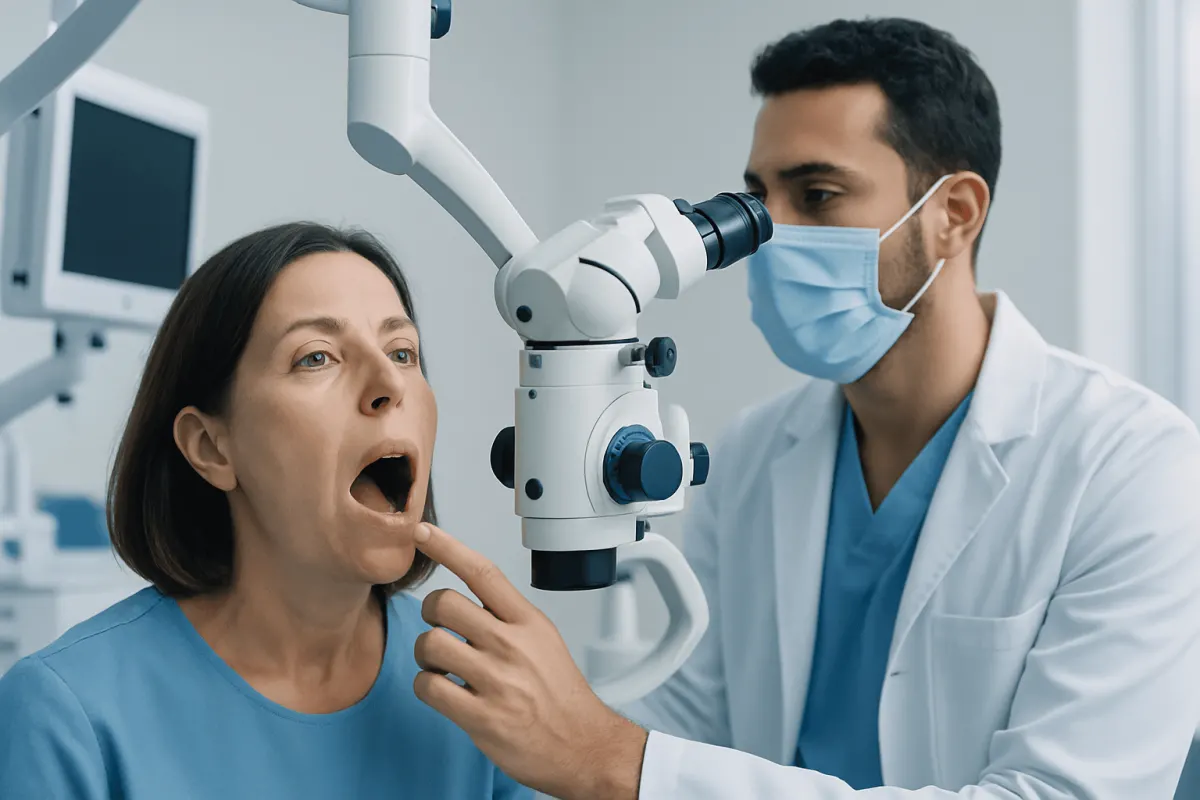
Diagnosis begins with a detailed history and examination of the mouth, gums, tongue, throat, jaw, and neck. The clinician may ask when the change began, whether it is growing or bleeding, and about tobacco, alcohol, medical conditions, and prior cancer treatment. They will also check for enlarged lymph nodes in the neck.
A biopsy is needed to confirm whether a suspicious lesion is cancer. During this procedure, a small sample of tissue is removed and examined by a pathologist. Imaging tests such as CT, MRI, PET-CT, or dental imaging may help show whether a tumor involves the jawbone, nearby tissues, lymph nodes, or distant organs.
If cancer is confirmed, the care team assigns a stage. Staging describes the size and local extent of the tumor, whether nearby lymph nodes contain cancer, and whether the cancer has spread to distant areas. Stage helps guide treatment planning, but it does not predict an individual outcome on its own. Overall health, tumor biology, response to treatment, and access to supportive care also matter.
Evaluation is often coordinated by a multidisciplinary team that may include head and neck surgeons, oral and maxillofacial surgeons, medical oncologists, radiation oncologists, radiologists, pathologists, dentists, dietitians, speech and swallowing specialists, and specialist nurses.
Modern Treatment Approaches for Gum Cancer
Treatment is tailored to the tumor’s site, stage, involvement of bone or lymph nodes, and the person’s general health and priorities. Surgery is often the main treatment for localized gum cancer. The surgeon removes the tumor with a margin of healthy-looking tissue; if the jawbone is affected, part of the bone may need to be removed. Reconstructive procedures may be considered to help restore chewing, speech, swallowing, and facial contour.
Radiotherapy may be used after surgery when there is a higher risk of recurrence, or as a main treatment in selected situations. It uses carefully planned high-energy radiation to target cancer cells. Chemotherapy can be combined with radiotherapy for some locally advanced cancers, while drug treatment may also be used when disease has returned or spread.
Immunotherapy and other systemic treatments may be appropriate for selected people with recurrent or metastatic oral cancer. These medicines are chosen after careful review of the cancer, prior treatments, overall health, and likely benefits and side effects. Head and neck cancer treatment planning should include a discussion of possible effects on oral health, nutrition, speech, swallowing, and quality of life.
Before radiotherapy or extensive surgery, a dental assessment is often important. Treating dental infections and planning preventive mouth care can reduce complications. Rehabilitation, pain control, nutritional support, and emotional support remain important throughout treatment and recovery.
What Are the Best Foods to Eat to Fight Oral Cancer?
No specific food can cure oral cancer or replace evidence-based treatment. During and after treatment, the most helpful eating plan is one that provides enough calories, protein, fluids, vitamins, and minerals while being comfortable to chew and swallow. A registered dietitian can adapt recommendations to symptoms, weight changes, treatment effects, cultural preferences, and medical conditions.
When eating is comfortable, a varied pattern that includes vegetables, fruits, whole grains, beans, nuts or nut butters when safe, fish, eggs, dairy or fortified alternatives, and lean protein sources can support general health. Protein is especially important for healing and maintaining muscle. Smooth soups, yogurt, scrambled eggs, oatmeal, soft fish, mashed vegetables, smoothies, and nourishing drinks may be easier if the mouth is sore.
Some people need to avoid acidic, spicy, very salty, rough-textured, or very hot foods during treatment because these can irritate the mouth. Alcohol and tobacco should be avoided. If swallowing is difficult, coughing occurs with drinks, or intake has fallen, prompt advice from the oncology team, dietitian, or swallowing specialist is important; texture changes should be individualized rather than self-prescribed.
Nutrition supplements may be recommended when food alone is not meeting needs. It is sensible to discuss herbal products, concentrated antioxidants, and supplements with the oncology team, as some may interact with treatment or be unsuitable in high doses.
What Toothpaste Is Best for Chemo Patients?
For people receiving chemotherapy, a mild fluoride toothpaste is usually a practical choice. Toothpaste that is non-whitening, non-abrasive, and free from strong flavoring or sodium lauryl sulfate may be more comfortable if the mouth is sore or sensitive. Fluoride helps protect teeth when dry mouth, changes in saliva, or reduced oral care make cavities more likely.
A soft-bristled toothbrush and gentle brushing are generally recommended, unless the oncology or dental team gives different instructions. If bleeding risk is increased because of low blood counts, or if severe mouth sores are present, the team may suggest specific adjustments to brushing and flossing. Alcohol-free mouth rinses are often preferred because alcohol can sting and dry the mouth.
People should avoid harsh mouthwashes, abrasive whitening products, and unapproved home remedies during treatment. A dentist familiar with cancer care can recommend appropriate fluoride products and manage tooth, gum, or denture problems. Any mouth ulcer, fever, swelling, new bleeding, or difficulty drinking should be reported promptly to the treatment team.
How Long Can You Live With Stage 4 Oral Cancer?
Survival with stage 4 oral cancer varies widely, so it is not possible to give one reliable time frame for an individual. Stage 4 may describe a locally advanced cancer involving nearby structures or lymph nodes, or cancer that has spread to distant parts of the body. These situations have different treatment options and outlooks.
Factors influencing outlook include the exact site of the tumor, whether it can be completely treated with surgery and radiotherapy, the extent of lymph node involvement, whether distant spread is present, tumor characteristics, general health, nutrition, and response to treatment. Some people with stage 4 disease receive treatment with curative intent, particularly when the disease is locally advanced but has not spread distantly. Others may benefit from systemic therapy and supportive care focused on controlling the cancer and maintaining comfort and function.
The oncology team is best placed to explain prognosis in an individual context, including the goals of treatment and what can be expected over time. Palliative care can be introduced alongside cancer treatment at any stage to help with symptoms, emotional wellbeing, nutrition, and practical concerns; it is not limited to end-of-life care.
When to Seek Medical Care
A person should arrange a dental or medical appointment promptly if they have a mouth or gum ulcer, lump, patch, bleeding area, or swelling that has not resolved within two weeks. Earlier assessment is appropriate if there is rapid growth, increasing pain, facial swelling, a loose tooth without explanation, persistent numbness, trouble swallowing, unexplained weight loss, or a lump in the neck.
Urgent medical care is appropriate for difficulty breathing, severe difficulty swallowing liquids, uncontrolled bleeding, or signs of a serious infection such as fever with marked facial or neck swelling. These symptoms can have causes other than cancer, but they should not be managed at home.
Routine dental care, tobacco cessation support, limiting alcohol, and regular self-awareness of the mouth can help with prevention and earlier recognition. Acıbadem Health Point’s multidisciplinary specialists and JCI-accredited hospitals diagnose and treat oral and head and neck cancers for international patients, with treatment plans tailored to the individual.
Frequently asked questions
01Can gum cancer be mistaken for gum disease?
Yes. Gum cancer can resemble gum disease, infection, a traumatic ulcer, or irritation from dentures. A persistent or unusual area that does not improve after appropriate dental care should be examined and may need a biopsy.
02Is a white patch on the gums always cancer?
No. White patches can occur for several reasons, including irritation, fungal infection, or benign oral conditions. A patch that persists, cannot be explained, or is associated with a lump, ulcer, or bleeding should be assessed by a dental or medical professional.
03Does gum cancer hurt in the early stages?
Not always. Early gum cancer may be painless, which is one reason persistent mouth changes should not be ignored. Pain, tenderness, burning, or numbness can occur as the area changes or the disease progresses.
04Can a dentist diagnose gum cancer?
A dentist can identify suspicious changes during an examination and arrange referral or testing. Cancer is confirmed by a biopsy, in which a tissue sample is assessed by a pathologist.
05Can gum cancer be cured?
Many localized gum cancers can be treated successfully, particularly when diagnosed early. The possibility of cure depends on the tumor’s stage, location, biology, and response to treatment, so it should be discussed with the treating cancer team.
06How can gum cancer risk be reduced?
Avoiding tobacco and betel quid products, limiting alcohol, maintaining regular dental care, and eating a balanced diet can help reduce risk. People should also seek assessment for mouth changes that persist longer than two weeks.
This article is for general information only and is not a substitute for professional medical advice. Please consult a qualified doctor about your individual situation.
Persistent digestive symptoms? Get evaluated in Turkey
JCI-accredited · board-certified surgeons · reply within 24h
Add us as a Preferred Source to see more of our trusted health content across Google Search, AI Overviews and Discover.