Is Prostate Cancer Curable? Diagnosis, Staging and Outlook
Prostate cancer is often curable when it is diagnosed before it has spread beyond the prostate gland. For cancer that has spread, treatment may not always be curative, but it can frequently control the disease for many years while protecting quality of life.
Prostate cancer: is it curable?
Prostate cancer is often curable when it is found while confined to the prostate or nearby tissues. Surgery and radiation therapy are the main treatments used with curative intent, and some people with slow-growing, low-risk cancer can safely choose close monitoring before treatment is needed.
If prostate cancer has spread to distant parts of the body, it is less likely to be cured with currently available treatments. However, hormone therapy, newer targeted medicines, chemotherapy, radiopharmaceuticals and other approaches can often control advanced disease, reduce symptoms and help many people live well for a long time.
A diagnosis does not provide the full answer on its own. The likely outlook depends on the cancer stage, Gleason grade group, prostate-specific antigen (PSA) level, imaging results, treatment response, age, general health and personal priorities. The most useful prognosis is therefore one discussed with the clinical team using the individual’s complete results.
How diagnosis and staging shape the outlook
Prostate cancer is usually investigated after an elevated or changing PSA blood test, an abnormal digital rectal examination, urinary symptoms, or findings on imaging performed for another reason. PSA is helpful but is not a cancer diagnosis by itself; benign prostate enlargement, inflammation and other factors can also raise it.
Multiparametric MRI can help identify areas that may need sampling and support more accurate biopsy planning. A prostate biopsy confirms the diagnosis and assesses how abnormal the cancer cells look. Pathologists describe this using a Gleason score and grade group, which help estimate how likely a cancer is to grow or spread.
Staging describes where the cancer is located. Localized cancer is confined to the prostate. Locally advanced cancer has extended through the prostate capsule, into seminal vesicles or nearby tissues. Metastatic cancer has spread to lymph nodes farther away, bones or other organs. Depending on risk and stage, clinicians may use MRI, CT, bone scanning or PSMA PET imaging to look for spread.
- Low-risk disease: often slow growing and may be suitable for active surveillance.
- Intermediate-risk disease: may require treatment, depending on favorable or unfavorable features.
- High-risk or locally advanced disease: commonly needs combined treatment.
- Metastatic disease: generally needs systemic treatment, sometimes alongside treatment to the prostate or specific metastases.
What is the life expectancy for someone with stage 2 prostate cancer?

Stage 2 prostate cancer is generally still confined to the prostate, although it may be larger, involve more of the gland, or have higher-grade features than stage 1 disease. Because it is usually localized, it is commonly treated with curative intent and often has a very favorable outlook.
It is not possible to accurately predict an individual’s life expectancy from stage alone. Grade group, PSA level, the amount of cancer found in biopsy samples, imaging findings, other medical conditions, age and treatment choice all matter. Some stage 2 cancers are considered favorable intermediate risk, while others have features that require more intensive treatment.
Population survival figures can be reassuring but cannot predict one person’s outcome. Many people with localized prostate cancer live for many years and may ultimately die from causes unrelated to prostate cancer. A treating specialist can place the individual’s results in context and explain whether active surveillance, surgery, radiation or another approach is most appropriate.
What is stage 3 prostate cancer?
Stage 3 prostate cancer is usually described as locally advanced disease. The cancer has grown beyond the prostate itself, such as through the outer covering of the gland or into the seminal vesicles, but it has not been shown to have spread to distant organs or distant lymph nodes.
Stage 3 disease is more likely than earlier-stage cancer to return after treatment, but it may still be treated with curative intent. Management often combines treatments to address both the prostate and the risk of microscopic cancer cells outside it. For example, external-beam radiation therapy may be combined with a period of androgen deprivation therapy, sometimes with additional medicines for selected higher-risk cases.
In some situations, radical prostatectomy may be considered, particularly for carefully selected patients. Further radiation or hormone treatment can be recommended after surgery if pathology findings or PSA results suggest a higher risk of recurrence. The best plan should be made through shared decision-making after reviewing cancer features and possible effects on urinary, sexual and bowel function.
I recently got diagnosed with prostate cancer. What should I do now?
After a new diagnosis, it is reasonable to take time to understand the findings before making a decision. Most prostate cancers do not require treatment within days, although prompt follow-up is important. The person should ask for copies of the pathology report, PSA history, MRI or scan reports, and details of the clinical stage and grade group.
A useful next step is discussing the case with specialists experienced in prostate cancer. Depending on the situation, this may include a urologist, radiation oncologist and medical oncologist. A second review of the biopsy by a specialist genitourinary pathologist may be helpful, particularly when treatment decisions are uncertain or the cancer appears higher risk.
Questions to ask include: Is the cancer localized, locally advanced or metastatic? What is its grade group and risk category? Is active surveillance safe? What treatments are suitable, what are their likely benefits, and what side effects may occur? The person may also want to ask whether genetic counseling or inherited cancer testing is appropriate, especially with a strong family history of prostate, breast, ovarian, pancreatic or colorectal cancer.
Reliable support is important. Bringing a trusted relative or friend to appointments, writing down questions, and discussing worries about work, intimacy, continence and emotional wellbeing can make decision-making more manageable. It is appropriate to seek information, but treatment choices should be based on the person’s own clinical results rather than another patient’s experience.
Treatment choices and the goal of care
For low-risk localized cancer, active surveillance may avoid or delay treatment side effects without neglecting the cancer. It involves scheduled PSA tests, examinations, imaging and sometimes repeat biopsies. Treatment is offered if results indicate that the cancer is changing or becoming more likely to cause harm.
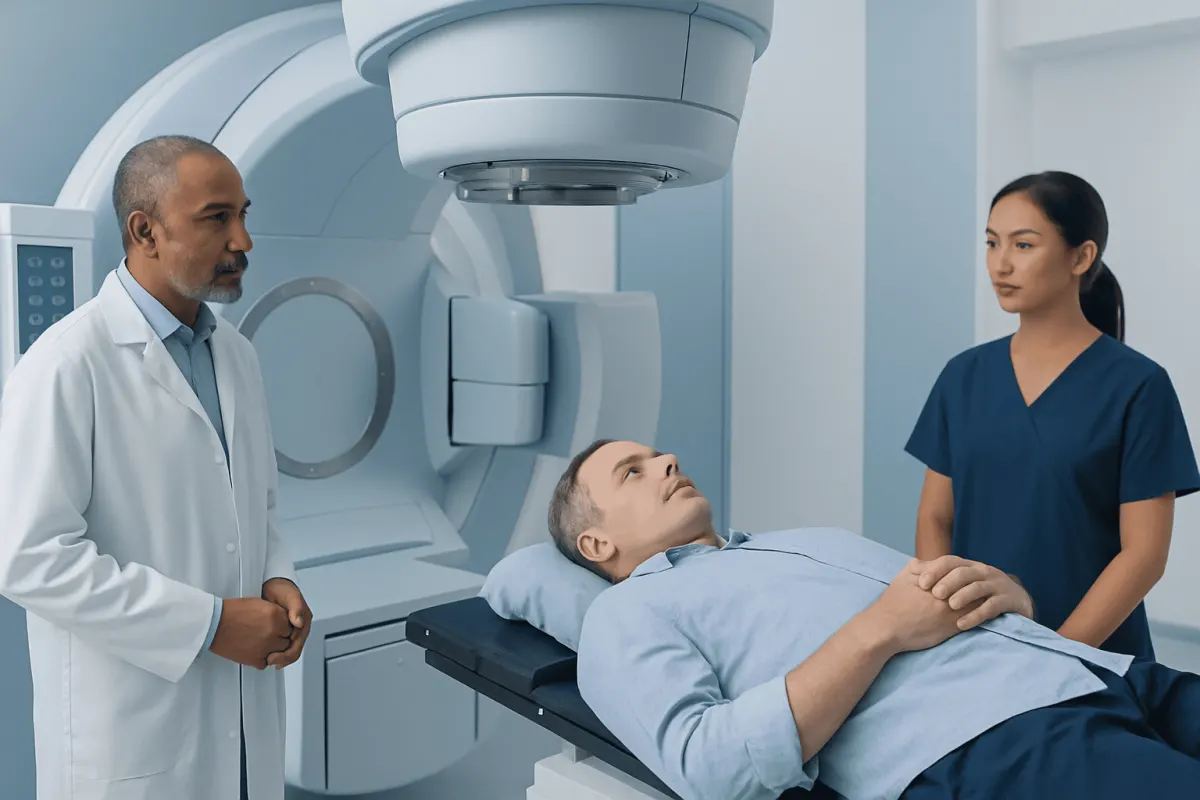
For localized or locally advanced cancer, common curative approaches include radical prostatectomy and radiation therapy. Surgery removes the prostate and seminal vesicles, while radiation uses high-energy beams to treat the prostate and, in selected cases, nearby lymph nodes. Brachytherapy, which places radioactive sources in or near the prostate, may be suitable for some patients. Hormone therapy is often combined with radiation for unfavorable intermediate-risk, high-risk or locally advanced cancer.
For metastatic prostate cancer, treatment is usually aimed at long-term disease control. Androgen deprivation therapy lowers or blocks testosterone, which commonly drives prostate cancer growth. Depending on the cancer’s features and prior treatment, clinicians may add androgen receptor-targeted medicines, chemotherapy, immunotherapy for selected biomarker-defined cancers, PARP inhibitors for certain inherited or tumor mutations, or radioligand therapy.
Each option can have side effects, such as urinary leakage or erectile dysfunction after surgery, bowel or urinary irritation after radiation, and fatigue, hot flushes, bone thinning or metabolic changes with hormone therapy. Supportive care, rehabilitation and regular follow-up can help manage these effects. Treatment selection should balance cancer control with the person’s values and quality-of-life goals.
What is it like living with prostate cancer?
Living with prostate cancer can be different for every person. Some people live with a low-risk cancer on active surveillance and continue their usual routines with periodic tests. Others go through treatment and recovery, or take long-term medication for advanced cancer. Uncertainty around PSA results and follow-up scans can be emotionally difficult, even when the cancer is stable.
Physical changes depend on the treatment received. Urinary control, erections, energy, mood, sleep and bowel habits can be affected, but many symptoms can be improved with appropriate support. Pelvic floor physiotherapy may help urinary leakage after surgery, while clinicians can discuss medicines, devices or counseling for sexual health concerns.
Regular physical activity, a balanced eating pattern, maintaining a healthy weight, avoiding tobacco and limiting alcohol can support general health during and after treatment. These habits do not replace cancer treatment or follow-up, but they can improve wellbeing and help manage some treatment-related effects. Emotional support from family, cancer support groups, psychologists or sexual health counselors may also be valuable.
Follow-up commonly includes PSA testing at intervals recommended by the treating team. A rising PSA does not always have the same meaning in every setting; interpretation depends on whether the person had surgery, radiation, systemic therapy or surveillance. New symptoms should be discussed rather than assumed to represent recurrence.
When to seek medical care
A person should arrange a medical appointment for urinary symptoms that persist or change, such as difficulty starting urine flow, weak stream, frequent urination, waking repeatedly at night to urinate, blood in urine or semen, or new erectile difficulties. These symptoms are common and often caused by non-cancerous conditions, but they deserve assessment.
Anyone with an abnormal PSA result, suspicious examination finding, strong family history of prostate or related cancers, or a known inherited cancer-related gene mutation should discuss appropriate evaluation with a clinician. Screening decisions are individualized and should consider age, health, family history and personal preferences.
Urgent medical assessment is appropriate for inability to pass urine, severe unexplained back or bone pain, new leg weakness or numbness, loss of bladder or bowel control, or significant unexplained weight loss. These symptoms have many possible causes, but timely evaluation is important.
For international patients, Acıbadem Health Point’s multidisciplinary specialists and JCI-accredited hospitals assess and treat prostate cancer with individualized diagnostic and treatment planning. A qualified cancer care team can explain the stage, likely goals of treatment and follow-up needs in clear terms.
Frequently asked questions
01Can prostate cancer be completely cured?
Many prostate cancers that are confined to the prostate can be cured with surgery or radiation therapy. Cure is less likely once cancer has spread to distant organs, but modern systemic treatments can often control metastatic prostate cancer for extended periods. The likelihood of cure depends on stage, grade group, PSA level and other individual factors.
02Is stage 2 prostate cancer considered curable?
Stage 2 prostate cancer is usually confined to the prostate and is often treated with curative intent. Depending on risk features, options may include active surveillance, surgery, radiation therapy or a combination of treatments. A specialist can explain how the specific PSA, grade group and imaging results affect the outlook.
03Can prostate cancer return after surgery or radiation?
Yes, prostate cancer can recur after initial treatment, especially when it has higher-risk features. Follow-up PSA testing is used to look for signs of recurrence, often before symptoms develop. If cancer returns, further treatment may still be possible and depends on where the recurrence is found.
04Does a high PSA mean prostate cancer is advanced?
No. PSA levels can rise for several reasons, including benign prostate enlargement, inflammation, infection and recent prostate manipulation. PSA is interpreted alongside examination findings, MRI, biopsy results and imaging when needed; it does not establish stage by itself.
05Is active surveillance the same as doing nothing?
No. Active surveillance is a structured monitoring approach for selected low-risk prostate cancers. It uses regular PSA tests, clinical reviews, imaging and sometimes repeat biopsies so treatment can begin if there are signs that the cancer is becoming more concerning.
06What are the first signs of prostate cancer?
Early prostate cancer often causes no symptoms. When urinary symptoms occur, they are frequently due to benign prostate enlargement rather than cancer. Persistent urinary changes, blood in urine or semen, or unexplained pain should be assessed by a healthcare professional.
This article is for general information only and is not a substitute for professional medical advice. Please consult a qualified doctor about your individual situation.
Oncology care in Turkey — second opinion and treatment plan
JCI-accredited · board-certified surgeons · reply within 24h
Add us as a Preferred Source to see more of our trusted health content across Google Search, AI Overviews and Discover.