Prostate Cancer Diagnosis: Tests and Next Steps
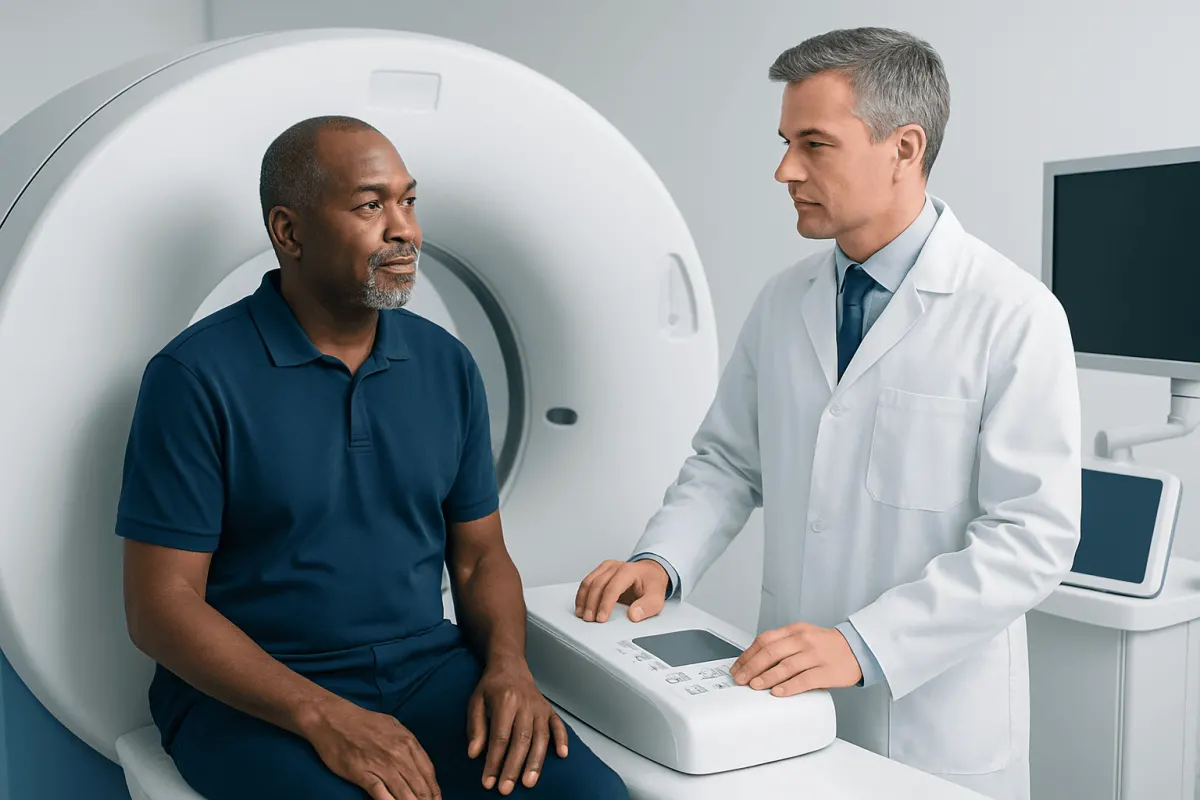
Prostate cancer diagnosis usually begins with a discussion of individual risk and may include a prostate-specific antigen (PSA) blood test and digital rectal examination. If results suggest a concern, multiparametric MRI and a prostate biopsy can help confirm whether cancer is present and describe its likely behavior.
Overview: How prostate cancer is diagnosed
Prostate cancer diagnosis is a stepwise process rather than a single test. Clinicians first consider a person’s symptoms, health history and risk factors, then may recommend a PSA blood test and a digital rectal examination (DRE). When these findings are concerning, prostate MRI and a biopsy can provide clearer answers.
The aim is to identify clinically important prostate cancer while avoiding unnecessary invasive testing whenever possible. Many prostate cancers grow slowly and may not cause symptoms, while others need prompt assessment. A urologist can explain what each result means in the context of the individual rather than relying on one number alone.
Testing may be arranged because of urinary symptoms, an abnormal examination, a raised or changing PSA level, or participation in a screening discussion. Urinary symptoms are common and are often caused by non-cancerous conditions such as benign prostate enlargement, so they do not automatically mean cancer is present.
Who should consider prostate cancer screening?
Screening looks for prostate cancer before it causes symptoms, most commonly with a PSA blood test. It is not a one-size-fits-all decision. A clinician can discuss the potential benefits of finding cancer early alongside possible downsides, including false-positive results, additional investigations and detecting slow-growing cancers that may never cause harm.
Risk tends to increase with age. Screening discussions may be especially relevant for people with a close relative who has had prostate cancer, particularly at a younger age, and for those with certain inherited cancer-risk gene changes. People of African or Caribbean ancestry may also have a higher risk and may benefit from an earlier individual conversation with their doctor.
A check-up can create an opportunity to review prostate health alongside blood pressure, cardiovascular risk and other preventive care. The most suitable starting age and testing interval depend on personal risk, life expectancy, previous PSA results and informed preference. Screening is usually less helpful when a person has serious health conditions that would make treatment for a newly found cancer unlikely to offer benefit.
- Tell the clinician about prostate cancer, breast cancer, ovarian cancer or pancreatic cancer in close relatives.
- Discuss current urinary symptoms, medicines, prior urinary infections and previous prostate procedures.
- Ask how to prepare for a PSA test, as certain activities and conditions can affect the result.
Initial tests: PSA, examination and repeat testing

The PSA test measures prostate-specific antigen, a protein made by prostate cells, in the blood. PSA can rise with prostate cancer, but it can also increase because of benign prostate enlargement, prostatitis or urinary infection, recent ejaculation, vigorous cycling, urinary retention or recent instrumentation of the urinary tract. For this reason, an elevated PSA needs careful interpretation rather than immediate conclusions.
Clinicians may repeat PSA testing after a suitable interval, particularly if there may have been a temporary influence on the result. They also consider the PSA trend over time, prostate size, age and any medicines that may alter PSA readings. Additional blood-based or risk-calculation tools may sometimes be used to estimate the likelihood of clinically significant cancer.
A DRE involves a clinician gently feeling the prostate through the rectal wall using a gloved, lubricated finger. It takes a short time and may be uncomfortable but should not be painful. The examination can identify a prostate that feels enlarged, asymmetrical, firm or irregular, though a normal DRE cannot rule out cancer.
These early tests help decide whether more assessment is appropriate. They do not confirm prostate cancer. A person with a normal PSA may still need evaluation if they have concerning symptoms or an abnormal examination, while a person with a raised PSA may ultimately have a non-cancerous explanation.
The role of multiparametric prostate MRI
Multiparametric MRI, often called mpMRI, produces detailed images of the prostate. It can show areas that look more suspicious for clinically significant cancer and helps doctors plan whether a biopsy is needed and, if so, where samples should be taken. MRI is commonly performed before a first biopsy when it is available and clinically appropriate.
During the scan, the person lies still on a moving table that passes through the MRI machine. The examination is non-invasive and does not use ionizing radiation. Some MRI studies use a contrast agent given through a vein; the imaging team checks kidney health, allergies and other relevant medical history beforehand.
MRI results are generally reported using a standardized score that reflects how likely an area is to contain clinically significant cancer. A low-suspicion MRI may support monitoring PSA and other findings rather than immediate biopsy in selected people. However, no scan can completely exclude cancer, so the result must be reviewed together with PSA, examination findings and individual risk.
MRI may not be suitable for everyone, including some people with certain implanted devices or severe claustrophobia. In these situations, the clinical team can discuss alternatives or practical support. If cancer is confirmed, imaging may also be used later to assess whether there is any evidence that disease has spread beyond the prostate.
Prostate biopsy: how it works and what to expect
A prostate biopsy is the test that confirms prostate cancer. A pathologist examines small tissue samples under a microscope to look for cancer cells and assess their appearance. Biopsy is usually recommended when the combined PSA, DRE, MRI and risk assessment indicate that the chance of clinically significant cancer is high enough to justify sampling.
Modern biopsies are often MRI-targeted, meaning samples are taken from MRI-visible areas as well as, in many cases, systematic areas throughout the prostate. Samples can be obtained through the perineum, the skin between the scrotum and anus, or through the rectum. The transperineal approach is increasingly used because it may reduce the risk of infection.
Before the procedure, the team reviews blood-thinning medicines, allergies, medical conditions and infection risk. Local anesthetic, sedation or anesthesia may be used depending on the approach and the individual. Ultrasound guidance helps the clinician place the sampling needle accurately. The procedure itself is usually brief, although preparation and recovery time add to the appointment.
Afterward, mild soreness, blood in the urine or semen, and a small amount of rectal bleeding can occur for a short time. Patients are given personalized instructions about activity, hydration and medicines. Fever, chills, worsening pain, inability to pass urine or heavy bleeding require urgent medical assessment because they can indicate a complication such as infection or urinary retention.
For people considering evaluation and treatment planning, Cancer Treatment: Options for Every Stage" class="ahp-ilk">prostate cancer treatment options can provide an overview of the care pathways available after diagnosis.
Understanding biopsy results and staging tests
If cancer is found, the biopsy report describes how much cancer is present in the samples and how abnormal the cells look. This is commonly summarized with a Gleason score and Grade Group. In general, lower-grade cancers are more likely to behave slowly, while higher-grade cancers are more likely to grow or spread and may need more active treatment.
Doctors combine the Grade Group with PSA level, DRE findings, MRI findings and the number and location of positive biopsy samples. This creates a risk category, often described as low, intermediate or high risk. The category supports a shared decision about management but does not predict the exact course for any one person.
Some people need further imaging after a cancer diagnosis, particularly when PSA, Grade Group or clinical findings suggest a higher chance that cancer has extended outside the prostate. Depending on the situation, tests may include MRI, CT, bone scanning or specialized PET imaging. These tests are used for staging: determining where the cancer is located and whether it appears to have spread.
Not every diagnosed cancer requires immediate treatment. For selected low-risk cancers, active surveillance may involve scheduled PSA tests, repeat MRI, examinations and sometimes repeat biopsy. This approach monitors the cancer carefully and allows treatment to be considered if there are signs that it is changing.
Benefits, limitations and possible risks of testing
The main benefit of appropriate prostate cancer testing is the chance to find clinically significant cancer at a stage when treatment or close monitoring can be planned effectively. MRI-guided assessment and targeted biopsy can improve the precision of investigation, helping clinicians focus sampling on areas of concern.
There are limitations. PSA is sensitive but not specific, so it may be elevated without cancer. MRI can miss some cancers or show changes that later prove non-cancerous. A biopsy is more definitive, but because it samples small areas of tissue, it can occasionally miss a cancer or underestimate its grade.
Biopsy-related risks include temporary bleeding, pain or discomfort, urinary retention and infection. Serious complications are uncommon but possible. The care team reduces risk by choosing an appropriate biopsy approach, reviewing medicines and medical history, and providing clear aftercare advice.
There can also be emotional effects while waiting for results or deciding about next steps. It can help to bring a trusted person to appointments, write down questions and ask for explanations of unfamiliar terms. A second clinical opinion may be appropriate when decisions are complex or preferences are uncertain.
When to seek medical care
People should arrange a medical review if they develop persistent urinary changes, such as difficulty starting urination, a weak flow, needing to urinate more often, waking frequently at night, pain on urination, or blood in the urine or semen. These symptoms are more often related to non-cancerous prostate or urinary conditions, but they deserve assessment, particularly when they are new or worsening.
Prompt medical advice is also sensible for unexplained persistent bone pain, unintentional weight loss, ongoing fatigue, or new symptoms in someone with a previous history of prostate cancer. These symptoms have many potential causes and should be evaluated without assuming a diagnosis.
Urgent care is needed for fever or chills after a prostate biopsy, inability to pass urine, heavy bleeding, severe pain or feeling acutely unwell. Anyone with a raised PSA, abnormal DRE or concerning MRI result should discuss the recommended follow-up with a urologist rather than delaying assessment.
Acıbadem Health Point’s multidisciplinary specialists in JCI-accredited hospitals diagnose and treat prostate conditions for international patients, with care plans based on clinical findings and individual preferences.
Frequently asked questions
01Can a PSA test diagnose prostate cancer?
No. PSA is an important blood test, but a raised result can occur for several non-cancerous reasons, including benign prostate enlargement, infection or inflammation. A clinician interprets it with other findings and may recommend repeat testing, MRI or biopsy.
02Does a normal PSA rule out prostate cancer?
No test completely rules out prostate cancer. A normal PSA generally lowers concern, but a doctor may still investigate if there are persistent symptoms, an abnormal rectal examination or strong risk factors.
03Is a prostate biopsy always needed after a high PSA result?
Not always. The next step may be repeat PSA testing, treatment of an infection if present, a risk assessment or multiparametric MRI. A biopsy is generally considered when the overall findings suggest a meaningful likelihood of cancer.
04How painful is a prostate biopsy?
The procedure is performed with anesthetic, and some people also receive sedation or anesthesia depending on the method used. Mild pressure, discomfort and temporary soreness can occur, but the team provides instructions to make the procedure as comfortable and safe as possible.
05How long does it take to receive prostate biopsy results?
Timing varies by laboratory and healthcare setting. The pathology team needs time to prepare and examine the tissue samples carefully, after which the clinician discusses the results, Grade Group and any recommended next tests.
06What does an MRI-targeted prostate biopsy mean?
It means the clinician uses information from an earlier MRI to direct samples toward areas that appear suspicious. Targeted samples may be taken alongside systematic samples from other parts of the prostate to improve the assessment.
This article is for general information only and is not a substitute for professional medical advice. Please consult a qualified doctor about your individual situation.
Oncology care in Turkey — second opinion and treatment plan
JCI-accredited · board-certified surgeons · reply within 24h
Add us as a Preferred Source to see more of our trusted health content across Google Search, AI Overviews and Discover.