Could a Lump on the Head Be Cancer? Signs and Next Steps

Most lumps on the head are caused by harmless conditions such as an injury, cyst, lipoma or skin infection rather than cancer. However, a lump that grows, changes, bleeds, does not heal, or occurs with neurological symptoms needs medical assessment to identify its cause and guide treatment.
A lump on the head is not usually cancer
A lump on the head can understandably raise concerns about cancer, but most are not cancerous. Common explanations include swelling after a minor injury, an epidermoid cyst, a fatty lump called a lipoma, an inflamed hair follicle, a benign bone growth, or a skin condition. A clinician can often narrow down the cause through a history and examination.
It is important to distinguish a lump in the scalp or skull from a tumor inside the brain. Most brain tumors do not create a lump that can be felt from outside the head. They may instead cause symptoms related to pressure or effects on nearby brain tissue, such as new seizures, persistent worsening headaches, changes in vision, weakness, balance problems, or changes in thinking or personality.
Rarely, a lump can be a skin cancer, cancer involving the skull, lymphoma, a soft-tissue tumor, or cancer that has spread from another part of the body. A medical evaluation does not mean cancer is likely; it is the reliable way to identify a persistent or concerning lump and plan the right care.
What does a cancerous bump on the head look like?
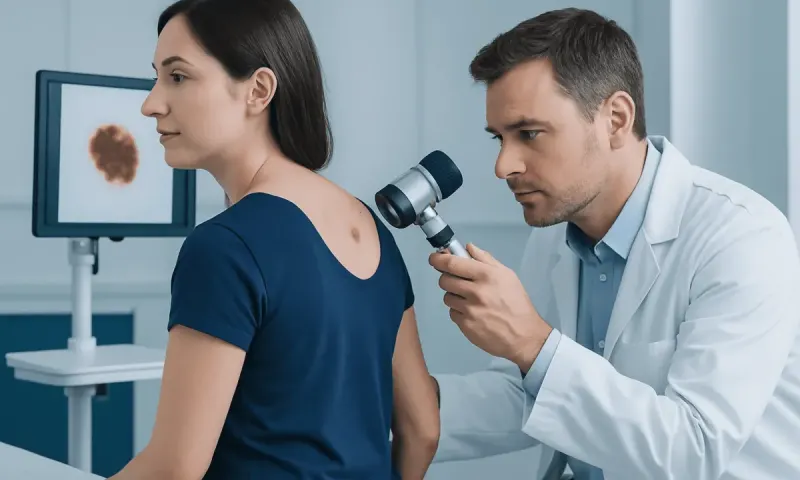
There is no single appearance that reliably identifies a cancerous bump on the head. Some skin cancers look like a persistent scaly or crusted patch, a sore that does not heal, a shiny or pearly raised area, a new pigmented spot, or a mole that changes in color, shape, size or sensation. Other tumors may appear as a firm, enlarging lump beneath normal-looking skin.
A bump is more concerning when it grows steadily, becomes hard or fixed to deeper tissue, breaks down or bleeds, becomes painful without an obvious reason, or returns after removal. Enlarged lymph nodes in the neck, unexplained weight loss, or a history of previous cancer may also affect the urgency and type of assessment needed.
Appearance alone cannot confirm or rule out cancer. Harmless cysts may become red and tender when inflamed, while some cancers are painless in early stages. A clinician may examine the skin with magnification, assess nearby lymph nodes, and recommend imaging or a biopsy when needed.
How to know if a lump is cancerous?

Only a medical assessment can determine whether a lump is cancerous. The clinician will ask when it appeared, whether it has changed, whether there was an injury or infection, and whether there are associated symptoms. They will examine the lump’s size, borders, mobility, tenderness and overlying skin, as well as the neck and surrounding areas.
Depending on the findings, tests may include ultrasound for a superficial soft-tissue lump, CT or MRI for deeper structures or suspected skull and brain involvement, and a biopsy to examine cells under a microscope. A biopsy is often the definitive test when cancer is suspected. It may involve removing a small sample or, in some cases, removing the entire small lesion.
People should avoid repeatedly squeezing, puncturing or trying to drain a lump at home. This can cause infection, bleeding or scarring and may make assessment more difficult. Photographs taken over time, with dates and a consistent angle, can sometimes help document whether a visible skin lesion is changing.
- Seek assessment for a lump that persists beyond a few weeks without a clear explanation.
- Arrange review sooner if it is enlarging, firm, irregular, ulcerated, bleeding or associated with a changing mole.
- Emergency assessment is appropriate for head swelling after a significant injury, especially with vomiting, confusion, loss of consciousness, seizure, weakness or worsening headache.
Brain tumors and externally felt head lumps
Brain tumors are abnormal growths that begin in the brain or, less commonly, spread there from elsewhere in the body. They are not usually responsible for a palpable scalp lump. Some tumors involving the skull, meninges or tissues around the brain may occasionally produce swelling, but this is uncommon and requires imaging rather than visual inspection alone.
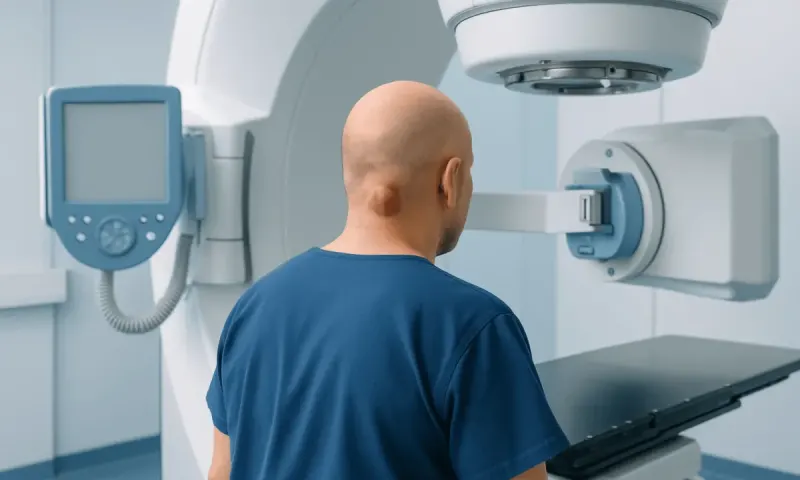
When symptoms suggest a possible neurological cause, doctors may arrange a neurological examination and MRI or CT scan. The scan helps show the location, size and characteristics of a lesion. If a brain tumor is found, specialists may use imaging features and, when appropriate, tissue obtained during surgery or biopsy to determine the tumor type and grade.
Brain tumors include benign and malignant types. Benign does not mean that a tumor is always harmless, because its location can affect important brain functions. More information about diagnosis and care pathways is available in brain tumor information.
What is the life expectancy after benign brain tumor surgery?
Life expectancy after surgery for a benign brain tumor is often very good, particularly when the tumor can be completely removed and does not affect vital structures. Many people return to long-term daily life after recovery, although the outlook depends on the specific tumor, its location, whether it can be fully removed, and whether it may regrow.
“Benign” describes how cells look and behave under the microscope; it does not guarantee that treatment is simple. A benign tumor near areas controlling movement, vision, speech, hormones or breathing may need careful long-term monitoring. Some tumors can be managed with observation, surgery, focused radiation, or a combination of approaches.
After surgery, follow-up MRI scans are commonly used to monitor for residual or recurrent tumor. The treating neurosurgeon and neuro-oncology team can provide the most meaningful individual outlook because they know the pathology result, imaging findings, treatment plan and recovery progress. Brain tumor surgery is planned individually to protect neurological function while treating the tumor as effectively as possible.
What is the average life expectancy for someone with brain tumors?
There is no single average life expectancy that applies to everyone with a brain tumor. Brain tumors differ greatly in type, grade, molecular features, size, location, whether they started in the brain or spread from another cancer, and how they respond to treatment. Age, general health and the ability to safely remove or treat the tumor also influence outlook.
Some slow-growing or benign tumors can be controlled for many years and may have little effect on life expectancy. Other tumors are more aggressive and require prompt, combined care. Doctors may use surgery, radiotherapy, chemotherapy, targeted medicines, tumor-treating fields in selected cases, rehabilitation and supportive care according to the diagnosis.
Population estimates can be useful for research but cannot predict one person’s outcome. A care team can discuss prognosis in a sensitive, individualized way after reviewing imaging, pathology and response to treatment. Continuing research, molecular testing and personalized treatment planning are improving options for many tumor types.
When to seek medical care
A non-urgent appointment with a doctor or dermatologist is appropriate for a new lump that does not resolve, a lump that grows or changes, or a skin lesion that repeatedly crusts, bleeds or fails to heal. Prompt assessment is also sensible for a new or changing mole on the scalp, where changes can be difficult to notice because of hair coverage.
Urgent medical evaluation is needed for severe or sudden headache, a first seizure, new weakness or numbness, trouble speaking, vision loss, confusion, repeated vomiting, or a loss of consciousness. These symptoms have many possible causes, but they should not be assessed through a home examination of a lump alone.
For people with a previous Prostate Cancer Diagnosis: Tests and Next Steps" class="ahp-ilk">cancer diagnosis, a new persistent head lump should be discussed with the treating doctor. Acıbadem Health Point’s multidisciplinary specialists in JCI-accredited hospitals can assess head and scalp lumps, coordinate imaging and pathology, and develop treatment plans for international patients when cancer care is required.
Diagnosis, treatment and practical next steps
Treatment is based on the confirmed cause rather than on the lump’s appearance. A harmless lipoma or stable cyst may need no treatment unless it is uncomfortable, infected, cosmetically bothersome or uncertain in diagnosis. Inflamed lesions may require medical treatment, while suspicious skin lesions are usually removed or biopsied for laboratory analysis.
If cancer is diagnosed, care may involve surgical removal, Cancer Radiation Treatment: Options and Outlook" class="ahp-ilk">radiation treatment, systemic therapies or a combination. For a scalp cancer, treatment depends on the cancer type, depth and whether lymph nodes are involved. For a brain tumor, options are determined by the tumor’s location, pathology and molecular findings; radiotherapy may be recommended after or instead of surgery in selected situations.
Until an appointment, it can help to note when the lump was first noticed, any changes in size or symptoms, recent injuries, skin cancer history, sun exposure and medicines that affect bleeding. This information supports a focused clinical assessment and helps the care team decide whether monitoring, imaging, biopsy or treatment is most appropriate.
Frequently asked questions
01Can a lump on the head be a brain tumor?
Usually, no. Brain tumors are inside the skull and generally cannot be felt as a lump on the scalp. A palpable lump is more often related to the skin, soft tissue or bone, but a clinician can decide whether imaging is needed.
02Are hard lumps on the skull always dangerous?
No. A hard lump may result from normal skull shape, a previous injury, a benign bone growth or another non-cancerous cause. A new, enlarging or painful hard lump should still be assessed, particularly if it has no clear explanation.
03How quickly can a cancerous lump grow?
Growth rate varies greatly by cancer type, so it is not a dependable way to diagnose cancer. Any lump that is progressively enlarging over days to weeks, or a skin lesion that changes over time, should be checked by a healthcare professional.
04Can a cyst on the scalp turn into cancer?
Typical epidermoid or pilar cysts are benign, and cancer developing in them is very rare. However, a lump thought to be a cyst should be reassessed if it grows rapidly, becomes persistently ulcerated, recurs, or has an unusual appearance.
05Does a headache mean a head lump is cancer?
No. Headaches are very common and usually have causes unrelated to cancer or a visible lump. A new severe headache, a steadily worsening pattern, or headache with seizures, neurological changes, repeated vomiting or confusion needs urgent medical evaluation.
06What tests are used for a suspicious lump on the head?
The tests depend on where the lump is located and how it appears. A clinician may use examination, dermoscopy, ultrasound, CT, MRI and a biopsy. A biopsy is the main test used to confirm or exclude cancer when a lesion is suspicious.
This article is for general information only and is not a substitute for professional medical advice. Please consult a qualified doctor about your individual situation.
Hair transplant in Turkey — costs, graft counts & a free assessment
JCI-accredited · board-certified surgeons · reply within 24h
Add us as a Preferred Source to see more of our trusted health content across Google Search, AI Overviews and Discover.