Cancer Bumps on Back of Head: Signs and Next Steps
Cancer bumps on the back of the head may be caused by skin cancer, but most scalp lumps have noncancerous explanations such as cysts, inflamed hair follicles, or lipomas. A new or changing bump that bleeds, forms a persistent scab, grows, hurts, or does not heal should be examined by a dermatologist.
Can cancer bumps on the back of the head be serious?
Cancer bumps on the back of the head are not the most common reason for a scalp lump, but they should not be ignored when they are persistent or changing. Many scalp bumps are harmless conditions, including pilar cysts, lipomas, insect bites, acne-like folliculitis, or scars. A clinician can usually distinguish between these possibilities by examining the area and, when needed, taking a small tissue sample.
Skin cancers can develop on the scalp because it receives ultraviolet (UV) exposure, particularly in people with thinning hair, a shaved head, or a history of frequent sun exposure. The most common types are basal cell carcinoma and squamous cell carcinoma. Melanoma is less common but can be more likely to spread if not detected early.
A lump cannot be diagnosed as cancer simply by its appearance in a photograph or by touch. However, a bump that enlarges, changes color, repeatedly crusts, bleeds with little contact, becomes an open sore, or does not heal over several weeks deserves prompt evaluation. Early assessment provides clarity and may allow treatment before a lesion becomes more extensive.
What do cancerous head bumps look like?
Cancerous head bumps do not all look the same. Some are raised, while others are flat, scaly, ulcerated, pigmented, or resemble a sore that keeps returning. They may be difficult for a person to see on the back of the head, which is why a partner, barber, hairdresser, or clinician may notice a change first.
Basal cell carcinoma often appears as a pearly, shiny, skin-colored or pink bump, sometimes with tiny visible blood vessels. It may develop a central dip, a crust, or a sore that heals and then reopens. Squamous cell carcinoma may look like a rough, firm, scaly red patch or nodule, and it can be tender, crusted, or bleed.
Melanoma can present as a new or changing brown, black, blue, red, pink, or skin-colored spot. Warning features include asymmetry, uneven borders, varied color, enlargement, or a lesion that looks noticeably different from other marks on the skin. Some melanoma lesions are raised, but many are not. A professional examination is important because benign cysts and other common lumps can sometimes look similar.
- New bump or patch that continues to grow
- Scab, sore, or bleeding area that does not heal
- Persistent roughness, scaling, or thickened skin
- Change in color, shape, texture, or sensation
- Unexplained tenderness, itch, or pain in a changing lesion
What does stage 1 skin cancer look like?
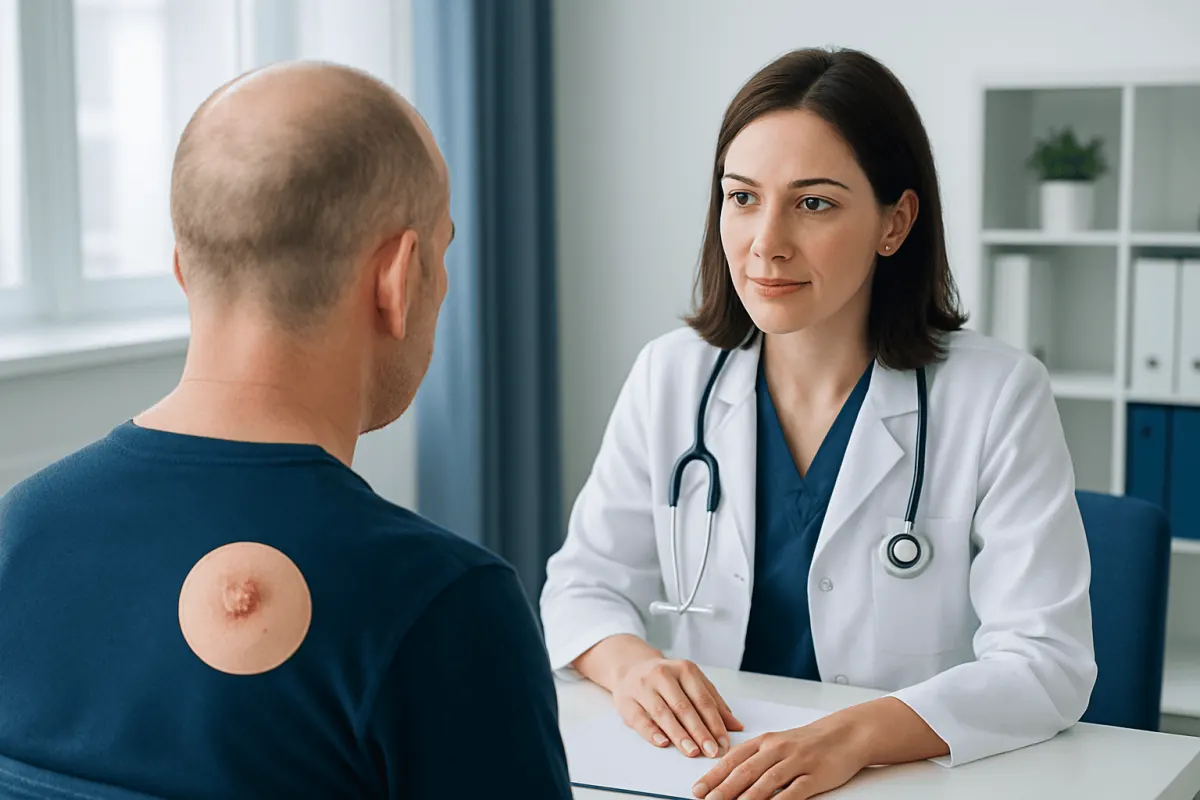
Stage 1 skin cancer is an early-stage diagnosis based on factors such as the cancer type, size, depth, and whether there is evidence of spread. It cannot be confirmed by appearance alone. In general, an early skin cancer may be small and limited to the skin, without signs that it has reached nearby lymph nodes or distant organs.
An early basal cell carcinoma may look like a small shiny bump, a pink patch, or a nonhealing spot. Early squamous cell carcinoma may resemble a persistent scaly patch, a thickened rough area, or a small firm nodule. Early melanoma may be a changing mole or a new pigmented spot that has an irregular pattern, although some melanomas have little or no dark pigment.
Small lesions can still require timely treatment. The visible surface does not always show how far abnormal cells extend beneath the skin, especially on the scalp where hair can obscure borders. A biopsy is used to identify the cancer type and help the care team determine the appropriate treatment and outlook.
Diagnosis of a suspicious scalp bump
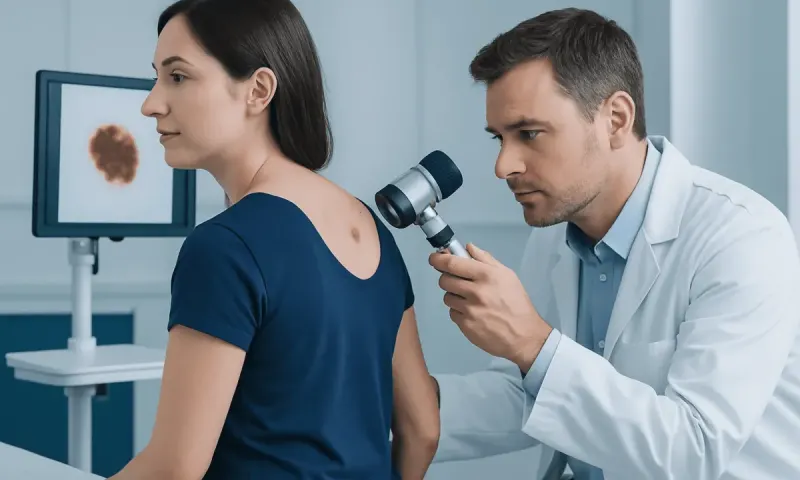
A dermatologist or other qualified clinician will ask when the bump first appeared, whether it has changed, and whether there is a history of sun exposure, sunburns, immune suppression, Cancer Radiation Treatment: Options and Outlook" class="ahp-ilk">radiation treatment, or previous skin cancer. The scalp, neck, ears, face, and nearby lymph nodes may be examined. Dermoscopy, a handheld magnifying device with light, can help assess pigment patterns and surface structures.
If cancer is suspected, the clinician may perform a biopsy. This involves removing part or all of the lesion under local anesthetic and sending it to a laboratory. The pathology result identifies whether cancer is present and, if so, the specific type and relevant features such as depth or degree of cell differentiation.
Most people do not need extensive scans for a small, localized skin cancer. Imaging or lymph node assessment may be considered if a lesion is large, deeply invasive, recurrent, high risk, or associated with signs suggesting spread. A confirmed diagnosis of skin cancer should be discussed with a dermatology and oncology team when the lesion has higher-risk features.
Modern treatment approaches for scalp skin cancer
Treatment depends on the cancer type, size, location, depth, pathology findings, and a person’s overall health. For many localized basal cell and squamous cell cancers, surgery is the main treatment. The aim is to remove the cancer completely while preserving as much healthy scalp tissue as possible.
Standard surgical excision removes the visible lesion along with a margin of surrounding skin. Mohs micrographic surgery may be recommended for selected cancers on the head and neck, recurrent tumors, tumors with poorly defined edges, or areas where conserving healthy tissue is especially important. During this procedure, thin layers are removed and examined until no cancer cells are found at the edges.
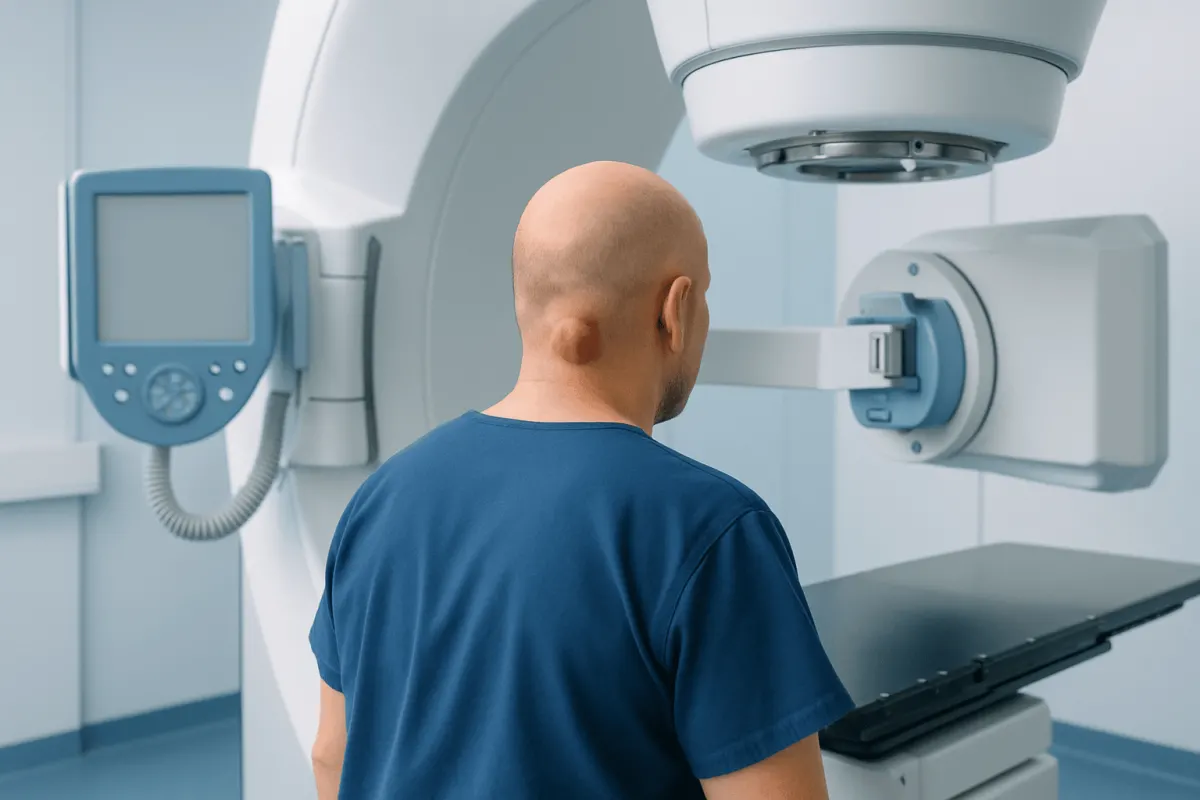
Other options may include curettage and electrodessication for carefully selected superficial lesions, topical medicines for certain superficial cancers, cryotherapy for some precancerous lesions, or radiation therapy when surgery is unsuitable. Advanced, recurrent, or metastatic cancers may require systemic treatment, including immunotherapy or targeted therapy, guided by a specialist team. Dermatology assessment and treatment planning can help match the approach to the individual diagnosis.
After treatment, regular skin checks are important because people who have had one skin cancer can develop another. The specialist may also advise on wound care, scar management, sun protection, and the schedule for follow-up visits.
What happens if you don't remove the basal cell?
Basal cell carcinoma usually grows slowly and rarely spreads to distant parts of the body. However, it is still a cancer and generally requires treatment. Without treatment, it can gradually enlarge and damage nearby skin and deeper structures, leading to a larger wound and a more complex procedure later.
On the scalp, an untreated basal cell carcinoma may extend into surrounding tissue and, in rare advanced cases, involve deeper structures. The chance of complications depends on the tumor’s subtype, location, size, growth pattern, and the person’s health. Waiting to see whether a suspicious lesion improves on its own is not a reliable strategy.
Timely removal or another clinician-recommended treatment usually offers the best chance of controlling a localized basal cell carcinoma. People who have been told they may have basal cell carcinoma should discuss their treatment options and expected recovery with a qualified skin cancer specialist rather than attempting home removal or using unproven remedies.
Can you live a normal life with skin cancer?
Many people with skin cancer continue to live active, normal lives, particularly when cancer is found early and treated successfully. Basal cell carcinoma and many squamous cell carcinomas are commonly managed with local treatment. Follow-up care and practical sun protection become important parts of long-term health after diagnosis.
The outlook varies by cancer type and stage. Melanoma and advanced squamous cell carcinoma may need more intensive monitoring or treatment, but modern care has expanded treatment options for many people. A clinician can explain the individual outlook after reviewing biopsy findings, stage, treatment response, and general health.
A diagnosis can also bring understandable worry about appearance, recurrence, and the future. Clear communication with the care team, asking about follow-up plans, and seeking emotional support when needed can help people feel more in control. At Acıbadem Health Point, multidisciplinary specialists in JCI-accredited hospitals can assess and treat skin cancers for international patients, with care plans based on the individual diagnosis.
When to seek medical care
A person should arrange a medical appointment for a new scalp bump that lasts longer than a few weeks, grows, changes, bleeds, repeatedly crusts, or does not heal. An earlier assessment is sensible for anyone with a previous skin cancer, a weakened immune system, a history of radiation to the scalp, or substantial past sun exposure.
More urgent assessment is appropriate if a lesion is rapidly enlarging, forms an ulcer, causes significant pain, is associated with unexplained swollen lymph nodes in the neck, or causes concerning symptoms such as persistent numbness near the area. These features do not always mean cancer, but they should be checked without delay.
Until the appointment, it is best not to pick, squeeze, cut, or try to remove the bump. Taking a clear photograph with the date and noting changes can be useful. Protecting the scalp from sun with a hat and broad-spectrum sunscreen on exposed areas may also help reduce further UV damage.
Frequently asked questions
01Are bumps on the back of the head usually cancer?
No. Most bumps on the scalp are not cancer and may be caused by cysts, inflamed follicles, lipomas, or other benign skin conditions. A bump that persists, grows, bleeds, crusts, or changes should still be examined by a clinician.
02Can skin cancer grow under hair?
Yes. Skin cancer can develop anywhere on the scalp, including areas covered by hair. Hair can make lesions harder to notice, so regular scalp checks by a person, partner, barber, or hairdresser can be helpful.
03Is a painful scalp bump more likely to be cancer?
Pain alone does not determine whether a bump is cancerous. Inflamed cysts and infections can be painful, while many skin cancers are painless. Any persistent or changing bump needs a clinical assessment regardless of pain.
04How is a cancerous scalp bump confirmed?
A biopsy is the definitive test. A clinician removes a small sample or the entire lesion under local anesthetic, and a pathologist examines the cells under a microscope.
05Can a dermatologist remove a scalp cancer?
Yes. Dermatologists commonly diagnose and treat many skin cancers, including lesions on the scalp. Depending on the cancer and its features, treatment may involve standard excision, Mohs surgery, radiation therapy, or referral to a multidisciplinary cancer team.
06Can a cancerous bump on the scalp be cured?
Many localized skin cancers can be treated successfully, especially when diagnosed early. The chance of cure and the follow-up plan depend on the cancer type, size, depth, location, and whether it has spread.
This article is for general information only and is not a substitute for professional medical advice. Please consult a qualified doctor about your individual situation.
Hair transplant in Turkey — costs, graft counts & a free assessment
JCI-accredited · board-certified surgeons · reply within 24h
Add us as a Preferred Source to see more of our trusted health content across Google Search, AI Overviews and Discover.