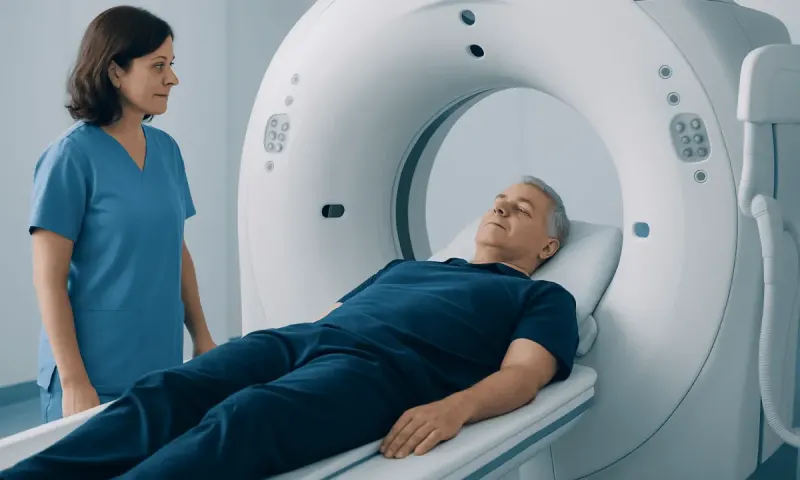
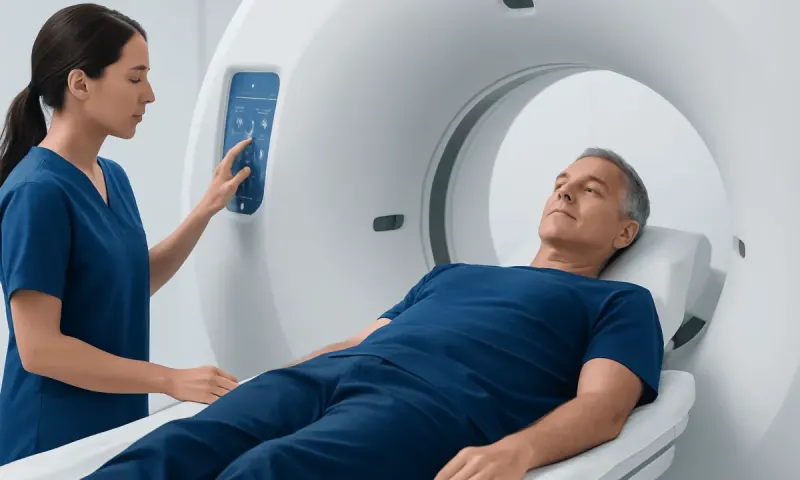
What Is the Best Scan for Prostate Cancer?
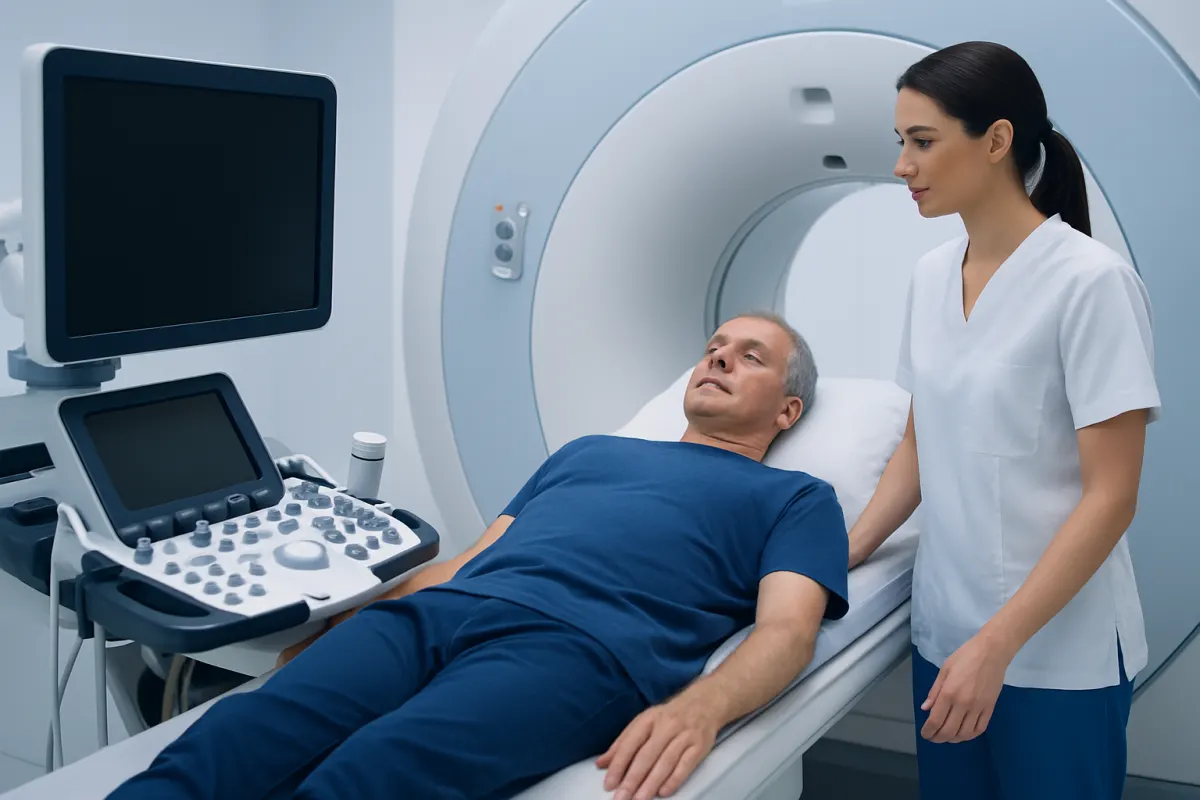
For most people being evaluated for possible prostate cancer, multiparametric MRI (mpMRI) is the most informative first scan because it can identify suspicious areas and help guide a targeted biopsy. No single scan confirms prostate cancer on its own: PSA testing, clinical assessment, MRI, biopsy, and sometimes PSMA PET/CT each have different roles.
Overview: choosing the right prostate cancer scan
What is the best scan for prostate cancer? For a person with an elevated prostate-specific antigen (PSA) result or an abnormal rectal examination, a multiparametric MRI (mpMRI) is usually the preferred first scan of the prostate. It produces detailed images, helps identify areas that may need sampling, and can sometimes help a specialist decide whether biopsy is necessary.
The best scan depends on the clinical question. MRI is primarily used to look for a possible cancer within the prostate. If cancer has already been diagnosed, imaging may be used to assess whether it has spread beyond the prostate. In that setting, PSMA PET/CT, CT, bone scanning, or MRI may be selected based on the person’s risk level, symptoms, previous treatment, and local clinical guidance.
Imaging is part of a careful pathway rather than a stand-alone answer. A urologist considers PSA trends, age, family history, symptoms, physical examination findings, prostate size, MRI results, and personal preferences before recommending the next step. This approach helps avoid unnecessary procedures while ensuring potentially significant cancers are investigated appropriately.
How prostate cancer testing is usually approached
The best check for prostate cancer often begins with a discussion about individual risk. Risk can be higher with increasing age, a close relative with prostate or certain other cancers, or inherited gene changes. Many prostate cancers cause no symptoms at an early stage, which is why testing may be considered even when a person feels well.
A PSA blood test is commonly the first assessment. PSA is made by prostate tissue and may increase because of cancer, but also because of benign prostate enlargement, inflammation or infection, recent ejaculation, cycling, urinary retention, or procedures involving the prostate. A result therefore needs interpretation in context, and a repeat PSA may sometimes be appropriate.
If PSA or examination findings raise concern, mpMRI may follow. The scan provides a PI-RADS score, which estimates how likely a visible area is to represent clinically significant cancer. A suspicious MRI finding can guide a targeted biopsy, often alongside systematic sampling. For more information about the condition and its evaluation, see prostate cancer.
Is a CT scan or MRI better for prostate cancer?

MRI is better than CT for examining the prostate gland itself. A multiparametric MRI combines several image sequences to show prostate anatomy and tissue characteristics in high detail. This makes it more useful for locating suspicious areas, estimating whether a tumour may extend just outside the prostate, and planning a targeted biopsy.
CT uses X-rays and is excellent for many parts of the body, but it has limited soft-tissue detail within the prostate. It generally cannot reliably distinguish a small prostate tumour from normal prostate tissue. For this reason, CT is not usually the best diagnostic test when the main question is whether cancer is present inside the prostate.
CT can still have an important role after a cancer diagnosis, particularly as part of staging in selected people with a greater risk of spread. It may be used to assess lymph nodes or organs elsewhere in the body, often alongside other imaging. The right test is chosen by the clinical team according to the purpose of the scan rather than as a one-size-fits-all option.
What is the number one test for prostate cancer?
There is no single number one test for every stage of prostate cancer assessment. For initial screening and risk assessment, the PSA blood test is the most widely used test. It is simple and useful, but it is not specific for cancer and cannot determine whether a cancer is present or how aggressive it may be.
For someone with an abnormal PSA or other concerning finding, mpMRI is often the best imaging test to refine the risk assessment before biopsy. It can identify lesions that should be sampled and can help clinicians perform MRI-targeted biopsy. However, a normal MRI does not completely rule out cancer, especially when PSA density, family history, examination findings, or other risk factors remain concerning.
In practical terms, the best test for prostate cancer is usually a sequence of tests: informed PSA testing, clinical review, MRI where indicated, and biopsy when necessary. The choice should be individualized with a urologist rather than based on one result alone.
What is the gold standard diagnostic test for prostate cancer?
A prostate biopsy is the gold standard diagnostic test for prostate cancer. During a biopsy, small tissue samples are taken from the prostate and examined under a microscope by a pathologist. Only tissue analysis can confirm whether cancer cells are present and describe their grade, commonly reported using the Gleason score and Grade Group.
Biopsy may be performed through the perineum, the area of skin between the scrotum and anus, or through the rectum. Many centres increasingly use the transperineal approach because it can lower the chance of infection. If an MRI has shown a suspicious area, targeted samples may be taken from that area, usually with additional systematic samples to improve detection.
Biopsy has possible side effects, including temporary blood in the urine, semen, or stool, bruising, discomfort, and infection. The care team explains preparation, anaesthesia options, expected recovery, and warning signs. People should tell their clinician about medicines that affect bleeding and about allergies or prior infections before the procedure.
Is there a better prostate cancer test than PSA?
There is no universal replacement for PSA, but PSA is not used in isolation. It remains the best established blood test for Cancer Screening: PSA Testing, MRI, and When Biopsy Is Needed" class="ahp-ilk">prostate cancer screening and early risk assessment because it is widely available and can identify people who may benefit from further evaluation. Its limitation is that elevated PSA can occur for reasons other than cancer, while some cancers may occur with a PSA that is not markedly raised.
To improve decision-making, clinicians may consider repeat PSA testing, PSA change over time, PSA density (PSA in relation to prostate volume), digital rectal examination, risk calculators, MRI, and selected additional blood or urine tests. The usefulness and availability of these tests vary, and none is suitable for every person.
The best blood test for prostate cancer therefore depends on why testing is being done. PSA is generally the first-line blood test, while additional tests may help clarify whether biopsy is likely to be useful. A clinician can also advise on when to avoid transient influences on PSA testing and whether an unexpected result should be repeated.
What is the best PET scan for prostate cancer?
For many people with confirmed prostate cancer, PSMA PET/CT is the most sensitive modern PET-based imaging option for detecting prostate cancer cells outside the prostate. It uses a tracer that binds to prostate-specific membrane antigen (PSMA), which is often present at higher levels on prostate cancer cells. The PET images are combined with CT, and in some settings with MRI, to show the location of suspicious disease.
PSMA PET/CT is not usually the first test for an elevated PSA before a diagnosis has been made. It is most often considered for staging newly diagnosed intermediate- or high-risk disease, evaluating a rising PSA after surgery or radiotherapy, or helping plan further treatment. It may find small areas of cancer that conventional CT or bone scans do not show.
A PSMA PET result still requires expert interpretation. Not every prostate cancer expresses PSMA strongly, and non-cancerous conditions can occasionally produce uptake. The scan complements, rather than replaces, pathology and the full clinical assessment. It may be incorporated into planning for Cancer Treatment: Options for Every Stage" class="ahp-ilk">prostate cancer treatment when clinically appropriate.
When to seek medical care
People should arrange a medical review if they have urinary symptoms that persist or worsen, such as difficulty starting urination, a weak stream, needing to urinate frequently at night, blood in urine or semen, or unexplained pelvic discomfort. These symptoms are common and are often caused by benign conditions, but they deserve assessment. Early prostate cancer frequently causes no symptoms, so symptoms alone are not a reliable screening tool.
Prompt medical attention is appropriate for inability to pass urine, visible blood in the urine, fever with urinary symptoms, severe pain, or new unexplained bone pain, especially in a person with known prostate cancer. These symptoms do not necessarily indicate cancer, but timely evaluation is important.
Anyone with a raised PSA, abnormal rectal examination, strong family history, or a known inherited cancer-risk mutation should discuss a personalized assessment plan with a qualified doctor. Acıbadem Health Point’s multidisciplinary specialists and JCI-accredited hospitals support international patients with prostate cancer diagnosis and treatment planning.
Frequently asked questions
01What is the best MRI scan for prostate cancer?
Multiparametric MRI, often called mpMRI, is generally the best MRI scan for assessing a possible prostate cancer before biopsy. It combines several imaging techniques to identify suspicious areas and estimate the likelihood of clinically significant cancer. The scan should be interpreted by radiologists experienced in prostate MRI.
02Can an MRI diagnose prostate cancer without a biopsy?
MRI can strongly suggest or make significant cancer less likely, but it cannot confirm a diagnosis on its own. A biopsy is needed to identify cancer cells under a microscope and determine their grade. In some people with a reassuring MRI and low overall risk, a clinician may recommend monitoring rather than immediate biopsy.
03Should everyone with a high PSA have a PSMA PET scan?
No. PSMA PET/CT is not usually the first investigation for a raised PSA when prostate cancer has not been confirmed. MRI and, when needed, biopsy are typically more appropriate at that stage. PSMA PET/CT is more often used for staging known cancer or assessing possible recurrence.
04Is PSA the best screening test for prostate cancer?
PSA is the main and best established screening blood test, but it has benefits and limitations. It can help identify people who may need further evaluation, yet it may be raised for non-cancer reasons and can lead to additional testing. Decisions about PSA screening should be made after discussing personal risks and possible outcomes with a clinician.
05Can a CT scan show prostate cancer?
A CT scan can show an enlarged prostate or obvious advanced disease, but it is not reliable for finding or characterizing cancer within the prostate. MRI provides much better detail of prostate tissue. CT may still be used when assessing whether known cancer has spread.
06What happens if a prostate MRI shows a suspicious lesion?
A urologist reviews the MRI score together with PSA, examination findings, prostate size, and personal risk factors. If the concern is sufficient, the next step is commonly an MRI-targeted biopsy, often combined with systematic biopsy samples. The pathology result then guides whether treatment, monitoring, or further tests are needed.
This article is for general information only and is not a substitute for professional medical advice. Please consult a qualified doctor about your individual situation.
Oncology care in Turkey — second opinion and treatment plan
JCI-accredited · board-certified surgeons · reply within 24h
Add us as a Preferred Source to see more of our trusted health content across Google Search, AI Overviews and Discover.