Clear Aligners: Straightening Teeth Without Braces

Clear aligners are removable, transparent orthodontic devices used to gradually move teeth into a better position. They can be a comfortable and discreet option for many adults and teenagers, but they require careful planning, good daily wear habits, and regular dental supervision.
Overview
Clear aligners are a modern orthodontic treatment designed to straighten teeth without the metal brackets and wires used in traditional braces. They are made from transparent medical-grade plastic and fit closely over the teeth. Each aligner applies gentle, controlled pressure to selected teeth, helping them move gradually toward a planned position.
Treatment usually begins with a detailed dental examination, photographs, scans or impressions, and a digital treatment plan. A series of aligners is then produced, and the patient changes to the next aligner in the sequence according to the dentist’s or orthodontist’s instructions. Because the aligners are nearly invisible, many people choose them for aesthetic reasons, especially adults and older teenagers who prefer a less noticeable option.
Clear aligners can correct many common orthodontic concerns, including mild to moderate crowding, spacing, and certain bite irregularities. However, they are not simply a cosmetic product. Moving teeth affects the whole mouth, including the gums, jaw joints, bite, and long-term tooth stability. For this reason, aligner treatment should be planned and monitored by a qualified dental professional.
How Clear Aligners Work
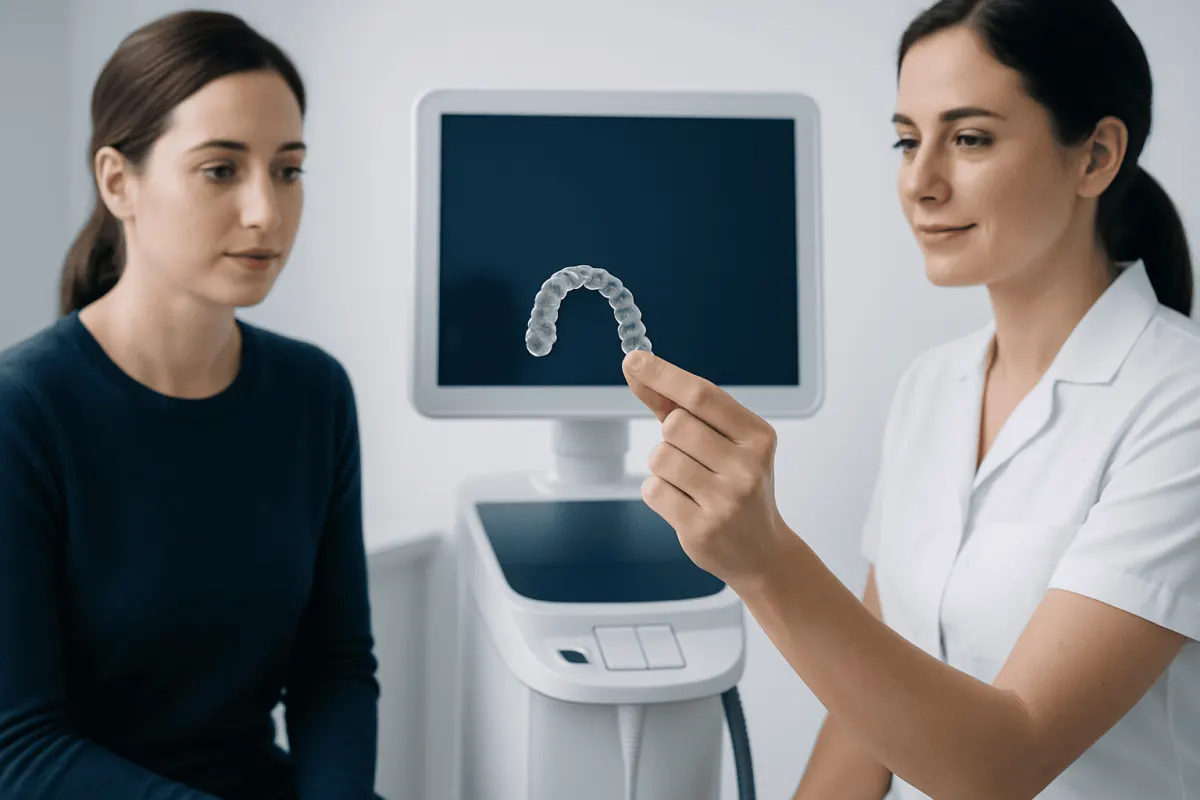
Clear aligners work through a step-by-step process. Each tray is slightly different from the one before it, guiding the teeth in small movements. These movements are calculated in advance using clinical assessment and digital planning software. The aligners must fit accurately because even small differences in fit can affect how well the teeth move.
In some cases, small tooth-colored attachments are bonded to specific teeth. These attachments act like handles, allowing the aligner to apply more precise forces. A dentist may also recommend minor reshaping between teeth, known as interproximal reduction, when safe and necessary, to create space for alignment. These procedures are planned carefully and are not needed for every patient.
Patients are usually advised to wear aligners for most of the day and night, removing them only for eating, drinking anything other than water, brushing, and flossing. Consistent wear is one of the most important factors in treatment success. If aligners are worn for too few hours, teeth may not track as planned, and treatment can take longer or require additional aligners.
Who May Be a Good Candidate

Clear aligners may be suitable for people with mild to moderate misalignment, small gaps, crowded front teeth, or relapse after previous orthodontic treatment. They may also help with some overbite, underbite, crossbite, or open bite situations, depending on the severity and the patient’s overall dental condition. A professional evaluation is needed to decide whether aligners can safely and predictably achieve the desired result.
Good candidates are usually people with healthy teeth and gums, no untreated cavities, and a commitment to wearing the aligners as directed. Teenagers may be suitable if their teeth and jaws have developed enough and they are responsible enough to follow the wear schedule. Adults can also benefit, including those who had braces earlier in life and have noticed their teeth shifting over time.
Clear aligners may not be the best first choice for every case. More complex tooth movements, significant jaw discrepancies, severe crowding, impacted teeth, or major bite correction may require fixed braces, additional appliances, or a combined orthodontic approach. The goal is not only straighter-looking teeth but also a stable, comfortable, and healthy bite.
Benefits and Limitations
One of the main benefits of clear aligners is their discreet appearance. Many patients find them less noticeable in daily life, during work, school, or social situations. Since they are removable, patients can eat most foods without the restrictions often associated with fixed braces, provided they remove the aligners before meals and clean their teeth before putting them back in.
Oral hygiene can also be easier with aligners because brushing and flossing are not obstructed by brackets and wires. This may help reduce the risk of plaque buildup when the patient follows good hygiene habits. Aligners can also be more comfortable for some people because they have smooth edges and do not use metal wires that may irritate the cheeks or lips.
However, aligners have limitations. They require discipline, because removal is both a convenience and a responsibility. Losing aligners, wearing them inconsistently, or not cleaning them properly can delay progress. Some patients may experience temporary speech changes, pressure, or mild soreness when switching to a new aligner. These effects are usually manageable and often improve as the mouth adapts.
- Possible advantages include a discreet appearance, easier cleaning, and fewer food limitations.
- Possible challenges include the need for consistent wear, careful hygiene, and regular follow-up appointments.
- Suitability depends on the complexity of the bite and the health of the teeth and gums.
Diagnosis and Treatment Planning
Before clear aligner treatment begins, the dentist or orthodontist evaluates the teeth, gums, bite, jaw function, and oral hygiene. This assessment may include dental X-rays, intraoral scans or impressions, facial and dental photographs, and a review of medical and dental history. Any active dental problems, such as cavities or gum disease, should usually be treated before orthodontic movement begins.
Digital planning helps the clinician estimate how teeth may move over time and what the final alignment could look like. The treatment plan may show the sequence of movements, expected duration, need for attachments, and whether additional procedures are required. While digital previews are helpful, they are planning tools, not guarantees. Teeth move biologically, and response can vary from person to person.
Follow-up visits are important throughout treatment. The dentist checks whether the teeth are tracking correctly, whether the aligners fit well, and whether the gums and teeth remain healthy. If the teeth do not move as expected, the plan may be adjusted. Some patients need refinement aligners after the initial series to improve the final result.
Daily Care During Aligner Treatment
Good daily habits are essential for safe and effective clear aligner treatment. Aligners should be removed before eating and before drinking beverages that may stain or contain sugar or acid. Water is generally the safest drink while wearing aligners. After meals or snacks, brushing the teeth before reinserting the aligners helps prevent food particles and sugars from being trapped against the teeth.
Aligners should be cleaned gently every day according to the dentist’s instructions. Many patients rinse them with cool or lukewarm water and use a soft toothbrush reserved for the aligners. Hot water should be avoided because it can distort the plastic. Aligners should be stored in their case when not in the mouth to reduce the risk of loss, damage, or contamination.
Patients should continue regular dental checkups and professional cleanings during treatment. Orthodontic movement does not replace preventive care. If an aligner cracks, is lost, or no longer fits properly, the patient should contact the dental clinic for guidance rather than guessing whether to move forward or backward in the aligner sequence.
- Remove aligners for meals and most drinks other than water.
- Brush and floss before putting aligners back in whenever possible.
- Keep aligners away from heat and store them in a protective case.
- Attend scheduled follow-ups so progress can be monitored.
Results, Retainers, and Long-Term Stability
The length of clear aligner treatment varies depending on the starting position of the teeth, the complexity of the bite, and how consistently the aligners are worn. Some minor corrections may take a shorter time, while more complex cases may require many months or longer. The clinician can provide an individualized estimate after examination and planning.
When the active aligner phase is complete, retainers are needed to help maintain the new tooth positions. This is an important part of orthodontic care because teeth naturally tend to shift over time. Retainers may look similar to aligners or may be fixed behind the teeth, depending on the clinical recommendation. Not wearing retainers as advised can allow teeth to move again.
Long-term stability also depends on oral health, bite forces, gum support, and habits such as teeth grinding or tongue thrusting. Some patients may need additional advice for night guards, periodontal care, or bite management. The best results come from treating alignment as part of overall dental health, not as a one-time cosmetic change.
When to See a Dentist or Orthodontist
A dental consultation is recommended for anyone considering clear aligners, especially if there is crowding, spacing, shifting teeth, bite discomfort, or previous orthodontic relapse. A professional can determine whether aligners are appropriate and whether any dental treatment is needed before tooth movement begins. This is particularly important for patients with gum disease, missing teeth, crowns, bridges, implants, or jaw joint symptoms.
During treatment, patients should seek advice if aligners stop fitting, cause persistent pain, create sores that do not heal, or if a tooth feels unusually loose. Mild pressure when changing aligners is common, but ongoing or severe discomfort should be assessed. Any signs of gum swelling, bleeding, tooth decay, or bad taste should also be discussed with a dentist.
Acıbadem Health Point’s multidisciplinary dental specialists and JCI-accredited hospitals provide assessment and treatment planning for international patients seeking orthodontic care, including clear aligners when clinically suitable. As with any orthodontic treatment, an individualized examination is the safest way to understand options, expected steps, and follow-up needs.
Frequently asked questions
01Are clear aligners as effective as braces?
Clear aligners can be very effective for many mild to moderate orthodontic problems, including crowding and spacing. However, fixed braces may be more suitable for complex tooth movements or significant bite correction. A dentist or orthodontist can recommend the most predictable option after examining the teeth and bite.
02Do clear aligners hurt?
Patients may feel pressure or mild soreness for a short time after switching to a new aligner. This usually means the aligner is applying force to move the teeth and often improves within a few days. Persistent or severe pain should be checked by a dental professional.
03How many hours a day should clear aligners be worn?
Most aligner plans require wear for most of the day and night, with removal mainly for eating, drinking, brushing, and flossing. The exact recommendation should come from the treating dentist or orthodontist. Inconsistent wear can slow progress and may affect the final result.
04Can patients eat with clear aligners in place?
Patients should usually remove clear aligners before eating. Eating with aligners can damage or stain them and may trap food against the teeth. After eating, it is best to brush and floss before putting the aligners back in.
05Will clear aligners affect speech?
Some people notice a slight lisp or change in speech when they first start wearing aligners. This is usually temporary as the tongue adapts to the trays. Practicing speaking and wearing the aligners consistently often helps the adjustment happen more quickly.
06What happens after clear aligner treatment is finished?
After treatment, retainers are needed to help keep the teeth in their new positions. Teeth can gradually shift if retainers are not worn as recommended. The dentist or orthodontist will explain how often to wear the retainer and when follow-up checks are needed.
This article is for general information only and is not a substitute for professional medical advice. Please consult a qualified doctor about your individual situation.
Joint and spine care in Turkey — expert assessment & treatment
JCI-accredited · board-certified surgeons · reply within 24h
Add us as a Preferred Source to see more of our trusted health content across Google Search, AI Overviews and Discover.