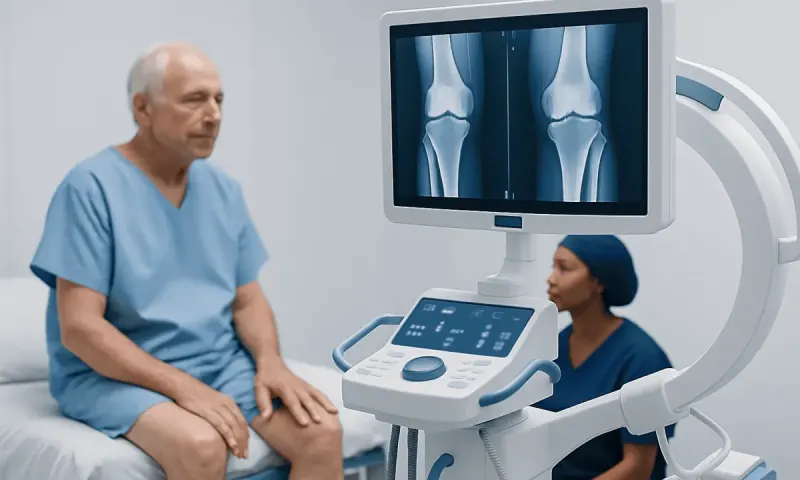
Am I a Candidate for Knee Replacement Surgery?

A person may be a candidate for knee replacement when ongoing knee pain, stiffness, and reduced mobility significantly affect daily life and nonsurgical care no longer provides adequate relief. An orthopedic assessment considers symptoms, joint damage, overall health, goals, and readiness for recovery rather than age alone.
Overview: Who May Be a Candidate?
Am I a candidate for knee replacement? A person may be eligible when knee pain and loss of function substantially limit everyday activities, imaging confirms significant joint damage, and suitable nonsurgical treatments have not provided enough relief. The decision is individualized: an orthopedic specialist weighs symptoms, knee structure, general health, expectations, and ability to take part in rehabilitation.
Knee replacement, also called knee arthroplasty, is most often performed for advanced osteoarthritis. It may also be considered for inflammatory arthritis, post-traumatic arthritis, or certain forms of joint damage that cause persistent disability. The purpose is not simply to improve an X-ray result; it is to reduce pain and support safer, more comfortable movement when the expected benefits outweigh the risks.
Some people need a total knee replacement, in which all major damaged joint surfaces are replaced. Others may be suitable for a partial knee replacement if arthritis is limited to one area of the knee and ligaments and alignment are appropriate. For a detailed overview of the operation, patients can review knee replacement treatment information.
Signs That Knee Replacement May Be Considered
The symptoms that matter most are those affecting quality of life. Pain may occur while walking, climbing stairs, standing from a chair, or at rest. Stiffness, swelling, reduced range of motion, a feeling that the knee may give way, and difficulty sleeping can also be important when they are frequent and persistent.
Doctors often consider surgery when symptoms interfere with essential activities such as work, self-care, shopping, exercise, or caring for family. A person does not need to wait until they are unable to walk. However, surgery is generally not the first response to mild or occasional knee discomfort that can be managed with activity adjustments and conservative care.
- Daily pain that remains troublesome despite reasonable treatment
- Walking, stairs, or sleep regularly limited by the knee
- Marked stiffness or reduced ability to straighten or bend the knee
- Imaging showing arthritis or other damage consistent with symptoms
- A clear understanding of the recovery commitment and realistic goals
Symptoms and scan results do not always match perfectly. Some people have substantial arthritis on an X-ray but manageable symptoms, while others have severe symptoms with less obvious changes. This is why candidacy is based on the full clinical picture rather than imaging alone.
Eligibility Criteria and Preoperative Assessment
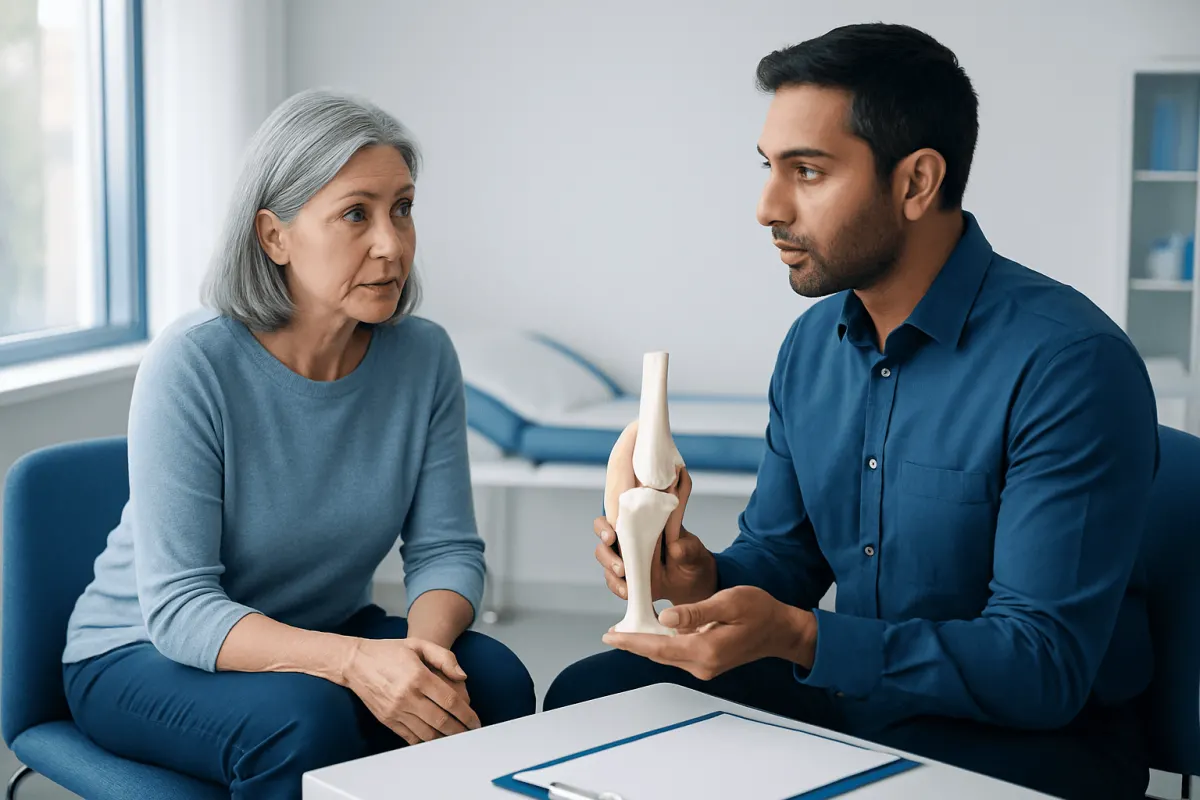
During an orthopedic consultation, the clinician asks about the location, duration, and pattern of pain; past injuries or surgery; previous treatments; mobility; and goals. The knee is examined for swelling, alignment, stability, strength, range of motion, and signs that pain may be coming from the hip, spine, nerves, or circulation rather than the knee joint itself.
Standing X-rays are commonly used to assess joint-space narrowing, bone changes, deformity, and the parts of the knee affected. Further imaging is sometimes needed, although it is not routine for every person. Blood tests, heart and lung assessment, medication review, and screening for infection help determine whether surgery can be performed as safely as possible.
Factors such as obesity, diabetes, smoking, anemia, heart disease, kidney disease, dental or skin infections, and use of blood-thinning medicines do not automatically rule out surgery. They may require optimization before an operation. Weight management, improving blood sugar control, stopping smoking, strengthening exercises, and treatment of active infections can lower avoidable risks and support recovery.
People considering surgery should also be prepared to participate in physiotherapy and follow postoperative advice. A pre-assessment form or orthopedic consultation can help organize medical history, symptoms, medications, previous treatments, and practical support needs before a decision is made.
How Knee Replacement Works and What Happens During Surgery
The knee is a joint where the thighbone, shinbone, and kneecap meet. In arthritis, the smooth cartilage that normally allows these surfaces to glide can become worn or damaged. During knee replacement, the surgeon removes a small amount of damaged bone and cartilage and resurfaces the joint with precisely fitted metal and high-grade plastic components. The goal is to create a stable, smoothly moving joint surface.
Before surgery, the care team confirms the plan, reviews anesthesia options, and discusses medicines that may need to be adjusted. On the day of surgery, anesthesia is used so the patient is comfortable and does not feel the operation. The surgeon makes an incision at the knee, prepares the bone surfaces, checks alignment and movement with trial components, then secures the final implants and closes the incision.
The exact approach varies according to the knee problem, implant type, anatomy, and whether a total or partial replacement is planned. A surgeon may use techniques or technology to assist planning and alignment where appropriate, but the essential aim remains careful removal of damaged surfaces and balanced reconstruction of the joint.
Most patients begin supported standing and gentle movement soon after surgery under guidance from the clinical team. Hospital stay and discharge timing depend on individual mobility, pain control, medical needs, and the support available at home.
Benefits, Limitations, and Possible Risks
For appropriately selected patients, knee replacement can provide meaningful relief from arthritis-related pain and improve walking, sleep, and participation in daily activities. Many people regain confidence with movement after rehabilitation. The most realistic goal is a less painful, more functional knee, rather than a knee that feels exactly like a natural joint or permits every high-impact activity.
As with any major operation, there are potential risks. These include infection, bleeding, blood clots, wound-healing problems, stiffness, persistent pain, nerve or blood-vessel injury, instability, and medical complications related to anesthesia. Although uncommon, an implant may loosen, wear, or develop problems over time and could require further surgery.
Risk is reduced through careful assessment, sterile surgical practice, preventive medicines and mobility measures for blood clots, appropriate rehabilitation, and follow-up. Patients should tell their team about all medicines, allergies, previous blood clots, health conditions, and any current illness before surgery.
A person may not be an ideal candidate if pain is not primarily caused by knee joint damage, if an active infection is present, or if medical risks are currently too high. In these situations, treating the underlying issue or choosing another approach may be safer and more useful.
Recovery Timeline and Rehabilitation
Recovery begins immediately after surgery with pain management, circulation exercises, and guided walking. Physiotherapy focuses on gradually restoring knee movement, strength, balance, and confidence with everyday tasks. Early progress varies, and swelling, bruising, tiredness, and temporary discomfort with exercise are common parts of healing.
During the first several weeks, many patients use a walking aid and work steadily on bending and straightening the knee. The care team provides guidance on wound care, bathing, sleep positions, medicines, stairs, and returning home safely. Help from a family member, friend, or caregiver may be useful in the early period.
Improvement continues over months as muscles regain strength and swelling settles. Return to driving, work, travel, and recreational activity depends on the operated leg, job demands, recovery progress, and the surgeon’s advice. Low-impact activities such as walking, cycling, and swimming are often encouraged once healing permits, while running and jumping may place greater stress on the implant.
Attending follow-up appointments and completing the prescribed rehabilitation plan are important. New or worsening pain, increasing redness, wound drainage, fever, calf swelling, chest pain, or shortness of breath should be assessed urgently.
When to Seek Medical Care
A person should arrange a medical review for knee pain that lasts for several weeks, repeatedly returns, limits normal movement, or does not improve with rest and appropriate self-care. An assessment is also sensible when there is progressive bowing of the knee, frequent giving way, increasing stiffness, or a major reduction in walking tolerance.
Urgent medical care is needed after a significant injury if the person cannot bear weight, the knee looks deformed, or there is numbness or a cold foot. Prompt assessment is also important for a hot, red, very swollen knee with fever or feeling unwell, as infection or another urgent condition needs to be excluded.
For people exploring surgical options, Acıbadem Health Point’s multidisciplinary specialists and JCI-accredited hospitals assess and treat knee conditions for international patients. A consultation can clarify whether continued nonsurgical management, partial replacement, or total knee replacement is the most suitable path.
Frequently asked questions
01What is the main criterion for knee replacement?
The main criterion is not age or an X-ray alone. Knee replacement is usually considered when confirmed knee joint damage causes persistent pain and disability that significantly affect daily life despite appropriate nonsurgical treatment.
02Can someone be too young or too old for knee replacement?
There is no single age cutoff. Specialists consider overall health, severity of symptoms, degree of joint damage, activity needs, and the likelihood that surgery will provide lasting benefit. Younger patients may be advised to consider implant longevity, while older adults may need a careful medical assessment before surgery.
03Do I need to try physiotherapy before knee replacement?
Many people try physiotherapy, activity modification, weight management where relevant, pain-relief strategies, injections, or supportive devices before surgery. The most appropriate options depend on the diagnosis, symptom severity, and previous response to treatment. A doctor can advise which nonsurgical measures are reasonable in an individual case.
04How do doctors decide between partial and total knee replacement?
Partial knee replacement may be possible when arthritis is confined to one compartment of the knee and the knee's ligaments, alignment, and other areas are suitable. Total knee replacement is more commonly used when damage is widespread or the joint is significantly deformed. Imaging and examination guide this decision.
05How long does recovery from knee replacement take?
Most people begin walking with support shortly after surgery and make steady gains during the first weeks. Recovery continues for several months as strength, movement, and endurance improve. The exact pace depends on health, rehabilitation participation, the type of surgery, and individual healing.
06What can prevent someone from having knee replacement surgery?
Active infection, uncontrolled medical conditions, or uncertainty that the knee joint is the true source of pain may mean surgery should be delayed or avoided. Some risk factors can be improved before surgery, such as smoking, poorly controlled diabetes, anemia, or low fitness. An orthopedic and medical assessment helps identify the safest plan.
This article is for general information only and is not a substitute for professional medical advice. Please consult a qualified doctor about your individual situation.
Joint and spine care in Turkey — expert assessment & treatment
JCI-accredited · board-certified surgeons · reply within 24h
Add us as a Preferred Source to see more of our trusted health content across Google Search, AI Overviews and Discover.