Knee Pain When Climbing Stairs: Common Causes
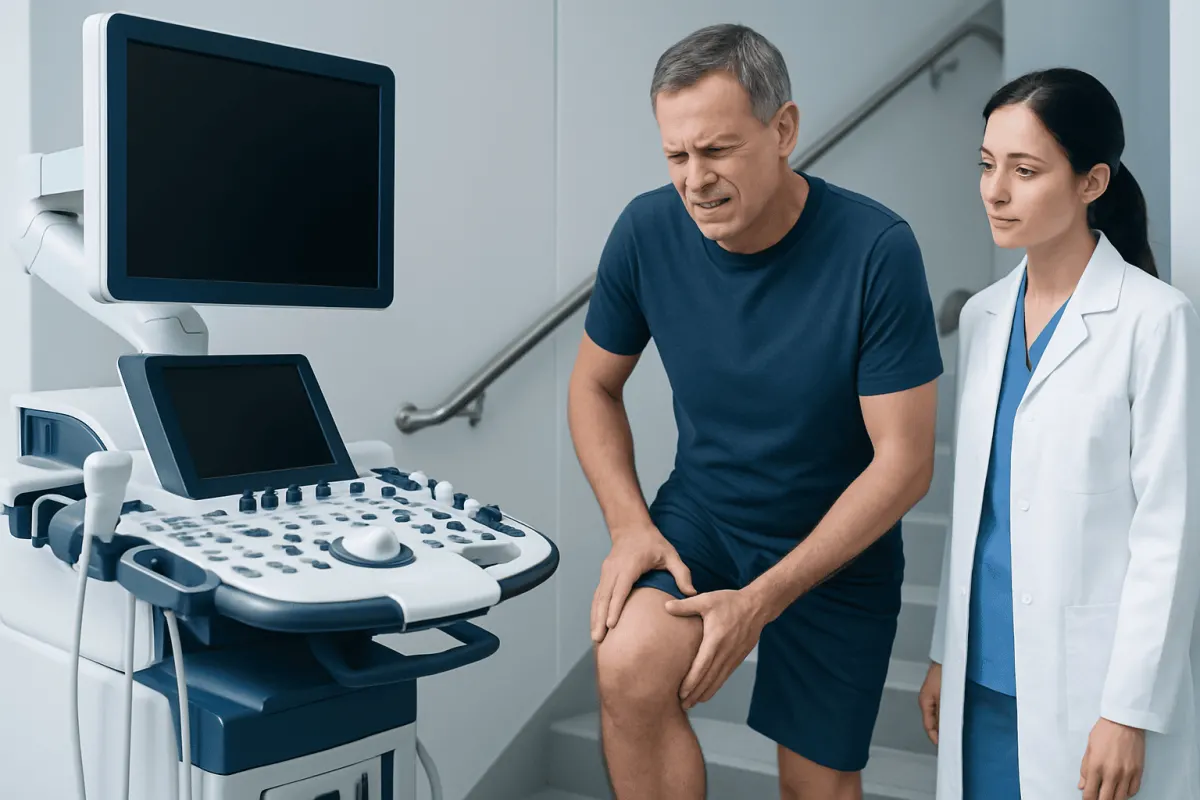
Pain knee climbing stairs commonly occurs when the knee bends under load, increasing pressure through the kneecap joint and surrounding tissues. It may result from temporary overuse, muscle weakness, a tendon problem, arthritis, or an injury, and the pattern of symptoms can help guide evaluation.
Overview: Why Does the Knee Hurt When Climbing Stairs?
Pain knee climbing stairs is often caused by increased pressure on the kneecap and the joint surfaces behind it as the knee bends and the thigh muscles work to lift the body upward. Many people notice discomfort at the front of the knee, around or behind the kneecap, although pain may also occur on the inner, outer, or back part of the joint.
Stairs can reveal a knee problem that is not noticeable during level walking. Going up requires force from the quadriceps muscles, while going down places additional demand on the knee to control the body’s descent. The exact location, onset, and associated symptoms—such as swelling, clicking, stiffness, or a feeling that the knee may give way—offer useful clues.
In many cases, the symptom improves with a sensible reduction in aggravating activity and targeted rehabilitation. However, ongoing or significant pain should not simply be ignored, particularly after an injury or when it affects daily movement.
The Stair-Climbing Pattern: What the Location of Pain May Suggest
Pain at the front of the knee or behind the kneecap is frequently associated with patellofemoral pain. This term describes pain arising from the area where the kneecap glides in a groove at the end of the thigh bone. It can be more noticeable with stairs, squatting, rising from a chair, running, or sitting with bent knees for a long time.
Pain just below the kneecap may point to irritation of the patellar tendon, particularly in people whose symptoms began after jumping, running, or a sudden increase in training. Pain at the inner or outer joint line, especially with twisting, catching, or swelling, may occur with a meniscus problem or early joint degeneration.
Stiffness and aching that develop gradually, particularly in midlife or later adulthood, may be related to Osteoarthritis: When Injections Still Help and When Surgery Makes More Sense" class="ahp-ilk">knee osteoarthritis. Osteoarthritis does not affect everyone in the same way: some people mainly notice discomfort after activity, while others have stiffness after rest, reduced range of motion, or pain with weight-bearing tasks such as stairs.
Common Causes and Contributing Factors

Patellofemoral pain is one of the most common explanations for knee pain on stairs. It may develop when the kneecap and surrounding tissues are repeatedly stressed, often alongside reduced strength or coordination in the hip and thigh muscles. A rapid change in exercise, hills, repeated stair use, or prolonged kneeling and squatting can contribute.
Other possible causes include tendon irritation, bursitis, arthritis, cartilage changes, and injuries to the meniscus or ligaments. An acute injury may follow a fall, twist, awkward landing, or direct blow to the knee. Previous knee surgery or injury can also alter movement patterns and increase strain on part of the joint.
- Increasing activity intensity or duration too quickly
- Weakness or poor control of the hip, thigh, or core muscles
- Reduced flexibility in muscles around the hip and knee
- Excess body weight, which increases load across the knee joint
- Unsupportive or worn footwear, depending on the person’s activity and foot mechanics
- Older age, prior injury, occupational kneeling, or family history of osteoarthritis
These factors do not establish a diagnosis on their own. Knee pain can have more than one cause, and a healthcare professional can help determine which factors are most relevant for the individual.
Symptoms That Help Distinguish Possible Knee Problems
Patellofemoral pain often feels like a dull ache at the front of the knee and may be worse on stairs, with squats, or after sitting. Some people hear or feel crackling, known as crepitus, when bending the knee. Crepitus alone is common and is not necessarily a sign of damage, especially when it is painless.
Osteoarthritis may cause activity-related pain, stiffness after resting, reduced flexibility, and intermittent swelling. Tendon pain is commonly more localized and tender to touch, with discomfort during forceful knee movements. A meniscus injury can cause pain along the joint line, swelling, catching, or a sensation that the knee gets stuck.
Feeling that the knee gives way can occur for different reasons, including pain-related muscle inhibition, instability after a ligament injury, or a mechanical problem inside the joint. A true locking episode, where the knee cannot fully bend or straighten, deserves timely medical assessment.
How Knee Pain on Stairs Is Diagnosed
A clinician will usually begin by asking when symptoms started, whether there was an injury, which activities trigger pain, and whether swelling, locking, weakness, fever, or pain at night is present. They may also ask about work demands, sport, medical history, previous injuries, and changes in activity or body weight.
The physical examination may include observing walking and stair-related movement, checking knee alignment and range of motion, pressing specific areas for tenderness, and assessing muscle strength, balance, and hip function. The clinician may perform maneuvers that evaluate the ligaments, meniscus, kneecap, and other structures.
Imaging is not always needed for new, uncomplicated anterior knee pain. X-rays can help assess arthritis, alignment, or bone changes when clinically appropriate. Magnetic resonance imaging may be considered when an internal injury is suspected, symptoms do not improve as expected, or surgical planning is being considered. Blood tests are occasionally useful when inflammatory or infectious causes need to be ruled out.
Treatment Options and Everyday Measures
Treatment depends on the underlying cause, symptom severity, and the person’s goals. For many overuse-related problems, temporarily reducing the activities that provoke pain can help while maintaining comfortable forms of movement, such as level walking, swimming, or cycling with suitable adjustment. Complete rest is not always necessary or helpful; gradual, tolerable activity is often part of recovery.
Guided physiotherapy can address strength, flexibility, balance, and movement control. Exercises often focus on the quadriceps, hip muscles, and trunk, while also considering how the person performs daily tasks. A clinician may recommend physical therapy to develop an individualized plan and progress activity safely.
Cold packs after activity may ease short-term soreness for some people. Simple pain-relieving medicines or anti-inflammatory medicines may be appropriate for selected individuals, but they are not suitable for everyone and should be discussed with a pharmacist or doctor, particularly for people with stomach, kidney, heart, bleeding, or medication-related concerns.
For arthritis or a structural knee condition, management may include rehabilitation, weight management where relevant, injections in carefully selected situations, or surgery when non-surgical treatment has not adequately controlled symptoms. Decisions about knee replacement are based on symptoms, joint damage, function, overall health, and patient preferences—not stair pain alone.
Reducing Strain During Stairs and Preventing Recurrence
When the knee is painful, using a handrail and taking one step at a time can reduce demand on the joint. Leading with the less painful leg when going up and the more painful leg when going down may be more comfortable temporarily. Smaller steps, slower pacing, and avoiding carrying heavy loads on stairs can also help.
A gradual approach to fitness is important. Activity levels should increase in manageable steps, with time for the body to adapt. Regular strengthening of the thigh and hip muscles can support knee function, while a warm-up before exercise and appropriate recovery may reduce the chance of overuse symptoms.
Comfortable, well-fitting shoes suited to the activity can be useful. If body weight is contributing to joint load, gradual and sustainable weight changes may improve knee symptoms and overall health. It is best to seek professional guidance rather than relying on a knee brace, insole, or exercise routine that causes increasing pain.
When to Seek Medical Care
Medical advice is recommended if knee pain persists for more than a few weeks, repeatedly returns, limits work or everyday activities, or does not improve with sensible self-care. Assessment is also appropriate when there is swelling, reduced movement, recurrent giving way, painful clicking, or pain that began after a twist, fall, or sporting injury.
Prompt medical care is important for a knee that is severely swollen, visibly deformed, unable to bear weight, locked in one position, or associated with numbness or a cold, pale foot. Urgent assessment is also needed if the knee becomes hot, red, and very painful, particularly with fever or feeling unwell, as infection or inflammation must be considered.
Acıbadem Health Point’s multidisciplinary specialists and JCI-accredited hospitals assess and treat knee conditions for international patients, with evaluation tailored to the person’s symptoms and functional needs.
Frequently asked questions
01Why does my knee hurt only when I climb stairs?
Climbing stairs increases the force passing through the kneecap joint and requires the thigh muscles to work harder than during level walking. This can make early patellofemoral pain, tendon irritation, muscle weakness, or arthritis more noticeable. The location of the pain and any swelling or mechanical symptoms help clarify the likely cause.
02Is knee pain on stairs a sign of arthritis?
It can be, especially if there is stiffness after rest, gradual worsening, reduced movement, or recurring swelling. However, pain on stairs is also common with patellofemoral pain and tendon problems, including in younger people. A clinical assessment is needed to determine whether arthritis is present.
03Why does going downstairs hurt more than going upstairs?
Going downstairs requires the thigh muscles to control the body’s downward movement while the knee is bent, which can increase pressure at the kneecap joint. This pattern is often reported with patellofemoral pain, although other knee conditions can cause it as well. Slowing down and using a handrail may reduce discomfort temporarily.
04Should I exercise if my knee hurts on stairs?
Gentle movement is often beneficial, but activities that clearly worsen pain should be reduced or modified until the cause is understood. Low-impact exercise and a professionally guided strengthening program may be appropriate. Severe pain, swelling, locking, or instability should be assessed before continuing strenuous activity.
05Can weak muscles cause knee pain when climbing stairs?
Yes. Weakness or poor coordination in the quadriceps and hip muscles can affect how the knee and kneecap move under load. Strengthening these areas is commonly part of treatment, but exercises should be selected and progressed according to the individual’s condition.
06When is knee pain on stairs urgent?
Urgent care is appropriate after a major injury, if the knee is deformed, if weight cannot be placed on the leg, or if the knee is locked. A hot, red, very swollen knee with fever or feeling unwell also needs prompt medical attention. These symptoms may indicate a condition that should not be managed at home.
This article is for general information only and is not a substitute for professional medical advice. Please consult a qualified doctor about your individual situation.
Joint and spine care in Turkey — expert assessment & treatment
JCI-accredited · board-certified surgeons · reply within 24h
Add us as a Preferred Source to see more of our trusted health content across Google Search, AI Overviews and Discover.