Allergic Eye Ointment: Uses and Side Effects

Key Takeaways
- Allergic eye ointment is not a single medicine; it usually refers to an eye ointment used to soothe allergy-related irritation or to support treatment.
- Common eye allergy symptoms include itching, redness, watering, swelling, and a gritty or burning feeling.
- A proper diagnosis matters because allergies, infection, dry eye, and eyelid conditions can look similar.
- Some eye ointments are intended for symptom relief, while others may be prescribed alongside other treatments.
- People who wear contact lenses, have severe pain, or notice vision changes should seek medical advice promptly.
Allergic eye ointment may be recommended when eye allergy symptoms need local relief and lubrication support. The best choice depends on the cause of symptoms, eye health history, and whether the eyes are irritated, dry, or inflamed.
Overview
When the eyes react to pollen, dust, animal dander, smoke, or other triggers, the surface of the eye can become red, itchy, watery, and uncomfortable. In everyday language, people may call the treatment an allergic eye ointment, but the exact product can vary widely. Some ointments are soothing lubricants, while others are prescribed to calm inflammation or protect the eye surface as part of a broader care plan.
Eye allergy care is often straightforward, yet choosing the right treatment is not always as simple as selecting the product with the strongest label. Symptoms that seem “allergic” can also be caused by dry eye, blepharitis, an infection, or irritation from contact lenses and cosmetics. A clinician’s evaluation helps match the treatment to the actual problem and reduces the risk of using the wrong product on a sensitive eye.
For patients deciding on care from another country, this usually means thinking beyond the ointment itself. A clear diagnosis, instructions in an understandable language, and follow-up if symptoms change are important parts of treatment. That is especially true when eye discomfort is persistent, recurrent, or affecting work, travel, or daily activities.
Symptoms
Eye allergies often cause a very particular pattern of discomfort. Itching is one of the most common clues, and it may come with tearing, redness, and swelling of the eyelids or the white part of the eye. Some people describe a burning, sandy, or “something in the eye” sensation rather than pain.
Symptoms may affect one eye or both, and they can come and go depending on exposure to a trigger. Allergies often worsen outdoors during pollen seasons, after cleaning dusty rooms, around pets, or in dry, windy environments. People with seasonal or environmental allergies may also notice sneezing, a runny nose, or nasal congestion at the same time.
It is important to notice what the eyes are not doing as well. Thick discharge, severe light sensitivity, strong pain, or blurred vision are not typical of simple allergy alone and deserve medical assessment. Likewise, if one eye is much worse than the other, or if symptoms do not improve with usual measures, another cause may be present.
Common eye-allergy symptoms include:
- Itching
- Redness
- Watering or excessive tearing
- Swollen eyelids
- Burning or stinging
- Gritty or irritated sensation
Causes & Risk Factors

Eye allergies happen when the immune system reacts to a harmless substance as if it were a threat. This reaction releases inflammatory chemicals that affect the eye surface and surrounding tissues. The result is irritation, swelling, and the urge to rub the eyes, which can make symptoms worse.
Seasonal allergens such as tree, grass, and weed pollen are frequent triggers. Indoor triggers are also common and may include house dust mites, mold, and animal dander. Air pollution, cigarette smoke, and strong fragrances may not cause a true allergy, but they can intensify irritation and make the eyes feel more reactive.
Some people are more likely to develop eye allergy symptoms. A personal or family history of allergies, asthma, or eczema can increase the chance of allergic eye disease. Contact lens wear, frequent eye rubbing, and dry environments may further irritate the ocular surface and make symptoms feel more pronounced.
Different products may be called “allergic eye ointment” in conversation, but their roles are not identical. A lubricating ointment can help protect and soothe a dry, irritated surface. Prescription ointments may be chosen when the eyelids or eye surface need targeted treatment, but they should be used only under professional guidance.
Diagnosis
Diagnosis usually begins with a careful history of the symptoms, triggers, and timing. A clinician may ask when the problem started, whether both eyes are involved, whether there is itching or pain, and whether the person has allergies elsewhere in the body. The pattern often gives important clues before the eye is even examined.
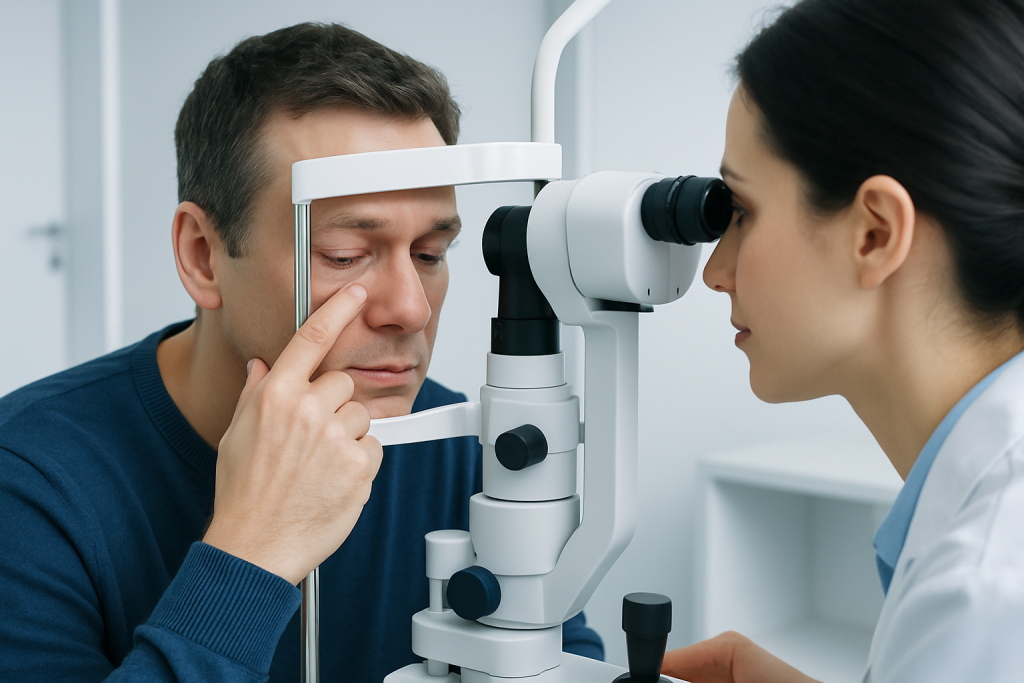
During the eye examination, the doctor may look at the eyelids, conjunctiva, cornea, and tear film. A slit-lamp exam can reveal signs of allergy, dryness, infection, or surface injury. If needed, the clinician may check vision, eyelid margins, or the fit and hygiene of contact lenses.
Testing is not always necessary for a simple case, but it may be useful when symptoms are recurrent or difficult to control. In selected situations, allergy testing or referral to an allergy specialist may help identify triggers. The goal is not only to name the condition, but also to rule out eye problems that need a different treatment approach.
People seeking care while traveling may benefit from bringing a short symptom timeline, a list of eye products already used, and details about contact lens use, pets, or recent exposure to new environments. These small details often help the clinician reach a clearer diagnosis more quickly.
Treatment Options
Treatment depends on what is causing the eye symptoms and how severe they are. For mild allergic irritation, the first steps may include avoiding the trigger when possible, using cool compresses, and cleansing the eyelids gently. Lubricating eye ointment or drops may be recommended to reduce friction and soothe the eye surface.
If symptoms are more persistent, a clinician may suggest an antihistamine eye drop, a mast-cell stabilizer, or a combination product. In some cases, an ointment is used to support the eye surface overnight, especially when dryness and allergy overlap. If inflammation is significant, medical supervision is important because certain stronger treatments are not appropriate for routine self-care.
It is essential to use only products suited to the specific diagnosis. Some ointments are intended for the eyelids, some for the eye surface, and some are prescription-only. Using a product designed for another purpose, or sharing eye medication with someone else, can lead to delayed healing or added irritation.
Typical treatment approaches may include:
- Trigger reduction and environmental control
- Lubricating ointments or preservative-free tears
- Antihistamine or anti-allergy eye drops as prescribed
- Short-term doctor-supervised anti-inflammatory treatment when needed
- Management of dry eye or eyelid inflammation if present alongside allergy
For international patients, treatment planning may also consider the timing of travel, follow-up access, and the ability to continue care at home. A good plan should be practical, clearly explained, and safe to use after returning to another country.
Prevention & Self-care
Many people can reduce flare-ups by learning what triggers their eye symptoms and making a few targeted changes. Keeping windows closed during high-pollen periods, showering after outdoor exposure, and washing bedding regularly may help if seasonal or indoor allergens are involved. A clean, well-ventilated living space can also make a difference.
Eye rubbing is one of the most common habits to avoid. Although rubbing can feel briefly relieving, it often increases irritation and can worsen swelling. Cool compresses, proper hand hygiene, and gentle eyelid cleansing are safer ways to ease discomfort.
Contact lens wearers may need to be especially cautious. Lenses can trap allergens or make the ocular surface more sensitive, so a doctor may advise temporary lens breaks during a flare. Cosmetics around the eyes should be used carefully, and any product that causes burning, redness, or repeated irritation should be stopped until the eyes are assessed.
Self-care tips that are often helpful include:
- Use preservative-free lubricating drops or ointment if recommended
- Avoid rubbing the eyes
- Limit exposure to known triggers when possible
- Clean eyelids gently with a clinician-approved routine
- Replace eye makeup if contamination is suspected
- Follow storage and hygiene instructions for contact lenses
When to See a Doctor
Medical assessment is wise when symptoms are new, persistent, or not improving with simple measures. A doctor can confirm whether the problem is allergy and choose the safest treatment. This matters because eye infections, corneal irritation, and other eye disorders can sometimes resemble allergies in the early stages.
Prompt evaluation is especially important if there is pain, sensitivity to light, decreased vision, thick discharge, marked swelling, or symptoms in only one eye that are getting worse. People who wear contact lenses should seek advice early, since lens-related problems sometimes need rapid treatment. Any eye symptom after an injury or chemical exposure should be treated as urgent.
It is also worth seeing a doctor when allergic eye symptoms keep returning through the year or begin interfering with sleep, work, reading, or driving. A more complete plan may be needed, including trigger review, eye surface assessment, and guidance on which ointment or drop is most appropriate. Acibadem Health Point’s multidisciplinary specialists and JCI-accredited hospitals diagnose and treat eye conditions for international patients with coordinated, patient-centered care.
Care should not be delayed if the person is unsure whether the product they are using is safe for the eye, especially if it was purchased without a prescription in another country. The right treatment can be simple, but the safest path starts with the correct diagnosis.
Living With Recurrent Eye Allergies
Recurrent eye allergy can feel frustrating because it often returns with seasons, dust exposure, or changes in environment. Even so, symptoms can usually be managed with a combination of trigger awareness, good eye hygiene, and the right treatment plan. The aim is to keep the eyes comfortable without overusing products that may irritate the surface over time.
Patients who travel frequently may benefit from keeping a short record of triggers, medications used, and how the eyes responded. This can help a clinician fine-tune treatment during future visits, whether the person is at home or seeking care abroad. A clear plan also makes it easier to continue treatment safely after the trip ends.
With thoughtful evaluation, most people can identify whether they need simple lubrication, allergy-specific treatment, or a different diagnosis altogether. That practical clarity is often the most useful outcome, because it turns a recurring nuisance into a manageable part of daily health.
Frequently asked questions
01What is allergic eye ointment used for?
The term usually refers to an eye ointment used to soothe irritation from allergies or to protect the eye surface when it is dry and inflamed. It is not a single standard medicine, so the exact purpose depends on the product and the diagnosis. A clinician can help choose whether an ointment, drops, or another treatment is most appropriate.
02Can allergic eye symptoms go away without treatment?
Mild symptoms may improve when the trigger is removed and the eyes are rested. However, repeated exposure to allergens often brings symptoms back, and some people need treatment to feel comfortable. If the discomfort keeps returning or becomes more intense, medical advice is sensible.
03Are eye allergies the same as an eye infection?
No, they are different, although they can look similar at first. Allergies usually cause itching, watering, and redness, while infections are more likely to cause thicker discharge, pain, or increasing light sensitivity. Because the treatments differ, an examination is helpful if there is uncertainty.
04Can contact lens wearers use allergic eye ointment?
Contact lens wearers should be cautious, because some ointments are not meant to be used with lenses in place. A doctor may advise stopping lens wear temporarily during a flare and using another form of treatment first. Hygiene and safe lens handling are important parts of recovery.
05When should eye allergy symptoms be checked urgently?
Urgent assessment is appropriate if there is eye pain, vision changes, strong light sensitivity, thick discharge, or a history of injury or chemical exposure. One-sided worsening symptoms also deserve prompt review. These signs suggest that something other than simple allergy may be going on.
06What helps reduce future flare-ups?
Reducing exposure to known triggers is often the most useful step. Practical measures include keeping the home cleaner, managing pollen exposure, avoiding eye rubbing, and following a clinician’s advice on lubrication or allergy control. A personalized plan is especially helpful for people with recurrent symptoms.
This article is for general information only and is not a substitute for professional medical advice. Please consult a qualified doctor about your individual situation.
Explore treatments in Turkey — costs, top hospitals & a free quote
JCI-accredited · board-certified surgeons · reply within 24h
Add us as a Preferred Source to see more of our trusted health content across Google Search, AI Overviews and Discover.