Wisdom Teeth Removal: Procedure and Recovery

Key Takeaways
- Wisdom teeth removal is often recommended when third molars are impacted, painful, infected, or affecting nearby teeth.
- Some people never need their wisdom teeth removed, but others benefit from early evaluation before symptoms become severe.
- The procedure may be done under local anesthesia, sedation, or general anesthesia depending on complexity and patient needs.
- Recovery usually includes swelling, soft foods, careful oral hygiene, and temporary activity limits.
- A dentist or oral surgeon can explain whether observation or removal is the safer long-term choice.
Medically reviewed by the Acıbadem clinical team — August 19, 2026
Wisdom teeth removal is a common dental procedure used to prevent or treat pain, infection, crowding, and damage to nearby teeth. Understanding when it is recommended, how it is performed, and what recovery usually involves can help patients plan care with confidence.
Overview
Wisdom teeth are the third molars, the back teeth that usually appear in the late teens or early adult years. For some people, they come through normally and stay healthy. For many others, the jaw does not have enough space, and the teeth remain partly trapped under the gum or grow at an angle.
That is where wisdom teeth removal enters the picture. The procedure is done to relieve current problems, but it is also often recommended to prevent future ones such as repeated infections, decay in a hard-to-clean area, or pressure on nearby teeth. For patients planning treatment from another city or country, this decision is usually made after an exam and imaging that help show how the teeth are positioned before travel and scheduling are finalized.
Not every wisdom tooth needs to come out. The best choice depends on symptoms, x-ray findings, age, oral health, and how likely the tooth is to cause trouble later. A careful consultation helps separate a tooth that can be monitored from one that is likely to become a recurring problem.
Symptoms That May Point to a Problem
Wisdom teeth do not always announce themselves loudly. Sometimes the first signs are subtle: a dull ache at the back of the jaw, food trapping behind the last molar, or irritation when chewing. Other people notice swelling around the gums or a bad taste in the mouth when the area becomes inflamed.
When a wisdom tooth is impacted or only partly erupted, the gum tissue around it may become tender and swollen. This can make brushing difficult and may lead to repeated episodes of discomfort. In some cases, the pain comes and goes, which can tempt people to wait; however, repeated flare-ups often suggest that the tooth position is unlikely to improve on its own.
Possible signs that warrant a dental review include:
- Pain or pressure at the back of the mouth
- Swollen, red, or bleeding gums near the last molar
- Difficulty opening the mouth fully
- Repeated infection or a bad taste/odor
- Crowding or shifting of nearby teeth
- Decay in the wisdom tooth or the tooth next to it
Causes & Risk Factors
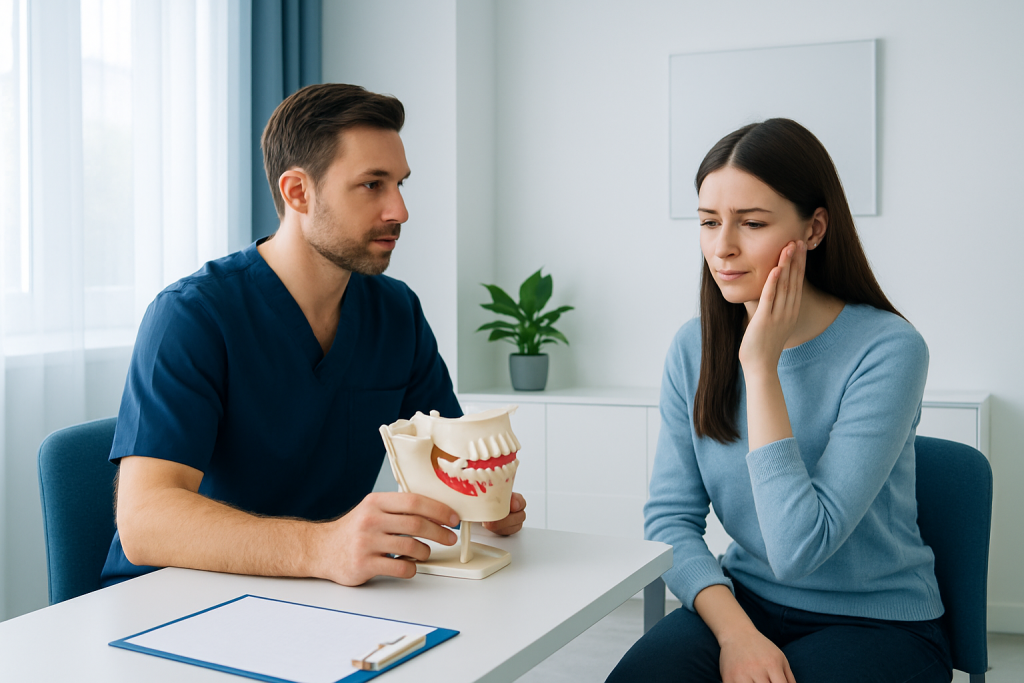
The main reason wisdom teeth become troublesome is anatomy. The jaw may simply be too small to allow the teeth to erupt in a straight, functional position. When space is limited, the tooth may stay buried in bone, come through only partly, or press into the second molar.
Impaction can create several problems. A partially erupted tooth can trap food and bacteria beneath the gum flap, increasing the chance of inflammation or infection. An angled tooth may be difficult to clean, raising the risk of cavities and gum disease. In some people, nearby structures such as nerves or the sinus may also be close enough to affect treatment planning.
Factors that may make removal more likely include:
- Lack of space in the jaw
- Impacted or partially erupted teeth
- Recurrent gum infection around the tooth
- Damage to adjacent teeth or bone
- Difficulty keeping the area clean
- Cysts or other changes seen on imaging
Age can matter as well. Younger adults often heal more quickly after extraction, while later removal can be more complex if roots have fully developed or bone has become denser. That said, the right timing is individual and should be based on a dentist’s or oral surgeon’s assessment rather than age alone.
Diagnosis and Treatment Planning
A wisdom tooth evaluation usually begins with a history of symptoms and a mouth examination. The clinician looks at how much of the tooth has erupted, whether the gums are inflamed, whether there is decay, and whether the bite or neighboring teeth are being affected.
Dental imaging is typically the next step. A panoramic x-ray is commonly used to map the position of the wisdom teeth and their relationship to the roots of nearby teeth, the jawbone, and important nerves. In more complex situations, a three-dimensional scan may be recommended to give a clearer picture before surgery.
From there, the plan may be observation, treatment of a temporary infection, or removal. Observation can be appropriate when a wisdom tooth is fully erupted, easy to clean, and not causing harm. Removal is usually favored when the tooth is likely to create repeated problems or is already damaging surrounding structures. For international patients, this planning stage is especially useful because it helps determine how much time should be set aside for the procedure, initial recovery, and follow-up visits before travel home.
Treatment Options
Wisdom teeth removal is a minor oral surgery, but the details depend on the tooth’s position. A fully erupted tooth may be removed in a straightforward extraction. An impacted tooth may require a small incision in the gum and sometimes sectioning of the tooth into smaller pieces to make removal safer and less traumatic.
Different types of anesthesia may be used. Local anesthesia numbs the area. Sedation can help patients remain relaxed and comfortable. General anesthesia may be appropriate for more complex cases or when several teeth are removed at once. The best option depends on the procedure, the patient’s health, and the care team’s recommendation.
After the tooth is removed, the gum is cleaned and may be closed with stitches. A gauze pad is placed to help control bleeding, and the patient receives instructions for home care. Most people go home the same day. The early recovery period usually involves swelling, mild bleeding, and some jaw stiffness, all of which are expected to improve over time. A clear aftercare plan is especially valuable for patients recovering away from home, because it reduces uncertainty about diet, activity, and follow-up timing.
Recovery, Prevention & Self-care
Recovery after wisdom teeth removal is usually most noticeable in the first few days. Swelling, soreness, and limited mouth opening are common early on. Rest, cold packs during the first day or two, and a soft-food diet can make this period more manageable.
Oral hygiene matters, but it should be gentle. Patients are usually advised to avoid disturbing the surgical site while still keeping the rest of the mouth clean. Following the surgeon’s instructions about rinsing, brushing, and avoiding smoking or vigorous spitting helps lower the chance of complications. It is also wise to stay hydrated and choose foods that are easy to chew and not too hot.
Helpful self-care steps often include:
- Eat soft foods and gradually return to a normal diet
- Use cold compresses in the early recovery phase
- Take prescribed or recommended pain relief only as directed by the care team
- Avoid smoking, vaping, and drinking through a straw during early healing
- Keep follow-up appointments, especially if stitches were placed
There is no way to prevent every wisdom tooth problem, but regular dental checks and timely imaging can catch changes before they become urgent. In some cases, early removal is the simpler path because it can prevent repeated flare-ups and protect nearby teeth.
Possible Complications and When to See a Doctor
Most wisdom tooth extractions heal without major issues, but patients should know what falls outside the expected recovery pattern. Increasing pain after the first few days, persistent bleeding, fever, worsening swelling, pus, or a foul taste that does not improve may suggest a complication that needs attention.
Another issue to watch for is dry socket, which can occur when the blood clot in the socket is lost too early. This often causes a deeper, throbbing pain and should be assessed by the dental team. Numbness that lasts longer than expected, trouble swallowing or breathing, or swelling that spreads quickly should also be reviewed promptly.
It is a good idea to contact a dentist or oral surgeon if the patient has:
- Pain that is getting worse instead of better
- Bleeding that does not settle with the instructions provided
- Signs of infection such as fever or pus
- Persistent numbness or tingling
- Concerns about healing after returning home or traveling
For patients coming from abroad, arranging a clear point of contact before departure can make follow-up much easier if questions arise after the trip. Acibadem Health Point’s multidisciplinary specialists and JCI-accredited hospitals diagnose and treat this condition for international patients, with care plans designed to support both treatment and recovery.
Living Well After Treatment
After the initial healing period, most people return to normal eating and daily routines without ongoing issues. The surgical area gradually becomes less sensitive, and the gum tissue closes over the socket. Good oral hygiene and regular dental visits remain important so the rest of the mouth stays healthy and any nearby teeth can be monitored.
Patients who have had one wisdom tooth removed sometimes ask whether the others should also come out. The answer depends on the status of each tooth, symptoms, and imaging findings. The presence of one problem tooth does not automatically mean the others need surgery, but it does justify a thoughtful review.
In practical terms, wisdom teeth removal is less about the tooth itself and more about what it is doing to the mouth around it. When the balance shifts toward pain, infection, or damage, removal can be a preventive step that protects long-term oral health.
Frequently asked questions
Do all wisdom teeth need to be removed?
No. Some wisdom teeth erupt fully, stay healthy, and are easy to clean. Removal is usually considered when the tooth is impacted, painful, infected, decayed, or affecting nearby teeth.
How is wisdom teeth removal done?
The tooth may be taken out with a simple extraction or with a small surgical procedure if it is impacted. The team uses local anesthesia, sedation, or general anesthesia depending on the complexity and the patient’s needs.
How long does recovery usually take?
The first few days often involve the most swelling and soreness, then symptoms usually ease gradually. Many people feel much better within a week, though complete healing of the socket takes longer.
What foods are best after the procedure?
Soft foods are usually easiest at first, such as soups that are not too hot, yogurt, mashed vegetables, or smoothies without a straw. Patients should follow the surgeon’s guidance and advance their diet as comfort improves.
Is wisdom teeth removal painful?
The procedure itself should be managed with anesthesia so the area is numb or the patient is comfortably asleep, depending on the plan. Some soreness is expected afterward, but it is usually controlled with standard aftercare and the dentist’s recommendations.
When should a patient contact the dentist after surgery?
They should reach out if pain worsens after the first few days, swelling spreads, bleeding does not stop, or fever or pus appears. Any breathing or swallowing difficulty needs urgent medical attention.
References
- American Dental Association
- National Health Service
- Mayo Clinic
- Cleveland Clinic
- American Association of Oral and Maxillofacial Surgeons
This article is for general information only and is not a substitute for professional medical advice. Please consult a qualified doctor about your individual situation.
Explore treatments in Turkey — costs, top hospitals & a free quote
JCI-accredited · board-certified surgeons · reply within 24h
Add us as a Preferred Source to see more of our trusted health content across Google Search, AI Overviews and Discover.