How a Sleep Study Changes ENT Treatment Plans

Key Takeaways
- A sleep study can show whether nighttime symptoms are caused by obstructive sleep apnea or another sleep-related breathing problem.
- ENT specialists use sleep study results to decide if treatment should focus on the nose, tonsils, palate, jaw-related airway narrowing, or a combination of factors.
- Not every person who snores needs surgery; the test often helps avoid unnecessary procedures and supports more targeted care.
- Sleep study findings can influence whether CPAP, weight management, allergy treatment, or an ENT procedure is the best next step.
- People traveling for care should bring symptoms, prior imaging, medication lists, and any previous sleep results to help the team plan treatment efficiently.
Medically reviewed by the Acıbadem clinical team — June 13, 2026
A sleep study can reveal whether snoring, restless sleep, or daytime fatigue is linked to a breathing problem that needs ENT attention. In many cases, the results help doctors choose between medical treatment, surgery, CPAP, or a combined plan tailored to the person’s airway and sleep pattern.
Overview
When a sleep study is added to an ENT workup, it often changes the conversation from “Why is there snoring?” to “What is actually happening to the airway during sleep?” That shift matters because many nighttime symptoms look similar from the outside, yet they can lead to very different treatment plans.
An ENT specialist may recommend a sleep study when there is loud snoring, pauses in breathing, morning headaches, unrefreshing sleep, or daytime sleepiness. The results can show whether the problem is simple vibration of soft tissues, repeated airway collapse, or another sleep-related breathing disorder that needs broader evaluation.
For international patients, this step is especially useful because it brings structure to the care pathway. Instead of arriving with only symptoms and uncertainty, the person and the ENT team gain a clearer map of the airway, the severity of the problem, and the most practical options for treatment and follow-up.
Symptoms That Often Lead to Testing
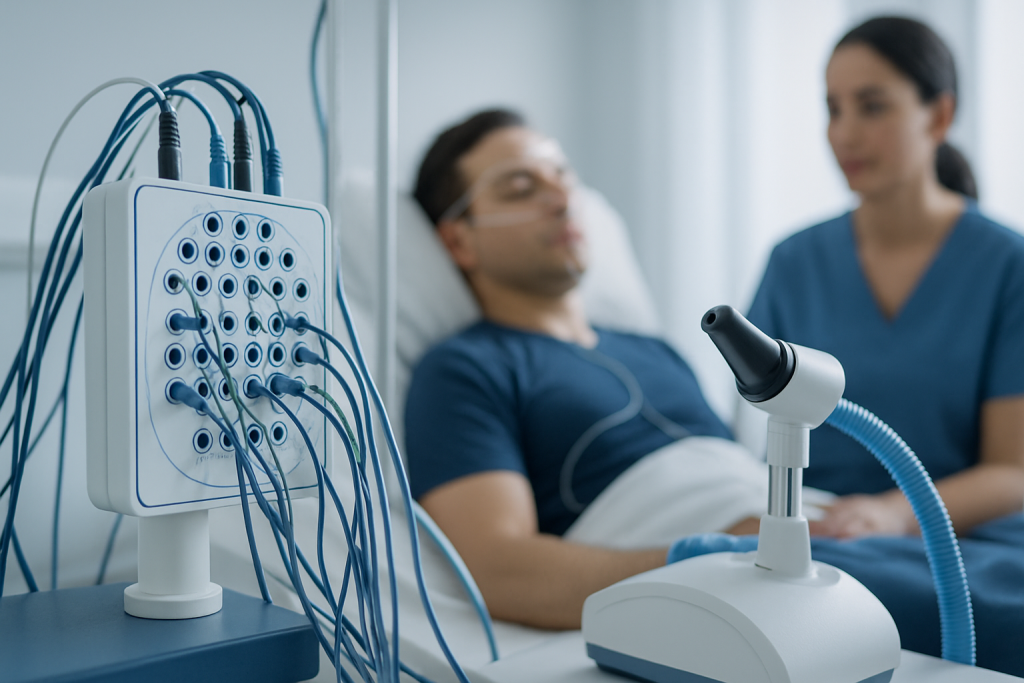
Sleep studies are usually considered when symptoms suggest that breathing during sleep may be interrupted. Loud snoring is common, but it is not the only clue. A bed partner may notice gasping, choking, or brief pauses in breathing, while the person affected may only notice fatigue, dry mouth, or trouble concentrating.
Children and adults can present differently. In adults, the pattern may include restless sleep, waking often, or feeling tired even after a full night in bed. In children, ENT specialists may hear about mouth breathing, behavioral changes, poor school concentration, or enlarged tonsils and adenoids affecting the airway.
- Loud, regular snoring
- Observed pauses in breathing during sleep
- Gasping or choking at night
- Morning headaches or dry mouth
- Daytime sleepiness or low energy
- Restless sleep, frequent waking, or poor concentration
These symptoms do not confirm a diagnosis by themselves. They simply signal that the airway may need to be studied more carefully before a treatment decision is made.
Why ENT Specialists Order a Sleep Study

ENT doctors focus on the nose, throat, tonsils, palate, and upper airway, all of which can influence breathing during sleep. A sleep study helps the specialist see whether one narrow area is the main issue or whether several parts of the airway contribute together. That distinction can change the treatment plan significantly.
For example, a person may seem like a good candidate for a nasal or throat procedure based on symptoms alone. A sleep study may show mild snoring without major breathing interruptions, which can support a more conservative approach. In another case, the test may reveal repeated airway collapse, suggesting that surgery alone is unlikely to be enough and that CPAP or combined treatment should be discussed.
The test is also helpful when symptoms and exam findings do not fully match. A person may have relatively small tonsils but severe sleep disruption, or large tonsils but only mild breathing events. The sleep study gives objective information that helps the ENT team avoid guessing.
How the Diagnosis Is Made
A sleep study, also called polysomnography in many settings, records what happens during sleep. Depending on the clinical question, it may be done in a sleep laboratory or with a carefully selected home testing device. The study can measure breathing patterns, oxygen levels, heart rate, sleep stages, and body movements.
Before or after the test, the ENT specialist usually performs a detailed history and airway examination. This may include looking at the nasal passages, tonsils, tongue position, palate, jaw alignment, and signs of blockage or inflammation. In some cases, additional imaging or nasal endoscopy may help explain the airway anatomy more clearly.
The key value of diagnosis is not only naming the problem, but matching it to the right kind of care. A sleep study may confirm obstructive sleep apnea, suggest simple snoring without apnea, or point toward another pattern that needs coordination with sleep medicine, dentistry, or surgery.
How Sleep Study Results Can Change ENT Treatment
This is where the plan often becomes much more personalized. If the study shows mild disease, the ENT team may recommend treating contributing factors first, such as nasal congestion, allergies, reflux, or sleep position. If the study shows moderate or severe obstruction, the discussion may move toward CPAP, oral appliance therapy, surgery, or a combination of approaches.
Results can also help determine which procedure, if any, is most appropriate. A person with enlarged tonsils may benefit from tonsil surgery, while another with a blocked nose may improve more with treatment directed at the nasal airway. When the sleep study suggests multi-level obstruction, the doctor may explain that one operation alone may not fully solve the problem.
Typical ways the plan may change include:
- Choosing conservative treatment instead of surgery
- Recommending CPAP or another sleep-breathing device
- Targeting a specific level of blockage, such as the nose or tonsils
- Combining ENT care with sleep medicine or dental appliance therapy
- Planning follow-up testing to confirm improvement after treatment
For patients coming from another country, this clarity can make travel and recovery planning easier. It helps them understand whether the treatment is likely to be a one-step visit, a staged plan, or a procedure that requires later review back home.
Treatment Options After the Study
Treatment depends on what the sleep study and ENT exam reveal. There is no single path for everyone because sleep-related airway problems can arise from different structures and different levels of severity. A good treatment plan usually balances symptom relief, breathing safety, and the person’s daily routine.
Non-surgical options may include managing nasal blockage, reducing allergy triggers, adjusting sleep habits, or using CPAP when sleep apnea is present. Oral appliances may be considered in selected cases, especially when the airway issue is mild to moderate or when a device is preferred over surgery. Weight-related factors, when present, may also be discussed as part of a broader health plan.
Surgical treatment is sometimes appropriate, particularly when there is a clearly identified anatomical blockage. Procedures may involve the nose, tonsils, soft palate, or other parts of the upper airway. The goal is not to “fix snoring” in a general sense, but to address the specific obstruction that the evaluation has identified.
Recovery and follow-up are part of the treatment, not an afterthought. Many patients need reassessment after healing, because the airway can change over time and some people benefit from adjusting the plan once symptoms and sleep quality improve.
Prevention & Self-care
Self-care does not replace diagnosis, but it can support treatment and sometimes reduce nighttime symptoms. Simple changes often make the airway less irritated and sleep more stable. For some people, especially those with mild symptoms, these steps can be a helpful first layer of care.
Useful habits may include sleeping on the side rather than the back, keeping a regular sleep schedule, limiting alcohol near bedtime, and managing nasal allergies or congestion as advised by a doctor. If reflux is part of the picture, timing of meals and other medical guidance may also matter. In children, keeping follow-up appointments for enlarged tonsils or adenoids is especially important.
- Maintain a consistent sleep routine
- Avoid alcohol or sedating substances before bed unless prescribed
- Address nasal allergies, congestion, or reflux with medical guidance
- Use CPAP or oral appliances exactly as instructed if prescribed
- Prepare a symptom diary before follow-up visits, especially when traveling for care
International patients may find it useful to track symptoms before and after treatment, including snoring severity, waking frequency, and daytime alertness. This makes remote follow-up more meaningful when the person returns home and continues recovery.
When to See a Doctor
ENT evaluation is appropriate when snoring is frequent, breathing pauses are noticed, or sleep is no longer refreshing. A person should also seek medical review if there is persistent daytime sleepiness, concentration problems, high blood pressure that is difficult to manage, or symptoms that suggest sleep apnea may be affecting overall health.
Children should be assessed if they snore regularly, breathe through the mouth, have enlarged tonsils, or show behavior or attention changes that could be related to poor sleep. These signs are worth discussing even when the child does not seem overtly ill during the day.
Emergency care is not usually needed for routine snoring, but urgent assessment is sensible if breathing problems are severe, worsening quickly, or associated with major medical concerns. For patients seeking coordinated care abroad, Acibadem Health Point’s multidisciplinary specialists and JCI-accredited hospitals can help diagnose and treat sleep-related ENT conditions for international patients.
Because sleep symptoms can have more than one cause, it is best to let a qualified doctor interpret the sleep study in the context of the full ENT exam and medical history. That combination is what turns a test result into a practical treatment plan.
What Patients Commonly Ask Before Deciding on Care
Many patients want to know whether a sleep study will automatically lead to surgery. The answer is no. In ENT care, the study is often used to decide whether surgery is needed at all, and if so, which procedure is most likely to help.
Others ask whether treatment has to happen immediately. In many cases, there is time to discuss options carefully, especially if symptoms are mild or the results point to more than one reasonable approach. For people traveling internationally, this discussion is valuable because it supports realistic planning for procedure timing, recovery, and follow-up after returning home.
When the sleep study changes the ENT plan, it usually does so by making the treatment more specific. Instead of treating a symptom in isolation, the care team can focus on the actual pattern of airway obstruction and build a plan that better fits the person’s life.
References
This article is based on guidance and concepts commonly used in ENT and sleep medicine practice. It is intended for education and should not replace individualized medical advice.
Patients should speak with a qualified ENT specialist or sleep medicine physician to understand what their own test results mean and which treatment options are most appropriate.
Frequently asked questions
Why would an ENT doctor order a sleep study?
An ENT doctor may order a sleep study when symptoms suggest that snoring or poor sleep could be caused by airway obstruction during sleep. The test helps identify whether the problem is mild snoring, obstructive sleep apnea, or another breathing pattern that needs targeted care.
Can a sleep study rule out the need for surgery?
Yes, sometimes it can. If the study shows only mild symptoms or a problem that is better managed without an operation, the ENT specialist may recommend conservative treatment instead of surgery.
Does a sleep study show where the blockage is?
A sleep study mainly shows how breathing is affected during sleep, not the exact anatomy of the blockage. ENT examination, and sometimes nasal endoscopy or imaging, are used together with the study to identify where the airway narrows.
What happens if the sleep study shows sleep apnea?
The doctor will discuss treatment based on severity, anatomy, and other health factors. Options may include CPAP, oral appliances, medical treatment for nasal problems, weight-related support when relevant, or surgery in selected cases.
Is a home sleep test enough for ENT planning?
It can be enough in some cases, especially when the main question is whether obstructive sleep apnea is present. In more complex situations, a full laboratory study may provide more detail and better support treatment planning.
How should international patients prepare for ENT care after a sleep study?
They should bring prior test results, medication lists, symptom notes, and any imaging or operative reports. Clear records help the ENT team make decisions efficiently and can make follow-up easier after the patient returns home.
References
- American Academy of Otolaryngology–Head and Neck Surgery
- American Academy of Sleep Medicine
- National Heart, Lung, and Blood Institute
- Mayo Clinic
- NHS
This article is for general information only and is not a substitute for professional medical advice. Please consult a qualified doctor about your individual situation.