What Does a Cavity Look Like?

Key Takeaways
- Cavities may appear as white spots, brown stains, dark holes, or rough areas on a tooth.
- Not all cavities hurt at first; early tooth decay can be easy to miss without a dental exam.
- The look of a cavity can vary depending on where it is and how far it has progressed.
- Dentists use visual exams and imaging, such as X-rays, to confirm decay and plan treatment.
- Good daily oral hygiene and regular dental visits are the best ways to lower cavity risk.
Medically reviewed by the Acıbadem clinical team — August 19, 2026
A cavity is a form of tooth decay that can begin quietly, with small changes in color or texture before pain appears. Understanding what a cavity may look like helps a person seek dental care early, when treatment is usually simpler and more comfortable.
Overview
When people ask what a cavity looks like, they are often trying to catch a problem before it becomes painful. A cavity is an area of tooth decay, and in its early stages it may look like a faint white patch, a dull spot, or a tiny change in the enamel’s smooth surface.
As decay moves deeper, the tooth may take on a yellow, brown, or black appearance, and a small pit or hole can become visible. The appearance depends on the tooth’s location, the person’s oral hygiene habits, and how long the decay has been developing.
Because cavities do not always cause symptoms right away, a person may not notice them during daily brushing. That is one reason routine dental checkups matter: they give a dentist a chance to detect changes early, before the damage becomes more extensive.
What a cavity can look like at different stages
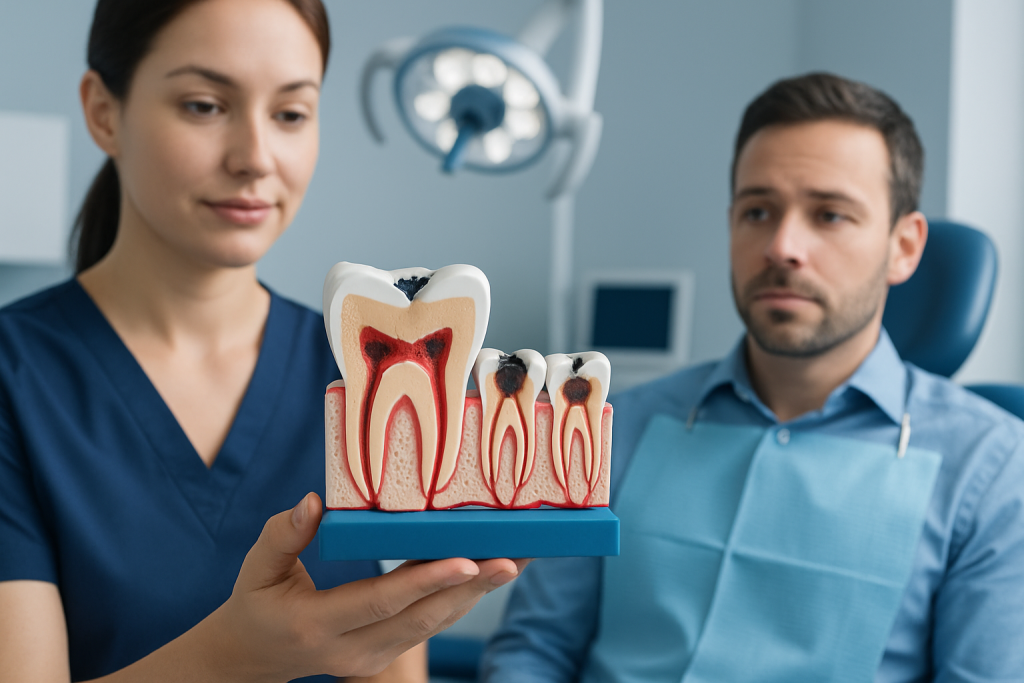
Early tooth decay often begins as a white spot on the enamel. This happens when minerals are lost from the outer surface of the tooth, and the area may look chalky or less glossy than the surrounding enamel.
As the decay continues, the color may shift from white to light brown, then darker brown or black. Some cavities remain flat for a while, while others become rough, sticky, or visibly pitted. On chewing surfaces, the change may look like a tiny dark groove that keeps collecting food.
In between teeth, cavities are harder to see directly and may only be noticed on X-rays or when a dentist examines the area with special tools. A person may also see a chipped edge, a shadow under the enamel, or a spot that catches the tongue because the surface is no longer smooth.
- White or chalky spots: often an early sign of enamel loss
- Brown or black discoloration: may suggest more advanced decay
- Small holes or pits: the tooth surface has begun to break down
- Rough, sticky, or soft areas: decay may be progressing
Symptoms that may appear alongside the visible changes

A cavity does not always come with pain at first, which is why visible changes should not be ignored even when the tooth feels normal. Some people only notice that something looks different during brushing or flossing.
When symptoms do show up, they may include tooth sensitivity to cold, heat, or sweets, discomfort when biting, or food getting caught in one area more often than usual. If decay reaches deeper layers of the tooth, the pain can become more noticeable and may linger.
Other possible signs include bad breath that does not improve with routine cleaning, a strange taste in the mouth, or swelling around the tooth if the area becomes irritated. These symptoms do not confirm a cavity on their own, but they do signal that a dental check is a good idea.
Causes and risk factors
Cavities form when bacteria in the mouth use sugars and starches from food to produce acids that weaken enamel. Over time, repeated acid exposure can create enough damage for decay to progress into the tooth.
Several factors can raise the risk. Frequent snacking, sipping sugary drinks, dry mouth, incomplete brushing, and skipping flossing can all make it easier for decay to develop. A history of previous cavities may also suggest that more careful prevention is needed.
Age, dental anatomy, and daily routines can matter too. Deep grooves in molars, crowded teeth that are harder to clean, braces, or a diet high in sticky foods may increase the chance of visible decay. Some medical conditions and medications that reduce saliva can also leave teeth more vulnerable.
How dentists diagnose a cavity
A dentist usually starts with a visual examination of the teeth, looking for changes in color, texture, and shape. They may also use a small instrument to check whether an area feels soft or weakened, which can suggest decay beneath the surface.
Dental X-rays are often helpful, especially for cavities between teeth or under fillings. They can reveal decay that is not obvious in the mirror and help the dentist see how far the problem has spread.
Diagnosis is not only about confirming that a cavity exists; it is also about understanding how much tooth structure remains healthy. That information helps the dentist decide whether the tooth may need a simple filling, a larger restoration, or another type of treatment.
Treatment options
The best treatment depends on how early the cavity is found. Very early enamel changes may sometimes be managed with fluoride, improved home care, and closer monitoring if the dentist thinks the area can still be stabilized.
Once a cavity has formed a hole, the damaged part of the tooth usually needs to be removed and restored. Common treatments include fillings, inlays, onlays, crowns, or, in more advanced cases, root canal treatment if the decay reaches the inner tissue of the tooth.
If a tooth is too damaged to save, extraction may be discussed, followed by options for replacing the tooth. Dentists aim to preserve as much natural tooth structure as possible, and treatment plans are typically tailored to the person’s needs, comfort, and overall oral health.
For patients traveling from another country, it can help to arrange records, images, and a follow-up plan before treatment begins, so care continues smoothly after returning home. Where appropriate, Acibadem Health Point’s multidisciplinary specialists and JCI-accredited hospitals can diagnose and treat dental conditions for international patients.
Prevention and self-care
The simplest way to avoid wondering whether a tooth spot is a cavity is to reduce the chance that decay starts in the first place. Daily brushing with fluoride toothpaste, flossing once a day, and limiting frequent sugar exposure all support healthier teeth.
Water can help rinse away food particles, and chewing sugar-free gum after meals may support saliva flow for some people. Saliva matters because it helps neutralize acids and protect enamel. Regular professional cleanings and checkups are also important, since early decay can be difficult to identify at home.
Helpful habits include:
- Brushing twice daily with fluoride toothpaste
- Cleaning between teeth with floss or another interdental aid
- Reducing constant snacking or sipping on sweet drinks
- Keeping scheduled dental visits, even if the mouth feels fine
- Asking a dentist about fluoride or sealants when appropriate
When to see a dentist
A person should arrange a dental visit if they notice a new white, brown, or black spot on a tooth, a visible hole, roughness, or a tooth surface that seems softer than the others. Even if there is no pain, these changes may represent early decay.
Dental care should also be sought if there is ongoing sensitivity, pain when chewing, swelling, or a broken filling. These symptoms do not always mean the cavity is severe, but they do suggest that the tooth deserves attention sooner rather than later.
It is especially wise not to wait when a child, older adult, or person with dry mouth notices a change in tooth color or shape. Early evaluation usually offers more treatment choices and helps protect nearby teeth from further damage.
Frequently asked questions
What does an early cavity look like?
An early cavity may look like a white, chalky spot on the enamel or a dull area that no longer reflects light the same way. At this stage, the surface may still be intact, so the change can be easy to overlook. A dental exam is often the best way to confirm whether it is decay or something else.
Can a cavity look like a stain?
Yes, a cavity can begin as a stain-like change in color, especially white, brown, or dark spots. Not every stain is decay, though, because some discoloration comes from food, drinks, or other harmless causes. If the area changes shape, feels rough, or becomes sensitive, a dentist should evaluate it.
Do cavities always hurt?
No, cavities often do not hurt in the early stages. Pain usually appears later, when decay is deeper or the tooth becomes irritated by temperature, sweets, or biting pressure. That is why visual changes should still be taken seriously even without discomfort.
Can I tell if a dark spot is a cavity at home?
Sometimes a dark spot may suggest decay, but home inspection cannot confirm it with certainty. A tooth can also look dark because of staining, a filling, or an old fracture. A dentist can examine the area and use X-rays if needed to decide what is happening.
How fast do cavities get worse?
Cavities can progress at different speeds depending on oral hygiene, diet, saliva flow, and the tooth’s shape. Some remain small for a long time, while others worsen more quickly if the mouth is frequently exposed to sugar and acids. Regular checkups help catch changes before they spread.
What should someone do if they think they see a cavity?
They should schedule a dental appointment rather than trying to scrape or treat the spot themselves. Until then, continuing to brush gently, floss, and avoid very sticky or sugary foods can help protect the tooth. A dentist can confirm the cause and recommend the right treatment.
References
- American Dental Association
- National Institute of Dental and Craniofacial Research
- Mayo Clinic
- World Health Organization
This article is for general information only and is not a substitute for professional medical advice. Please consult a qualified doctor about your individual situation.
Explore treatments in Turkey — costs, top hospitals & a free quote
JCI-accredited · board-certified surgeons · reply within 24h
Add us as a Preferred Source to see more of our trusted health content across Google Search, AI Overviews and Discover.