

What Do Contractions Feel Like?

Key Takeaways
- Contractions often feel like a tightening, hardening, or cramping in the abdomen, pelvis, or lower back.
- True labor contractions usually become closer together, longer, and stronger over time.
- Braxton Hicks contractions can be irregular and may ease with rest, hydration, or a change in position.
- It is helpful to track timing, intensity, and associated symptoms rather than relying on pain alone.
- A maternity team should be contacted promptly for warning signs such as fluid leakage, bleeding, reduced fetal movement, or severe pain.
Medically reviewed by the Acıbadem clinical team — August 19, 2026
Contractions are the uterus tightening and relaxing as labor begins or as the body prepares for birth. Their feel can vary widely, but patterns in timing, intensity, and how they respond to rest often help distinguish true labor from practice contractions.
Overview
For many people, the first question is not when labor will start, but how it will be recognized. Contractions are the body’s way of making the uterus tighten and relax, and they can feel very different from one pregnancy to another. Some describe them as a wave of pressure, others as a strong period-like cramp, and some notice a firming of the whole abdomen more than pain.
Understanding contractions is especially useful for people preparing to give birth away from home or while traveling for maternity care. Knowing what is normal, what is changing, and when to call the maternity team can reduce uncertainty and help the person focus on safe, timely care rather than trying to guess from pain alone.
Contractions may occur in pregnancy before labor, during labor, and sometimes even in the days leading up to it. The pattern matters as much as the sensation. A contraction that is irregular and settles with rest may mean something different from one that becomes more regular, more intense, and harder to ignore.
What Contractions Often Feel Like
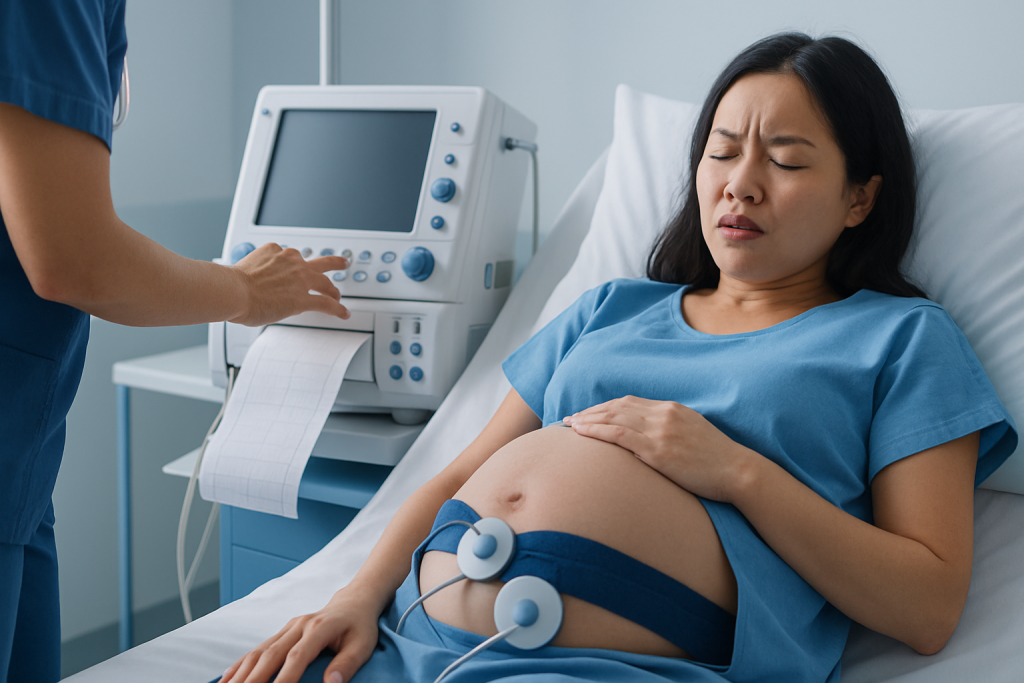
Many people notice contractions first as a tightening across the lower abdomen. The belly may feel hard to the touch, then soften again as the contraction passes. This tightening can come with a pulling sensation, pressure in the pelvis, or pain that spreads into the lower back or thighs.
Labor contractions are often described as rhythmic and wave-like. They usually build gradually, peak, and then ease, leaving a brief rest period before the next one begins. Some people feel this as cramping that starts low and spreads, while others experience strong back labor or pressure that makes it difficult to talk or move comfortably during the peak.
Not every contraction is painful in the same way. Early labor contractions may feel mild and manageable, while later ones can feel more intense and longer lasting. The key is not only how strong they feel, but whether they are becoming more organized over time.
- Tightening or hardening of the abdomen
- Menstrual-like cramping
- Pressure in the pelvis or rectum
- Pain or aching in the lower back
- Wave-like discomfort that comes and goes
How True Labor Differs From Braxton Hicks

People often compare true labor contractions with Braxton Hicks contractions, which are sometimes called practice contractions. Braxton Hicks can feel like a brief tightening or a mild squeeze, but they are usually irregular and do not steadily become stronger. They may appear after activity, dehydration, or a long day on one’s feet.
True labor tends to follow a pattern. Contractions become more regular, last longer, and are harder to ignore. They do not usually disappear with rest or a glass of water. For someone already nervous about timing the trip to the hospital or maternity unit, pattern recognition is often more helpful than trying to judge pain level alone.
It can also help to notice whether the pain stays in one general area or spreads and intensifies. Braxton Hicks often remain mild and inconsistent, while labor contractions typically progress in a more predictable way. If there is doubt, a maternity team can usually advise based on the timing and associated symptoms.
Causes & Risk Factors
Contractions happen because the uterus is a muscle, and like all muscles it contracts. In late pregnancy, hormonal changes and the body’s preparation for birth make the uterus more responsive. During labor, these contractions help the cervix soften and open and support the baby’s movement downward.
Several factors can make contractions more noticeable before labor begins. Dehydration, overexertion, a full bladder, sexual activity, and fetal movement may trigger temporary tightening in some pregnancies. In people who are farther along, the uterus may be more likely to tighten with position changes or physical strain.
Risk factors for labor-related concerns are not determined by contraction pain alone. A person’s overall pregnancy history, the baby’s movements, whether the membranes have broken, and the presence of bleeding or fever all matter. This is one reason maternity assessment looks at the whole picture rather than a single symptom.
- Advancing pregnancy, especially in the final weeks
- Dehydration or fatigue
- Physical exertion or stress
- History of preterm labor
- Multiple pregnancy or other obstetric factors, in some cases
Diagnosis: How Clinicians Check What the Body Is Doing
There is no single home test that can confirm whether contractions are true labor. Clinicians usually begin with a conversation about timing, frequency, intensity, and how the sensations have changed. They also ask about fetal movement, fluid leakage, bleeding, and the person’s stage of pregnancy.
In a maternity setting, the team may check the baby’s heart rate, monitor uterine activity, and assess whether the cervix is changing. A cervical exam or ultrasound may be used when appropriate, depending on the situation and local practice. These steps help distinguish early labor from Braxton Hicks contractions and identify whether labor is progressing safely.
For Myomectomy Recovery for International Patients: The Usual Travel Timeline" class="ahp-ilk">international patients, this evaluation may be especially reassuring when they are away from their usual obstetric provider. Clear communication about language preferences, pregnancy records, travel plans, and prior scans helps the team interpret symptoms in context and support coordinated care.
Treatment Options
The right approach depends on whether the contractions are part of normal late pregnancy, early labor, active labor, or a concern that needs urgent assessment. If the contractions are Braxton Hicks, rest, hydration, and a change of position may help them settle. A warm shower or gentle breathing can also make the body more comfortable, as long as there are no warning signs that require evaluation.
When contractions are true labor, treatment is not meant to stop normal birth from progressing. Instead, the focus is on monitoring maternal and baby wellbeing, supporting comfort, and deciding when hospital admission or birth preparation is needed. Pain relief options vary and may include non-medication measures, medication, or epidural anesthesia, depending on the stage of labor and the person’s preferences and medical situation.
If contractions occur too early, a doctor may assess for preterm labor and decide whether close observation, hydration, medication, or other measures are appropriate. Because pregnancy care should be individualized, especially for people arriving from abroad, treatment plans are best discussed directly with a qualified maternity specialist.
Prevention & Self-care
Not every contraction can be prevented, and many are part of a healthy pregnancy journey. Still, a few practical habits may reduce unnecessary discomfort and help a person understand what their body is doing. Regular hydration, rest, and avoiding overexertion can make it easier to distinguish temporary tightening from true labor patterns.
Tracking contractions on a phone app or by writing down the start time, duration, and interval can be useful, especially late in pregnancy. It is also helpful to notice whether the sensation changes with movement, drinking water, emptying the bladder, or lying on the left side. If the pattern becomes more regular, more painful, or closer together, that information should be shared with the maternity team.
For those planning delivery in another country, it can help to keep key pregnancy documents accessible, know the route to the hospital, and understand who to contact day or night. A prepared plan reduces stress if contractions begin while navigating a hotel, airport, or unfamiliar city.
- Drink water regularly unless a doctor has advised otherwise
- Rest when contractions seem irregular and mild
- Change position and observe whether symptoms ease
- Keep a simple timing record of contractions
- Have maternity contact details ready before the due date
When to See a Doctor
A maternity professional should be contacted if contractions seem regular, are becoming stronger, or are happening before 37 weeks. It is also important to seek advice if there is vaginal bleeding, fluid leakage, reduced baby movement, fever, or severe abdominal pain. Even when symptoms turn out to be harmless, checking them early can prevent confusion and delay.
Immediate assessment is especially important if a person feels pressure that suggests the baby is coming, cannot speak through contractions, or has concerns about a change in fetal movement. If the person is far from home, the threshold for calling should be low; health teams are used to helping patients decide whether to come in, wait, or monitor a little longer.
Acibadem Health Point supports international patients with multidisciplinary specialists and JCI-accredited hospitals that diagnose and treat pregnancy-related concerns, including labor assessment and childbirth planning. The goal is to provide clear guidance, safe monitoring, and a calm route to care when contractions begin to change.
Frequently asked questions
What do contractions usually feel like at first?
Early contractions often feel like a tightening or firming of the abdomen, sometimes with mild cramping or back discomfort. They may be easy to talk through at first and can come and go irregularly. The pattern over time is often more informative than the intensity of one contraction.
How can someone tell the difference between Braxton Hicks and labor contractions?
Braxton Hicks contractions are usually irregular, shorter, and less intense, and they may improve with rest or hydration. True labor contractions generally become more regular, longer, and stronger. If there is uncertainty, a maternity team can help assess the pattern.
Do all labor contractions hurt the same way?
No, contraction pain varies widely. Some people mainly feel pressure or tightening, while others feel strong cramping or back pain. The experience can also change as labor progresses.
When should contractions be timed?
Timing is helpful once contractions seem regular or start becoming more noticeable. Recording when each contraction begins, how long it lasts, and how far apart they are can help a doctor or midwife judge whether labor is starting. If symptoms are early, mild, and irregular, timing for a short period may still provide useful information.
Can contractions start before the due date?
Yes, contractions can begin before the due date, and not all of them mean labor is starting. Some are Braxton Hicks or brief uterine tightening, while others may signal preterm labor. Any contractions before 37 weeks should be discussed with a maternity professional.
What should someone do if contractions begin while traveling?
They should rest, drink water, note the timing, and contact the maternity team they were told to call. If contractions are regular, very painful, or accompanied by bleeding, fluid leakage, or reduced baby movement, they should seek urgent assessment. Having pregnancy records and hospital contact details ready makes this easier.
References
- American College of Obstetricians and Gynecologists
- NHS
- Mayo Clinic
- World Health Organization
This article is for general information only and is not a substitute for professional medical advice. Please consult a qualified doctor about your individual situation.
Explore treatments in Turkey — costs, top hospitals & a free quote
JCI-accredited · board-certified surgeons · reply within 24h
Add us as a Preferred Source to see more of our trusted health content across Google Search, AI Overviews and Discover.
More from the Health Library



Related Specialists

Dr. Gamze Karababa
Gynecology & Obstetrics
Dr. Onur Özdenoğlu
Gynecology & Obstetrics
Dr. Selcen Bahadır
Gynecology & Obstetrics
Prof. Dr. A. Taner Usta
Gynecology & Obstetrics