Tte

Key Takeaways
- TTE uses ultrasound waves to create moving images of the heart without radiation.
- It can help assess heart chambers, valves, pumping strength, and some fluid or structural problems.
- The test is usually quick, painless, and done while the person lies on an exam table.
- Results are interpreted together with symptoms, medical history, and other tests when needed.
- A doctor may recommend TTE for shortness of breath, chest symptoms, murmurs, palpitations, or follow-up of known heart disease.
A transthoracic echocardiogram, often called a TTE, is a noninvasive ultrasound test that helps clinicians see how the heart is moving and pumping. It is commonly used to evaluate symptoms, check heart structure, and guide ongoing care in a clear, painless way.
Overview
A transthoracic echocardiogram, or TTE, is one of the most common ways to look at the heart without opening the chest. A probe placed on the skin over the chest sends sound waves into the body, then receives the echoes to form moving images of the heart in real time.
For many people, the appeal of a TTE is its simplicity. There is no radiation, no special recovery period, and no need to stay in the hospital. The test is often used when a clinician wants to understand whether symptoms such as breathlessness, fatigue, chest discomfort, swelling, or palpitations may be related to the heart.
International patients often encounter TTE early in the diagnostic journey because it can be arranged quickly and interpreted alongside blood tests, electrocardiography, and a physical examination. That combination helps the care team decide whether more testing is needed before travel plans, treatment decisions, or follow-up back home.
What a TTE can show
A TTE offers a practical look at several parts of heart function. It can show the size and shape of the heart chambers, how strongly the heart muscle is pumping, and whether the valves open and close as expected.
It can also help identify conditions such as valve narrowing or leakage, weak pumping function, some congenital heart differences, fluid around the heart, and signs that pressure inside the heart may be elevated. In certain situations, the test may reveal evidence of prior heart damage or help explain an abnormal sound heard during an examination.
The information from a TTE is not used in isolation. Clinicians interpret the images together with symptoms, medical history, examination findings, and other test results so the overall picture is accurate and clinically meaningful.
Symptoms and reasons it may be ordered

A doctor may recommend TTE when a person has symptoms that need a closer look at the heart’s structure or movement. Common reasons include shortness of breath, chest pain or pressure, swelling in the legs, fainting episodes, a new heart murmur, or a feeling that the heart is racing or skipping beats.
TTE is also frequently used for people with known heart conditions who need monitoring over time. This includes valve disease, heart failure, cardiomyopathy, prior heart attack, congenital heart disease, and certain follow-up checks after treatment or surgery.
- Unexplained shortness of breath or reduced exercise tolerance
- Abnormal heart sounds or murmur heard on examination
- Known valve, muscle, or congenital heart disease
- Assessment before or after a cardiac procedure
- Follow-up when symptoms change or new findings appear
Causes & risk factors
TTE is not a treatment; it is a diagnostic test. The factors that increase the chance of needing one are usually the same factors that raise concern for heart disease in general, such as high blood pressure, diabetes, high cholesterol, smoking, family history, prior heart disease, or advancing age.
People who have infections affecting the heart, autoimmune conditions, certain inherited disorders, or a history of chest radiation or chemotherapy may also need echocardiographic assessment. Athletes and active travelers are not exempt either; sometimes symptoms only become obvious during exertion, and a TTE can help clarify whether the heart is responding normally.
In international care settings, TTE is particularly useful when a clinician needs a dependable baseline before someone returns home. A well-documented scan can make later follow-up easier, especially if care will continue across different countries or health systems.
Diagnosis: how the test is performed and what to expect
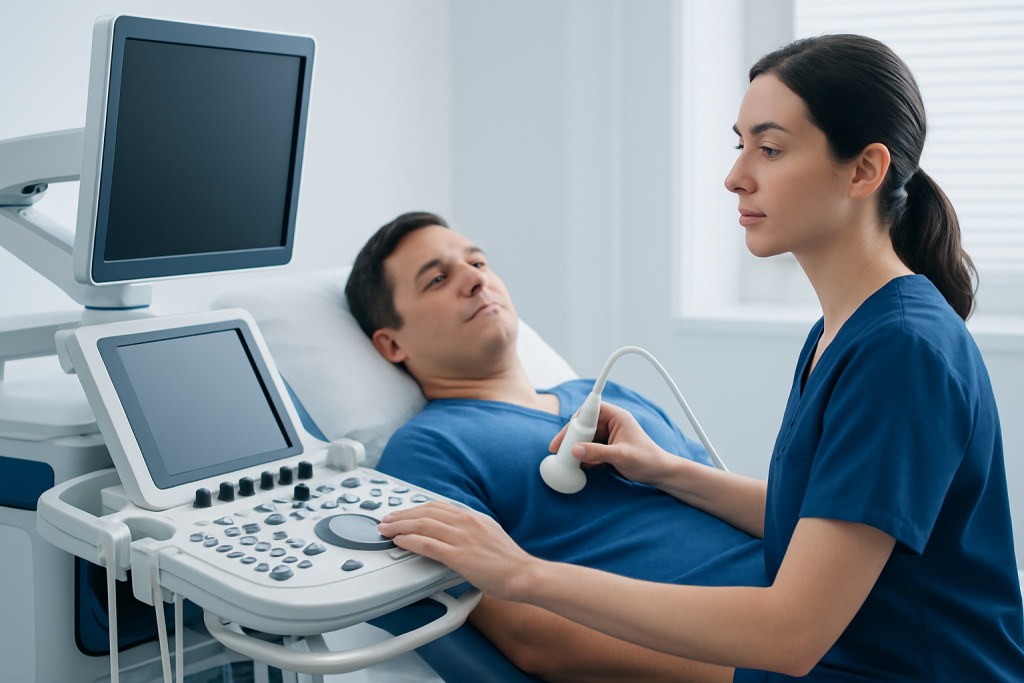
The test is usually done in an outpatient imaging room. The person lies on an examination table, and a technologist places gel on the chest to help the probe move smoothly and transmit sound waves effectively. The probe is then moved over several areas of the chest to capture different views of the heart.
Most people do not feel pain during the exam, although the probe may be pressed more firmly in some positions to improve image quality. The test often takes around 20 to 60 minutes, depending on the questions being asked and how easy it is to obtain clear images.
After the scan, there is typically no recovery time. People can usually return to normal activities right away, including eating, walking, and traveling if their clinician says it is appropriate. A cardiologist or other qualified doctor then reviews the images and writes a report that explains the main findings in plain clinical terms.
Treatment options
Because TTE is a diagnostic test, the results guide treatment rather than replace it. If the scan shows valve disease, weakened pumping function, fluid buildup, or other abnormalities, the clinician may suggest medications, lifestyle changes, repeat imaging, catheter-based treatment, surgery, or monitoring, depending on the problem and its severity.
Sometimes a TTE is reassuring because it shows that the heart structure and pumping function are within expected limits. Even then, symptoms still deserve attention, since some heart-related and non-heart-related conditions can cause similar complaints and may require different follow-up.
For patients who travel for care, the treatment plan should be clear before discharge whenever possible. That usually includes which symptoms require urgent attention, whether a repeat scan is needed, and how to share results with the doctor who will continue care at home.
Prevention & self-care
There is no way to “prevent” the need for a TTE in every case, but heart risk can often be lowered by managing the conditions that make heart problems more likely. Regular blood pressure checks, healthy eating, physical activity suited to one’s health status, not smoking, and follow-up for diabetes or cholesterol all support better heart health.
If a TTE has already been recommended, a few practical steps can help the appointment go smoothly. It is useful to bring a medication list, prior test results, and a short timeline of symptoms. For international patients, keeping digital copies of reports and images can make handover to another clinician much easier.
People should also be prepared to ask what the scan is meant to answer. Knowing whether the goal is to evaluate a murmur, check valve function, investigate shortness of breath, or monitor a known condition can make the result easier to understand and help the next steps feel more organized.
When to see a doctor
Medical advice should be sought promptly if symptoms such as chest pain, fainting, severe shortness of breath, new swelling, or a rapidly worsening heartbeat occur. These symptoms do not always mean there is a serious heart problem, but they deserve timely assessment.
It is also important to follow up if a clinician recommends a TTE and it has not yet been scheduled, especially when there is a heart murmur, known cardiac disease, or unexplained symptoms. A delayed scan can slow down decisions about treatment or travel planning.
In cases where care is being coordinated across borders, a clear report and follow-up plan are especially valuable. Acibadem Health Point’s multidisciplinary specialists and JCI-accredited hospitals diagnose and treat cardiac conditions for international patients, with attention to continuity of care after discharge.
How TTE fits into a broader heart workup
A TTE often works best as part of a larger cardiac evaluation. Clinicians may pair it with an electrocardiogram, blood tests, chest imaging, stress testing, or rhythm monitoring to understand whether the heart’s structure, electrical activity, and blood flow are all telling the same story.
That broader approach matters because symptoms can overlap. Breathlessness, fatigue, and chest discomfort may stem from the heart, the lungs, anemia, thyroid disease, or other conditions. A TTE helps narrow the possibilities and can be an efficient first step when the heart needs a closer look.
For patients who are planning treatment from another country, the value of the test extends beyond the day it is performed. A clear echocardiogram report can become part of a portable medical record that supports future decisions wherever follow-up takes place.
Frequently asked questions
What does TTE stand for?
TTE stands for transthoracic echocardiogram. It is a heart ultrasound performed from the outside of the chest. The test creates moving images that help clinicians evaluate heart structure and function.
Is a TTE painful?
A TTE is usually not painful. Some pressure from the probe may be felt when the technologist needs better images, but most people tolerate the exam well. No needles or radiation are involved in the standard test.
Do people need to prepare for a TTE?
Preparation is usually simple and depends on the reason for the scan. People may be asked to wear a two-piece outfit or gown for easier access to the chest and to bring medication and prior record information. In most cases, eating and drinking can continue normally unless the doctor gives different instructions.
How long does it take to get results?
This varies by clinic and how the report is handled. In many settings, the images are reviewed by a cardiologist and the results are available after interpretation, sometimes the same day or within a short time. The clinician will explain what the findings mean in context.
Can a normal TTE rule out all heart problems?
No single test can rule out every heart condition. A normal TTE is reassuring because it shows the heart’s structure and pumping function are not obviously abnormal, but some issues need other tests to detect. The doctor may suggest further evaluation if symptoms persist.
Is TTE the same as an echocardiogram?
TTE is a type of echocardiogram and is the most common form. It is done through the chest wall, whereas other forms, such as transesophageal echocardiography, use a different approach when a closer view is needed.
References
- American Heart Association
- Mayo Clinic
- Cleveland Clinic
- National Heart, Lung, and Blood Institute
This article is for general information only and is not a substitute for professional medical advice. Please consult a qualified doctor about your individual situation.