Spine Surgery or Non-Surgical Care for Sciatica: How the Decision Is Made

Key Takeaways
- Sciatica often improves with time, but the cause of the nerve irritation matters more than the pain itself.
- Surgery is usually considered when pain is persistent, disabling, or accompanied by progressive weakness or other warning signs.
- Non-surgical care may include activity changes, physical therapy, pain-relief strategies, and close follow-up.
- Imaging and neurological examination help doctors match symptoms with the right treatment plan.
- Traveling for care is safest when follow-up, rehabilitation, and recovery planning are arranged before the trip.
Medically reviewed by the Acıbadem clinical team — June 13, 2026
Sciatica is a symptom rather than a diagnosis on its own, and the best treatment depends on what is pressing or irritating the nerve, how severe the pain is, and whether any weakness or emergency signs are present. Many people improve without surgery, but a careful evaluation helps determine when procedures may offer a better path to relief.
Overview
Sciatica is the name many people use for pain that travels along the sciatic nerve pathway, usually from the lower back or buttock down one leg. The experience can range from a sharp, electric pain to a deep ache, tingling, numbness, or a sense that the leg is not fully reliable.
The key decision is not simply whether the pain is severe, but what is causing it. A herniated disc, spinal stenosis, a bone spur, or another structural problem may irritate a nerve root. In many cases, that irritation settles with time and conservative care; in others, surgery becomes the more appropriate option because the nerve is under ongoing pressure or function is starting to change.
Doctors usually approach sciatica as a step-by-step problem. They look at how long symptoms have lasted, how they affect walking and daily life, whether numbness or weakness is present, and whether there are signs that a more urgent spinal problem may be developing. That structured evaluation is what turns a difficult choice into a reasoned plan.
Symptoms
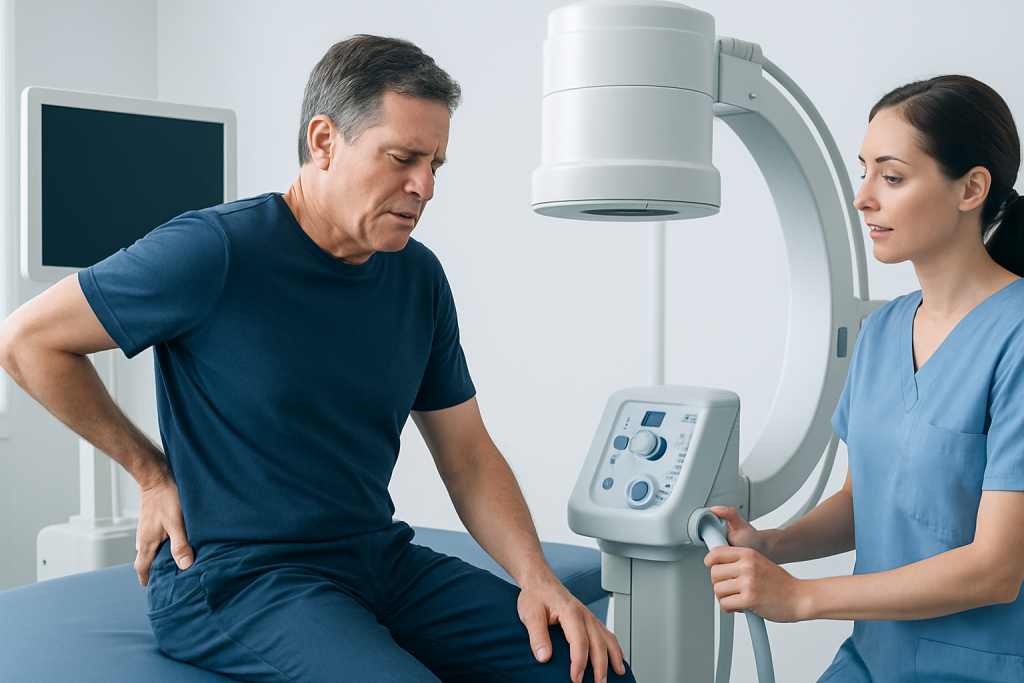
Sciatica often begins as pain on one side of the body, though the pattern can vary. Some people feel it in the low back and buttock first, while others notice the leg pain more strongly than the back pain. The discomfort may worsen when sitting, bending, coughing, or sneezing, because those movements can increase pressure around the irritated nerve.
Alongside pain, patients may notice tingling, burning, numbness, or a pins-and-needles sensation in the thigh, calf, foot, or toes. Some describe the leg as heavy or less coordinated, which is important because weakness can influence whether surgery should be considered sooner.
Doctors pay close attention to the exact symptom pattern because it can help identify which nerve root is involved. That detail matters: a person with tolerable pain and no weakness may be treated differently from someone who has pain plus difficulty lifting the foot, climbing stairs, or standing on tiptoe.
Causes & Risk Factors

Sciatica is usually caused by something that irritates or compresses a nerve root in the lower spine. A herniated disc is one of the most common reasons, especially when disc material presses on the nerve. Spinal stenosis, which narrows the spinal canal, can also produce sciatica-like symptoms, particularly in older adults.
Other contributors may include degenerative changes in the spine, spondylolisthesis, previous spinal injury, or less commonly a tumor, infection, or inflammatory condition. The treatment choice depends not only on the cause, but on how clearly the cause matches the patient’s symptoms and exam findings.
Risk factors can include age-related wear and tear, heavy physical labor, prolonged sitting, obesity, and a history of back problems. Even so, sciatica can affect active people as well, especially if a sudden disc problem or mechanical strain affects the lower spine.
- Herniated or bulging disc
- Spinal stenosis
- Degenerative disc changes
- Prior spine injury or surgery
- Activities that repeatedly stress the lower back
Diagnosis
The decision between surgery and non-surgical care starts with a careful history and neurological examination. A doctor will ask where the pain begins, how far it travels, what makes it better or worse, and whether there is numbness, weakness, or changes in bladder or bowel control. The physical exam may include tests of strength, reflexes, sensation, and movement.
Imaging is not always needed right away. If symptoms are mild and improving, doctors may recommend a period of conservative treatment first. If pain is severe, persistent, recurring, or associated with weakness or red flags, imaging such as MRI is often used to look for disc herniation, narrowing, or another structural cause.
For international patients, a good diagnostic plan should also consider timing and continuity of care. When treatment may involve travel, it helps to know whether the needed imaging, consultation, and follow-up can be completed in a coordinated sequence rather than as separate, loosely connected visits.
Treatment Options
Non-surgical care is often the first path, especially when there is no progressive weakness or emergency sign. This may include guided activity modification, physical therapy, anti-inflammatory pain strategies when appropriate, nerve-pain management in selected cases, heat or ice, and education about safe movement. The goal is not just pain relief, but helping the irritated nerve calm down while keeping the patient moving safely.
Surgery is usually considered when pain remains disabling despite conservative treatment, when symptoms last for a prolonged period, or when nerve function is worsening. The exact operation depends on the cause: a herniated disc may be treated with a discectomy, while spinal stenosis may require a decompressive procedure. In some cases, fusion is discussed if spinal stability is also part of the problem.
There is no single “best” answer for every patient. Two people with similar MRI findings may be treated differently if one is improving and the other is losing strength. The decision is typically made by combining symptom severity, exam findings, imaging, response to prior treatment, and the patient’s goals for work, travel, caregiving, and daily independence.
- Conservative care when symptoms are improving or stable
- Surgical consultation when pain persists or function declines
- Urgent assessment if weakness or bladder/bowel changes appear
Prevention & Self-care
Self-care does not replace medical treatment, but it can support recovery and reduce future flare-ups. Gentle movement is often better than prolonged bed rest, because staying active within comfort limits helps preserve mobility and prevents stiffness. A physical therapist may recommend exercises that strengthen the core, support posture, and reduce repeated strain on the lower back.
Simple habit changes can also matter. Paying attention to lifting technique, breaking up long periods of sitting, and using supportive seating during long flights or car rides may reduce pressure on the spine. For patients traveling for evaluation or surgery, planning for walking support, medication schedules, and post-procedure follow-up before departure can make recovery smoother.
People who already know they have disc disease or stenosis may be advised to track symptom patterns. A notebook or phone note with dates, triggers, leg strength changes, and walking tolerance can be useful during consultations, especially when Neurology Second Opinions: Which Cases Benefit Most Before You Commit" class="ahp-ilk">second opinions or cross-border care are being considered.
When to See a Doctor
Medical review is important if sciatica lasts more than a short period, keeps returning, or begins limiting work, sleep, or basic daily activities. An appointment is also wise if pain is spreading farther down the leg, if numbness is increasing, or if the person feels less steady on the affected side.
Some symptoms deserve prompt assessment. These include new or worsening weakness, difficulty lifting the foot, changes in bladder or bowel control, numbness in the groin or inner thighs, fever with back pain, or severe pain after a significant injury. These signs may point to a condition that needs urgent attention rather than routine follow-up.
For patients seeking care from another country, it is reasonable to ask how the diagnosis will be confirmed, how treatment decisions are made, and what recovery support will be available after discharge. At Acibadem Health Point, multidisciplinary specialists and JCI-accredited hospitals help diagnose and treat sciatica for international patients in a coordinated way.
Recovery and Outlook
The outlook depends on the cause of the sciatica and whether nerve function is affected. Many people improve without surgery, especially when symptoms are mild to moderate and the underlying problem settles with time. Others recover more fully after a procedure when the nerve is clearly compressed and conservative treatment has not been enough.
Recovery should be matched to the treatment path. A person using non-surgical care may need several weeks of gradual improvement and guided rehabilitation, while a surgical patient may need a structured plan for wound care, walking, physical therapy, and follow-up visits. In both cases, the important sign of progress is not only less pain, but steadier movement and better function.
People often feel reassured when they understand that the decision is not about being “for” or “against” surgery. It is about identifying when time, rehabilitation, and symptom control are likely to help, and when removing pressure from a nerve offers a better chance of lasting relief.
Frequently asked questions
Is sciatica always caused by a herniated disc?
No. A herniated disc is common, but spinal stenosis, degenerative changes, spondylolisthesis, and other spinal problems can also irritate the sciatic nerve. The cause is usually identified by combining symptoms, examination findings, and, when needed, imaging.
How do doctors decide if surgery is needed for sciatica?
They look at the severity and duration of symptoms, whether conservative treatment has helped, and whether there is weakness or other neurological change. Surgery is more likely to be recommended when pain is persistent and disabling or when nerve function is declining.
Can sciatica improve without surgery?
Yes, many people improve with time and non-surgical care. This is especially common when symptoms are mild to moderate and there is no progressive weakness or emergency warning sign.
What tests are usually done before choosing treatment?
A doctor typically begins with a history and neurological exam, and may order MRI if symptoms are severe, persistent, or associated with weakness. Imaging is used to match the symptoms to a specific spinal cause and guide treatment choices.
What should a patient do while waiting for an appointment?
It is usually helpful to stay gently active, avoid movements that clearly worsen pain, and note any new numbness or weakness. If bladder or bowel changes, saddle numbness, or rapidly worsening weakness appear, urgent medical care is needed.
If someone travels for care, what should be arranged first?
They should confirm the diagnosis plan, the likely treatment pathway, and how follow-up will happen after returning home. Having rehabilitation instructions and a clear recovery timeline before travel makes the experience safer and easier to manage.
References
- National Institute of Neurological Disorders and Stroke
- Mayo Clinic
- American Association of Neurological Surgeons
- American Academy of Orthopaedic Surgeons
- NHS
This article is for general information only and is not a substitute for professional medical advice. Please consult a qualified doctor about your individual situation.