Signs Of Sinus Infection

Key Takeaways
- Sinus infection symptoms often include facial pressure, thick nasal discharge, congestion, and reduced sense of smell.
- Symptoms that last longer than about 10 days, improve and then worsen, or become severe may suggest sinusitis rather than a simple cold.
- Most cases are caused by viruses, but bacteria, allergies, and structural nasal issues can also contribute.
- Diagnosis is usually based on symptoms and an exam; imaging is not always needed.
- Supportive care can ease discomfort, while some cases need prescription treatment or ENT evaluation.
A sinus infection, or sinusitis, can look a lot like a lingering cold, but certain patterns make it more likely. Understanding the typical signs can help a person know when home care may be enough and when it is time to speak with a doctor.
Overview
Sinusitis is inflammation of the lining of the sinuses, the air-filled spaces behind the forehead, cheeks, and nose. When those spaces swell, mucus drains less freely and pressure builds, which is why people often describe a heavy, blocked, or “stuck” feeling in the face.
The phrase signs of sinus infection is commonly used for a wide range of symptoms, but not every stuffy, painful nose is truly infected. A simple cold, allergies, and sinus inflammation without infection can feel similar at first, so the pattern and duration of symptoms matter as much as the symptoms themselves.
For people who travel for care, sinus symptoms can become especially frustrating because they may flare during flights, dry climates, or long work trips. Understanding the likely cause helps a person decide whether to rest, monitor, or arrange a medical assessment before symptoms disrupt sleep, work, or travel plans further.
Signs and Symptoms
Sinus infection symptoms often begin with nasal congestion and a sensation of pressure in the face. Many people notice thicker nasal mucus, Sinus Surgery Is Worth Considering" class="ahp-ilk">postnasal drip, headaches that feel heavier when bending forward, or reduced ability to smell and taste.
Other common signs can include tenderness around the eyes, cheeks, or forehead, a cough that is worse at night, bad breath, fatigue, and an overall “run-down” feeling. Some people also develop ear pressure, upper tooth discomfort, or a feeling of fullness in the head.
Helpful clues that point toward sinusitis rather than a short-lived cold include:
- Symptoms that last longer than about 10 days without clearing.
- A cold that seems to improve and then becomes worse again.
- Thick colored mucus together with facial pressure or reduced smell.
- More intense pain, fever, or one-sided symptoms in some cases.
It is worth remembering that mucus color alone does not prove a bacterial infection. The overall picture, especially duration and severity, is usually more useful than any single symptom.
Causes and Risk Factors

Most sinus infections start after a viral upper respiratory infection, such as a common cold. When the nasal passages become swollen, drainage slows and mucus collects, creating an environment where symptoms linger.
Allergies are another frequent contributor. Ongoing allergic inflammation can narrow sinus openings, making congestion and pressure more likely, especially during pollen seasons or in places with dust, mold, or air pollution.
Other factors can increase the chance of sinus problems:
- Deviated septum or other structural narrowing in the nose
- Nasal polyps
- Smoking or exposure to secondhand smoke
- Frequent respiratory infections
- Asthma or other chronic airway inflammation
- Changes in pressure during air travel or diving
In people who cross time zones or spend long periods in dry cabins and hotel rooms, dehydration and irritated nasal passages may make symptoms feel worse. This does not cause infection by itself, but it can make recovery less comfortable and prolong congestion.
Diagnosis
Doctors usually diagnose sinusitis by listening carefully to the symptom pattern and examining the nose, throat, ears, and face. The goal is to distinguish a likely viral illness from a condition that may need closer follow-up or targeted treatment.
During an evaluation, a clinician may ask how long symptoms have been present, whether they improved and then returned, and whether there is fever, severe facial pain, or swelling. A medical history is also important because allergies, asthma, and previous sinus issues can influence the diagnosis.
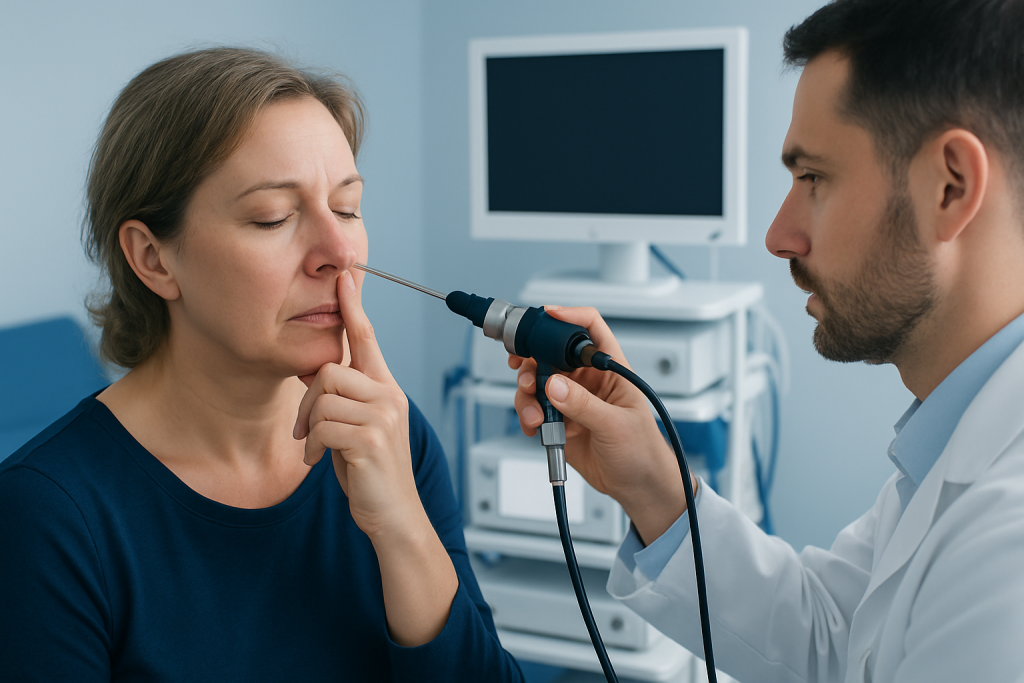
Imaging tests are not always necessary for routine cases. A CT scan or nasal endoscopy may be considered when symptoms are persistent, recurrent, unusual, or when a specialist needs more detail about sinus drainage and anatomy. This is especially relevant for international patients planning care across borders, since a clear diagnosis can help guide whether treatment should be started immediately or coordinated after travel.
Treatment Options
Treatment depends on the cause, how long symptoms have lasted, and how severe they are. Many cases improve with supportive care because the inflammation settles as the underlying viral illness resolves.
Common non-prescription measures may include saline nasal rinses, adequate hydration, rest, and warm compresses to the face. Some people also benefit from over-the-counter pain relievers or medicines that reduce congestion, though these should be used carefully and according to label directions or a doctor’s advice, especially in people with high blood pressure, pregnancy, or other medical conditions.
If a doctor suspects a bacterial sinus infection, prescription treatment may be discussed. Antibiotics are not needed for every sinus infection, and they are generally reserved for cases with features that suggest bacterial involvement or symptoms that are not improving as expected.
When sinusitis is linked to allergies, treatment may focus on controlling the inflammation behind the congestion. In select cases, an ENT specialist may recommend nasal steroid sprays, treatment for nasal polyps, or surgery if structural blockage or recurrent disease is driving the problem. For people seeking care abroad, a coordinated ENT assessment can be helpful because treatment may need to be matched to imaging, travel timing, and follow-up availability.
Prevention and Self-care
There is no way to prevent every sinus infection, but a few habits can reduce the chance of irritation and recurring blockage. Keeping the nasal passages moist and avoiding triggers often makes a noticeable difference, especially in dry climates or during long flights.
Practical self-care measures include:
- Using saline spray or saline rinses to help thin mucus
- Drinking enough fluids to support mucus drainage
- Avoiding cigarette smoke and strong airborne irritants
- Managing allergies consistently when they are a trigger
- Using a humidifier in dry indoor environments when appropriate
- Practicing hand hygiene to lower the risk of viral colds
For travelers, it can help to plan ahead with tissues, saline spray, and a way to stay hydrated during flights. If a person tends to get sinus pressure when flying, discussing prevention strategies with a doctor before travel may be worthwhile, especially if sinus symptoms have been recurring.
When to See a Doctor
A doctor should be consulted if symptoms last more than about 10 days, if they become more severe after briefly improving, or if facial pain and pressure are interfering with daily life. Ongoing fever, significant one-sided symptoms, or repeated sinus infections also deserve medical review.
Prompt medical attention is important if there is swelling around the eyes, severe headache, confusion, vision changes, stiff neck, or trouble breathing. These are not typical features of a routine sinus infection and should be assessed without delay.
People with weakened immune systems, significant chronic illness, or repeated infections may need a more detailed evaluation to look for underlying causes. For international patients, Acibadem Health Point’s multidisciplinary specialists and JCI-accredited hospitals can diagnose and treat sinus conditions while helping coordinate care across the travel and recovery process.
Frequently asked questions
How can someone tell the difference between a cold and a sinus infection?
A cold usually improves within several days, while sinusitis often causes symptoms that linger or worsen after an initial improvement. Facial pressure, thick nasal discharge, and reduced smell can also point more toward sinus involvement. A doctor looks at the overall pattern, not just one symptom.
Does colored mucus mean the infection is bacterial?
Not necessarily. Mucus can turn yellow or green during a viral illness or when the nasal passages are inflamed. The length and progression of symptoms are usually more important than mucus color alone.
Can sinus infections go away without antibiotics?
Yes, many do. Viral sinusitis often improves with rest, fluids, saline rinses, and time. Antibiotics are considered only when a doctor thinks bacteria are likely or symptoms are not improving as expected.
Why does a sinus infection sometimes cause tooth pain?
The sinuses sit close to the upper teeth, so pressure and inflammation in that area can be felt as dental discomfort. This is common with sinusitis and does not always mean there is a problem with the teeth themselves. A clinician can help tell the difference if the pain is unclear.
Are sinus infections contagious?
The sinus infection itself is not usually the contagious part, but the viral cold that starts it can be spread to other people. Good hand hygiene and avoiding close contact when sick can help reduce transmission. Allergy-related sinusitis is not contagious.
When is sinus surgery considered?
Surgery is usually reserved for people with recurrent, chronic, or structurally complicated sinus disease that does not improve with medical treatment. An ENT specialist may suggest it after reviewing symptoms, examination findings, and imaging when needed. The decision is individualized and not part of routine care for most first-time cases.
References
- American Academy of Otolaryngology–Head and Neck Surgery
- Centers for Disease Control and Prevention
- Merck Manual Consumer Version
- Mayo Clinic
- National Institute on Deafness and Other Communication Disorders
This article is for general information only and is not a substitute for professional medical advice. Please consult a qualified doctor about your individual situation.