Should You Treat Sinusitis Medically or Surgically? The Questions That Change the Plan

Key Takeaways
- Many sinus infections improve with medical treatment, especially when symptoms are recent or mild.
- Surgery is usually considered when sinusitis keeps returning, becomes chronic, or does not respond to appropriate medicine.
- A clear diagnosis matters because allergies, polyps, structural blockage, and dental problems can all affect the plan.
- Imaging, nasal endoscopy, and symptom history help ENT specialists decide whether medical or surgical care is more appropriate.
- Follow-up is important, particularly for patients traveling from another country who need a coordinated recovery plan.
Sinusitis treatment is not one-size-fits-all. The right plan depends on whether symptoms are short-lived or persistent, what is causing the inflammation, and how well the sinuses respond to medicines and self-care.
Overview
Sinusitis can look simple from the outside—pressure in the face, blocked breathing through the nose, a heavy head, and mucus that seems to linger longer than expected. But behind those symptoms, the reasons can differ widely. Some people have an acute viral infection that settles with time and supportive care. Others develop ongoing inflammation, nasal polyps, or repeated infections that keep the sinuses from draining properly.
That difference is why the key question is often not “What is the best treatment?” but “What kind of sinusitis is this?” For many patients, medicine is enough to calm inflammation, clear infection when present, and restore nasal function. For others, especially when the sinuses are physically blocked or disease keeps returning, surgery may be the step that allows treatment to work more effectively.
ENT specialists usually think in stages. First comes confirmation of the diagnosis, then a trial of appropriate medical care, and only afterward a discussion of surgery if symptoms persist or the pattern suggests a structural problem. This careful sequence helps patients avoid unnecessary procedures while still addressing disease that truly needs more than medication.
Symptoms
Sinusitis symptoms can overlap with a common cold, allergies, or migraine, which is one reason self-diagnosis can be misleading. Typical features include nasal congestion, thick nasal discharge, reduced sense of smell, facial pressure or pain, and a feeling of fullness around the cheeks, forehead, or between the eyes.
Acute sinusitis often begins with a viral upper respiratory infection and may include sore throat, cough, and a general sense of being unwell. Chronic sinusitis, by contrast, tends to last longer and can feel less dramatic but more exhausting: ongoing blockage, repeated postnasal drip, poor sleep, and a sense that the nose never fully clears.
Some symptoms deserve special attention because they suggest the need for prompt evaluation rather than routine home care. These may include swelling around the eyes, vision changes, severe headache, high fever, confusion, or symptoms that worsen rather than improve after an initial period of recovery. These are not the usual course of uncomplicated sinusitis and should be assessed by a clinician.
Causes & Risk Factors

Whether sinusitis is treated medically or surgically often depends on what is driving it. In many cases, the trigger is inflammation after a viral infection, and the lining of the sinuses simply needs time to settle. In other cases, bacteria, allergies, asthma, environmental irritants, or immune-related issues can keep the inflammation going.
Chronic sinusitis is more likely when the natural drainage pathways are narrowed or blocked. Common contributors include nasal polyps, a deviated septum, enlarged turbinates, scar tissue from prior infection or surgery, and less commonly dental infection spreading to the sinus area. When drainage is impaired, medicines may reduce swelling but still struggle to fully restore airflow and mucus clearance.
Risk factors can also shape treatment decisions. People with frequent allergies, asthma, recurrent respiratory infections, smoking exposure, or prior facial trauma may have a more complicated course. For international patients, another practical factor is continuity of care: if someone is traveling for treatment, the team has to consider what can be safely started before the trip, what requires in-person follow-up, and whether surgery would need coordinated postoperative care at home or abroad.
Diagnosis
The plan begins with a precise diagnosis. An ENT specialist usually starts with a detailed symptom history: how long the problem has lasted, whether it keeps coming back, which medicines have already been tried, and whether there is a history of allergies, asthma, or previous nasal surgery.
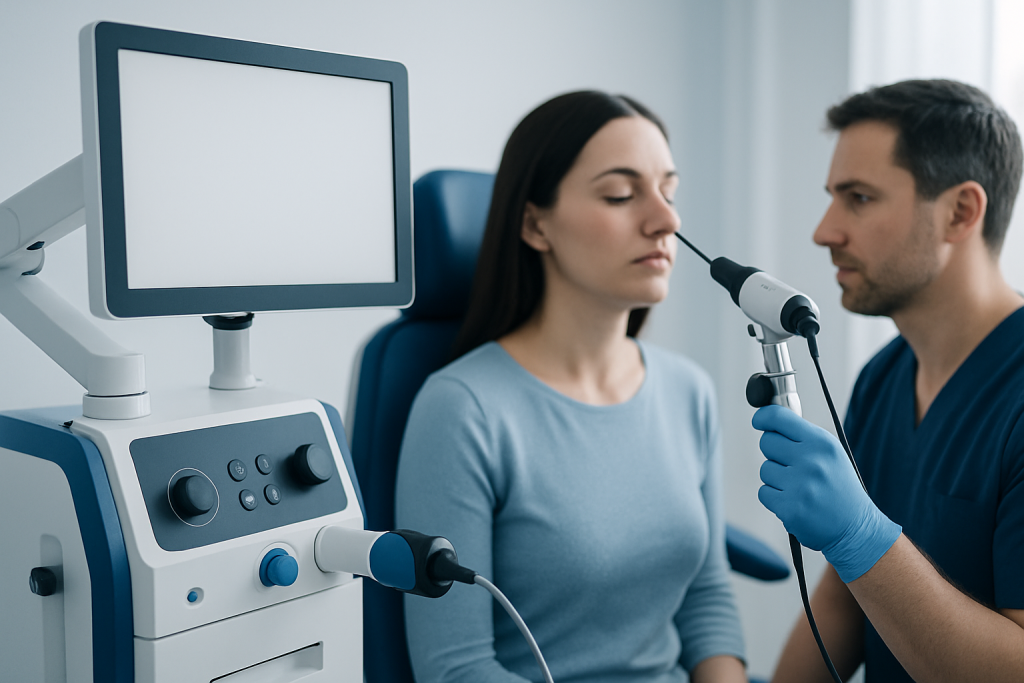
A physical exam may be followed by nasal endoscopy, a thin camera exam that allows the doctor to look directly inside the nasal passages and sinus drainage areas. This can reveal swelling, pus, polyps, crusting, or anatomic narrowing that a simple external exam would miss. When symptoms are persistent, severe, or unclear, imaging such as a sinus CT scan may be recommended to map the anatomy and confirm the extent of inflammation.
Diagnosis also helps separate sinusitis from look-alike conditions. Facial pain without sinus disease may come from migraine or tension headache, while congestion may be driven primarily by allergic rhinitis. The more clearly the cause is identified, the more accurately the team can choose between medication, observation, or surgery.
Treatment Options
Medical treatment is usually the first step for most forms of sinusitis, especially when the condition is recent or has not yet been fully evaluated. Depending on the cause, this may include saline rinses, anti-inflammatory therapy, allergy management, decongestant measures used appropriately, or antibiotics when a bacterial infection is suspected. The goal is not only symptom relief but also reducing swelling so the sinuses can drain naturally.
For chronic sinusitis, medicine often remains part of long-term care even when surgery is considered. In many patients, steroid sprays, saline irrigation, and allergy control are used before and after procedures to keep symptoms stable. Surgery is generally discussed when the sinuses stay blocked despite proper medical therapy, when nasal polyps are present, or when repeated infections keep interfering with daily life.
Common surgical options include endoscopic sinus surgery, which uses small instruments and a camera through the nostrils to open blocked drainage pathways and remove inflamed tissue or polyps. If anatomy is a major issue, procedures may also address a deviated septum or enlarged turbinates. Surgery is not a shortcut or a universal cure; it is best understood as a way to restore drainage and allow ongoing medical care to work better.
Patients deciding between medical and surgical treatment often benefit from asking a few practical questions: Is the problem acute or chronic? Has a full course of appropriate medicine already been tried? Is there objective evidence of blockage or polyps? Will the plan require follow-up visits, and if so, can they be coordinated after travel? These questions often clarify whether a procedure is likely to help.
Prevention & Self-care
Self-care can make a meaningful difference, especially when the condition is mild or when someone is recovering between medical visits. Saline nasal rinses, good hydration, rest, and managing allergens in the home can ease congestion and reduce irritation. For people with known allergies, staying consistent with prescribed allergy treatment can lower the chance of repeated flare-ups.
It also helps to avoid nasal irritants such as cigarette smoke and heavy environmental pollution when possible. Using medicines exactly as directed matters as well, because underusing anti-inflammatory therapy may allow swelling to return, while using the wrong over-the-counter product can worsen dryness or rebound congestion. Patients who have had surgery are usually given specific postoperative instructions to protect healing and reduce infection risk.
For international patients, planning is part of prevention too. Before traveling for ENT care, it is useful to clarify what tests may be needed, how long recovery may take, whether flying soon after surgery is appropriate, and what signs should prompt urgent contact after returning home. A written follow-up plan can make recovery smoother and less stressful.
When to See a Doctor
Medical evaluation is wise when sinus symptoms last longer than expected, return often, or interfere with sleep, work, or daily concentration. If home care has not helped, or if symptoms seem to improve and then worsen again, an ENT assessment can identify whether the issue is inflammation, infection, polyps, or an anatomic blockage.
More urgent care is needed if a patient develops swelling around the eyes, severe headache, changes in vision, high fever, stiff neck, confusion, or significant facial pain that is out of proportion to a typical cold. These signs do not automatically mean something dangerous, but they do deserve prompt assessment.
When treatment is being considered across borders, patients often want a team that can organize diagnosis, treatment, and recovery in one pathway. At Acibadem Health Point, multidisciplinary specialists and JCI-accredited hospitals diagnose and treat sinusitis for international patients with coordinated ENT care and follow-up planning.
Living With Sinusitis: How the Decision Usually Gets Made
The choice between medical and surgical treatment is rarely made in a single visit. It is usually built from symptom patterns, examination findings, imaging, and the patient’s response to earlier therapy. In practical terms, doctors try to answer whether the sinuses are simply inflamed or whether they are mechanically unable to drain.
Patients sometimes worry that surgery means medicine has “failed.” In reality, surgery is often part of a layered approach to chronic disease, much like opening a blocked pathway so the right medications can work more effectively afterward. For many people, the best outcome comes from combining procedure, maintenance sprays, saline care, and periodic follow-up rather than relying on one treatment alone.
The most useful next step is usually a conversation with an ENT specialist who can match the treatment intensity to the disease pattern. That approach helps avoid both under-treatment and unnecessary intervention, which is especially important when care must fit around travel, work, family, or recovery away from home.
Frequently asked questions
How do doctors decide if sinusitis should be treated medically or surgically?
They look at how long symptoms have lasted, how often they return, and whether medicines have helped. Imaging and nasal endoscopy can show whether there is inflammation alone or a blocked drainage pathway that may need surgery.
Is surgery usually the first treatment for sinusitis?
No, most patients start with medical treatment and self-care. Surgery is typically considered when symptoms persist, recur frequently, or are linked to structural blockage or polyps.
Can sinusitis go away without antibiotics?
Yes, many cases, especially viral sinusitis, improve without antibiotics. A doctor may recommend other treatments instead, depending on the cause and the length of symptoms.
What is endoscopic sinus surgery?
It is a minimally invasive procedure done through the nostrils using a camera and small instruments. The goal is to open blocked sinus passages, remove inflamed tissue or polyps, and improve drainage.
Will surgery cure sinusitis permanently?
Surgery can improve drainage and reduce symptoms, but it does not guarantee that sinusitis will never return. Ongoing care such as saline rinses, allergy control, and follow-up visits often remains important.
When should someone seek urgent help for sinus symptoms?
Urgent evaluation is important if there is swelling around the eyes, vision changes, severe headache, high fever, confusion, or intense facial pain. These symptoms need prompt assessment rather than routine home treatment.
References
- American Academy of Otolaryngology–Head and Neck Surgery
- National Institute on Deafness and Other Communication Disorders
- Mayo Clinic
- Cleveland Clinic
- World Health Organization
This article is for general information only and is not a substitute for professional medical advice. Please consult a qualified doctor about your individual situation.
More from the Health Library



Related Specialists

Dr. Burcu Aydemir Efelerli
Internal Medicine
Dr. Bahar Anayurdu
Radiology
Prof. Dr. Selim Aksöyek
Pediatric Surgery
Asst. Prof. Dr. Barış Sancak
Psychiatry