Scalp Psoriasis: Symptoms, Causes and Treatment

Key Takeaways
- Scalp psoriasis is an immune-mediated skin condition, not a sign of poor hygiene.
- Symptoms can range from mild flaking to thick, itchy plaques that extend beyond the hairline.
- Treatment often combines medicated topical therapies, gentle scalp care, and trigger management.
- A doctor should evaluate persistent scalp scaling, hair loss, pain, or possible infection.
- With a tailored plan, most people can keep symptoms under better control and reduce flare-ups.
Medically reviewed by the Acıbadem clinical team — August 19, 2026
Scalp psoriasis is a chronic inflammatory skin condition that can cause redness, scaling, itching, and discomfort on the scalp. It is manageable for many people with the right diagnosis, treatment plan, and day-to-day scalp care.
Overview
Scalp psoriasis is a long-term skin condition that causes patches of inflammation on the scalp. These patches may look pink or red on lighter skin tones and more purple, brown, or gray on darker skin tones, often covered with silvery-white scale. Some people notice only light flaking; others develop thicker plaques that spread to the hairline, behind the ears, or onto the forehead and neck.
Although the appearance can be unsettling, scalp psoriasis is not contagious. It reflects an overactive immune response that speeds up skin cell turnover, leading to the buildup of visible scales. For many patients, the condition comes and goes in flares, with periods of improvement in between.
Because the scalp is difficult to examine and treat on one’s own, diagnosis and treatment planning can take a little more coordination than for psoriasis elsewhere on the body. People traveling for care may want a dermatologist who can assess the scalp carefully, distinguish psoriasis from dandruff or other conditions, and choose therapies that fit daily life, hair type, and follow-up needs after returning home.
Symptoms
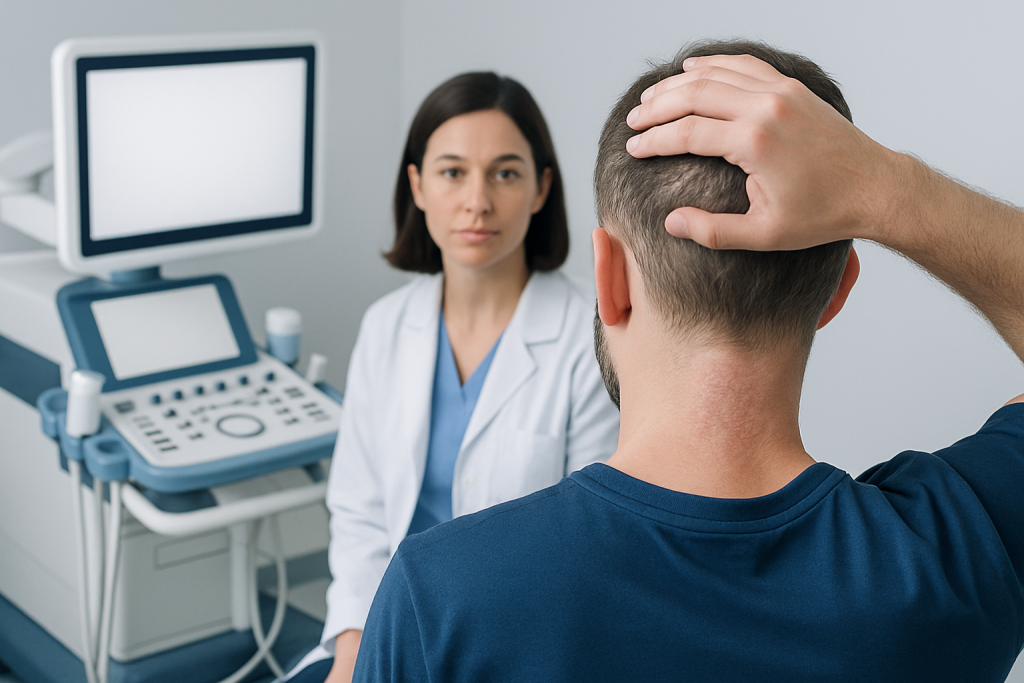
Scalp psoriasis may begin with fine flaking that resembles dandruff, but the scale is often thicker and more adherent than ordinary dry skin. Itching is common, and some people describe burning, tenderness, or a tight feeling in the scalp. Scratching can worsen irritation and occasionally cause small areas of bleeding.
In more noticeable cases, the plaques can extend beyond the scalp line. Common areas include the hairline, temples, nape of the neck, and the skin behind the ears. The condition may also lead to temporary hair shedding, usually from scratching, inflammation, or repeated picking rather than from permanent follicle damage.
Symptoms can vary over time. Stress, illness, cold weather, skin injury, or certain medications may make the scalp feel more active for a period, then settle again. The pattern is often personal, which is why keeping track of when flares happen can be useful during a consultation.
- Itchy, scaly scalp patches
- Red, pink, purple, or brown plaques depending on skin tone
- Flaking that may be mistaken for dandruff
- Burning, soreness, or tenderness
- Scale extending to the hairline, neck, or behind the ears
Causes & Risk Factors

Scalp psoriasis develops when the immune system signals skin cells to grow and shed too quickly. Instead of maturing and falling away gradually, cells build up on the surface and form the thick scale seen in psoriasis. Genes play an important role, but not everyone with a family history will develop the condition.
Certain factors can make scalp psoriasis more likely or more noticeable. These include a personal or family history of psoriasis, other autoimmune conditions, stress, smoking, excess alcohol use, and skin injuries such as scratches, harsh grooming, or sunburn. Some medicines may also aggravate psoriasis in susceptible people, so a full medication review can be helpful.
Triggers are not the same for every person. One patient may flare after a throat infection, while another notices worsening during dry winter weather or after using irritating hair products. Identifying individual patterns is often a key part of long-term control, especially for people who need practical advice that can be continued after treatment abroad.
Diagnosis
Diagnosis usually starts with a detailed history and a close look at the scalp, hairline, ears, and nearby skin. A clinician may ask how long symptoms have been present, whether there is itching or pain, and whether similar patches appear on the elbows, knees, nails, or other parts of the body. These clues often help separate psoriasis from other common scalp problems.
In some cases, scalp psoriasis can be confused with seborrheic dermatitis, eczema, tinea capitis (a fungal infection), or contact dermatitis from hair products. If the appearance is unclear, a dermatologist may recommend further testing or, rarely, a skin biopsy. This is especially important when symptoms are severe, unusual, or not responding as expected to treatment.
For international patients, diagnosis may also involve planning ahead for follow-up. A clear written treatment plan, photographs of the scalp at baseline, and guidance on what to watch for can help a person continue care safely once back home. The aim is not only to identify the condition, but to make the plan realistic in everyday life.
Treatment Options
Treatment is usually tailored to the thickness of the scale, the degree of inflammation, and how much the condition affects comfort and daily routines. Many people begin with topical therapies applied directly to the scalp. These may include medicated corticosteroids, vitamin D-based treatments, keratolytic agents to soften scale, or combination preparations chosen by a doctor.
When plaques are stubborn or the scalp is extensively involved, a dermatologist may consider additional options. These can include medicated shampoos, light-based approaches in selected cases, systemic medicines, or biologic therapies for more widespread psoriasis. The choice depends on the person’s overall health, other forms of psoriasis, and treatment goals.
For patients receiving care while traveling, it is especially useful to understand the application method, expected timeline, and monitoring needs before leaving the clinic. Scalp treatments often work best when the person knows how to part the hair, apply medicine consistently, and gently remove scale without irritating the skin.
- Topical corticosteroids to reduce inflammation and itching
- Vitamin D analogues or combination topical therapies
- Scale-softening agents and medicated shampoos
- Phototherapy in selected cases
- Systemic or biologic treatment for more extensive disease
Prevention & Self-care
Scalp psoriasis cannot always be prevented, but everyday habits can make flares less intense and the scalp more comfortable. Gentle cleansing is usually better than aggressive scrubbing. People often do well with lukewarm water, fragrance-free products, and a soft touch when washing, drying, and styling hair.
It also helps to avoid picking at plaques or trying to peel scale forcefully, since this can increase irritation. Some people benefit from using a medicated shampoo as directed, then following it with a conditioner on the hair shafts rather than the scalp, depending on their doctor’s advice. Stress reduction, good sleep, and trigger awareness may also help reduce flare frequency.
When planning care across borders, self-care matters even more because treatments need to be practical outside the clinic. A patient may be advised to bring product names, written instructions, and follow-up contact details, so the routine remains clear after travel. Small changes can make a significant difference in comfort and consistency.
- Use gentle, non-irritating hair products
- Avoid scratching, picking, and harsh brushing
- Follow the prescribed application schedule carefully
- Note possible triggers such as stress, infection, or weather changes
- Seek advice before changing or stopping treatment
When to See a Doctor
A medical evaluation is a good idea if scalp flaking does not improve with ordinary anti-dandruff products, if itching is persistent, or if patches are spreading beyond the scalp. A clinician can confirm whether psoriasis is the cause and suggest a treatment that matches the pattern and severity of symptoms.
It is especially important to seek care if there is significant pain, oozing, crusting, signs of infection, or sudden hair loss. A doctor should also be consulted if the diagnosis is uncertain, if symptoms affect sleep or confidence, or if treatment is no longer helping as expected. Early assessment can prevent unnecessary trial-and-error and shorten the path to relief.
For people exploring treatment abroad, a coordinated dermatology visit can be useful when the condition has been difficult to control or when they want a second opinion. Acibadem Health Point’s multidisciplinary specialists and JCI-accredited hospitals diagnose and treat scalp psoriasis for international patients, with attention to continuity of care after the visit.
Living With Scalp Psoriasis
Living with scalp psoriasis often involves learning the condition’s rhythm. Some people have mild, manageable flares; others need ongoing treatment adjustments. Tracking symptoms, products used, and flare triggers can help a clinician fine-tune the plan over time.
Hair care can usually continue, but the routine may need to be simplified. Patients often do better when styling is gentle and when treatments are built around the realities of work, travel, and family life. A plan that is easy to follow is usually a plan that is followed.
Support is also important. Psoriasis can affect confidence because it is visible and sometimes misunderstood. Reassurance from a qualified clinician, combined with practical treatment steps, helps many people feel more in control of the condition.
FAQs
Is scalp psoriasis the same as dandruff?
No. Dandruff usually causes looser, finer flakes, while scalp psoriasis often creates thicker plaques and more persistent inflammation. A doctor can help distinguish between the two, especially when symptoms overlap.
Can scalp psoriasis cause hair loss?
It can, but the hair usually grows back once inflammation, scratching, or picking is controlled. Permanent hair loss is not typical from psoriasis alone, although other causes of shedding should be considered if the pattern is severe or ongoing.
Will washing hair make it worse?
Not usually. Gentle washing can help remove loose scale and make medicated treatments more effective. The key is to avoid harsh scrubbing, very hot water, and strongly fragranced products that may irritate the scalp.
What treatments work best?
The best treatment depends on severity and how much of the scalp is involved. Many people start with topical prescription treatments and medicated shampoos, while others may need stronger therapy if the condition is widespread or persistent.
Can stress really trigger flares?
Yes, stress is a common trigger for many people, though it is not the only one. Learning personal triggers and building a manageable routine can help reduce flare-ups over time.
When should a dermatologist be seen?
A dermatologist should be seen when symptoms persist, diagnosis is uncertain, or home care is not enough. Prompt evaluation is also important if there is pain, infection, or noticeable hair loss.
Can scalp psoriasis be cured?
There is no permanent cure, but it can often be controlled well with the right combination of treatments and self-care. Many patients improve when therapy is adjusted to their individual symptoms and lifestyle.
References
- American Academy of Dermatology
- National Psoriasis Foundation
- NHS
- Mayo Clinic
- DermNet
This article is for general information only and is not a substitute for professional medical advice. Please consult a qualified doctor about your individual situation.
Hair transplant in Turkey — costs, graft counts & a free assessment
JCI-accredited · board-certified surgeons · reply within 24h
Add us as a Preferred Source to see more of our trusted health content across Google Search, AI Overviews and Discover.