Receding Hairline

Key Takeaways
- A receding hairline often develops slowly and may be one sign of pattern hair loss.
- Genetics, hormones, aging, stress, and some medical conditions can contribute.
- A clinician may use history, scalp examination, and selected tests to identify the cause.
- Treatment options can include topical therapies, oral medicines, procedures, and lifestyle support.
- Early assessment may help preserve more hair and rule out treatable conditions.
A receding hairline is a common pattern of hair loss that often develops gradually and may be linked to genetics, hormones, aging, or certain medical conditions. Understanding the cause helps guide the most appropriate treatment and self-care plan.
Overview
A receding hairline usually describes gradual thinning or backward movement of the front hairline, most often at the temples. Many people notice it first in photographs, when styling becomes harder, or when the forehead appears a little more open than before.
For some, it is part of a common pattern called androgenetic alopecia, sometimes known as male pattern hair loss, although it can also affect women in different ways. In other cases, hairline changes are related to traction, stress-related shedding, scalp inflammation, medication effects, or an underlying medical problem.
Because the appearance of hair loss can have emotional weight, a careful, unrushed evaluation matters. For international patients considering care abroad, the practical questions are often simple: what is causing the recession, what treatment is realistic, and how can progress be followed once they return home?
Symptoms
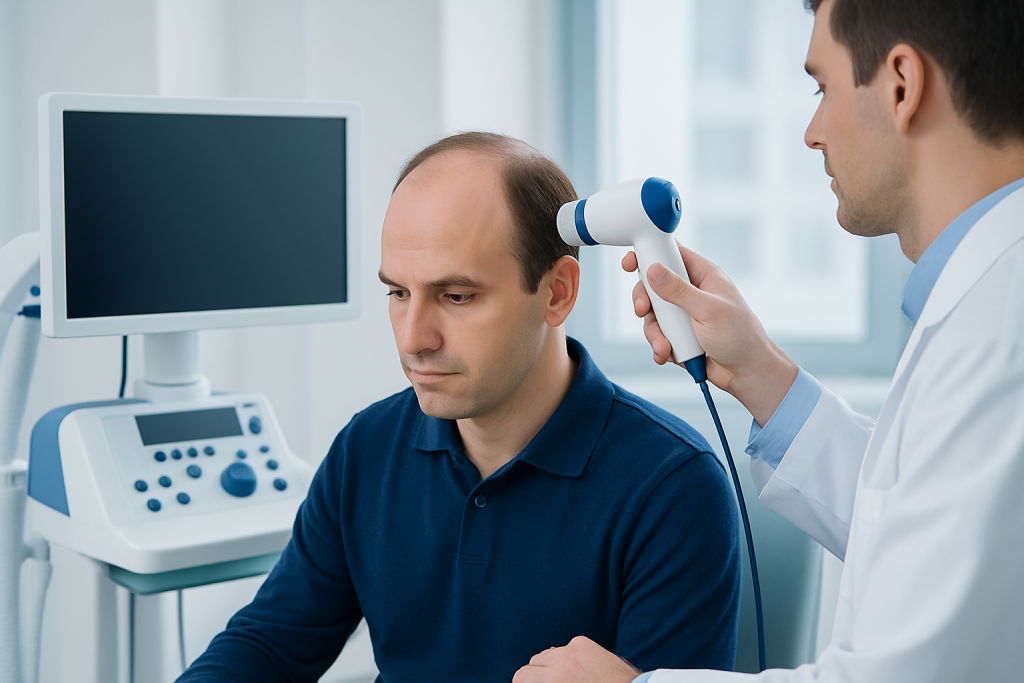
The earliest signs are often subtle. A person may notice that the temples look less dense, the front hairline appears less straight, or small hairs along the edge of the scalp seem finer and shorter than before.
Depending on the cause, hair changes may be limited to the front of the scalp or may include thinning over the crown, widening part lines, increased shedding in the shower, or more visible scalp through the hair. Some people also describe scalp itching, flaking, tenderness, or redness if inflammation is involved.
It helps to remember that not all hairline changes mean permanent loss. Temporary shedding can follow illness, emotional stress, surgery, major weight change, or a new medicine, and hair may partially recover once the trigger is addressed.
Causes & Risk Factors

The most common cause is inherited sensitivity to hormones that gradually shortens the hair growth phase. In this pattern, follicles slowly produce finer hairs over time until the hairline appears to move backward.
Other possible causes include traction from tight hairstyles, chemical or heat damage, autoimmune conditions such as alopecia areata, thyroid disease, iron deficiency, certain skin disorders, and some medications. Inflammatory scalp conditions can also interfere with normal growth if they are not treated.
- Family history of pattern hair loss
- Older age, though it can begin earlier
- Frequent tight braids, buns, extensions, or headwear traction
- Hormonal changes or endocrine disorders
- Recent illness, major stress, or significant weight change
- Scalp inflammation, scaling, or patchy hair loss
Risk is not determined by one factor alone. A person may have a genetic tendency and still notice faster change when another trigger, such as traction or illness, is present at the same time.
Diagnosis
Diagnosis usually starts with a detailed conversation about when the hairline changed, whether shedding increased, and whether there are symptoms such as itching or scalp pain. A clinician will also ask about family history, hair practices, medications, recent illnesses, and general health.
A scalp examination can reveal whether the pattern fits androgenetic alopecia, traction alopecia, or another form of hair loss. In some cases, a dermatoscope is used to look closely at hair shaft thickness and follicle patterns. If the picture is not clear, blood tests may be ordered to check for issues such as thyroid imbalance, iron deficiency, or other contributors.
When hair loss is atypical, rapidly progressive, patchy, or associated with scarring, a dermatologist may recommend further evaluation. The goal is not only to confirm a diagnosis but also to avoid missing conditions that need earlier treatment.
Treatment Options
Treatment depends on the cause, the degree of recession, and the person’s goals. If the hairline change is due to a reversible trigger, care may focus on removing that trigger and supporting regrowth over time. If it is pattern hair loss, treatment is usually aimed at slowing further thinning and improving density where possible.
Common approaches may include topical treatments, oral medicines prescribed by a clinician, and in selected cases procedural options such as platelet-rich plasma, low-level light therapy, or hair transplantation. A specialist may also discuss whether the current pattern is stable enough for surgery or whether medical treatment should come first.
Because therapies differ by sex, age, medical history, and future pregnancy plans, a personalized discussion is essential. For patients traveling internationally, it is useful to plan not only the procedure or prescription but also follow-up timing, medication access after return, and how results will be monitored remotely if needed.
- Topical therapies to support hair growth and reduce ongoing loss
- Oral prescriptions in appropriate candidates
- Treatment of scalp inflammation or underlying medical conditions
- Hair transplant evaluation for selected stable cases
- Adjunctive therapies such as light-based or injection-based options in some settings
Prevention & Self-care
Not every receding hairline can be prevented, especially when genetics play a major role. Still, gentle hair care and early attention to shedding can reduce avoidable stress on the scalp and help preserve the hair that remains.
Avoid repeated traction from tight styles, aggressive brushing, frequent harsh chemical processing, or high-heat styling. A balanced diet, adequate protein intake, and attention to general health can also support normal hair growth, although they do not replace medical treatment when an underlying condition is present.
It can be helpful to document changes with periodic photos taken in the same lighting. This gives a more reliable sense of progression than day-to-day mirror checks, which often make small changes feel larger than they are.
- Use gentle hairstyles that do not pull on the front hairline
- Choose mild scalp care products if irritation is present
- Address stress, sleep, and overall wellbeing
- Review medicines with a clinician if shedding starts after a new prescription
- Seek assessment sooner rather than waiting for marked thinning
When to See a Doctor
A doctor’s review is sensible when hairline recession happens quickly, is accompanied by patchy loss, redness, pain, heavy scaling, or scarring, or when there is noticeable shedding after illness or a new medication. These features can point to a condition that needs specific treatment rather than simple observation.
It is also wise to seek advice if hair loss is affecting confidence or daily life. A consultation can clarify whether the pattern is stable, whether blood tests are useful, and which options are realistic for the person’s age, health, and hair goals.
For international patients, planning care before travel often makes the experience smoother. Acibadem Health Point’s multidisciplinary specialists and JCI-accredited hospitals diagnose and treat hair loss conditions for international patients, with attention to evaluation, treatment choice, and follow-up planning across borders.
Living With a Receding Hairline
Many people find that the most helpful approach is a practical one: confirm the cause, choose a treatment that matches the pattern, and set expectations that hair recovery is usually gradual. A receding hairline does not always mean all hair will continue to be lost, and early management can make a meaningful difference.
Wigs, hairpieces, hairstyles, and cosmetic camouflage can also be useful while treatment is underway. These options are personal, and they can be combined with medical care rather than viewed as a substitute for it.
Staying engaged with follow-up is important, especially when treatment begins after returning home from an international consultation. Consistent review helps a clinician adjust the plan if shedding continues, if side effects appear, or if the diagnosis needs to be revisited.
FAQs
Is a receding hairline always permanent?
No. Some causes, such as temporary shedding or traction, can improve when the trigger is removed. Pattern hair loss is often long term, but treatment may slow progression and improve density.
Can women have a receding hairline?
Yes. Women may develop thinning at the front hairline or along the part, although the pattern can differ from men. A clinician can help determine whether the cause is hormonal, nutritional, inflammatory, or related to another condition.
Does shaving the head make hair grow back thicker?
No. Shaving does not change how follicles produce hair. New growth may simply feel coarser at first because the hair shafts are short and blunt.
Are over-the-counter products enough?
They may help in some cases, especially when used consistently and for the right diagnosis, but they do not replace a proper evaluation. If the cause is not pattern hair loss, the most effective treatment may be different.
How long does treatment take to show results?
Hair usually grows slowly, so improvements are often gradual rather than immediate. A clinician will typically review progress over months, not days, and may use photos to compare change objectively.
When should urgent assessment be considered?
Urgent review is not usually needed for gradual recession alone, but prompt medical attention is sensible if hair loss is sudden, patchy, painful, scarring, or linked with other symptoms such as fatigue, weight change, or scalp inflammation.
Can stress cause a receding hairline?
Stress can contribute to temporary shedding and may make hair loss more noticeable. It is not usually the only explanation, so a medical evaluation can help distinguish stress-related shedding from pattern hair loss or another condition.
References
- American Academy of Dermatology
- National Institute of Arthritis and Musculoskeletal and Skin Diseases
- Mayo Clinic
- British Association of Dermatologists
- Cleveland Clinic
This article is for general information only and is not a substitute for professional medical advice. Please consult a qualified doctor about your individual situation.