

Rollator

Key Takeaways
- A rollator is a mobility aid designed to support balance, walking, and rest breaks during movement.
- The right rollator depends on posture, strength, home environment, and how often it will be used.
- Proper fitting and training can reduce strain and help prevent unsafe use.
- Rollators are often part of a broader rehabilitation plan after illness, surgery, or a decline in mobility.
- Regular checks of brakes, wheels, and seat stability help keep the device safe and reliable.
A rollator is a wheeled walking aid that can help people move more safely, conserve energy, and feel more confident indoors and outdoors. This guide explains how rollators work, who may benefit from them, and what to consider when choosing and using one.
Overview
A rollator is a wheeled walking aid that offers support to people who have difficulty walking long distances, need help with balance, or tire easily. Unlike a standard walker that must usually be lifted with each step, a rollator rolls forward and often includes hand brakes, a seat, and a basket or pouch for carrying personal items.
For many people, the practical value of a rollator is not only physical support but also the freedom to move with less hesitation. It can make routine tasks such as going to appointments, walking in a hotel corridor, shopping, or visiting family feel more manageable. In rehabilitation, that confidence can matter as much as the device itself.
Rollators are not a single-size solution. Different models suit different needs, from lightweight designs for easier transport to sturdier frames for people who need more support. A health professional can help determine whether a rollator is the right aid, or whether another device would be safer and more effective.
Symptoms and situations that may lead to rollator use

A rollator is usually considered when walking becomes unsteady, slow, tiring, or uncomfortable. Some people notice that they pause frequently because of fatigue, while others feel insecure on uneven surfaces, in crowds, or when turning. A rollator may also help someone who needs a place to sit and rest during longer outings.
Common situations include recovery after surgery, muscle weakness, arthritis, neurological conditions, deconditioning after illness, or age-related changes in balance and stamina. In some cases, a rollator is used temporarily during recovery; in others, it becomes a long-term mobility aid.
- Unsteadiness when walking
- Need for support during standing or moving
- Reduced endurance or frequent fatigue
- Fear of falling in community settings
- Need for periodic rest while outdoors
Because mobility challenges can come from many causes, the choice of device should be guided by an assessment rather than by convenience alone. A person who only needs a small amount of support may do better with a cane, while someone with more pronounced balance problems may need a different type of walker or additional therapy.
Causes and risk factors
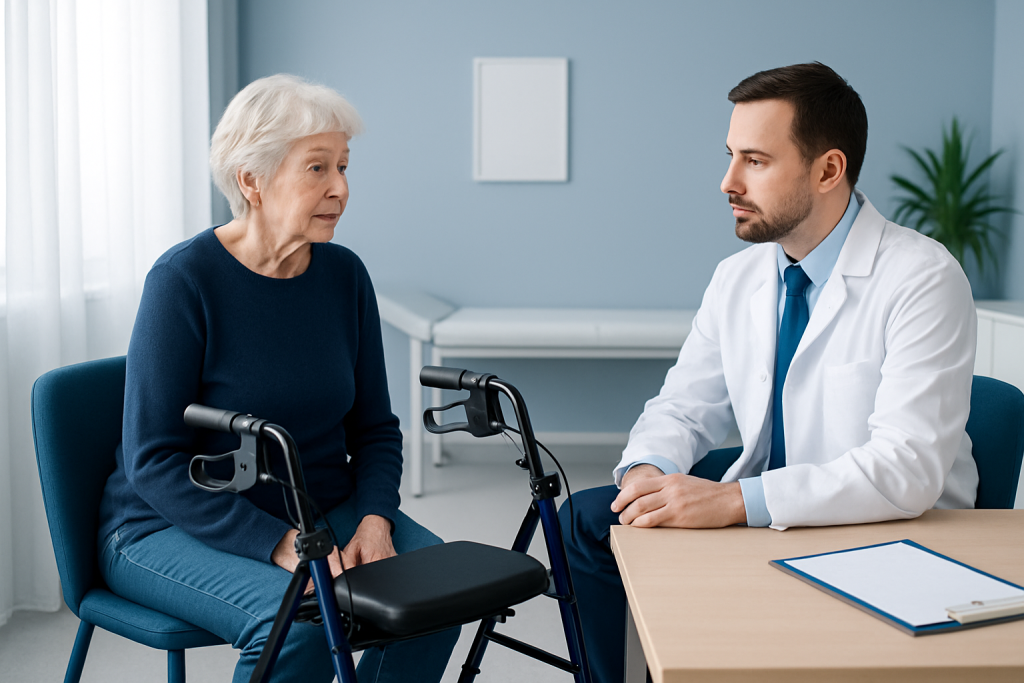
Rollators are not used for one diagnosis only. They are often recommended when walking ability is affected by a mix of medical, physical, and environmental factors. The underlying reason may be temporary, such as after an operation, or chronic, such as joint disease or a neurological condition.
Several factors can increase the likelihood that a person may benefit from a rollator. These include reduced leg strength, joint pain, shortness of breath during activity, poor balance, changes in vision, dizziness, or reduced confidence after a fall. Environmental barriers such as stairs, crowded spaces, and uneven sidewalks can also make a mobility aid more useful.
International patients sometimes seek rehabilitation advice while recovering away from home, where walking distances, unfamiliar floors, and travel fatigue may make a temporary aid especially helpful. In those cases, the decision is usually based on the patient’s current function, expected recovery, and whether the device can be safely used in the travel setting and back at home.
Diagnosis and assessment
Before a rollator is recommended, a clinician or rehabilitation specialist usually reviews how the person stands, walks, turns, and sits. This assessment may include observation of gait, balance, endurance, grip strength, posture, and the person’s ability to use the hand brakes safely.
The home and daily routine also matter. A person who lives in a compact apartment, climbs stairs often, or must carry the aid frequently will have different needs from someone who mainly uses it outdoors. The clinician may ask about falls, near-falls, pain, medications, dizziness, and any conditions affecting coordination or stamina.
In some rehabilitation programs, the evaluation is paired with practice. That may include learning how to lock brakes, sit and rise from the seat, navigate thresholds, and move on slopes. For patients traveling for care, this training can be especially useful before returning to their hotel, airport, or home environment.
Treatment options and types of rollators
A rollator itself is a supportive device, but it is often part of a broader treatment plan. Rehabilitation may include physical therapy, strength and balance exercises, pain management, medication review, or treatment of the underlying condition. The aim is not simply to provide support, but to improve safe movement over time.
Rollators come in several forms. Some are lightweight and easy to fold for travel, while others are more robust and intended for users who need a steadier frame. A model may have three or four wheels, a padded seat, a backrest, adjustable handles, or different wheel sizes for indoor and outdoor use.
- Lightweight rollators: easier to lift and transport
- Standard rollators: balanced option for everyday use
- Heavy-duty rollators: designed for greater support
- Indoor models: narrower for tight spaces
- Outdoor models: larger wheels for uneven ground
The best choice depends on function, not appearance. A device that is too heavy, too wide, or too unstable can create new problems. For that reason, fitting and instruction are as important as the frame itself.
How to choose the right rollator
Choosing a rollator is easier when the decision starts with the person’s movement pattern. The handle height should allow an upright posture without forcing the shoulders to rise, and the grips should be comfortable enough for regular use. A seat, if present, should be stable and easy to reach, but not so high or low that standing becomes difficult.
Brakes are another key feature. The user should be able to squeeze, lock, and release them without strain or confusion. Wheel size also matters: larger wheels may handle outdoor surfaces better, while smaller frames may suit indoor use and travel. Storage needs can also influence the choice, especially for people who carry medication, water, or documents to appointments.
When possible, the user should test the rollator while walking, turning, stopping, and sitting. This helps reveal whether the frame feels secure and whether the person can manage it independently. If recovery is expected to change over time, the team may recommend a model that can meet current needs while still being practical later.
Prevention and self-care
Safe rollator use begins with good habits. The brakes should be checked before each outing, and the frame should be inspected regularly for loose parts, worn wheels, or uneven movement. The user should also avoid carrying heavy items that make the device unstable or reduce control.
Learning the correct posture is important. A person should walk close enough to the rollator to maintain support, but not lean so far forward that balance is compromised. The seat should be used only when the device is fully stable and the surroundings are safe, with the brakes locked before sitting or standing.
Self-care also includes keeping strength and balance active as advised by the rehabilitation team. A rollator can support mobility, but it does not replace exercise, medical follow-up, or treatment of underlying causes. For people recovering after surgery or illness, following the prescribed rehabilitation plan often helps reduce reliance on the device over time.
Traveling patients may benefit from planning ahead: checking airline or airport assistance policies, confirming whether the rollator folds easily, and arranging safe transfers between transport, accommodation, and clinic visits. Small preparations can make mobility feel much less stressful away from home.
When to see a doctor
A doctor, physiotherapist, or rehabilitation specialist should assess mobility if walking becomes unsafe, painful, or noticeably more limited. This is especially important after a fall, a sudden change in strength, new dizziness, or worsening shortness of breath. A timely evaluation can clarify whether a rollator is appropriate or whether another approach is needed.
Medical review is also sensible if the device causes back pain, shoulder strain, hand discomfort, or repeated near-falls. These are often signs that the rollator is the wrong size, the brakes are difficult to use, or additional training is needed. Sometimes the issue is not the aid itself, but the fit or the way it is being used.
For patients seeking care internationally, rehabilitation teams can coordinate assessment, device selection, and walking training before discharge. Acibadem Health Point’s multidisciplinary specialists and JCI-accredited hospitals diagnose and treat mobility-related conditions for international patients, with attention to safe recovery and follow-up planning.
Living well with a rollator
Many people adjust to a rollator quickly once it is properly fitted and introduced in a supervised way. The device can make everyday movement feel less uncertain, which may encourage people to leave the house more often, participate in therapy, and keep up with appointments.
Good results usually come from using the rollator as part of a larger mobility plan rather than as a stand-alone fix. That plan may include home modifications, pacing strategies, exercise, pain control, and periodic reassessment as strength and balance change.
When support is matched to need, a rollator can become a practical bridge between limitation and independence. The goal is not to walk perfectly, but to walk as safely and comfortably as possible in real life.
Frequently asked questions
What is the difference between a rollator and a walker?
A rollator has wheels and usually hand brakes, which allows it to roll forward with less lifting. A traditional walker is typically steadier for some users but must often be picked up and moved step by step. The safer choice depends on balance, strength, and the person’s ability to control the device.
Who might benefit most from a rollator?
People who can walk but need support, tire easily, or feel unsteady may benefit from a rollator. It is also useful for some patients recovering from surgery or illness who need rest breaks during longer walks. A professional assessment helps confirm whether it is the right option.
Can a rollator be used indoors?
Yes, many people use a rollator indoors, especially if it fits through doorways and around furniture. However, some models are better suited to narrow spaces than others. Safety depends on the layout of the home and the user’s ability to turn and brake confidently.
How should a rollator be fitted?
The handles should generally be adjusted so the user can stand upright with relaxed shoulders and a slight bend in the elbows. The person should not need to hunch forward or reach excessively. A therapist or clinician can help set the height and check walking technique.
Is it safe to sit on the rollator seat anywhere?
No, the rollator should be on a stable surface with the brakes locked before sitting. The person should avoid using the seat on slopes, uneven ground, or in crowded areas where the device may move. Proper instruction is important to prevent falls.
Can a rollator help after travel-related fatigue?
It can, especially if the person is still recovering and has trouble walking long distances through airports, hotels, or clinics. The device should be chosen with travel needs in mind, including weight, foldability, and portability. A rehabilitation specialist can advise on whether temporary use makes sense.
References
- World Health Organization
- National Institute on Aging
- Mayo Clinic
- National Health Service
- American Physical Therapy Association
This article is for general information only and is not a substitute for professional medical advice. Please consult a qualified doctor about your individual situation.
More from the Health Library



Related Specialists

Dr. Mürüvvet Ayten Tüzünalp
Ophthalmology
Dr. Mehmet Behram Çam
Otorhinolaryngology
Dr. Aziz Pak
Emergency Service
Prof. Dr. Ferda Özdemir
Physical Medicine & Rehabilitation