Poop Chart

Key Takeaways
- A poop chart is a visual tool that helps describe stool shape, texture, and color.
- Changes in stool can be related to diet, hydration, stress, infection, medications, or digestive conditions.
- A single unusual bowel movement is often not a concern, but ongoing changes deserve attention.
- Warning signs include blood in the stool, black stool, persistent diarrhea, severe pain, or unintentional weight loss.
- Tracking stool patterns can make it easier to discuss symptoms with a doctor, especially before traveling for care.
A poop chart is a simple way to describe stool appearance, which can offer useful clues about digestion and bowel health. It helps patients and doctors talk more clearly about changes that may be harmless, temporary, or worth checking.
Overview
A poop chart gives everyday language to something many people struggle to describe. Instead of saying a bowel movement was simply “bad” or “different,” the chart helps identify whether stool is hard, loose, watery, pale, black, or somewhere in between.
The best-known version is the Bristol stool chart, which groups stool into types based on shape and consistency. Clinicians use it because stool form often reflects how quickly food moved through the digestive tract and how much water the body absorbed along the way.
For patients, a stool chart can be especially useful when symptoms are intermittent. It creates a clearer record of what has changed, which can help a doctor distinguish a temporary digestive upset from a pattern that needs further evaluation.
What the chart shows
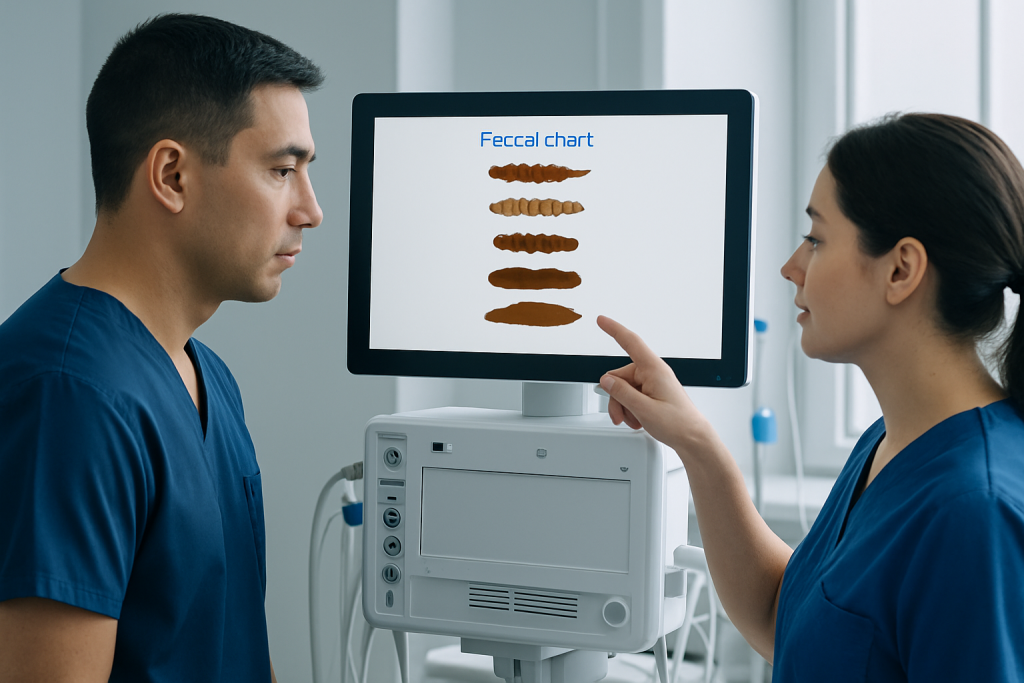
Most stool charts focus on three features: consistency, shape, and color. Consistency often tells the most about bowel movement speed, while shape can suggest whether stool has spent too long in the colon or moved through too quickly. Color adds another layer, since diet, supplements, medicines, and bleeding can all affect it.
On the Bristol stool chart, very hard pellets usually suggest constipation, while mushy or watery stool points toward faster transit and possible diarrhea. Smooth, sausage-like stools are often considered easier to pass and generally fall within a healthy range.
Color is not part of the original Bristol categories, but it is still important in real-world use. Brown is typically expected, while black, red, very pale, or clay-colored stool may deserve medical attention depending on the context.
- Hard, separate lumps: often linked with constipation or dehydration
- Soft, formed stool: commonly a healthy pattern
- Loose or watery stool: may occur with infection, food intolerance, stress, or medication effects
- Unusual color: may reflect foods, supplements, bile flow issues, or bleeding
Symptoms and changes people notice

People usually consult a stool chart because something about their bowel movements feels unfamiliar. They may notice straining, urgency, frequent trips to the bathroom, a feeling of incomplete emptying, or stool that changes from day to day.
Some changes are brief and have a clear cause, such as travel, a different diet, a stomach bug, or new medication. Others are more persistent and may come with abdominal pain, bloating, nausea, rectal discomfort, or fatigue.
It can help to note not only what the stool looks like, but also how the body feels overall. A pattern of stool changes plus fever, dehydration, weight loss, or blood in the stool is more important than appearance alone.
Causes and risk factors
Stool changes have many possible explanations, and most are not serious. Diet is one of the most common influences: low fiber intake can lead to hard stools, while sudden dietary changes, rich foods, or food intolerances may cause looser movements.
Hydration matters as well. When the body conserves water, stool can become dry and difficult to pass. On the other hand, diarrhea can follow infections, certain antibiotics, antacids, laxatives, or conditions that affect how the intestines absorb fluid.
Ongoing stool changes may also be linked to digestive disorders such as irritable bowel syndrome, inflammatory bowel disease, celiac disease, gallbladder or bile duct problems, or conditions that affect the pancreas. Stress, travel, and changes in routine can make symptoms more noticeable, especially in people who already have sensitive digestion.
Risk is higher when there is a history of gastrointestinal disease, recent antibiotic use, new medication, recent foreign travel, or a family history of bowel disorders. In international patients, long flights and unfamiliar foods can temporarily alter bowel habits, which makes observation over time especially useful.
How doctors evaluate stool changes
A doctor usually begins with questions about timing, frequency, color, pain, and related symptoms. A stool chart can make this conversation more precise because it gives a shared reference point rather than relying on memory alone.
Depending on the situation, the evaluation may include a physical examination, blood tests, stool tests, or imaging. For persistent symptoms, doctors may also consider endoscopy or colon evaluation to look for inflammation, bleeding, infection, or other structural causes.
The most helpful information often comes from patterns: when the change started, whether it follows certain foods, whether it wakes the person at night, and whether there are warning signs. A short symptom diary, even over one or two weeks, can make diagnosis more efficient and less stressful.
Treatment options
Treatment depends on the cause rather than the chart itself. For constipation, doctors may suggest increasing fluids, adding fiber gradually, improving activity, and reviewing medications that may slow bowel movements. For diarrhea, treatment often focuses on replacing fluids, correcting the trigger, and watching for dehydration.
If an infection is suspected, care may include testing and, in some cases, targeted treatment. If stool changes are related to chronic digestive disease, the plan may involve diet guidance, medications, and follow-up to monitor response over time.
It is important not to self-treat every stool change in the same way. Laxatives, anti-diarrheal medicines, supplements, and restrictive diets can be unhelpful or even unsafe if the underlying issue is not known.
For patients traveling from another country for care, a clear written record of symptoms, prior test results, and current medicines can help the medical team tailor treatment more quickly and safely.
Prevention and self-care
Healthy bowel habits often begin with consistent daily routines. Regular meals, adequate fluids, and fiber from foods such as vegetables, fruits, legumes, and whole grains can support smoother digestion for many people.
Movement also helps. Even light physical activity may encourage the bowel to work more regularly, which can reduce constipation in some people. Stress management matters too, since the gut and nervous system are closely connected.
Useful self-care habits include:
- Tracking stool pattern, frequency, and color when something changes
- Drinking enough fluids, especially during hot weather or travel
- Introducing fiber slowly to avoid extra gas or bloating
- Reviewing new medicines or supplements with a clinician if symptoms begin after starting them
- Staying alert to bleeding, black stool, severe pain, or ongoing diarrhea
Travel can make stool patterns temporarily unpredictable. That is common, but if changes continue after returning home or are accompanied by other symptoms, medical advice is still worthwhile.
When to see a doctor
Medical advice is appropriate when stool changes last more than a few days without improvement, keep returning, or interfere with daily life. It is especially important to seek evaluation if there is blood in the stool, black tarry stool, very pale stool, persistent diarrhea, unexplained constipation, or significant abdominal pain.
Other reasons to book a visit include unintentional weight loss, fever, vomiting, dehydration, anemia, or a family history of bowel disease or colorectal cancer. Children, older adults, and people with chronic illness may need earlier assessment because dehydration and complications can develop more quickly.
A stool chart is most useful when it helps someone speak early and clearly, not when it replaces medical assessment. If symptoms are ongoing or worrisome, a qualified doctor can help determine whether the change is harmless, diet-related, or a sign of a condition that deserves treatment. Acibadem Health Point’s multidisciplinary specialists and JCI-accredited hospitals diagnose and treat digestive conditions for international patients with coordinated, patient-centered care.
Living with a stool chart at home
Many people find it helpful to use a stool chart for a short period, especially when digestive symptoms are new or changing. A quick note in a phone app or notebook about stool type, meals, stress, medications, and pain can reveal patterns that are easy to miss otherwise.
The goal is not to monitor every bowel movement forever. Instead, the chart is a practical tool for noticing trends, preparing for a clinic visit, and understanding how the digestive system responds to routine changes.
When used calmly and consistently, a poop chart can reduce uncertainty. It gives patients and doctors a shared starting point for deciding whether simple lifestyle adjustments are enough or whether further testing is the better next step.
Frequently asked questions
What is a poop chart used for?
A poop chart is used to describe stool shape, consistency, and sometimes color in a more precise way. It helps people track bowel habits and gives doctors clearer information about digestive symptoms.
Is the Bristol stool chart the same as a poop chart?
The Bristol stool chart is one of the most common poop charts. It classifies stool into types based on form, which can help identify constipation, normal bowel movements, or diarrhea patterns.
Do stool changes always mean something is wrong?
No, many changes are temporary and linked to diet, hydration, stress, travel, or minor infections. Ongoing changes or symptoms such as pain, bleeding, or weight loss should be checked by a doctor.
What does very black stool mean?
Black stool can sometimes happen after certain medicines or supplements, but it can also signal bleeding in the upper digestive tract. Because the cause is not always obvious, it is important to seek medical advice promptly if this happens.
Can stress affect stool?
Yes, stress can affect bowel rhythm and make stool looser, harder, or more frequent in some people. This is common, but persistent symptoms still deserve evaluation if they do not settle.
Should someone use a stool chart every day?
Some people use it daily for a short time when symptoms are active, while others only use it when changes appear. It is best seen as a practical tracking tool rather than something that needs constant monitoring.
References
- World Gastroenterology Organisation
- National Institute of Diabetes and Digestive and Kidney Diseases
- Mayo Clinic
- NHS
- American College of Gastroenterology
This article is for general information only and is not a substitute for professional medical advice. Please consult a qualified doctor about your individual situation.