Pityriasis Rosea: Symptoms, Causes and Treatment

Key Takeaways
- Pityriasis rosea often starts with one larger patch, followed by a wider rash pattern.
- The condition usually resolves on its own, although itching may need treatment.
- A doctor may diagnose it by examining the skin and ruling out other rashes.
- Moisturizers, anti-itch measures, and sometimes prescription medicines can improve comfort.
- Persistent, painful, or unusual rashes deserve medical review to confirm the cause.
Medically reviewed by the Acıbadem clinical team — August 19, 2026
Pityriasis rosea is a common, usually self-limited skin rash that often begins with a single larger patch before smaller spots appear. It can be itchy and unsettling, but it is typically temporary and managed with supportive care.
Overview
Pityriasis rosea is a skin condition that usually appears as a temporary rash. It is known for its distinctive pattern: a single larger patch may show up first, followed days or weeks later by smaller oval spots that spread across the trunk and sometimes the upper arms or thighs.
For many people, the rash is more uncomfortable than dangerous. The skin may feel dry or itchy, but the condition often settles without leaving permanent marks. Because the first patch can resemble ringworm or other skin problems, people often seek advice when the rash seems unusual or continues to expand.
In an international-patient setting, it can be especially helpful to have the rash assessed by a dermatologist if there is uncertainty, if travel is planned, or if another skin condition needs to be ruled out before heading home. A clear diagnosis can reduce anxiety and guide simple, practical care.
Symptoms
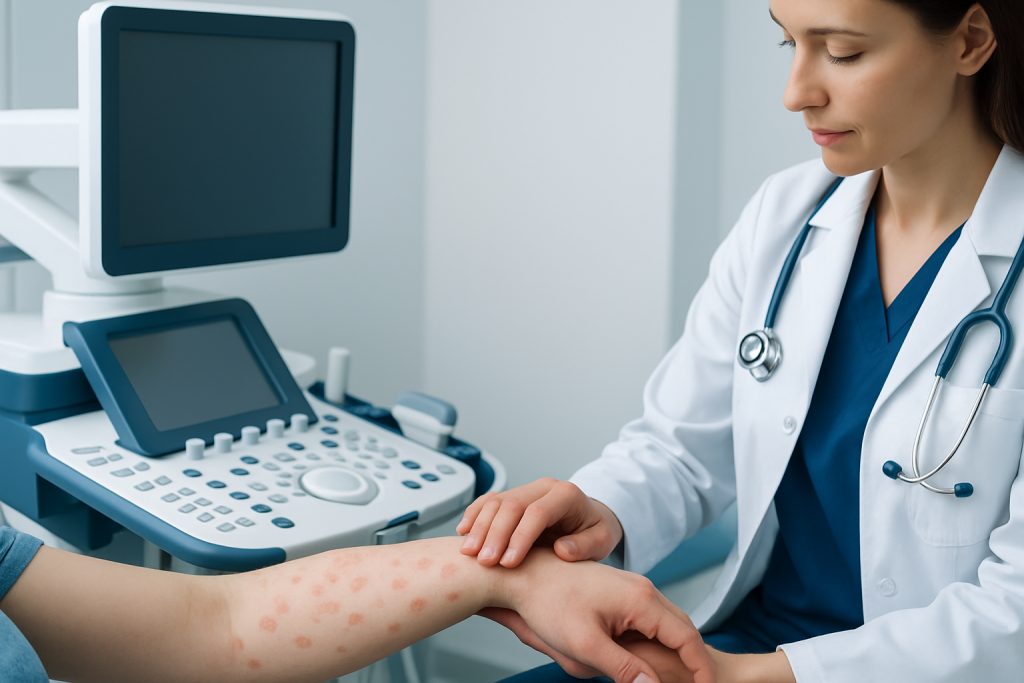
Pityriasis rosea often begins quietly. Many people notice a single oval or round patch first, commonly on the chest, back, or abdomen. This first lesion is sometimes called a “herald patch” because it appears before the rest of the rash.
Within several days to a few weeks, smaller spots may develop. They often follow the lines of the skin on the trunk, creating a pattern that may look like a Christmas tree when seen on the back. The spots are usually pink, tan, or red, and they may have a fine, flaky edge.
Not everyone experiences the same symptoms. Some people have little or no itching, while others feel persistent itchiness that is worse with heat, sweating, or dry skin. Less commonly, mild tiredness, headache, or a brief feeling of being unwell can happen around the time the rash appears.
- One larger starting patch
- Smaller oval patches on the trunk
- Fine scaling or dryness
- Itching that varies in intensity
- Occasional mild flu-like discomfort
Causes & Risk Factors
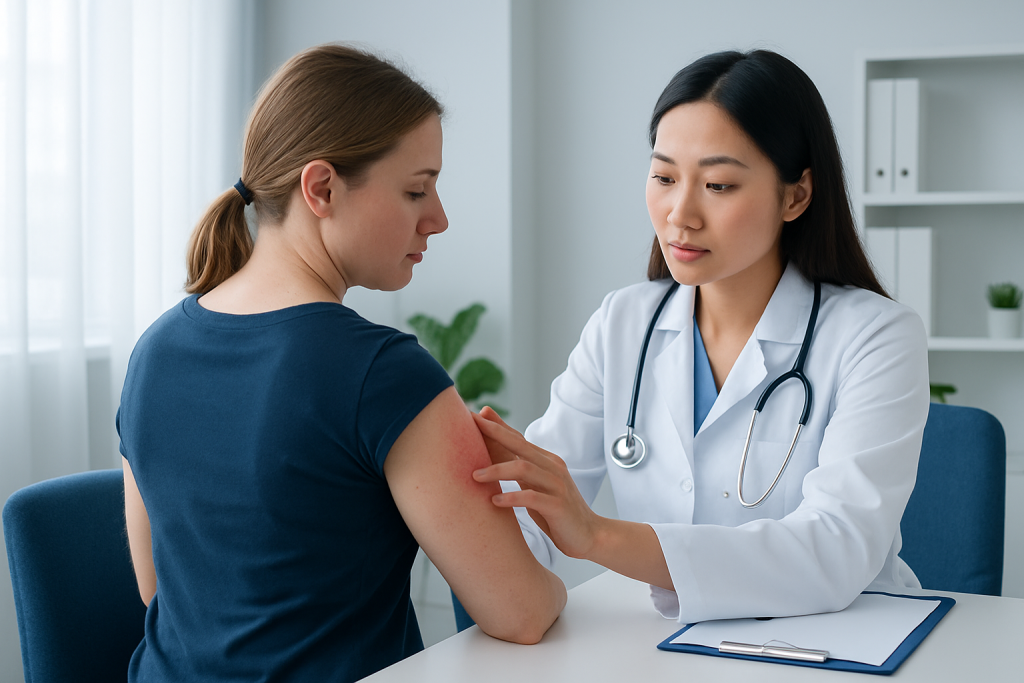
The exact cause of pityriasis rosea is not fully understood. It is not considered a sign of poor hygiene, and it is not usually linked to an obvious allergy or food trigger. Researchers have explored possible viral associations, but no single proven cause explains every case.
The condition can occur in otherwise healthy people, often without a clear warning. It tends to affect adolescents and young adults more commonly, but it can appear at other ages too. Because it may resemble fungal or allergic rashes, the visible pattern and timing often matter more than any one trigger.
Some people notice the rash after a minor viral illness, but that does not mean the skin condition is contagious in the everyday sense. Family members and close contacts typically do not need special precautions unless a clinician identifies a different diagnosis. If the rash appears during pregnancy or alongside other health concerns, medical assessment is especially important.
Diagnosis
Diagnosis is usually made by looking carefully at the skin and asking about how the rash started. A clinician will often want to know whether a single larger patch appeared first, how quickly the smaller spots followed, and whether the rash is itchy or spreading in a typical pattern.
Because pityriasis rosea can resemble other skin conditions, the doctor may consider ringworm, eczema, psoriasis, drug-related eruptions, or secondary syphilis in the right context. The goal is not to alarm, but to make sure the appearance truly fits the expected pattern and no other treatment is needed.
Tests are not always required. If the rash looks unusual, lasts longer than expected, or affects the face, palms, soles, or mucous membranes in an atypical way, the clinician may order blood tests or a skin scraping, or occasionally a biopsy. This is especially useful when patients are traveling and need a clear answer before continuing their journey.
Treatment Options
There is no single treatment that instantly removes pityriasis rosea, because it usually improves on its own over time. Care is often focused on easing itching, reducing dryness, and helping the skin stay comfortable while the rash runs its course.
Common supportive options include moisturizers, gentle skin care, and anti-itch measures. A clinician may also recommend antihistamines or topical corticosteroid creams for short-term symptom relief when itching is bothersome. In selected cases, a doctor may discuss other treatments if the rash is severe, extensive, or causing major discomfort.
For people who are trying to manage symptoms while abroad, it is helpful to know that treatment is usually straightforward and does not require complicated follow-up in most cases. Still, any new prescription or over-the-counter product should be chosen with medical guidance, especially for children, pregnant patients, or people with other skin conditions.
- Fragrance-free moisturizers
- Short, lukewarm showers instead of hot water
- Anti-itch medicines as advised by a doctor
- Prescription creams when needed
- Observation and follow-up if the rash is mild
Prevention & Self-care
There is no guaranteed way to prevent pityriasis rosea because its cause is not fully known. Even so, day-to-day skin care can make the rash easier to tolerate and may reduce irritation while it heals.
Gentle routines are usually best. Loose clothing can reduce rubbing, and staying cool may help if heat or sweating makes the itching worse. Many people also find that avoiding harsh soaps, scrubbing, and long hot baths keeps the skin calmer.
If the rash is being managed while traveling, packing a few simple items can be useful: a mild cleanser, an unscented moisturizer, and any medicines recommended by the doctor. Photos of the rash taken over time can also help with follow-up, especially if a second opinion is needed after returning home.
- Use mild, fragrance-free skin products
- Moisturize regularly to reduce dryness
- Avoid scratching to limit skin irritation
- Choose breathable fabrics
- Seek medical advice before using new creams on a changing rash
When to See a Doctor
Medical review is sensible when a rash is new and the cause is not clear. It is especially important if the rash is painful, rapidly worsening, very itchy, or spreading in a way that does not seem typical for pityriasis rosea.
Attention is also wise if the rash involves the face, hands, feet, mouth, or genitals, or if there is fever, swollen glands, or significant fatigue. These features do not necessarily mean something serious, but they do make a careful examination more valuable.
People should also see a clinician if the rash lasts longer than expected, comes back soon after improving, or appears after starting a new medication. For international patients, a timely dermatology appointment can be especially helpful before travel, since a confirmed diagnosis may guide practical treatment and reduce uncertainty during recovery. Acibadem Health Point’s multidisciplinary specialists and JCI-accredited hospitals diagnose and treat this condition for international patients.
Living With the Rash
Most people are reassured to learn that pityriasis rosea is temporary. The main challenge is usually comfort rather than medical risk, and symptoms often fade gradually even if the rash looks dramatic at first.
Recovery can feel easier when expectations are realistic. The spots may change color before disappearing, and mild dryness or post-rash marks can linger for a while, particularly in deeper skin tones. That does not usually mean the condition is getting worse.
If someone is coordinating care from another country, a photo-based follow-up visit or a short message to the treating team may be enough once the diagnosis has been confirmed. That kind of practical support can make a simple skin condition feel much more manageable.
Frequently asked questions
Is pityriasis rosea contagious?
Pityriasis rosea is generally not considered contagious in the usual everyday sense. Close contacts typically do not need to isolate or take special precautions. If several people in a household develop a rash, another cause should be considered and checked by a clinician.
How long does pityriasis rosea last?
The rash often improves on its own over several weeks. In some people, it can last a bit longer before fully fading. A doctor should reassess the rash if it is not following the expected course.
Does pityriasis rosea leave scars?
It usually does not leave scars. Some people notice temporary color changes or mild darkening or lightening of the skin after the rash clears. These changes often fade gradually with time.
Can pityriasis rosea be mistaken for ringworm?
Yes, especially when the first patch appears as a single round or oval lesion. Ringworm and pityriasis rosea can look similar at first glance, which is one reason a medical examination can be useful. The pattern of the full rash often helps separate the two.
What helps the itching most?
Moisturizing regularly, avoiding hot showers, and keeping the skin cool often help. A doctor may suggest antihistamines or a short course of a topical cream if itching is bothersome. Scratching should be minimized because it can irritate the skin further.
Should someone with pityriasis rosea avoid exercise?
Light exercise is usually fine if it does not worsen discomfort. If sweating makes the rash itch more, it may help to choose cooler activities and shower gently afterward. A clinician can give more personal advice if the rash is extensive or very irritated.
References
- American Academy of Dermatology
- Mayo Clinic
- National Health Service
- DermNet NZ
- Cleveland Clinic
This article is for general information only and is not a substitute for professional medical advice. Please consult a qualified doctor about your individual situation.
Explore treatments in Turkey — costs, top hospitals & a free quote
JCI-accredited · board-certified surgeons · reply within 24h
Add us as a Preferred Source to see more of our trusted health content across Google Search, AI Overviews and Discover.