Pityriasis Alba: Symptoms, Causes and Treatment

Key Takeaways
- Pityriasis alba is a benign skin condition that often affects children and adolescents.
- It usually causes light-colored patches with fine scale, most often on the cheeks, arms, or upper body.
- The condition is commonly linked with dry skin, mild eczema, and irritation rather than infection.
- Diagnosis is usually made by a clinical skin examination; tests are only needed if the appearance is unclear.
- Moisturizing, gentle cleansing, and sun protection can help the skin recover and make patches less noticeable.
- A doctor should be consulted if the rash spreads quickly, becomes painful, or does not improve as expected.
Medically reviewed by the Acıbadem clinical team — August 19, 2026
Pityriasis alba is a common, harmless skin condition that usually appears as pale, slightly scaly patches, often on the face. It is more noticeable after sun exposure and tends to improve gradually with simple skin care and time.
Overview
Pityriasis alba is a mild skin condition that causes round or oval pale patches, usually with a fine, dry surface. It is most often seen in children and teenagers, especially those with dry skin or a history of eczema, and it tends to be more visible during or after sunny weather because the surrounding skin tans more easily.
The name can sound unsettling, but the condition is generally harmless and not contagious. For many families, the main concern is appearance rather than discomfort, which is why reassurance and consistent skin care are often the first steps in management.
Because the pale areas can resemble other conditions, including fungal infections or vitiligo, a dermatologist may look at the pattern, surface texture, and location of the patches before confirming the diagnosis. For international patients seeking care abroad, that usually means a focused skin assessment, a clear explanation of what the patches represent, and a practical plan that can continue safely at home.
Symptoms
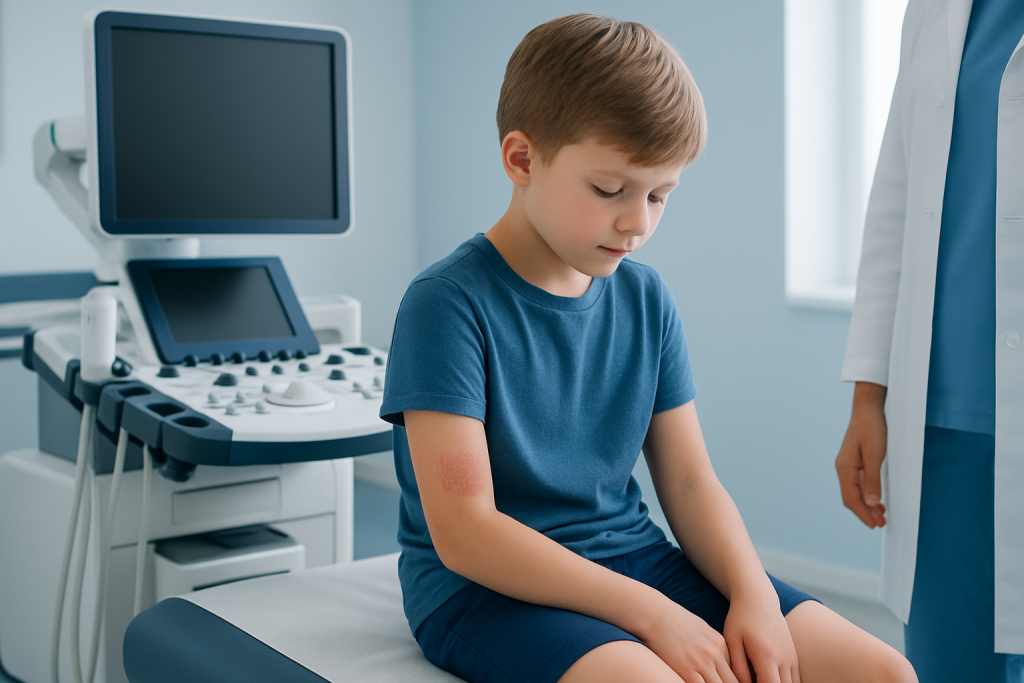
Pityriasis alba often begins as a slightly pink or red patch that later turns lighter than the surrounding skin. The surface may feel dry or show a very fine scale, especially when the skin is stretched or gently rubbed.
The most common sites are the cheeks, chin, neck, shoulders, and upper arms, although patches may also appear on the trunk. In many people, the spots are not itchy or only mildly itchy, so they may be noticed first in a mirror rather than because of discomfort.
- Round or oval pale patches
- Soft, fine scaling or dryness
- Mild redness at the beginning in some cases
- Usually little or no pain
- More visible contrast after sun exposure
The patches usually fade slowly over time, but the color may return in stages. This can take weeks to months, and occasionally longer, especially if the skin remains dry or irritated.
Causes & Risk Factors

The exact cause of pityriasis alba is not fully understood, but it is widely thought to be a mild form of eczema-related skin change. When the skin barrier is dry or irritated, the pigment-producing process can become temporarily uneven, leading to lighter patches.
Several factors may make it more likely to appear or more noticeable. These include a personal or family history of atopic dermatitis, dry skin, frequent bathing with harsh cleansers, low humidity, and sun exposure that darkens nearby skin while the pale patch remains lighter.
It is important to know that pityriasis alba is not caused by poor hygiene and is not a sign of infection. In most children and adolescents, no single trigger can be identified, and the condition often comes and goes as the skin barrier changes over time.
Diagnosis
Diagnosis is usually made by a clinician examining the skin and asking about the timeline, symptoms, and any history of eczema or dryness. In many cases, the appearance alone is enough to make the diagnosis without special testing.
If the patches are unusual in shape, spreading rapidly, or accompanied by more pronounced scaling, a dermatologist may consider other causes such as fungal infection, vitiligo, or post-inflammatory color change. A simple skin scraping, Wood’s lamp examination, or other targeted test may be used when the diagnosis is uncertain.
For patients traveling for care, this stage is often efficient: the goal is not only to name the condition, but also to rule out look-alike disorders and provide a plan that fits home routines in a different climate or healthcare setting.
Treatment Options
Most cases of pityriasis alba do not need aggressive treatment. The skin usually improves with gentle daily care, and doctors often focus on reducing dryness and irritation so the patches can gradually blend back in.
Moisturizers are commonly recommended because they support the skin barrier and reduce scaling. In some situations, a clinician may prescribe a short course of a mild anti-inflammatory cream if there is active redness or eczema, but treatment choices should always be guided by a qualified doctor, especially for children.
Other steps may include limiting harsh soaps, avoiding over-scrubbing, and using sunscreen so the surrounding skin does not tan more deeply than the affected areas. If the diagnosis is uncertain, treatment may be adjusted after follow-up to make sure the skin is responding as expected.
Some patients seek dermatology input abroad because they want reassurance that no hidden skin disorder is being missed. In that setting, multidisciplinary specialists and JCI-accredited hospitals, such as those at Acibadem Health Point, can diagnose and treat this condition for international patients with a coordinated plan of care.
Prevention & Self-care
There is no guaranteed way to prevent pityriasis alba, but good skin care can reduce irritation and help limit recurrence. The most useful approach is usually simple and consistent rather than complicated.
A gentle routine may include lukewarm bathing, fragrance-free cleansers, regular moisturizing after washing, and avoiding exfoliating products that dry the skin further. Sunscreen is helpful because it reduces the contrast between pale patches and surrounding skin, making the spots less noticeable while they fade.
- Use a bland moisturizer daily, especially after bathing
- Choose gentle, fragrance-free skin products
- Avoid scrubbing the patches
- Protect skin from strong sun exposure
- Manage dry or eczema-prone skin early
Families managing the condition during travel may find it helpful to pack familiar skin products and keep the routine steady across time zones and climates. If a child’s skin becomes itchy, inflamed, or increasingly dry, it is reasonable to arrange a review rather than waiting for the patches to fade on their own.
When to See a Doctor
A medical review is sensible if the patches are not clearly typical, if they are spreading quickly, or if they are causing significant itch, pain, or cracking. A doctor should also be consulted if the skin changes are associated with fever, widespread rash, or a strong family concern about vitiligo or another pigment disorder.
It is also worth seeking advice if the patches do not improve after several months of gentle care, or if they are creating emotional distress for the child or family. A dermatologist can confirm the diagnosis and recommend the most appropriate next step.
For patients planning treatment abroad, an in-person evaluation can be especially reassuring because it combines diagnosis, education, and a realistic follow-up strategy that can continue after returning home. Clear instructions and a simple skincare plan are often the most useful parts of the visit.
Living With Pityriasis Alba
Pityriasis alba often improves slowly, and that gradual pace is normal. The most helpful mindset is to treat it as a skin-barrier issue rather than a dangerous illness, while still checking in with a clinician if the pattern changes.
Parents and patients may notice that the patches are more obvious in summer or after travel to sunny climates. This does not mean the condition is getting worse; it often means the surrounding skin has tanned while the pale areas have not yet caught up.
With steady moisturizing, sun protection, and a calm follow-up plan, most people can manage the condition without disruption to school, work, or travel. When needed, a dermatologist can also help distinguish pityriasis alba from other causes of lighter skin patches so treatment stays focused and appropriate.
Frequently asked questions
Is pityriasis alba contagious?
No. Pityriasis alba is not contagious and cannot be spread from one person to another. It is usually related to dry, sensitive, or eczema-prone skin.
Why does pityriasis alba look whiter in the sun?
The affected patches do not tan as easily as surrounding skin. After sun exposure, the contrast becomes more noticeable even if the condition itself has not worsened.
Does pityriasis alba need prescription treatment?
Not always. Many cases improve with moisturizers and gentle skin care alone, although a doctor may recommend a prescription cream if there is active redness or eczema.
Can adults get pityriasis alba?
It is most common in children and adolescents, but adults can occasionally have similar patches. If pale skin spots appear later in life, a clinician may want to rule out other causes first.
How long does it take to go away?
The color usually fades gradually over weeks to months, and sometimes longer. Keeping the skin moisturized and protected from the sun may help the process look smoother and more even.
Should a skin scraping or blood test always be done?
Usually not. Doctors often diagnose pityriasis alba by looking at the skin, and tests are reserved for situations where another condition needs to be excluded.
References
- American Academy of Dermatology
- National Health Service
- DermNet NZ
- Mayo Clinic
This article is for general information only and is not a substitute for professional medical advice. Please consult a qualified doctor about your individual situation.
Joint and spine care in Turkey — expert assessment & treatment
JCI-accredited · board-certified surgeons · reply within 24h
Add us as a Preferred Source to see more of our trusted health content across Google Search, AI Overviews and Discover.