

Pediatric Asthma: When Inhalers Are Enough and When to Escalate Care

Key Takeaways
- Asthma in children can look different from adult asthma and may present as coughing, wheeze, chest tightness, or reduced stamina.
- Reliever inhalers and controller inhalers serve different purposes, and both must be used correctly to work well.
- Frequent symptoms, night waking, or repeated need for rescue medicine can signal that treatment should be reviewed.
- Triggers such as viral infections, allergens, exercise, and smoke are common and often manageable with a clear action plan.
- Urgent care is needed if a child struggles to breathe, cannot speak in full sentences, or does not improve after prescribed rescue treatment.
Medically reviewed by the Acıbadem clinical team — June 13, 2026
Pediatric asthma is a long-term airway condition that can often be controlled with the right inhaler plan, trigger management, and follow-up care. When symptoms begin to break through despite treatment, a child may need a reassessment and a step-up in care rather than simply more of the same medicine.
Overview
Pediatric asthma is a condition in which a child’s airways become inflamed and overly sensitive, making breathing harder at times. The pattern can change from week to week: one child may seem well most days and then develop coughing spells with a cold, while another may notice symptoms during play, at night, or around pets and dust.
For many families, inhalers are the center of asthma care. That does not mean every inhaler is doing the same job. Some inhalers are meant to open the airways quickly during symptoms, while others are used regularly to reduce inflammation and prevent flares. The key question is not simply whether a child uses an inhaler, but whether the current plan is giving steady day-to-day control.
This is also where the international-patient journey matters. Families often arrive with a prescription from home, but a child’s asthma history, trigger pattern, inhaler technique, and follow-up needs may all deserve a fresh look. A good plan should fit the child’s age, school routine, travel schedule, and family’s ability to monitor symptoms from one country to another.
Symptoms
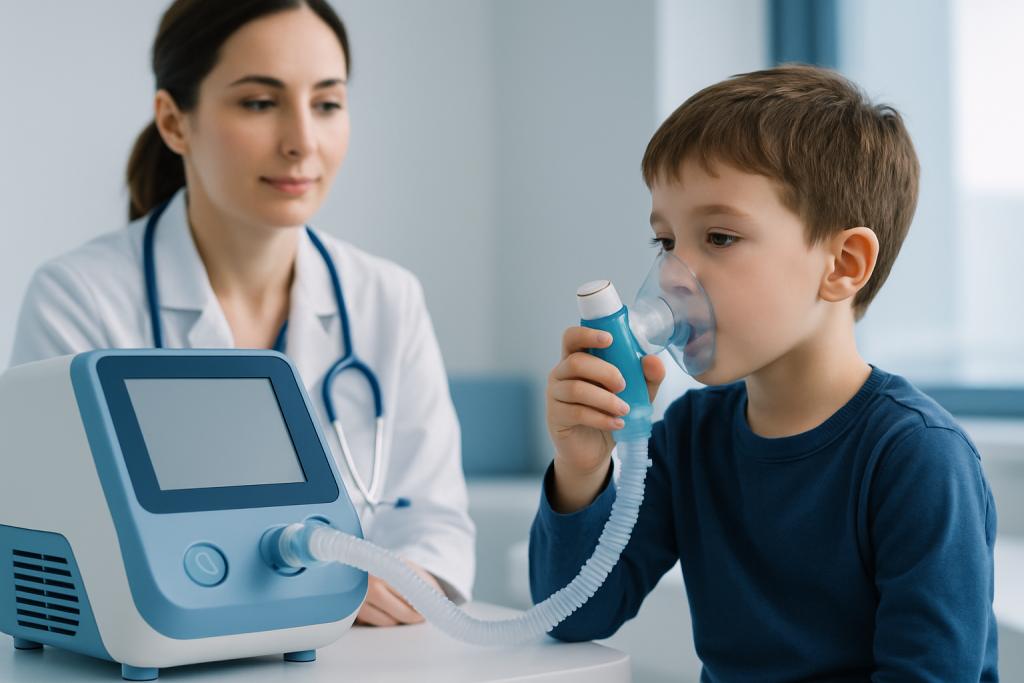
Asthma symptoms in children often come and go. Some children cough more than they wheeze, and younger children may not describe tightness in the chest clearly. A parent may only notice that the child tires more easily, avoids running, sleeps poorly, or clears the throat and coughs after bedtime.
Common signs include a whistling sound when breathing out, shortness of breath, chest tightness, coughing that worsens at night or after exercise, and symptoms that flare with colds. Symptoms may be mild at first, which is why many families think the child “just has a sensitive chest” until the pattern becomes more obvious.
It is helpful to watch for changes in how the child is functioning, not only for dramatic breathing trouble. If a child is missing school, stopping play to catch breath, waking at night, or needing a rescue inhaler repeatedly, those are meaningful clues that asthma may not be fully controlled.
Causes & Risk Factors

Asthma develops when the airways are prone to swelling and narrowing in response to triggers. It is influenced by a mix of genetics and environment, and no single factor explains every case. Some children have a family history of asthma, allergies, eczema, or other atopic conditions, while others develop symptoms without a clear family pattern.
Common triggers include respiratory infections, pollen, dust mites, mold, animal dander, cigarette smoke, air pollution, strong odors, cold air, and exercise. In some children, stress or laughter can also bring on coughing or wheezing. Food is not a typical trigger for asthma itself, although true food allergy can coexist and needs separate attention.
Children at higher risk may include those exposed to tobacco smoke, those with allergic rhinitis or eczema, and those living in environments with frequent respiratory irritants. Premature birth and early-life lung problems may also influence breathing patterns. Still, risk factors do not determine the future; many children do very well once their triggers and treatment are matched carefully.
Diagnosis
Diagnosing asthma in children begins with a careful history rather than a single test. A clinician usually asks when symptoms happen, how often they occur, what seems to trigger them, whether the child wakes at night, and whether exercise or illness changes the pattern. A detailed story from parents and caregivers is often the most useful piece of the puzzle.
Depending on the child’s age, the doctor may use breathing tests such as spirometry to see how well air moves in and out of the lungs. Some children also benefit from a trial of asthma medicine with follow-up, especially if they are too young for reliable lung testing. Allergy assessment may be useful when triggers appear to be environmental.
Because wheezing and cough can have other causes, clinicians also consider alternative explanations such as recurrent viral bronchitis, reflux, airway abnormalities, or foreign body aspiration when the story does not fit asthma well. This is one reason a specialist review can be valuable, particularly when symptoms are frequent, unusual, or not responding as expected.
Treatment Options
Inhalers are often enough when they are the right inhalers, used correctly, and paired with realistic follow-up. Rescue inhalers are designed for quick relief of acute symptoms, while controller inhalers reduce airway inflammation over time. Some children need only occasional rescue treatment, while others need a daily controller to stay well.
When symptoms continue despite a reliever inhaler, the next step is usually not guesswork. The care team may review inhaler technique, check whether the child is using a spacer properly, confirm whether doses are being missed, and look for unrecognized triggers. If the child is still having frequent symptoms, a controller medication may be started or adjusted as part of a stepwise plan.
Escalated care may be considered when the child has frequent flare-ups, repeated night symptoms, ongoing limitation with exercise, or several courses of urgent treatment. This can include a different inhaler strategy, treatment for allergies, or referral to a pediatric pulmonologist or allergist. In severe episodes, oxygen, nebulized bronchodilators, or short-term hospital care may be required to stabilize breathing.
Families should know that “more inhaler” is not always better. The goal is control with the least medicine needed, but that only works when the plan is reviewed regularly and adjusted to match the child’s current level of asthma activity.
Prevention & Self-care
Good day-to-day asthma care starts with knowing the child’s triggers and having a written action plan. That plan should explain what to do when symptoms are quiet, what to do when symptoms begin to increase, and when to seek urgent help. It is especially useful for school trips, sports, and travel, where a child may be away from familiar routines.
Practical steps often help reduce flare-ups: keeping smoke out of the home, minimizing dust exposure where possible, treating allergies when present, and making sure the child’s inhaler technique is checked regularly. A spacer may make inhaled medicine easier for many children, especially younger ones. For children with exercise symptoms, the care team may recommend a prevention strategy before activity.
Parents can also track patterns in a simple notebook or app: nighttime cough, rescue inhaler use, missed school days, and any trigger exposures. This record can be especially helpful if a family is traveling for care and needs to compare the child’s symptoms before and after treatment changes. When follow-up is planned across borders, keeping medicine names, device type, and prior test results together can save time and reduce confusion.
When to See a Doctor
A child should be seen for medical review if asthma symptoms happen more than occasionally, if a rescue inhaler is needed often, or if coughing and wheezing are disrupting sleep, school, or play. A pattern of frequent colds that “go to the chest” is also worth discussing, especially if each episode follows a similar breathing pattern.
Prompt evaluation is important if the child is using the inhaler correctly but still has ongoing symptoms. That may mean the diagnosis needs confirmation, the trigger profile needs more attention, or the treatment plan needs to be stepped up. Follow-up is also advisable after any emergency visit, since a recent flare can reveal that the asthma has become more active than it first appeared.
Emergency care is needed if a child is struggling to breathe, breathing very fast, using the neck or ribs to breathe, cannot speak comfortably, has bluish lips, seems unusually sleepy, or does not improve after prescribed rescue treatment. In those moments, do not wait for the next routine appointment; urgent assessment is the safest choice.
For families seeking coordinated care abroad, Acibadem Health Point’s multidisciplinary specialists and JCI-accredited hospitals can help diagnose and treat pediatric asthma for international patients in a structured, child-centered way.
Frequently asked questions
Can a child’s asthma be controlled with only an inhaler?
Sometimes yes, especially when symptoms are mild and infrequent. The important part is using the right inhaler for the right purpose and checking that symptoms are truly under control. If a child still has night waking, exercise limitation, or frequent rescue inhaler use, the plan should be reviewed.
What is the difference between a rescue inhaler and a controller inhaler?
A rescue inhaler works quickly to open the airways during symptoms. A controller inhaler is used regularly to reduce airway inflammation and lower the chance of future flare-ups. Children may need one, the other, or both depending on how active the asthma is.
How can parents know if inhaler technique is correct?
The best way is to have a clinician watch the child use the device. Small errors are common, especially with inhalers and spacers, and they can make the medicine less effective. Technique should be checked again after any device change or if symptoms are not improving.
Does exercise mean asthma is getting worse?
Not always. Some children only have symptoms with running or sports, and that can often be managed with the right prevention plan. However, if exercise is becoming hard because of breathlessness, the asthma may not be fully controlled and should be reassessed.
When should a child go to the emergency department for asthma?
Emergency care is needed when breathing becomes difficult, the child cannot speak in full sentences, the lips look bluish, or the child does not improve after the prescribed rescue medicine. Severe drowsiness, exhaustion, or visible chest and neck retractions are also warning signs. If in doubt, urgent assessment is the safer choice.
Can children outgrow asthma?
Some children have fewer symptoms as they get older, while others continue to have asthma into adolescence or adulthood. Even when symptoms improve, follow-up still matters because asthma can return or flare with triggers. A doctor can help determine whether treatment can be reduced safely or should continue.
References
- Global Initiative for Asthma (GINA)
- American Academy of Pediatrics
- National Heart, Lung, and Blood Institute
- Centers for Disease Control and Prevention
- World Health Organization
This article is for general information only and is not a substitute for professional medical advice. Please consult a qualified doctor about your individual situation.
More from the Health Library



Related Specialists

Dr. Murat Şahin
Pediatric CardiologyDr. Hande Turan
Pediatric Endocrinology
Assoc. Prof. Dr. Erman Çilsal
Pediatric Cardiology
Dr. Sinem Altunyuva Usta
Pediatric Cardiology