Pancreas Location

Key Takeaways
- The pancreas lies deep behind the stomach, stretching across the upper abdomen.
- It has two main jobs: helping digest food and supporting blood sugar control.
- Pancreas problems may cause upper abdominal pain, back pain, nausea, jaundice, or unexplained weight changes.
- Because the organ is tucked away, doctors often use blood tests and imaging to evaluate it.
- Anyone with persistent digestive symptoms or possible jaundice should seek medical assessment.
The pancreas sits deep in the upper abdomen, behind the stomach, where it plays a central role in digestion and blood sugar balance. Understanding its location helps explain why pancreas-related symptoms can be subtle, wide-ranging, and sometimes felt in nearby areas.
Overview
The pancreas is a small but important organ that sits deep inside the upper abdomen. It is not something a person can feel from the outside, and that hidden position is one reason pancreatic conditions may be harder to recognize early. For many people searching for the pancreas location, the first useful detail is simple: it lies behind the stomach, close to the first part of the small intestine and near other major abdominal structures.
This placement matters because the pancreas is involved in two essential jobs at once. It releases digestive enzymes into the intestine to help break down food, and it produces hormones such as insulin that help regulate blood sugar. When the pancreas is affected by inflammation, blockage, cysts, or other disease, symptoms may appear in the abdomen, the back, or even through changes in digestion and glucose levels.
For international patients planning evaluation or treatment abroad, understanding basic anatomy can make medical conversations clearer. It helps explain why doctors may recommend scans, blood tests, and sometimes endoscopic procedures rather than relying only on a physical examination.
Symptoms
Pancreas-related symptoms are often not specific to one problem, and they may develop gradually or suddenly. Pain is one of the most common clues, but it is not always felt directly over the pancreas itself. Because the organ sits deep in the abdomen, discomfort may be described as a band-like upper abdominal pain that can spread to the back.
Other symptoms may reflect how the pancreas influences digestion and metabolism. Some people notice nausea, vomiting, loss of appetite, bloating, pale or greasy stools, unintentional weight loss, or new trouble controlling blood sugar. If the bile duct is blocked, a person may develop jaundice, which can cause yellowing of the skin or eyes, dark urine, or itching.
- Upper abdominal pain or pressure
- Pain that radiates to the back
- Nausea or vomiting
- Unexplained weight loss
- Greasy, bulky, or floating stools
- Yellowing of the skin or eyes
These signs do not always mean a pancreas disorder, but they do deserve medical attention if they persist. A careful review of the symptom pattern often gives doctors the first clue about whether the pancreas is involved.
Causes & Risk Factors

Several different conditions can affect the pancreas, and each may arise for different reasons. Acute pancreatitis often develops when the pancreas becomes inflamed suddenly, sometimes due to gallstones, heavy alcohol use, certain medications, high triglycerides, or a recent procedure. Chronic pancreatitis refers to long-term inflammation that can gradually damage the gland and affect digestion and blood sugar control.
Pancreatic cysts, blocked ducts, autoimmune disease, inherited conditions, and pancreatic tumors are other possibilities. Not every pancreas problem has an obvious trigger, which is one reason medical evaluation is important when symptoms persist. The pancreas location also means nearby organs can influence it; for example, gallbladder disease can indirectly affect pancreatic drainage.
Risk tends to rise with age, smoking, long-term alcohol exposure, obesity, poorly controlled metabolic conditions, and some family histories or genetic syndromes. Still, pancreas disease can occur in people without clear risk factors. A doctor looks at the whole picture rather than one symptom or one risk factor alone.
Diagnosis
Because the pancreas is deep in the abdomen, diagnosis usually begins with a detailed history and physical examination, then moves to lab work and imaging. Blood tests may assess pancreatic enzymes, liver function, infection markers, blood sugar, and signs of blockage or inflammation. The exact tests depend on the symptoms and what the doctor is trying to rule out.
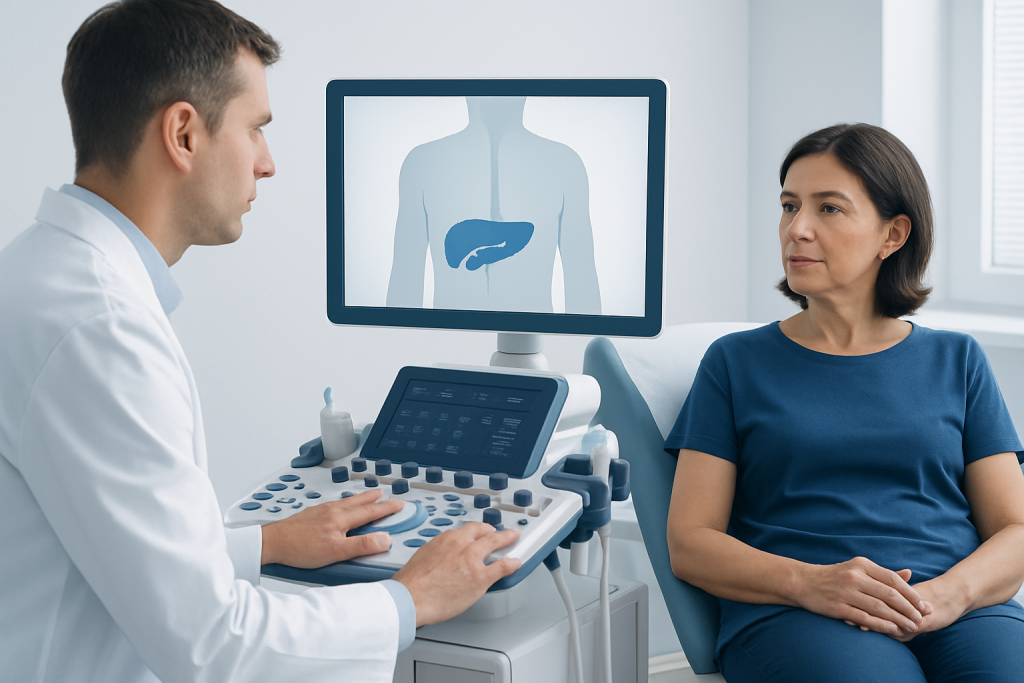
Imaging plays a major role. Ultrasound may be used first, especially if gallstones are suspected, while CT scans and MRI can show the pancreas more clearly and help identify inflammation, cysts, or masses. In some cases, endoscopic ultrasound or ERCP may be recommended for closer evaluation of the ducts and surrounding tissue.
For patients traveling internationally, the diagnostic path may be coordinated across departments so that the imaging, laboratory review, and specialist consultation happen efficiently. That coordination can be especially helpful when time is limited and follow-up will continue after returning home.
Treatment Options
Treatment depends entirely on the cause. Mild acute pancreatitis may be managed with bowel rest, hydration, pain control, and close monitoring, while more complicated cases may require hospital care. If gallstones are the trigger, treatment may include gallbladder management to reduce the chance of recurrence.
Chronic pancreatitis often requires a different approach focused on symptom control, enzyme replacement if digestion is impaired, nutritional support, diabetes management when needed, and stopping smoking or alcohol use. If a cyst, blockage, or tumor is found, the care plan may include endoscopic treatment, surgery, oncology consultation, or surveillance imaging, depending on the diagnosis.
There is no single treatment for “the pancreas location” itself, because location is an anatomical fact rather than a disease. What matters clinically is how that hidden position shapes the choice of tests and the type of treatment. In many cases, multidisciplinary evaluation makes the plan more precise and less disruptive for the patient.
Prevention & Self-care
Not every pancreas condition can be prevented, but some habits may lower risk or support recovery. Avoiding tobacco, limiting alcohol, maintaining a balanced diet, and managing triglycerides, blood sugar, and weight can all support pancreatic health. People with known gallstones or metabolic conditions may benefit from regular follow-up so that small problems are addressed before they become urgent.
Self-care is also about noticing changes early. A patient recovering after pancreas treatment should follow the care team’s nutrition advice, stay hydrated, and ask when it is safe to resume usual activity or travel. If medications, enzyme supplements, or diabetes treatment are prescribed, consistency matters, especially across time zones and after returning home.
International patients may find it helpful to leave with a written follow-up plan, copies of imaging and lab results, and clear instructions on who to contact if symptoms change. That kind of preparation supports continuity of care across borders.
When to See a Doctor
Medical assessment is sensible when upper abdominal pain is persistent, recurrent, or paired with nausea, weight loss, fever, jaundice, or changes in stool color or texture. New or worsening blood sugar problems can also be a clue that the pancreas needs evaluation. Even if symptoms come and go, repeated episodes should not be ignored.
Urgent care is important if pain is severe, vomiting prevents drinking fluids, the skin or eyes turn yellow, or a person seems dehydrated or unusually unwell. These signs do not automatically mean a serious diagnosis, but they do justify prompt medical review. A doctor can decide whether the next step is blood testing, imaging, or specialist referral.
For people seeking an international opinion, the pancreas is a good example of why expert coordination matters. At Acibadem Health Point, multidisciplinary specialists and JCI-accredited hospitals diagnose and treat pancreas conditions for international patients with careful coordination and follow-up planning.
Frequently asked questions
Where exactly is the pancreas located?
The pancreas sits deep in the upper abdomen, behind the stomach. It stretches horizontally toward the left side of the body and lies near the first part of the small intestine.
Can you feel the pancreas from the outside?
No, the pancreas is too deep inside the abdomen to be felt through the skin. Pain from pancreas problems is usually described in the upper abdomen or back rather than as a surface lump.
Why do pancreas problems sometimes cause back pain?
The pancreas lies close to the back wall of the abdomen, so inflammation or other irritation can be felt in the back. This referred pain pattern is common in several pancreatic conditions.
What symptoms should raise concern about the pancreas?
Upper abdominal pain, nausea, unexplained weight loss, greasy stools, and jaundice are among the more important warning signs. Persistent symptoms should be checked by a doctor, even if they seem mild at first.
How do doctors check the pancreas if it is hidden deep inside the body?
Doctors usually combine blood tests with imaging such as ultrasound, CT, MRI, or endoscopic ultrasound. These tests help show the pancreas and nearby structures more clearly than a physical exam alone.
Does a problem in the pancreas always mean cancer?
No, many pancreas symptoms are caused by inflammation, gallstones, cysts, or metabolic problems rather than cancer. A proper evaluation is needed to find the cause and guide treatment.
References
- Mayo Clinic
- National Institute of Diabetes and Digestive and Kidney Diseases
- Cleveland Clinic
- American Cancer Society
- World Health Organization
This article is for general information only and is not a substitute for professional medical advice. Please consult a qualified doctor about your individual situation.