Overbite: Symptoms, Causes and Treatment

Key Takeaways
- An overbite is a type of bite misalignment, not just a cosmetic concern.
- Mild overbites are common, but deeper ones may contribute to tooth wear, jaw strain or speech and chewing difficulties.
- Treatment depends on age, severity and the position of the teeth and jaws.
- Options may include braces, clear aligners, retainers, or in some cases jaw surgery.
- Regular dental checks help detect problems early and guide the right timing for care.
Medically reviewed by the Acıbadem clinical team — August 19, 2026
An overbite is a common bite alignment issue in which the upper front teeth overlap the lower front teeth more than expected. It can range from mild to severe and may affect appearance, tooth wear, jaw comfort and oral function.
Overview
An overbite describes how much the upper front teeth overlap the lower front teeth when the mouth closes. A small overlap is normal and helps the teeth fit together efficiently. When the overlap is pronounced, dentists may describe it as a deep bite or excessive overbite.
People often notice an overbite first in photos or when they become aware that their front teeth meet in an uneven way. Yet the issue is more than a visual detail. A deeper-than-normal bite can influence how the teeth wear, how the jaw muscles work, and how comfortable it feels to bite, chew, or speak.
In many people, an overbite develops gradually during childhood or the teenage years as the teeth and jaws grow. Some cases are mostly dental, meaning the teeth are positioned in a way that creates the overlap. Others are skeletal, meaning the upper and lower jaws do not meet in the usual relationship. That distinction matters because it shapes treatment planning.
Symptoms
The signs of an overbite vary widely. Some people have no symptoms beyond the bite itself, while others notice daily effects that build slowly over time. A dental examination is often the best way to understand whether the overlap is harmless or likely to cause future problems.
Common features may include:
- Upper front teeth that cover a large portion of the lower front teeth
- Lower front teeth that touch the roof of the mouth or the back of the upper teeth
- Uneven tooth wear, chipping, or sensitivity
- Jaw tightness, fatigue, or discomfort when chewing
- Difficulty biting into certain foods
- Speech changes in some cases
In children and teens, an overbite may be noticed during routine dental visits or orthodontic screening. In adults, symptoms may become more obvious after years of grinding, tooth wear, or gum irritation. Even when pain is absent, a deep bite can still affect the long-term health of the teeth and supporting structures.
Causes & Risk Factors
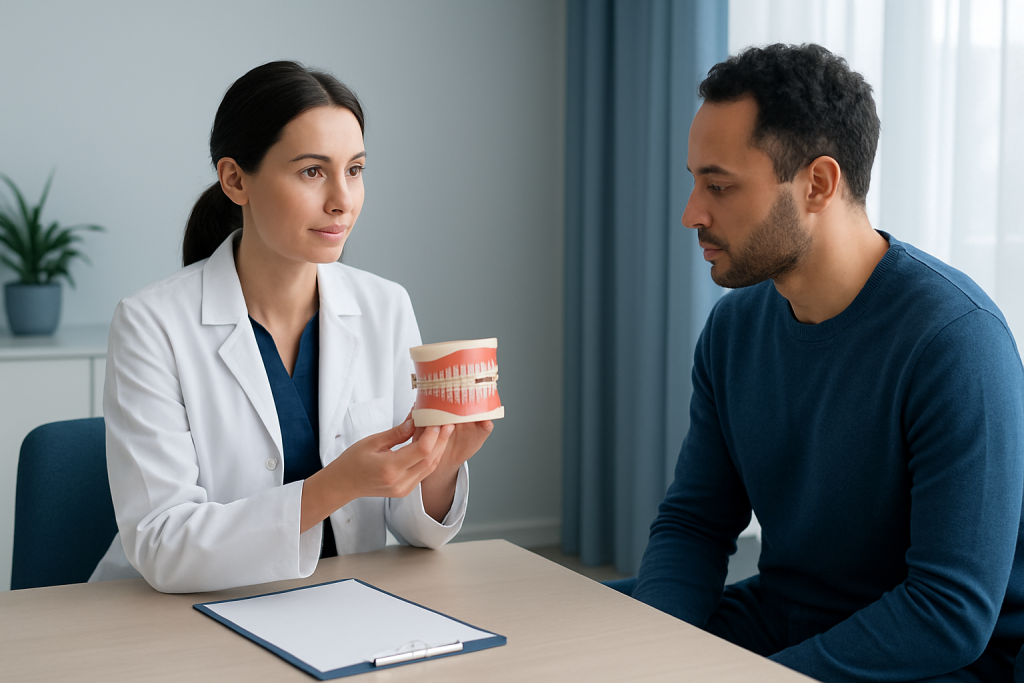
Overbites usually develop from a combination of inherited traits and growth patterns. A family history of bite problems can make a child more likely to develop similar alignment concerns. Jaw size, tooth size, and the way the teeth erupt all play a part.
Several factors may contribute to an overbite or make it more noticeable:
- Genetic jaw shape or tooth position
- Thumb sucking or prolonged pacifier use in childhood
- Extended bottle feeding habits in some children
- Missing teeth or early tooth loss
- Habits such as nail biting or tongue thrusting
- Teeth grinding or clenching, which may worsen wear
Not every overbite has a clear cause that can be traced to one habit or event. Often, it is the result of normal development taking an uneven path. Because growth is dynamic, an early mild overlap can become more pronounced if the bite is not monitored during childhood and adolescence.
Diagnosis
Diagnosis begins with a dental or orthodontic examination. The clinician looks at how the teeth meet, checks the jaws and facial profile, and asks about symptoms such as jaw discomfort, chewing difficulty, or tooth wear. In many cases, the bite can be assessed during a standard appointment.
To understand the full picture, the dentist may use photographs, dental impressions or digital scans, and X-rays. These images help show the position of the roots, the alignment of the jaws, and whether there is crowding, spacing, or other bite irregularities. In children, growth stage is important because treatment may be timed around ongoing jaw development.
For international patients, this assessment is often the first step in planning care that fits both clinical needs and travel timing. A good diagnostic visit should explain whether the overbite is mainly dental, mainly skeletal, or a combination of both, since that difference strongly influences the treatment path.
Treatment Options
Treatment is individualized. Some overbites are monitored rather than treated right away, especially if they are mild and not causing symptoms. When correction is recommended, the goal is usually to improve both the bite relationship and the long-term health of the teeth and jaw.
Orthodontic treatment is commonly used. Braces or clear aligners may gradually move the teeth into a more balanced position. In growing children, certain appliances may help guide jaw development or create space for better alignment. Retainers are often used after active treatment to help maintain the new position.
In more complex cases, especially when the jaws themselves are significantly mismatched, treatment may involve a combination of orthodontics and orthognathic surgery. This approach is considered when the bite issue cannot be corrected by tooth movement alone. The planning process is usually careful and staged, with imaging, coordination between specialists, and a clear discussion of what the patient can expect before, during, and after treatment.
Because treatment varies so much, there is no one-size-fits-all solution. A person seeking care from another country should ask how many visits are likely needed, whether treatment can be split into phases, and what follow-up will be required after returning home.
Prevention & Self-care
Not every overbite can be prevented, particularly when genetics and jaw growth are the main drivers. Still, early attention to oral habits and regular dental care can help reduce the chance that a developing bite problem becomes more difficult to correct.
Helpful self-care and prevention steps include:
- Bring children for routine dental checkups so bite changes can be seen early
- Discourage prolonged thumb sucking or pacifier use beyond the age recommended by a dentist or pediatrician
- Address missing teeth, decay, or early tooth loss promptly
- Use a mouthguard if advised for sports or if teeth grinding is suspected
- Maintain good brushing and flossing habits to protect teeth already under bite pressure
For people already living with an overbite, gentle habits matter. Avoid using teeth to open packages, and seek care if tooth wear, jaw soreness, or gum irritation appears. If grinding or clenching is part of the picture, a dentist may suggest a protective night appliance or further evaluation.
Living With an Overbite After Treatment
After correction, the main focus shifts to keeping the result stable. Teeth have a natural tendency to move over time, so retention is a routine part of orthodontic care. Wearing retainers exactly as instructed is one of the most important steps in protecting the outcome.
Short-term tenderness, mild speech adjustment, or a learning curve with aligners or retainers can happen during treatment. These effects usually settle as the mouth adapts. Good oral hygiene remains essential because brackets, aligners, or other appliances can make cleaning more challenging if attention slips.
For patients traveling internationally for care, follow-up planning deserves as much attention as the initial correction. The care team should explain how progress will be checked, what to do if an appliance breaks, and when remote or local follow-up is appropriate. Acibadem Health Point’s multidisciplinary specialists and JCI-accredited hospitals can diagnose and treat overbite for international patients, with coordinated care that supports both the treatment phase and the recovery period.
When to See a Doctor
A dental or orthodontic evaluation is worthwhile if an overbite is noticeable, worsening, or linked with pain, wear, or chewing difficulty. Early assessment is especially useful in children, because growth may offer more treatment options and simpler correction.
It is sensible to seek care sooner rather than later if there is:
- Jaw pain, clicking, or locking
- Teeth that chip, wear down, or feel sensitive
- Difficulty biting, chewing, or speaking clearly
- Gum irritation from the lower teeth contacting the palate
- Concern about how the bite is changing over time
Even when symptoms are mild, a clinician can help decide whether monitoring is enough or whether treatment would better protect oral health. A clear plan is especially helpful for patients balancing treatment with travel, work, or family commitments.
Frequently asked questions
Is an overbite always a problem?
No. A small overbite is normal and helps the teeth function properly. It becomes more of a concern when the overlap is excessive or begins to cause wear, discomfort, or bite problems.
Can an overbite correct itself over time?
Most overbites do not fully correct on their own, especially once the permanent teeth are in place. In children, early guidance may improve the outcome, but active treatment is often needed if the bite is significant.
What is the difference between an overbite and an overjet?
An overbite refers to how much the upper front teeth overlap the lower front teeth vertically. Overjet refers to how far the upper front teeth project forward horizontally.
Do clear aligners work for overbite?
They can help in some cases, particularly mild to moderate dental overbites. More complex bite or jaw problems may need braces, additional appliances, or a combination of orthodontics and surgery.
Can an overbite cause jaw pain?
It can contribute to jaw strain in some people, especially if the bite is deep or combined with clenching or grinding. However, jaw pain can have several causes, so a dental evaluation is important.
When should a child be checked for an overbite?
Children can be checked during routine dental visits, and many orthodontic concerns are first noticed in the mixed-dentition years. If a parent sees a deep overlap, mouth habits, or crowding, an earlier orthodontic opinion may be helpful.
References
- American Association of Orthodontists
- American Dental Association
- Mayo Clinic
- National Institute of Dental and Craniofacial Research
- NHS
This article is for general information only and is not a substitute for professional medical advice. Please consult a qualified doctor about your individual situation.
Explore treatments in Turkey — costs, top hospitals & a free quote
JCI-accredited · board-certified surgeons · reply within 24h
Add us as a Preferred Source to see more of our trusted health content across Google Search, AI Overviews and Discover.