Ocular Migraine: Symptoms, Causes and Treatment

Key Takeaways
- Ocular migraine can refer to visual symptoms with migraine or, less commonly, a retinal migraine affecting one eye.
- Shimmering lights, blind spots, zigzag patterns, or temporary blurred vision are common visual features.
- Sudden vision loss, a new one-sided eye symptom, or visual changes with weakness or trouble speaking should be assessed urgently.
- Doctors may use history, eye examination, and sometimes imaging to rule out other causes.
- Lifestyle measures, trigger management, and migraine-specific treatment can reduce future episodes.
Medically reviewed by the Acıbadem clinical team — August 19, 2026
Ocular migraine is a term people often use for temporary vision changes linked to migraine, but the phrase can describe different conditions. Understanding the pattern of symptoms matters, because not every episode of flashing lights or blurred vision is a migraine and some causes need prompt medical attention.
Overview
Ocular migraine is a term many people use when vision changes arrive with a migraine attack. In everyday conversation, it may describe visual aura, a migraine symptom that usually affects both eyes and lasts a limited time. In some cases, however, clinicians use the term retinal migraine for rare episodes of vision change in one eye.
That distinction matters because not every episode of flashing lights, a shimmering blind spot, or temporary dimness is a migraine phenomenon. Eye disease, vascular problems, and neurological conditions can produce similar symptoms. For that reason, a clear description of what happened, how long it lasted, and whether one or both eyes were involved helps a doctor guide the next step.
For international patients considering care abroad, this is often the part that feels most uncertain: the symptoms may fade before a clinic visit, yet the story still needs to be pieced together carefully. A good evaluation focuses on pattern recognition, not just the moment the symptom has disappeared.
Symptoms
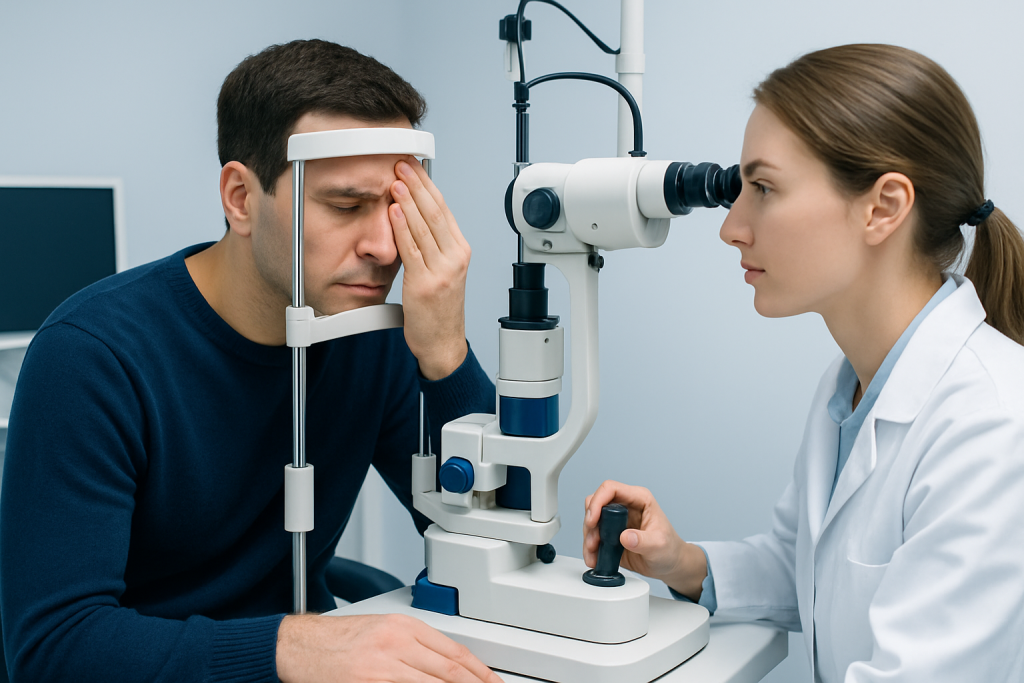
Visual symptoms are usually the feature that brings attention to ocular migraine. People may describe sparkling lights, heat-wave distortion, zigzag lines, tunnel-like vision, a gray patch, or a blind spot that slowly expands. The episode often unfolds over minutes rather than seconds and may be followed by headache, light sensitivity, nausea, or fatigue.
With migraine aura, the visual change typically affects both eyes, even if it feels like it is on one side of the visual field. Retinal migraine, by contrast, is usually described as reduced vision or temporary blindness in one eye only. Because people often do not test each eye separately during an attack, careful questioning is important.
Other symptoms can accompany the visual phase:
- Headache before, during, or after the vision change
- Sensitivity to light or sound
- Nausea or a sense of motion
- Difficulty concentrating
- Temporary speech or sensory changes in some migraine types
Visual symptoms that start suddenly, are accompanied by eye redness and pain, or do not fit the usual migraine pattern should not be assumed to be ocular migraine.
Causes & Risk Factors

Migraine is a complex neurological condition, and visual aura appears to involve temporary changes in brain activity, blood flow regulation, and nerve signaling. The exact mechanism is still being studied, but the result is a brief disruption in how visual information is processed. Retinal migraine is thought to be rarer and may involve temporary narrowing of blood vessels supplying the retina.
Several factors can make migraine episodes more likely. Common triggers include stress, disrupted sleep, skipped meals, dehydration, bright or flickering light, strong odors, hormonal changes, and certain foods or drinks in susceptible people. Travel itself can also play a role when routines, sleep, hydration, and meal timing change at the same time.
Risk is higher in people with a personal or family history of migraine. Some patients notice that attacks cluster during periods of intense work, after long screen exposure, or around the start of a trip. While triggers vary from person to person, identifying patterns often helps reduce future episodes without overcomplicating daily life.
Diagnosis
Diagnosis begins with the story of the episode. A doctor may ask when the visual change started, whether it moved or spread, how long it lasted, whether one or both eyes were involved, and whether headache, numbness, speech difficulty, or weakness followed. These details help separate migraine aura from conditions that need different treatment.
An eye examination is often important, especially if the symptom seemed to involve one eye, if there is true vision loss, or if the patient has other eye conditions. Depending on the presentation, a clinician may also recommend neurological assessment, imaging, or vascular evaluation to rule out stroke, retinal disease, inflammation, or other causes.
People preparing to seek care in another country can make the evaluation easier by noting the timing of each episode, taking a simple symptom diary, and listing current medicines and known triggers. If available, a sketch or phone note describing the visual pattern can be surprisingly helpful.
Treatment Options
Treatment depends on the type of migraine and the frequency of episodes. For many people, the immediate aim is to manage the attack safely and confirm that no other condition is responsible. If the symptoms are part of a typical migraine pattern, doctors may suggest migraine-specific medicines or general pain relief, depending on the overall history and the patient’s health profile.
When attacks happen often, preventive treatment may be considered. This may include medicines chosen by a neurologist, as well as attention to sleep, hydration, stress regulation, and trigger control. The best plan is usually individualized, especially when travel, work schedules, or other health conditions make routines less predictable.
People should not self-treat repeated vision loss as “just migraine” without evaluation, particularly if the pattern is new. A clinician may also address related issues such as severe nausea, anxiety about the episodes, or medication overuse, which can quietly make migraine harder to manage.
Prevention & Self-care
Prevention often starts with noticing the conditions around an attack. Regular meals, adequate water intake, consistent sleep, and paced screen use can reduce the likelihood of some episodes. For many patients, simple routines work better than complicated restrictions that are hard to maintain.
A practical migraine diary can reveal clues that are easy to miss. Recording sleep, meals, stress, menstruation, exercise, travel, and screen time may uncover a pattern that is specific to that person. When a trigger is identified, the goal is usually not perfection but reduction.
Helpful self-care habits may include:
- Taking breaks from bright screens and harsh lighting
- Keeping hydration and meals regular during travel
- Managing stress with predictable routines
- Limiting known dietary triggers if they are clearly linked
- Wearing sunglasses in strong light when needed
If migraine is frequent or disabling, prevention should be discussed with a doctor rather than handled by trial and error alone. For international patients, coordinated follow-up can be especially useful when episodes are tied to long-haul travel, new time zones, or shifting medication schedules.
When to See a Doctor
Medical assessment is important for any first-time visual episode that has not been previously diagnosed. It is also wise to seek care if the pattern changes, the attacks become more frequent, or the symptoms last longer than usual. A previous diagnosis of migraine does not rule out a new eye or neurological problem later on.
Urgent evaluation is recommended if vision loss is sudden, if only one eye is affected, if there is eye pain or redness, or if the episode comes with weakness, facial droop, severe dizziness, confusion, or trouble speaking. These features deserve prompt attention because they may point to conditions that need immediate treatment.
Patients who travel for care often look for a team that can assess both the neurological and eye aspects efficiently. In that setting, multidisciplinary specialists and JCI-accredited hospitals such as those at Acibadem Health Point can help diagnose and treat ocular migraine and related conditions for international patients in a coordinated way.
Living Well With Migraine-Related Vision Symptoms
Once the diagnosis is clear, many people feel reassured simply by knowing what the episodes represent and what warning signs matter. That clarity can reduce the anxiety that often follows a first attack. It also helps patients and doctors decide when a symptom is part of a familiar pattern and when it needs a new workup.
For people managing care across borders, a written plan is especially useful. It can list the usual symptoms, the medicines that are safe to use, the red flags that require urgent review, and the contact point for follow-up after returning home. Good migraine care is rarely about a single appointment; it is more often a series of steady adjustments.
With the right evaluation and a practical prevention plan, many patients learn to keep ocular migraine from dominating daily life. The aim is not only fewer attacks, but also greater confidence in recognizing what the eyes and brain are trying to say.
Frequently asked questions
Is ocular migraine the same as migraine aura?
People often use the term ocular migraine to mean migraine aura, but the words are not always used precisely. Migraine aura usually affects both eyes, even if it seems one-sided, while retinal migraine is a rarer condition that affects one eye. A doctor may help clarify which pattern is present.
How long does an ocular migraine usually last?
Visual migraine symptoms often last minutes and usually resolve within an hour, though the exact timing can vary. If symptoms last much longer, change character, or do not fully clear, medical review is a good idea. The duration is one of the clues doctors use to sort migraine from other causes.
Can ocular migraine happen without headache?
Yes. Some people experience visual aura without a following headache, which can be surprising the first time it happens. Even then, a new visual episode should still be evaluated if the pattern is unfamiliar or if one eye seems affected.
What is the difference between ocular migraine and a detached retina or stroke?
Ocular migraine symptoms are typically temporary and follow a recognizable pattern, while retinal detachment or stroke may cause sudden, persistent, or unusual vision changes. Because the symptoms can overlap, it is safest not to assume a new visual problem is migraine. Prompt assessment is especially important when vision loss is sudden or one-sided.
Can stress or travel trigger these episodes?
Yes, stress, sleep disruption, dehydration, and irregular meals can all contribute to migraine attacks in susceptible people. Travel can combine several of these triggers at once, which is why patients often notice episodes around long journeys or time-zone changes. Planning ahead can reduce the chance of an attack.
How is ocular migraine treated during an episode?
Treatment depends on the diagnosed type and the person’s overall health, but many people benefit from resting in a quiet, dim setting and following the plan advised by their doctor. If migraine is confirmed, a clinician may recommend medicines for the attack or prevention. New or unusual symptoms should not be managed as migraine without medical assessment.
References
- American Migraine Foundation
- National Eye Institute
- Mayo Clinic
- National Institute of Neurological Disorders and Stroke
- American Academy of Ophthalmology
This article is for general information only and is not a substitute for professional medical advice. Please consult a qualified doctor about your individual situation.
Explore treatments in Turkey — costs, top hospitals & a free quote
JCI-accredited · board-certified surgeons · reply within 24h
Add us as a Preferred Source to see more of our trusted health content across Google Search, AI Overviews and Discover.