Nipple

Key Takeaways
- Nipple changes can be harmless, but new or persistent symptoms deserve attention.
- Pain, discharge, inversion, itching, or skin changes may have several possible causes.
- Doctors usually start with a history, physical examination, and sometimes imaging or lab tests.
- Most nipple concerns are treatable once the cause is identified.
- Any sudden bloody discharge, a new lump, or one-sided skin changes should be checked by a clinician.
Nipple changes are common and are often linked to normal hormonal shifts, skin irritation, or benign breast conditions. This guide explains what to watch for, how doctors evaluate symptoms, and when medical review is helpful.
Overview
The nipple is a small structure with an outsized role in breast health, sensation, and breastfeeding. Because it is sensitive and responds to hormones, skin conditions, friction, and changes in the tissue beneath it, it may show early signs of many different conditions.
Some nipple changes are part of everyday life: temporary tenderness before a period, mild dryness in cold weather, or sensitivity during pregnancy and breastfeeding. Others are worth a closer look, especially when a change is new, one-sided, persistent, or accompanied by a lump, discharge, or visible skin changes.
For people planning care from another country, the first step is often simply deciding whether the change seems minor or needs specialist assessment. A well-timed evaluation can usually clarify the cause and reduce unnecessary worry.
Symptoms
Nipple-related symptoms may affect one side or both and can range from mildly bothersome to clearly uncomfortable. The pattern of symptoms often helps clinicians narrow down the cause.
Common symptoms include:
- Pain, tenderness, burning, or itching
- Dryness, cracking, flaking, or peeling skin
- Redness or swelling
- Discharge, which may be clear, milky, yellow, green, or bloody
- Flattening or turning inward of the nipple
- A lump under or near the nipple
- Changes in color, shape, or skin texture
Some symptoms appear only during certain times, such as breastfeeding, athletic activity, or hormonal changes. Persistent eczema-like rash on or around the nipple, especially on one side, should be assessed by a doctor rather than treated as simple dryness.
Causes & Risk Factors
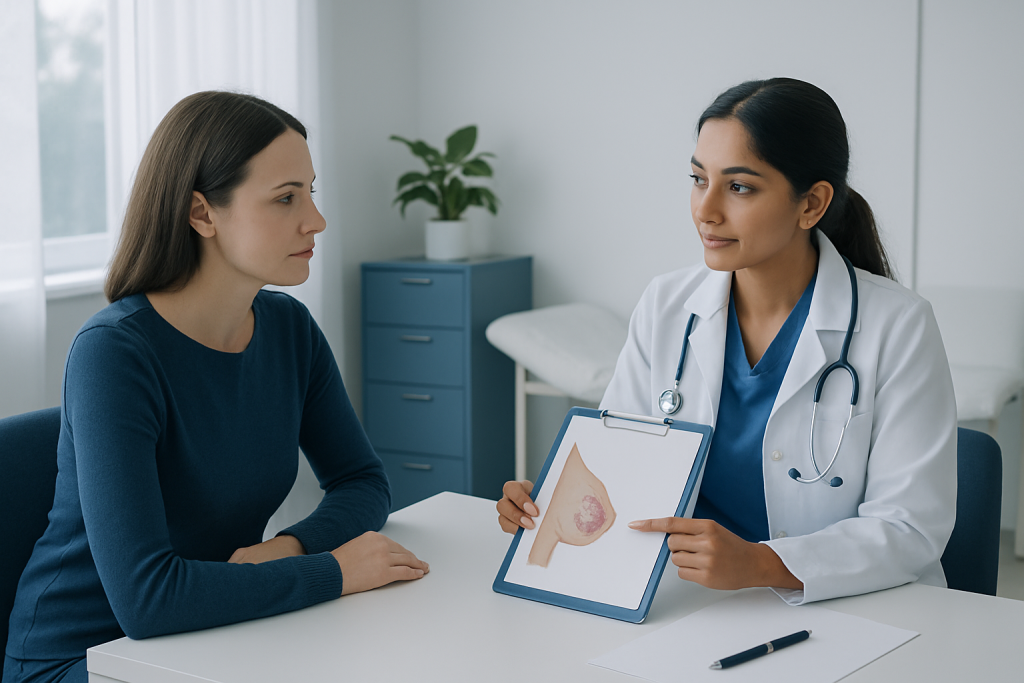
Nipple symptoms do not point to one single diagnosis. They may come from the skin itself, the ducts behind the nipple, the surrounding breast tissue, or hormone-related changes elsewhere in the body.
Possible causes include friction from clothing or exercise, eczema or contact dermatitis, infections such as mastitis, blocked ducts, benign breast cysts, hormonal changes, and breastfeeding-related irritation. Less commonly, discharge or inversion may be related to intraductal papilloma, duct ectasia, or breast cancer.
Risk factors depend on the underlying cause. A person may be more prone to irritation if they wear rough fabrics, use scented skin products, or have a history of sensitive skin. Breastfeeding, pregnancy, recent piercing, smoking, and prior breast procedures can also influence the type of symptoms that develop.
Age, family history, and a personal history of breast disease may change how quickly a clinician recommends follow-up. Still, many nipple complaints are benign and resolve once the trigger is identified and managed appropriately.
Diagnosis
Diagnosis usually begins with a careful discussion of the symptom timeline: when the change started, whether it affects one or both sides, and whether there is pain, discharge, rash, or a lump. This history often gives important clues, especially when symptoms vary with menstrual cycles, breastfeeding, or skin product use.
A physical examination follows, and a clinician may check the breast, underarm area, and surrounding skin. Depending on the findings, additional tests may be recommended, such as breast ultrasound, mammography, duct evaluation, skin examination, or laboratory tests if infection or hormonal causes are suspected.
If there is a persistent rash, ulceration, or unusual skin thickening, a biopsy may be needed to rule out more serious conditions. The goal is not to assume the worst, but to identify the cause accurately so treatment can be matched to the problem.
Treatment Options
Treatment depends entirely on the cause. For simple irritation, the plan may involve switching to softer fabrics, avoiding harsh soaps, protecting the skin with a gentle moisturizer, and reducing friction during exercise or breastfeeding.
If eczema or dermatitis is the issue, clinicians may suggest topical treatments and avoidance of triggers such as fragrances, detergents, or repeated moisture exposure. Infections may require medicines directed at bacteria or yeast, while blocked ducts or breastfeeding-related problems may improve with better drainage, lactation support, or changes in feeding technique.
For discharge, inversion, or a lump, treatment is guided by the exact diagnosis. Some benign conditions need only observation, while others may be removed or treated procedurally. If a cancerous cause is identified, management may involve surgery, radiation, systemic therapy, or a combination of approaches based on the stage and type of disease.
Myomectomy Recovery for International Patients: The Usual Travel Timeline" class="ahp-ilk">International patients often benefit from a coordinated plan that includes imaging, specialist consultation, and follow-up before they return home. Acibadem Health Point’s multidisciplinary specialists and JCI-accredited hospitals diagnose and treat nipple-related conditions for international patients in a structured, coordinated way.
Prevention & Self-care
Not every nipple problem can be prevented, but a few practical habits may reduce irritation and help people notice changes earlier. Gentle skin care is often the simplest place to start.
Helpful self-care measures include:
- Choosing breathable, well-fitting bras and soft fabrics
- Avoiding harsh soaps, scrubs, and heavily scented products
- Keeping the area dry during exercise or breastfeeding
- Using a clinician-recommended moisturizer if the skin is dry or cracked
- Checking both sides periodically for new changes
For people who breastfeed, early attention to latch issues, soreness, and skin breakdown can prevent small problems from becoming persistent ones. If a person has recurrent irritation, it may help to review detergents, skincare products, exercise clothing, or nipple jewelry as possible triggers.
When to See a Doctor
Medical review is advisable when nipple symptoms are new, one-sided, persistent, or getting worse. A clinician should also be consulted if there is bloody discharge, a new lump, nipple inversion that develops later in life, or skin changes that do not improve.
Prompt assessment is especially important if the nipple or nearby skin is scaly, crusted, ulcerated, or shaped differently than usual. Fever, spreading redness, significant pain, or signs of infection during breastfeeding also deserve timely care.
If someone is traveling for evaluation, it can help to bring a short symptom timeline, photos of changes if appropriate, and a list of products or medicines used on the area. Clear records make it easier for the medical team to organize the right tests and follow-up plan.
Frequently asked questions
Is nipple pain always a sign of something serious?
No. Nipple pain is often caused by friction, dryness, hormone shifts, or breastfeeding-related irritation. If the pain is new, persistent, one-sided, or comes with a lump or discharge, a doctor should evaluate it.
What does nipple discharge mean?
Discharge can have many causes, including pregnancy, breastfeeding, blocked ducts, infections, or benign breast conditions. Bloody, spontaneous, or one-sided discharge should be checked by a clinician.
When is nipple inversion concerning?
Some people naturally have inward nipples, which is normal for them. A nipple that turns inward later in life, especially if the change is new or only on one side, should be assessed.
Can skin conditions affect the nipple?
Yes. Eczema, contact dermatitis, and infections can all affect the nipple and areola. Persistent scaly or crusted skin changes should not be assumed to be simple dryness.
How do doctors check a nipple problem?
They usually start with questions about the symptom pattern and a physical examination. Depending on the findings, imaging, lab tests, or a biopsy may be recommended.
What should someone do before traveling for care?
It helps to note when the symptom started, whether it changes over time, and what has already been tried. Bringing prior imaging or medical records can make the specialist visit more efficient.
References
- National Cancer Institute
- American Cancer Society
- Mayo Clinic
- NHS
- World Health Organization
This article is for general information only and is not a substitute for professional medical advice. Please consult a qualified doctor about your individual situation.
More from the Health Library



Related Specialists

Prof. Dr. A. Taner Usta
Gynecology & Obstetrics
Prof. Dr. Ahmet Tayyar
Gynecology & Obstetrics
Prof. Dr. Ahmet Cem Batukan
Gynecology & Obstetrics
Dr. Sevgi Selen
Gynecology & Obstetrics