NICU Nurse: Role, Training and Responsibilities

Key Takeaways
- NICU nurses care for newborns who need specialized monitoring and treatment.
- They work with neonatologists and other specialists to track breathing, feeding, temperature, and overall stability.
- Families are part of the care plan, with guidance on bonding, pumping milk, and learning the baby’s needs.
- The NICU experience can be stressful, but clear communication and a prepared care team help parents understand each step.
- Follow-up care after discharge is important, especially for premature or medically fragile babies.
Medically reviewed by the Acıbadem clinical team — August 19, 2026
A NICU nurse cares for newborns who need close medical support, often because they were born early or have health concerns after delivery. Their role combines skilled monitoring, hands-on treatment, and steady support for families during a highly sensitive time.
Overview
A NICU nurse works in the neonatal intensive care unit, where newborns receive careful observation and specialized treatment. In many hospitals, this setting supports babies who are born prematurely, have low birth weight, struggle with breathing, or need help adjusting after birth.
The role is highly technical, but it is also deeply human. NICU nurses watch for subtle changes, respond quickly when a baby’s condition shifts, and help parents understand what is happening in plain language. For families arriving from another city or country, that guidance can be especially valuable because the NICU experience often begins before there has been time to process the birth itself.
These nurses do not work alone. They are part of a team that usually includes neonatologists, respiratory therapists, lactation consultants, and other pediatric specialists. Together, they create a care plan that changes as the baby grows stronger.
What a NICU Nurse Does
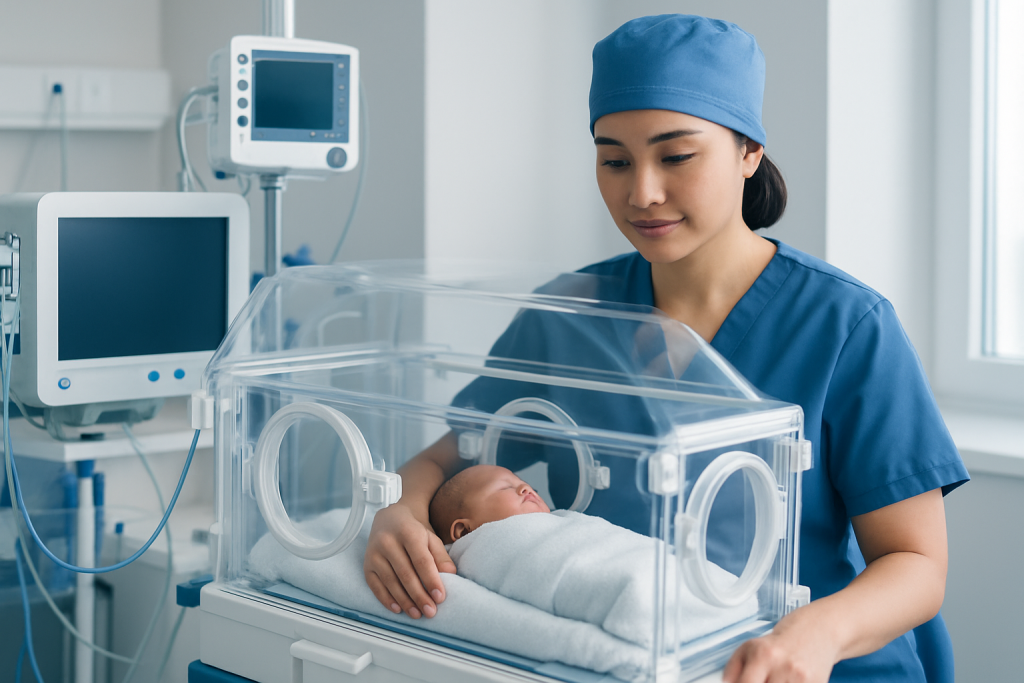
A NICU nurse’s day may include monitoring oxygen levels, heart rate, temperature, feeding tolerance, and fluid balance. They may assist with incubator care, IV lines, feeding tubes, and other equipment used to support fragile newborns. Small changes in a baby’s color, breathing pattern, or alertness can matter, so careful observation is a major part of the job.
They also help with comfort and development. This can mean positioning the baby safely, protecting sleep, reducing unnecessary stimulation, and encouraging skin-to-skin contact when it is medically appropriate. These details are important because newborns in intensive care benefit from both medical stability and a calm environment.
Another essential part of the role is communication. NICU nurses explain machines, routines, and daily progress in ways that parents can follow. For families far from home, this can make the unit feel less intimidating and more like a place where they can participate in their baby’s care.
- Monitoring vital signs and overall stability
- Administering treatments as ordered by the medical team
- Supporting feeding, growth, and comfort
- Teaching families how to safely touch, hold, or feed their baby
- Documenting changes and sharing concerns with the team
Why Babies Need NICU Care

Babies may need NICU care for many reasons. Some are born too early and need help with breathing, temperature control, or feeding. Others arrive at term but face challenges such as infection, jaundice, blood sugar problems, or breathing difficulty after delivery.
In some cases, the need is expected before birth. Families may be told during pregnancy that a baby will need specialized care immediately after delivery, which allows the hospital team to prepare. In other cases, NICU admission happens suddenly and can feel overwhelming because the baby looks smaller or more vulnerable than parents expected.
NICU nurses are trained to care for a wide range of conditions, but they also know that every baby’s course is different. Some newborns need support for only a short time, while others stay longer and need step-by-step progress before going home.
Skills and Qualities of a NICU Nurse
The best NICU nursing care depends on both clinical skill and emotional steadiness. These nurses must be comfortable with complex technology, precise medication and fluid management, and rapid changes in a newborn’s condition. At the same time, they need patience, observation, and a gentle communication style.
Because babies cannot explain how they feel, NICU nurses learn to recognize indirect signs of stress, discomfort, or improvement. This requires experience and attention to detail. It also means working closely with the rest of the neonatal team so that small observations are not missed.
Families often remember the nurse who took time to explain a monitor alarm, show how to hold a tiny hand, or reassure them after a difficult night. That human connection matters, especially when parents are making decisions from another country and may be navigating language or cultural differences along with medical care.
How NICU Nurses Support Families
Parents rarely expect to learn how to navigate intensive care for a newborn, and NICU nurses help make that process more understandable. They may teach hand hygiene, show how to express breast milk, explain feeding schedules, or guide parents through first visits to the incubator. These steps help families feel more involved even when the baby is still medically fragile.
Bonding in the NICU may look different from the picture many parents had in mind. A nurse may support quiet touch, skin-to-skin care, reading to the baby, or speaking softly during care times. As the baby improves, parents are gradually included in more daily tasks so they can feel prepared for discharge.
For international patients, continuity matters. A coordinated team can help families understand the hospital stay, discharge planning, and follow-up appointments before they return home. That planning reduces surprises and supports a smoother transition from the NICU to home care.
Diagnosis and Treatment in the NICU
The NICU itself is not a diagnosis; it is the place where babies receive specialized evaluation and treatment. A neonatologist or pediatric specialist determines the cause of the baby’s problem using the clinical exam, monitoring data, and tests such as blood work, imaging, or infection screening when needed.
Nurses help carry out the treatment plan and watch how the baby responds. Depending on the condition, care may include oxygen support, temperature regulation, IV fluids, tube feeding, phototherapy for jaundice, or treatment for infection. The exact approach depends on the newborn’s age, size, and medical needs.
Parents should expect the plan to evolve. In neonatal care, improvement is often measured in small steps, such as better feeding coordination, more stable breathing, or longer periods without extra support. NICU nurses help track those steps and keep families informed.
Going Home: Prevention, Self-care, and Follow-up
Before discharge, NICU nurses often spend time preparing parents for home care. This may include feeding instructions, safe sleep guidance, temperature checks if recommended, and signs that should prompt a call to the doctor. Families are usually encouraged to ask questions until they feel comfortable with the plan.
After discharge, follow-up is especially important for premature or medically complex babies. Appointments may include pediatric checkups, growth monitoring, hearing or vision evaluation, and developmental screening. A gradual, attentive follow-up plan helps catch concerns early and supports healthy growth.
For parents, self-care is part of the process too. Rest, support from family or friends, and clear communication with the medical team can help reduce exhaustion during what is often an emotionally demanding period. When care is needed away from home, families may also benefit from a simple written list of medications, feeding instructions, and follow-up dates before travel.
- Keep all discharge instructions in one place
- Attend follow-up visits as scheduled
- Watch feeding, breathing, and temperature patterns
- Ask for clarification if any home-care step feels unclear
- Seek support if stress or fatigue becomes overwhelming
When to See a Doctor
Parents should contact a doctor promptly if a newborn has trouble breathing, feeds poorly, becomes unusually sleepy, develops a fever, or seems less responsive than expected. For babies recently discharged from the NICU, any sudden change in color, breathing, feeding, or alertness should be taken seriously and discussed with a clinician.
Some babies need urgent medical attention, while others need a same-day pediatric review. The safest approach is to call the baby’s care team or local emergency service if symptoms seem severe or rapidly worsening. Families should not wait for a routine visit if they are worried about breathing difficulty or a major change in the baby’s condition.
It can also be helpful to seek support if a parent feels unable to manage the discharge plan, especially after returning home from care abroad. A clear follow-up pathway makes it easier to protect the baby’s health and gives families confidence after leaving the hospital.
Frequently asked questions
What is a NICU nurse?
A NICU nurse is a registered nurse who cares for newborns in the neonatal intensive care unit. They monitor fragile babies, provide treatments, and help families understand the baby’s condition and daily progress.
Why would a newborn need the NICU?
A newborn may need the NICU if they are premature, have breathing problems, need help feeding, or have another medical condition that requires close monitoring. The NICU provides a level of care that is more specialized than a regular newborn unit.
Do NICU nurses only care for very sick babies?
NICU nurses care for babies with a wide range of needs, from short-term support to more complex intensive care. Some babies improve quickly, while others need a longer stay and gradual support.
Can parents touch or hold their baby in the NICU?
In many cases, yes, but it depends on the baby’s condition and the medical team’s guidance. NICU nurses often show parents how to touch, hold, or do skin-to-skin care safely.
What happens after a baby leaves the NICU?
Most babies need follow-up with a pediatrician and sometimes additional specialists. The team usually gives parents written instructions for feeding, safe sleep, and warning signs to watch for at home.
Where do international families fit into NICU care?
International families often need clear communication, coordinated discharge planning, and help organizing follow-up after travel. A well-structured NICU team can make that transition safer and less confusing.
References
- American Academy of Pediatrics
- National Institute of Child Health and Human Development
- World Health Organization
- Centers for Disease Control and Prevention
This article is for general information only and is not a substitute for professional medical advice. Please consult a qualified doctor about your individual situation.
Explore treatments in Turkey — costs, top hospitals & a free quote
JCI-accredited · board-certified surgeons · reply within 24h
Add us as a Preferred Source to see more of our trusted health content across Google Search, AI Overviews and Discover.