

Masseter Muscle

Key Takeaways
- The masseter muscle helps lift the jaw and is essential for chewing and speaking.
- Overuse from clenching, grinding, stress, or bite problems can cause pain and tightness.
- Symptoms may include jaw soreness, headaches, facial fullness, and difficulty opening the mouth comfortably.
- Diagnosis is usually based on history and examination, with imaging used when another problem is suspected.
- Treatment often starts with conservative care such as night guards, jaw rest, and habit awareness.
The masseter muscle is one of the main muscles used for chewing, and when it becomes overworked or irritated, it can contribute to jaw discomfort, headaches, and changes in bite comfort. Understanding its role helps patients recognize when symptoms are simple strain and when they deserve dental or medical evaluation.
Overview
The masseter muscle sits along the side of the jaw, just in front of the ear and down toward the angle of the mandible. It is one of the strongest muscles in the body relative to its size, and its everyday job is simple: it closes the jaw so a person can chew, speak, and swallow comfortably.
Because it works every time the teeth meet, the masseter can become tired or irritated when it is asked to do too much. People may notice tightness after long periods of concentration, jaw soreness on waking, or a feeling that the sides of the face are more bulky than usual. For international patients arranging care from abroad, this muscle often becomes part of a broader evaluation of jaw pain, tooth wear, or temporomandibular joint concerns.
Most problems involving the masseter are not dangerous, but they can be disruptive and persistent. The goal of care is usually to reduce strain, identify the trigger, and protect the teeth and jaw joint from ongoing overuse.
Symptoms

Masseter-related symptoms often begin gradually rather than all at once. A person may first notice that chewing tough foods feels tiring, that the jaw aches after stress, or that the sides of the face feel tender when pressed. Some patients describe a dull pain near the cheek or angle of the jaw rather than a sharp, pinpoint pain.
Another common clue is muscle tightness. The jaw may feel stiff in the morning after nighttime clenching or grinding, or it may be difficult to open the mouth fully without discomfort. In some cases, the muscle becomes visibly enlarged from repeated overuse, which can create a wider or more square jaw appearance.
- Jaw soreness or fatigue while chewing
- Morning tightness after clenching or grinding
- Tenderness when touching the cheek or jaw angle
- Headaches or facial aching linked to jaw tension
- Difficulty opening the mouth widely or comfortably
Symptoms may overlap with temporomandibular joint disorder, dental problems, or sinus and ear discomfort, which is why a careful evaluation is helpful when pain keeps returning.
Causes & Risk Factors
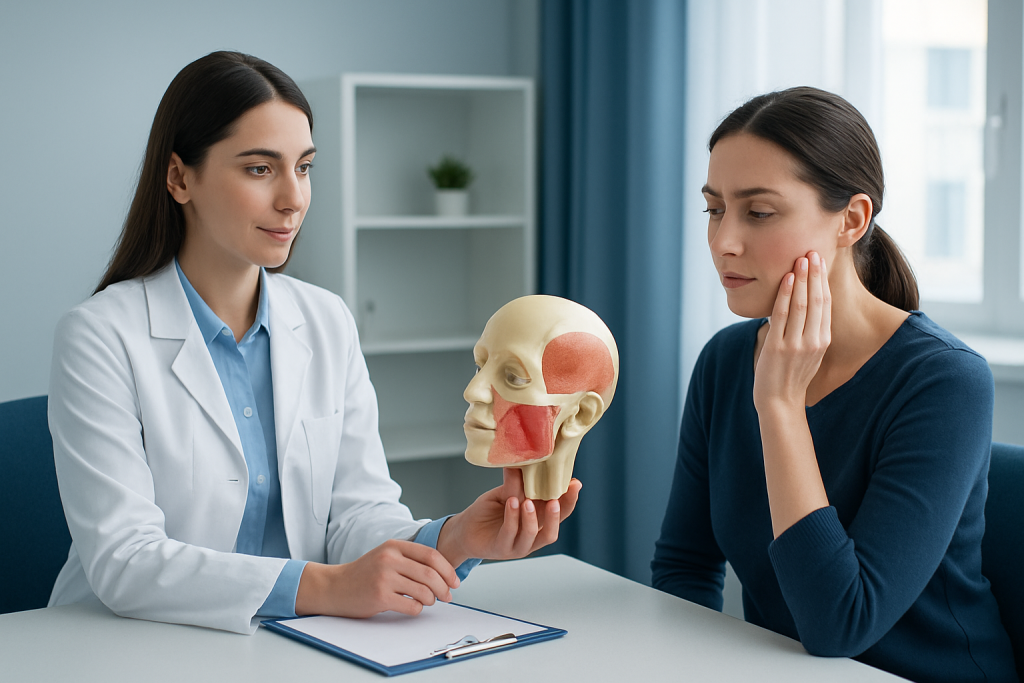
The most common reason the masseter becomes painful is overuse. Repeated clenching, teeth grinding, gum chewing, nail biting, or holding tension in the jaw can keep the muscle contracted for long periods. Over time, this can lead to soreness, stiffness, and sometimes enlargement of the muscle itself.
Stress and sleep-related bruxism are frequent contributors. Some people clench unconsciously during the day when concentrating, traveling, driving, or working under pressure. Others grind at night, and they may only learn about it after a partner notices sounds, a dentist sees wear on the teeth, or they wake with jaw fatigue.
Risk can also rise when the bite is uneven, when dental restorations do not fit comfortably, or when there is an underlying jaw joint problem. Less commonly, muscle pain may be influenced by trauma, infection nearby, or general pain syndromes that make muscles more sensitive.
For patients coming from another country, it is useful to bring any previous dental records, imaging, or mouth guards to the consultation. That background can help the specialist understand whether the masseter is reacting to a short-term trigger or a longer-standing pattern.
Diagnosis
Diagnosis usually begins with a conversation about symptoms, habits, and timing. A clinician will want to know when the pain started, whether it is worse in the morning or evening, whether there is jaw clicking or locking, and whether the person clenches or grinds their teeth. This history often points toward a muscle overuse pattern.
The physical examination focuses on the jaw muscles, the range of motion of the mouth, tooth wear, bite alignment, and the temporomandibular joints. Pressing on the masseter can reproduce the patient’s familiar pain, which helps confirm the muscle as the source. The clinician may also check whether the pain is one-sided or both-sided and whether other facial structures appear involved.
Imaging is not always necessary, but it may be used when symptoms are unusual, severe, or not improving. Dental X-rays, panoramic imaging, or other scans may be considered to rule out tooth, joint, or bone problems. If the patient is seeking care after traveling, a coordinated review of prior studies can prevent unnecessary repeat testing and make the visit more efficient.
Treatment Options
Treatment depends on the cause, but conservative care is usually the starting point. Resting the jaw by choosing softer foods for a short period, avoiding gum chewing, and reducing wide mouth opening can calm an irritated masseter. Warm compresses and gentle jaw relaxation techniques may also ease muscle tension.
Night guards or occlusal splints are commonly used when clenching or grinding is suspected. These devices do not stop stress or bruxism by themselves, but they can protect the teeth and reduce the strain placed on the muscle during sleep. If a bite problem or dental issue is contributing, a dentist may recommend appropriate correction or adjustment.
When pain persists, additional therapies may be considered. These can include physical therapy for the jaw, posture and habit training, or targeted treatments from a qualified clinician. In selected cases, specialist-guided procedures may help reduce excessive muscle activity, but such decisions should be individualized after a full evaluation.
Medication may sometimes be used for short-term symptom relief, but it should be chosen by a doctor or dentist based on the patient’s overall health and other medications. The most effective plan is usually the one that addresses both the muscle and the behavior or mechanical factor keeping it irritated.
Prevention & Self-care
Daily habits often make the biggest difference. Many patients improve when they learn to keep the teeth slightly apart during the day, with the lips together and the jaw relaxed. This simple posture can reduce unconscious clenching, especially during computer work, driving, and stressful conversations.
Sleep routines matter too. If grinding is suspected, a dentist may advise a custom night guard, and good sleep hygiene can support overall muscle recovery. Patients can also notice whether certain foods, such as very chewy or hard items, trigger soreness and choose them less often while the jaw settles.
Helpful self-care ideas include:
- Use warm compresses for short periods when the jaw feels tight
- Choose softer foods temporarily during flare-ups
- Avoid chewing ice, pens, or gum
- Practice gentle jaw relaxation rather than forceful stretching
- Manage stress with methods that suit the individual, such as breathing exercises or regular movement
For those traveling for treatment, it can be helpful to photograph the face or keep a symptom diary before the trip. Noting when pain occurs, which foods worsen it, and whether there is morning tightness can give the specialist clearer information at the first visit and make follow-up care easier after returning home.
When to See a Doctor
A dental or medical evaluation is sensible when jaw pain lasts more than a few days, keeps returning, or interferes with eating, speaking, or sleep. It is also wise to seek assessment if there is visible facial asymmetry, persistent muscle swelling, or a sudden change in the ability to open the mouth.
Prompt review is especially important if jaw symptoms are accompanied by tooth pain, ear symptoms that do not resolve, fever, recent injury, or locking of the jaw. These signs do not always point to a serious problem, but they do deserve a closer look so the underlying cause is not missed.
Patients who are planning care from abroad should try to arrange a consultation that can include both diagnosis and a practical treatment plan for after the trip. Acibadem Health Point’s multidisciplinary specialists and JCI-accredited hospitals can diagnose and treat conditions involving the masseter muscle for international patients, with attention to continuity of care once they return home.
Living With Masseter Pain
Many people feel relieved to learn that masseter pain often improves once the trigger is identified and the jaw is given a chance to recover. Progress may be gradual, especially if clenching has been a long-standing habit, but small changes are often meaningful. A consistent plan usually works better than trying to “push through” the discomfort.
It can help to think of the masseter as a hardworking muscle that benefits from balance rather than complete rest. The aim is not to stop using the jaw, but to prevent repeated overload. When the muscle, teeth, and jaw joint are all functioning comfortably, eating and speaking usually become easier again.
For patients who are uncertain whether their symptoms come from the masseter, a dentist, oral and maxillofacial specialist, or other qualified clinician can help sort out the cause and recommend the safest next step.
Frequently asked questions
What does the masseter muscle do?
The masseter is one of the main muscles that closes the jaw. It helps a person chew, bite, and speak by lifting the lower jaw toward the upper teeth.
Can stress really affect the masseter muscle?
Yes. Stress often leads to unconscious clenching during the day or grinding during sleep, which can overload the muscle. Over time, that repeated tension may cause pain, tightness, or enlargement.
How can a dentist tell if the masseter is the source of pain?
A dentist usually asks about symptoms and examines the jaw muscles, teeth, and bite. If pressing on the masseter reproduces the same discomfort the patient feels, that is an important clue.
Is masseter pain the same as TMJ disorder?
Not always, although the two can happen together. Masseter pain comes from the muscle, while TMJ disorder involves the jaw joint; both can cause similar symptoms such as jaw pain and difficulty opening the mouth.
Will a night guard fix masseter pain?
A night guard can help protect the teeth and reduce strain if clenching or grinding is part of the problem. It is often most helpful when combined with other measures such as habit awareness, stress management, and follow-up care.
When should someone seek medical help for jaw muscle pain?
They should seek evaluation if the pain is persistent, worsening, associated with jaw locking, or accompanied by tooth pain, swelling, fever, or recent injury. A clinician can identify whether the masseter is the main issue or whether another condition needs attention.
References
- American Dental Association
- National Institute of Dental and Craniofacial Research
- Merck Manual Professional Edition
- Mayo Clinic
This article is for general information only and is not a substitute for professional medical advice. Please consult a qualified doctor about your individual situation.
More from the Health Library



Related Specialists

Dr. Serkan Tokgönül
Aesthetic Plastic & Reconstructive Surgery
Dr. Ömercan Yağız Öksüz
Aesthetic Plastic & Reconstructive Surgery
Prof. Dr. Mehmet Veli Karaaltın
Aesthetic Plastic & Reconstructive Surgery
Dr. Nezail Demirciler
Plastic, Reconstructive and Aesthetic Surgery