

Liposculpture and Liposuction

Key Takeaways
- Liposculpture liposuction focuses on contour and proportion, not overall weight loss.
- The best candidates usually have stable weight, good skin quality, and realistic expectations.
- A qualified surgeon reviews health history, body goals, and treatment areas before planning the procedure.
- Recovery often includes compression garments, temporary swelling, and gradual return to activity.
- Choosing care involves discussing technique, safety, aftercare, and follow-up—especially when traveling from abroad.
Medically reviewed by the Acıbadem clinical team — August 19, 2026
Liposculpture liposuction is a body-contouring procedure that removes localized fat and aims to create smoother, more balanced lines. It is not a weight-loss treatment, but it may help people who are close to their goal weight and want a more defined shape.
Overview
Liposculpture liposuction is designed for refinement. Rather than simply removing larger amounts of fat, the procedure is planned to shape specific areas so the body looks more balanced and natural in proportion to the patient’s frame.
People often consider it when exercise and healthy eating have improved overall fitness but a few areas still hold stubborn pockets of fat. Common treatment zones include the abdomen, waist, hips, thighs, upper arms, back, chin, and around the knees. In skilled hands, the aim is subtle definition rather than an obvious surgical look.
It is important to understand what liposculpture can and cannot do. It can reduce localized fat and improve contour, but it does not tighten loose skin dramatically or replace weight management. A consultation helps determine whether the procedure matches the patient’s anatomy and goals.
Symptoms and Reasons People Seek Treatment
Liposculpture liposuction is not usually sought because of a medical symptom in the usual sense. Instead, people notice that certain areas of fat do not respond to routine lifestyle measures and appear disproportionate to the rest of the body.
Common reasons for considering the procedure include a soft bulge at the abdomen, fullness along the jawline or chin, outer-thigh prominence, or uneven fat distribution after weight changes. Some people also want improved contour after pregnancy or aging, when the body’s shape may no longer feel familiar.
Expectations matter as much as anatomy. A patient may be a better candidate if the goal is to refine shape, improve clothing fit, or create better harmony between adjacent body areas, rather than to pursue major weight reduction.
Causes and Risk Factors
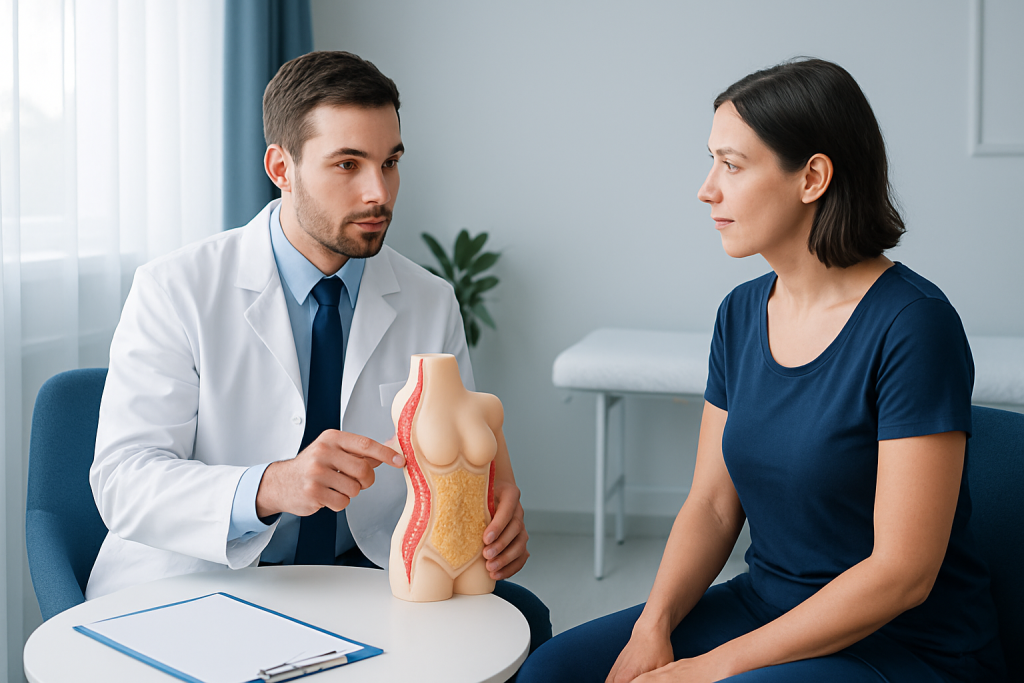
Localized fat deposits can develop for several reasons. Genetics plays a major role in where the body stores fat, and hormones, age, sex, and previous weight changes can all influence body contour. Even with consistent habits, some regions may remain resistant to slimming.
Several factors may affect candidacy for liposculpture. These include overall health, skin elasticity, smoking status, and whether weight has been stable for some time. Good skin quality is particularly helpful because the skin needs enough elasticity to adapt to a newly refined contour.
It is also useful to distinguish liposculpture from treatment for obesity. People with significant weight-related health concerns may need a different care plan first, such as nutrition support, medical weight management, or bariatric evaluation. A surgeon can help clarify which path is most appropriate.
Diagnosis and Consultation
There is no laboratory test that “diagnoses” a need for liposculpture. Instead, the consultation is a careful assessment of body shape, fat distribution, skin tone, and the patient’s overall health. The surgeon may ask about prior surgeries, medications, smoking, allergies, and any history of blood clotting problems.
During the visit, the clinician usually examines the areas of concern while the patient is standing and may mark zones for treatment. Photos are often taken for planning and later comparison. The discussion should also cover whether the patient’s expectations are realistic and whether another procedure would address the concern more effectively.
For international patients, this appointment is especially important because it sets the timeline for travel, surgery, and follow-up. If the patient is coming from another country, the team may explain what can be done before arrival, which tests should be completed locally, and how postoperative reviews can be coordinated after returning home.
Treatment Options
Liposculpture liposuction can be performed using several techniques, and the right approach depends on the area treated and the surgeon’s plan. In many cases, a small amount of fluid is used to help reduce bleeding and make Buccal Fat Removal: Procedure, Recovery and Risks" class="ahp-ilk">fat removal more controlled. Some methods also use ultrasound or laser assistance, while others rely on traditional suction with fine, targeted technique.
The procedure is usually done with local anesthesia, sedation, or general anesthesia depending on the extent of treatment. Small incisions are made, a thin tube called a cannula is inserted, and fat is removed in a carefully controlled way. The sculpting part of the procedure is in the pattern of removal: creating smooth transitions, not abrupt changes.
In some cases, liposculpture is combined with other aesthetic procedures, such as body lifting or skin tightening, when laxity is also part of the concern. The surgeon should explain the expected outcome, what improvements are realistic, and what limits the anatomy may place on the result.
What to Expect Before, During, and After Surgery
Before surgery, patients are commonly asked to stop smoking, adjust certain medications if advised, and follow instructions about eating, drinking, and hygiene. The team may also recommend arranging support for the first day or two after the procedure, especially if the patient is traveling back to a hotel or an international residence.
After surgery, swelling, bruising, and temporary soreness are expected. A compression garment is often worn to help support the treated area and reduce swelling. Patients are usually encouraged to walk gently soon after the procedure, because light movement supports circulation and recovery.
Results do not appear all at once. Early contour changes may be visible within weeks, but the final shape often becomes clearer only after swelling settles over several months. Follow-up visits help the surgeon check healing, guide scar care if needed, and make sure recovery is progressing normally.
Prevention and Self-care
Liposculpture is only one part of body contour maintenance. The most reliable way to preserve the result is to keep weight relatively stable through balanced eating, regular activity, good sleep, and hydration. Significant weight gain after surgery can alter the treated contour.
Self-care after the procedure usually includes wearing compression as instructed, taking short walks, avoiding strenuous exercise until cleared, and watching the incision sites for unusual redness or drainage. Patients should also attend follow-up appointments even if they feel well, because healing can look different from the inside than it feels on the surface.
For those traveling internationally for care, planning ahead makes recovery smoother. It helps to allow enough time in the destination for postoperative checks, avoid scheduling long flights too soon after surgery, and keep the surgical team’s contact instructions readily available.
When to See a Doctor
A consultation is worthwhile when a person is interested in refining specific body areas and wants to understand whether liposculpture is a safe and reasonable option. It is also the right step if there is uncertainty about whether the concern is fat, loose skin, or something that requires a different treatment approach.
After surgery, patients should contact their doctor promptly if they notice increasing pain, fever, shortness of breath, one-sided leg swelling, heavy bleeding, or a wound that suddenly becomes more red or draining. These signs do not always mean a serious problem, but they deserve timely medical attention.
For people seeking care from abroad, choosing a team that can manage consultation, surgery, and follow-up in a coordinated way is valuable. Acibadem Health Point’s multidisciplinary specialists and JCI-accredited hospitals diagnose and treat liposculpture liposuction for international patients, with attention to safe planning and recovery support.
Frequently asked questions
Is liposculpture liposuction the same as regular liposuction?
They are closely related, but liposculpture usually emphasizes more precise shaping and body proportion. Traditional liposuction may focus more simply on fat removal, while liposculpture aims for a smoother, more defined contour.
Who is a good candidate for this procedure?
A good candidate is often someone at a stable, near-ideal weight with localized fat deposits and reasonably good skin elasticity. A surgeon also looks at overall health, smoking status, and whether expectations are realistic.
Will liposculpture help with loose skin?
It can improve contour, but it does not reliably tighten significant loose skin. If skin laxity is a major concern, the surgeon may recommend a different or combined procedure.
How long does recovery usually take?
Recovery varies with the size of the treated area and the technique used. Many people return to light activity fairly soon, but swelling and bruising can last longer, and final results may take several months to settle.
Are the results permanent?
Removed fat cells do not return, but remaining fat cells can still enlarge if weight increases. Results are best maintained with stable weight and healthy daily habits.
Can someone travel for liposculpture and recover safely?
Yes, many international patients do travel for this care, but timing and follow-up need careful planning. The surgical team should advise when it is safe to fly, how to manage early recovery, and how postoperative checks will be arranged.
References
- American Society of Plastic Surgeons
- International Society of Aesthetic Plastic Surgery
- Mayo Clinic
- NHS
- Cleveland Clinic
This article is for general information only and is not a substitute for professional medical advice. Please consult a qualified doctor about your individual situation.
Joint and spine care in Turkey — expert assessment & treatment
JCI-accredited · board-certified surgeons · reply within 24h
Add us as a Preferred Source to see more of our trusted health content across Google Search, AI Overviews and Discover.
More from the Health Library



Related Specialists
Dr. İlker Altundağ
Aesthetic Plastic & Reconstructive Surgery
Dr. Serkan Tokgönül
Aesthetic Plastic & Reconstructive Surgery
Dr. Ömercan Yağız Öksüz
Aesthetic Plastic & Reconstructive Surgery
Prof. Dr. Mehmet Veli Karaaltın
Aesthetic Plastic & Reconstructive Surgery