Keratin Plugging

Key Takeaways
- Keratin plugging is caused by keratin collecting inside pores or hair follicles and preventing normal skin shedding.
- It can appear as rough bumps, clogged pores, whiteheads, blackheads, or tiny skin-colored spots.
- Dry skin, friction, certain skin conditions, and hormonal influences may make it more noticeable.
- Diagnosis is usually clinical, based on the skin appearance and history, rather than complex testing.
- Gentle cleansing, moisturizers, and targeted treatments can help; persistent or inflamed changes should be assessed by a dermatologist.
Medically reviewed by the Acıbadem clinical team — July 13, 2026
Keratin plugging happens when keratin, a protective skin protein, builds up and blocks pores or hair follicles. It can show up as small bumps, rough texture, or acne-like spots, and is usually manageable with the right skin care and medical guidance.
Overview
Keratin plugging describes a simple but frustrating skin process: a normal body protein, keratin, collects where it should not and forms a small blockage. That blockage can sit in a pore or hair follicle and make the skin feel rough, look bumpy, or develop spots that resemble acne.
For many people, the problem is more noticeable than dangerous. It often becomes part of an ongoing skin pattern rather than a one-time event, especially in areas where the skin is dry, rubbed, or naturally prone to buildup. In practical terms, the goal is not to “scrub it away,” but to help the skin shed in a healthier, more balanced way.
Keratin plugging is a broad description rather than one single disease. It may be seen in common conditions such as keratosis pilaris, comedonal acne, or disorders that cause abnormal skin turnover. Understanding the pattern on the skin helps determine the most helpful treatment approach.
Symptoms
The first clue is often texture. The skin may feel sandpapery, uneven, or dotted with tiny raised bumps. Some people notice that the bumps match the color of the surrounding skin, while others see white, red, or darker tips depending on skin tone and any inflammation.
When keratin plugs form in pores, they may look like whiteheads or blackheads. When they form around hair follicles, the skin can take on a more chicken-skin appearance, especially on the upper arms, thighs, cheeks, or buttocks. It may come and go, or stay fairly constant for long periods.
Itching is not always present, but dryness, mild irritation, or tenderness can occur, especially if the area has been overwashed, picked at, or exposed to friction from clothing, shaving, or sports gear. If the bumps become painful, warm, or pus-filled, another process may be present as well.
Causes & Risk Factors
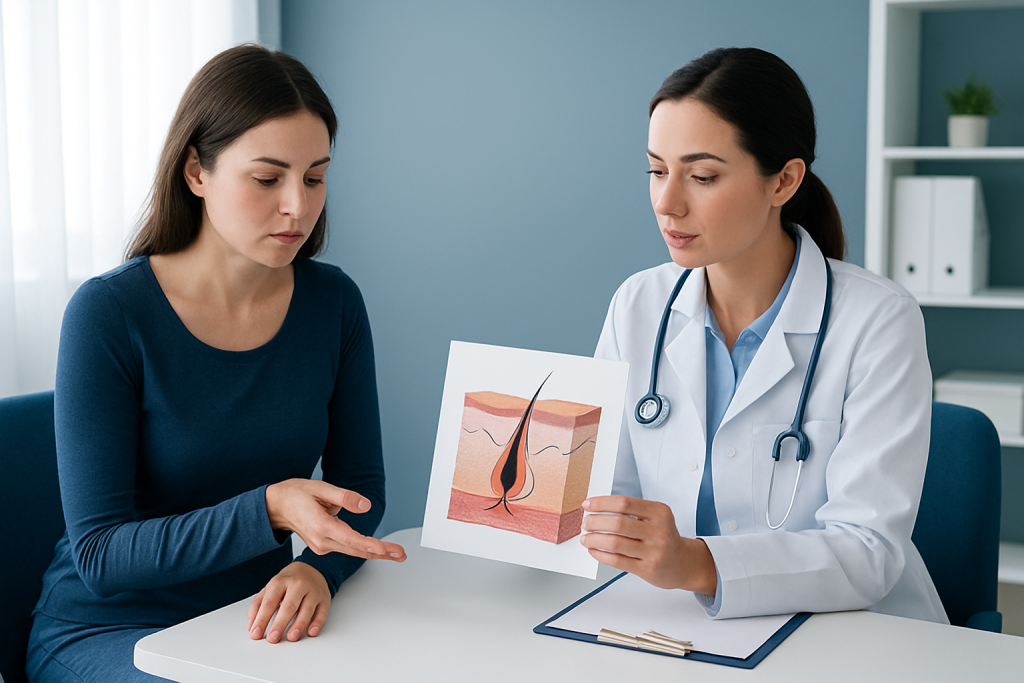
Keratin is the skin’s built-in protective protein, but problems arise when dead skin cells do not shed as expected. Instead, they mix with keratin and create a plug inside the opening of a pore or follicle. The exact reason this happens varies by person and by condition.
Dry skin is one of the most common contributors. When the outer skin barrier is not holding moisture well, dead cells can cling more tightly and create rough patches. Hormonal changes, oily skin, and increased sebum can also contribute when pores become filled with both oil and keratin.
Several factors may make keratin plugging more noticeable:
- A personal or family tendency toward keratosis pilaris or acne
- Dry weather, low humidity, or frequent hot showers
- Friction from tight clothing or repetitive rubbing
- Shaving or hair-removal practices that irritate follicles
- Skin conditions that affect turnover, such as eczema or acne
In some people, genetics play a role in how the skin sheds and how easily plugs form. For travelers or international patients, climate changes during trips—such as moving from a humid home environment to a colder, drier one—can make a familiar skin issue suddenly seem worse.
Diagnosis
Most cases are diagnosed by a dermatologist or general physician through a careful look at the skin and a discussion of symptoms. The appearance and location of the bumps usually tell the story. A clinician may ask whether the spots itch, hurt, recur, or seem related to shaving, friction, or seasonal changes.
Testing is not always needed. If the pattern is unusual, widespread, or not responding to standard care, a doctor may consider other conditions that can look similar, such as acne, folliculitis, eczema, contact dermatitis, or rarer skin disorders. In select cases, a skin sample or additional evaluation may be useful.
For patients arranging care from another country, photos taken in natural light can be very helpful during the first consultation, especially if the bumps fluctuate. A clear history of what has already been tried—cleansers, creams, exfoliants, shaving methods, or prescriptions—helps the specialist choose the next step more efficiently.
Treatment Options
Treatment depends on whether the keratin plugging is part of a cosmetic texture concern, acne, keratosis pilaris, or another skin condition. The usual strategy is to soften the plug, support normal shedding, and reduce irritation rather than aggressively stripping the skin.
Common treatment approaches include:
- Moisturizers: Creams or lotions that support the skin barrier can reduce dryness and roughness.
- Chemical exfoliants: Ingredients such as salicylic acid, lactic acid, or urea may help loosen buildup in a controlled way.
- Retinoids: In some cases, prescription or over-the-counter retinoid products may help normalize cell turnover.
- Acne-directed care: If clogged pores and breakouts are present, a clinician may recommend acne-focused treatment.
- Anti-inflammatory therapy: If irritation is significant, a doctor may address the underlying inflammation first.
Physical scrubbing is usually not the best answer. Harsh loofahs, strong abrasives, or repeated picking can worsen redness and make plugs more noticeable. A dermatologist can help match the treatment to the skin’s pattern, sensitivity, and body area involved.
For international patients who travel for skin care, treatment plans are often designed to be practical after the trip: simple routines, clear product categories, and follow-up guidance that can continue at home. That approach matters because skin changes usually improve with consistency rather than a single appointment.
Prevention & Self-care
Daily skin habits can make a meaningful difference. Gentle cleansing, regular moisturizing, and avoiding very hot water help the skin barrier stay more stable. When the barrier is healthier, the skin is less likely to hold on to dead cells in a way that creates plugs.
It also helps to reduce friction where possible. Loose-fitting clothing, careful shaving, and minimizing repeated rubbing can be useful, especially on the thighs, buttocks, or underarms. If a product stings or leaves the skin more irritated, it may be too harsh for the person’s skin type.
Simple self-care steps often include:
- Use a mild, fragrance-free cleanser
- Apply moisturizer soon after bathing
- Avoid picking or squeezing the bumps
- Introduce exfoliating ingredients slowly, not all at once
- Protect the skin from excessive dryness and sun exposure
Keratin plugging may improve slowly, so patience matters. Overdoing treatment can lead to more irritation, which can create the impression that the condition is worsening even when the skin is simply reacting to too much intervention.
When to See a Doctor
Medical review is helpful when the bumps are painful, rapidly spreading, infected-looking, or affecting confidence and comfort. A doctor’s input is also important if the skin problem keeps returning despite good home care, or if it is difficult to tell whether the issue is keratin plugging, acne, folliculitis, or something else.
People should seek an evaluation sooner if they notice fever, drainage, significant swelling, bleeding, or a sudden change in the appearance of the skin. Those with eczema, diabetes, immune suppression, or a history of severe skin sensitivity may also benefit from earlier assessment.
For patients considering care abroad, a dermatologist-led plan can be especially reassuring because it helps avoid trial-and-error with products that may not suit the skin. Acibadem Health Point’s multidisciplinary specialists and JCI-accredited hospitals diagnose and treat skin conditions for international patients, with attention to practical follow-up after travel.
Frequently asked questions
Is keratin plugging the same as acne?
Not always. Keratin plugging can contribute to acne by blocking pores, but it can also appear in other conditions such as keratosis pilaris. A clinician looks at the location and appearance of the bumps to tell the difference.
Can keratin plugs go away on their own?
Some mild cases improve with time, moisturizing, and gentle skin care. Others need ongoing treatment because the skin naturally tends to form plugs again.
Should the bumps be scrubbed off?
Usually not. Harsh scrubbing can irritate the skin and make redness or roughness worse. Gentle chemical exfoliation and moisturization are often more effective than physical abrasion.
Are keratin plugs contagious?
No, keratin plugging is not contagious. It comes from how the skin sheds and how the follicles or pores behave, not from an infection passed between people.
What ingredients are often used in treatment?
Products containing salicylic acid, lactic acid, urea, or retinoids are commonly used, depending on the skin type and diagnosis. A dermatologist can help choose the most suitable option and avoid over-irritation.
When is a dermatologist visit useful?
A visit is useful if the bumps are persistent, inflamed, painful, or unclear in cause. It is also helpful if someone wants a safer routine tailored to sensitive skin or to follow from another country after traveling for care.
References
- American Academy of Dermatology
- Mayo Clinic
- DermNet
- National Health Service
This article is for general information only and is not a substitute for professional medical advice. Please consult a qualified doctor about your individual situation.