Ingrown Toenail Treatment

Key Takeaways
- Early care can ease pain and reduce the chance of infection.
- Improper nail trimming and tight footwear are common contributors.
- Doctors may recommend conservative care or a minor procedure depending on severity.
- People with diabetes, poor circulation, or infection should seek medical advice sooner.
- Prevention focuses on straight nail trimming, roomy shoes, and foot hygiene.
An ingrown toenail develops when the edge of the nail grows into the surrounding skin, often causing pain, redness, and swelling. Most cases improve with simple care, but some need medical treatment to prevent infection and recurring problems.
Overview
An ingrown toenail usually starts quietly: a small corner of the nail presses into the nearby skin, and then walking, shoes, and swelling make it more noticeable. The big toe is affected most often, although any toenail can become ingrown.
For many people, the problem remains mild and short-lived. For others, repeated pressure, infection, or an already curved nail edge can turn it into a stubborn source of discomfort. In international patients, that discomfort sometimes begins during a trip, after long flights, sports activity, or a busy stretch of walking in new shoes.
Ingrown toenail treatment depends on how deeply the nail has grown into the skin and whether infection is present. Care may be simple at home for a very early case, or it may require a clinician to lift, trim, or partially remove the nail edge. The goal is not only to relieve pain, but also to help the toe heal cleanly and reduce the chance of repeat episodes.
Symptoms
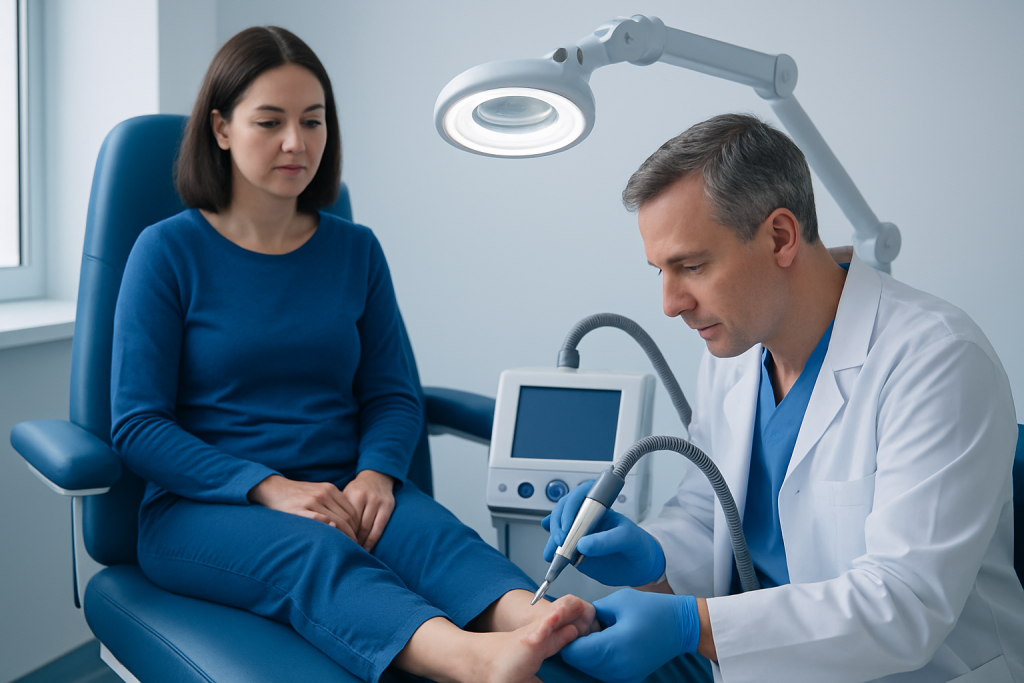
The earliest signs are often easy to overlook. The skin at one side of the toenail may feel tender when touched, look slightly red, or seem a little swollen. Shoes that were once comfortable can suddenly feel tight over the affected toe.
As the nail continues to press into the skin, symptoms may become more obvious. Pain can increase when walking, standing for long periods, or wearing closed footwear. Some people notice drainage, crusting, or a soft, overgrown-looking fold of skin near the nail edge.
- Localized pain along one side of the toenail
- Redness and swelling around the nail fold
- Warmth, tenderness, or throbbing
- Drainage of clear fluid or pus if infection develops
- Difficulty wearing shoes comfortably
When infection appears, the toe may become more painful and inflamed. Even then, the condition is usually manageable with timely evaluation and the right form of care.
Causes & Risk Factors

An ingrown toenail usually develops when the nail edge is cut too short, trimmed too rounded, or repeatedly pushed into the skin. Tight shoes, frequent toe pressure, and foot trauma can also encourage the nail to grow inward rather than forward.
Some people are more likely to experience the problem because of the natural shape of their nails. Nails that are naturally curved, thickened, or broad may press into the surrounding skin more easily. Repeated sports injuries, toe stubbing, and long hours in snug footwear can add to the risk.
Certain health conditions make it more important to address symptoms early. Diabetes, reduced blood flow, nerve problems, and immune suppression can make infections harder to manage and healing slower. For that reason, a minor-looking toenail problem deserves careful attention when circulation or sensation is already reduced.
Diagnosis
Diagnosis is usually straightforward. A clinician examines the toe, asks about symptoms, and looks for signs of inflammation, drainage, or infection. In most cases, no imaging or laboratory tests are needed.
The main question is how severe the ingrown nail has become. A mildly irritated nail may need conservative care, while a nail that is repeatedly digging into the skin may need a small in-office procedure. The clinician also considers whether a patient has diabetes, poor circulation, or another issue that could affect healing.
For travelers or international patients, it can be helpful to bring a list of any medications, relevant medical conditions, and previous nail problems. That information helps the care team choose treatment that fits both the toe and the broader health picture.
Treatment Options
Treatment ranges from simple measures to minor procedures. For an early or mild ingrown toenail, the clinician may recommend soaking the foot, protecting the area, and avoiding pressure from shoes. These steps can reduce irritation while the nail grows out more comfortably.
If the nail edge is embedded more deeply, the doctor may gently lift and separate the nail from the skin or trim away the offending edge. When ingrown toenails recur, partial nail removal may be recommended so the problem area does not keep re-entering the skin. In some cases, a technique is used to reduce regrowth from the troublesome part of the nail.
If infection is present, treatment may include cleaning the area and, when appropriate, additional medical therapy. The specific approach depends on the appearance of the toe, the patient’s health history, and whether the problem is first-time or recurrent. Healing is usually straightforward, but follow-up matters so that infection, pain, or repeat ingrowth are addressed promptly.
When surgical treatment is needed, it is typically a minor outpatient procedure. Recovery instructions may include keeping the area clean and dry, protecting the toe from friction, and returning for review if symptoms do not settle as expected.
Prevention & Self-care
Prevention starts with nail care that leaves the toe room to grow naturally. Toenails are generally best trimmed straight across rather than deeply rounded at the corners. Cutting them too short can leave sharp edges that press into the skin.
Footwear matters as well. Shoes with a wider toe box, adequate length, and less pressure over the front of the foot can reduce repeated irritation. This is especially relevant for people who walk a lot, exercise regularly, or spend long days on their feet during travel.
Helpful everyday habits include:
- Trim toenails straight across and avoid digging into corners
- Choose shoes that do not compress the toes
- Keep feet clean and dry
- Protect toes from repeated stubbing or pressure
- Check feet regularly if sensation is reduced or diabetes is present
At-home comfort measures may help with mild discomfort, but they should be gentle. Picking at the nail, cutting the skin, or trying to “dig out” the corner can worsen irritation and raise the risk of infection.
When to See a Doctor
Medical evaluation is wise when pain is worsening, the toe is draining, or walking becomes difficult. If redness is spreading, the area feels hot, or pus is present, the problem may already be infected and should be checked promptly.
People with diabetes, poor circulation, nerve damage, or a weakened immune system should not wait for the problem to become severe. A toenail that seems minor in one person can become more complicated in another, especially if healing is slower or sensation is reduced.
It is also sensible to seek care if the nail keeps growing in again, home measures do not help, or the toe interferes with work, sport, or travel plans. In those situations, a clinician can confirm the diagnosis and discuss the most appropriate next step. Acibadem Health Point’s multidisciplinary specialists and JCI-accredited hospitals can diagnose and treat ingrown toenails for international patients who need coordinated care.
Frequently asked questions
Can an ingrown toenail heal on its own?
A very mild ingrown toenail may improve if pressure is reduced and the nail grows out normally. If the nail is deeply embedded, keeps recurring, or becomes infected, medical treatment is usually needed. It is safer to have it assessed if the pain is increasing or not settling.
What should a person do first at home?
Gentle foot soaking, good hygiene, and avoiding tight shoes can help reduce irritation in early cases. The toe should not be cut, picked at, or aggressively dug into, because that can make the problem worse. If symptoms do not improve, a clinician should be consulted.
Is a procedure for an ingrown toenail painful?
When a procedure is needed, it is usually a minor outpatient treatment. Local anesthesia is commonly used so the toe is numb during the procedure. Most people find the experience manageable and focus more on the relief afterward.
Will the toenail grow back normally after treatment?
Often it does, especially after conservative treatment or a simple partial removal. If part of the nail matrix is treated to prevent recurrence, the nail may grow back a little narrower. A doctor can explain what to expect based on the procedure used.
Why do ingrown toenails keep coming back?
Recurrence can happen when the nail shape, trimming habit, or footwear keeps pushing the edge into the skin. Curved nails and repeated toe pressure are common reasons. A clinician may suggest a more definitive procedure if the problem continues.
When is an ingrown toenail more serious?
It becomes more concerning when there is infection, significant swelling, spreading redness, or severe pain. It also deserves prompt attention in people with diabetes, circulation problems, or reduced sensation. Early treatment usually keeps the problem simple.
References
- Mayo Clinic
- American Academy of Dermatology
- American College of Foot and Ankle Surgeons
- NHS
This article is for general information only and is not a substitute for professional medical advice. Please consult a qualified doctor about your individual situation.