Ingrown Hair Turned Into Hard Lump Under Skin

Key Takeaways
- An ingrown hair may feel firm when the surrounding skin is inflamed or scar tissue forms.
- Repeated shaving, waxing, friction, and curly hair increase the chance of ingrown hairs.
- Warm compresses and gentle skin care can help mild cases settle, but squeezing the lump can worsen irritation.
- A lump that grows, drains, becomes very painful, or keeps returning should be assessed by a clinician.
- Doctors may consider folliculitis, an epidermoid cyst, or an abscess if the bump does not behave like a simple ingrown hair.
Medically reviewed by the Acıbadem clinical team — August 19, 2026
An ingrown hair can sometimes trigger a firm, tender bump under the skin when the follicle becomes inflamed or blocked. Most cases are minor, but a persistent or enlarging lump should be checked to rule out infection, cysts, or other skin conditions.
Overview
An ingrown hair usually starts as a small, familiar nuisance: a hair curls back into the skin instead of growing out. In some people, though, the area does not stay as a simple bump. The skin can react with deeper inflammation, making the spot feel like a hard lump under the surface.
That firmness does not always mean something serious, but it does mean the body is responding to trapped hair, irritation, or blockage around the follicle. The challenge is that a lump caused by an ingrown hair can resemble a pimple, cyst, boil, or swollen follicle, especially if the skin has been shaved, waxed, rubbed, or scratched.
For people traveling for care, this can be frustrating: a lump may appear before a trip, during a holiday, or while staying abroad, and it is not always easy to know whether it is safe to wait or worth having examined. A careful assessment helps separate a harmless ingrown hair from a skin problem that needs more active treatment.
Symptoms
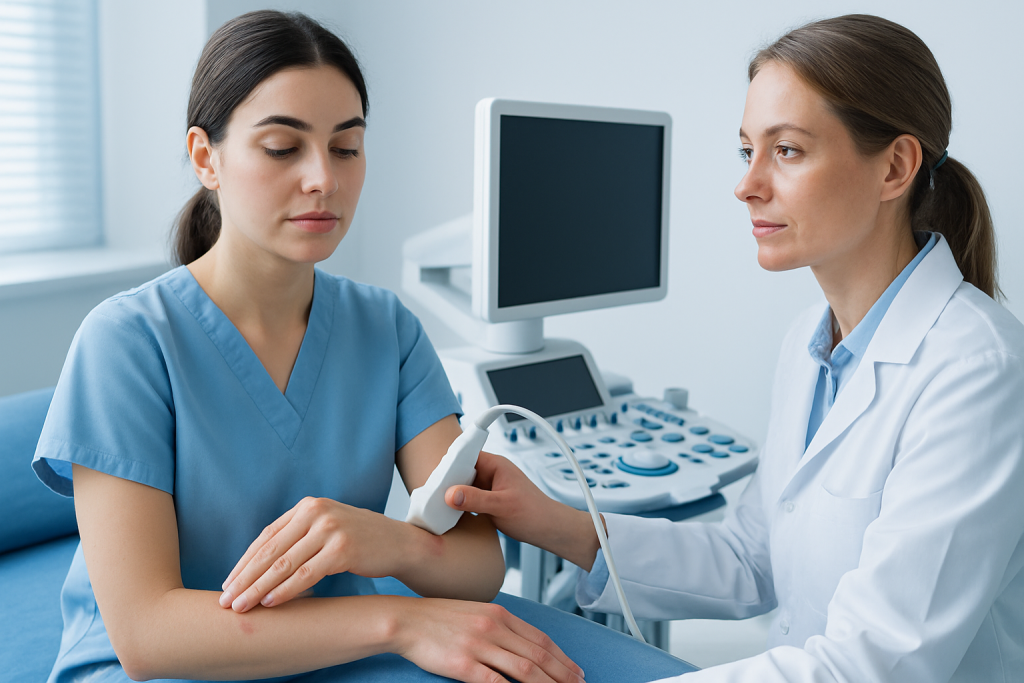
The first clue is often a small bump where hair is usually removed or grows thickly, such as the beard area, neck, bikini line, legs, armpits, or chest. The spot may be firm to the touch, mildly red, and uncomfortable when pressed. Some people notice a hair trapped under the skin or a tiny dark point in the center.
When an ingrown hair turns into a harder lump, the surrounding tissue can swell and feel deep rather than superficial. The area may itch, sting, or become tender after shaving or friction from clothing. If the inflammation is more pronounced, the skin can look raised and warm, and the lump may seem fixed in place.
Signs that the problem may be more than an ordinary ingrown hair include:
- Increasing redness or warmth around the bump
- Pus or fluid drainage
- Rapidly growing size
- Marked pain or throbbing
- Several similar lumps appearing at once
- Scarring or repeated flare-ups in the same area
Because different skin conditions can look alike, changes in texture, drainage, and duration matter as much as appearance.
Causes & Risk Factors

An ingrown hair forms when a hair does not emerge cleanly through the skin. It may curl back, grow sideways, or become trapped beneath dead skin cells. The body may then treat the hair like a foreign irritant, which leads to redness, swelling, and a firm bump.
Certain factors make this more likely. Curly or coarse hair can bend back into the skin more easily, and close shaving can leave a sharp hair tip that re-enters the follicle opening. Waxing, tweezing, tight clothing, skin rubbing, and heavy sweating can all add pressure or irritation.
Some people are also more prone to persistent lumps because the follicle becomes repeatedly inflamed. Skin oils, debris, and bacteria may contribute to folliculitis, while a trapped hair can sometimes sit inside an epidermoid cyst or trigger a small abscess. In those situations, the lump may feel harder and last longer than a straightforward ingrown hair.
For international patients, another practical factor is delayed care: a small bump may be ignored during travel until it becomes painful, enlarged, or cosmetically concerning. Early attention usually makes the condition easier to manage.
Diagnosis
Most of the time, diagnosis begins with a look at the skin and a few questions about hair removal habits, symptom timing, and whether the lump has changed. A clinician will want to know how long it has been present, whether it drains, and whether similar bumps have occurred before.
A simple ingrown hair often has a recognizable pattern: it appears in a hair-bearing area after shaving or friction and improves with gentle care. If the bump is unusually firm, deep, recurrent, or not clearly tied to hair removal, the clinician may consider other possibilities such as folliculitis, a cyst, a boil, or a different type of skin lesion.
Testing is not always needed, but it may be helpful if the lump is infected, persistent, or atypical. In some cases, a doctor may recommend removing the trapped hair, draining an abscess, or sending a sample for further evaluation. The goal is not just to name the bump, but to match the treatment to what is actually happening in the skin.
Treatment Options
Management depends on whether the lump is mild irritation or a deeper inflamed lesion. Small, uncomplicated ingrown hairs often improve with warm compresses, reduced shaving, and letting the area calm down. Gentle cleansing and avoiding picking can give the hair a better chance to release naturally.
If the bump is more inflamed, a clinician may recommend a topical treatment to reduce irritation or infection risk. When a trapped hair is visible near the surface, a healthcare professional may carefully release it with sterile technique. If the lesion has become a cyst or abscess, additional treatment may be needed, such as drainage or removal in selected cases.
Possible treatment approaches include:
- Warm compresses to soften the skin and encourage drainage
- Temporary pause in shaving or waxing
- Topical antiseptic or anti-inflammatory care, when appropriate
- Professional removal of a trapped hair
- Drainage of an infected pocket, if present
- Treatment of underlying folliculitis or cysts
People should avoid squeezing, digging, or using unsterile tools at home. Those actions can push inflammation deeper, increase scarring, and raise the chance of infection. If the lump keeps returning, a dermatologist may also discuss longer-term hair-removal strategies or ways to reduce follicle irritation.
Prevention & Self-care
Prevention usually starts with lowering skin trauma. If shaving is a trigger, using a clean, sharp razor and shaving in the direction of hair growth may reduce the chance of hairs curling back into the skin. Some people do better by trimming instead of shaving very closely, especially in areas that repeatedly form bumps.
Skin care also matters. Gentle exfoliation can help prevent dead skin from blocking hair follicles, but it should be mild rather than abrasive. Loose clothing, good hydration, and reducing repeated friction in the affected area may also support healing.
Useful self-care habits include:
- Use warm, not hot, compresses for short periods
- Keep the area clean and dry
- Avoid scratching, squeezing, or popping the lump
- Pause hair removal until the skin settles
- Choose non-irritating skin products
- Seek guidance before using strong home remedies
For people who travel often, packing a small skin-care kit and noting which grooming method tends to trigger bumps can be helpful. If the same area repeatedly becomes firm or inflamed, it is worth discussing longer-term prevention with a dermatologist rather than treating each flare as a one-off event.
When to See a Doctor
A doctor should evaluate a lump if it does not improve after a short period of gentle home care, if it keeps growing, or if it becomes very painful. Medical review is also important when the area is red, warm, draining, or accompanied by fever or feeling unwell. Those features can suggest infection rather than a simple ingrown hair.
Persistent or recurrent lumps deserve attention even when they are not urgent. A lesion that returns in the same spot, feels unusually deep, or leaves a scar may need a different diagnosis or a more structured treatment plan. This is especially true if the person has diabetes, poor wound healing, or a history of skin infections.
For international patients seeking care away from home, it can be helpful to have the lump assessed before long travel, or shortly after arrival if symptoms are worsening. Acibadem Health Point’s multidisciplinary specialists and JCI-accredited hospitals diagnose and treat skin conditions for international patients with a coordinated approach that supports both treatment and follow-up.
Living With Recurrent Ingrown Hairs
When ingrown hairs keep turning into hard lumps, the issue is often less about a single stubborn hair and more about a recurring skin pattern. Understanding the trigger is useful: some people need to change shaving technique, others need to address friction, and some may need a dermatologist to rule out a cyst or chronic follicle inflammation.
It can also help to track where and when bumps appear. If they happen after a certain grooming method, during sports, or under tight clothing, those details give a clinician useful clues. That makes follow-up more efficient, whether the person is being treated at home or while abroad.
Most importantly, a firm bump under the skin does not have to be managed alone. With the right diagnosis, many cases can be settled with simple measures, while more persistent ones can be treated before they become larger, more painful, or more difficult to remove.
Frequently asked questions
Can an ingrown hair really feel like a hard lump under the skin?
Yes. When the follicle becomes inflamed or blocked, the area can feel firm or deep rather than like a surface bump. Sometimes the hardness comes from swelling around the trapped hair, and sometimes it suggests another condition such as a cyst.
How long should a lump from an ingrown hair last?
A mild ingrown hair often settles within days to a couple of weeks with gentle care. If the lump is not improving, is getting bigger, or keeps coming back, it should be checked by a clinician.
Should the lump be squeezed or popped?
No. Squeezing can push inflammation deeper into the skin, increase scarring, and raise the chance of infection. Warm compresses and medical evaluation are safer options.
How can someone tell the difference between an ingrown hair and a cyst?
They can look similar, especially early on. Ingrown hairs are often linked to shaving or friction and may show a trapped hair, while cysts tend to persist, feel more like a rounded lump, and may not relate to hair removal.
What helps prevent ingrown hairs from becoming hard lumps?
Reducing close shaving, avoiding tight clothing, and using gentle exfoliation can help. It is also useful to stop hair removal temporarily when the skin is irritated so the follicle can heal.
When is it important to see a doctor quickly?
Prompt medical care is important if the lump becomes very painful, red, warm, or starts draining pus, or if fever develops. These signs can point to infection and may need treatment beyond home care.
References
This article is for general information only and is not a substitute for professional medical advice. Please consult a qualified doctor about your individual situation.
Hair transplant in Turkey — costs, graft counts & a free assessment
JCI-accredited · board-certified surgeons · reply within 24h
Add us as a Preferred Source to see more of our trusted health content across Google Search, AI Overviews and Discover.