Incline Bench Press

Key Takeaways
- The incline bench press shifts emphasis toward the upper chest and front shoulder muscles.
- Good setup matters: bench angle, shoulder position, and bar path influence both results and comfort.
- Pain at the shoulder, neck, or elbow is not something to push through; technique or load may need adjustment.
- People returning to exercise after an injury should progress gradually and consider professional guidance.
- A balanced program should include pulling exercises, mobility work, and recovery time, not pressing alone.
The incline bench press is a familiar upper-body strength exercise, but its value depends on how it is set up and performed. When the angle, load, and shoulder position are chosen well, it can be an effective part of a training plan for chest and shoulder development with less strain on the flat-bench pattern for some lifters.
Overview
The incline bench press is a standard strength-training movement in which the lifter presses a barbell or dumbbells while lying on a bench set at an upward angle. It is often chosen by people who want to build the upper chest, the front of the shoulders, and the triceps in a single exercise.
Although it is common in gyms, the incline bench press is not simply a “harder” version of the flat bench press. The angle of the bench changes how the body shares the load, which means the exercise feels different, recruits muscles differently, and may suit one person better than another. That is why careful setup matters as much as effort.
For someone training after a shoulder strain, a period of inactivity, or a sports-related overuse issue, the incline bench press may be helpful only if it fits the current stage of recovery. In that setting, the exercise should be treated as one tool among many, not a test of toughness.
Which Muscles It Uses
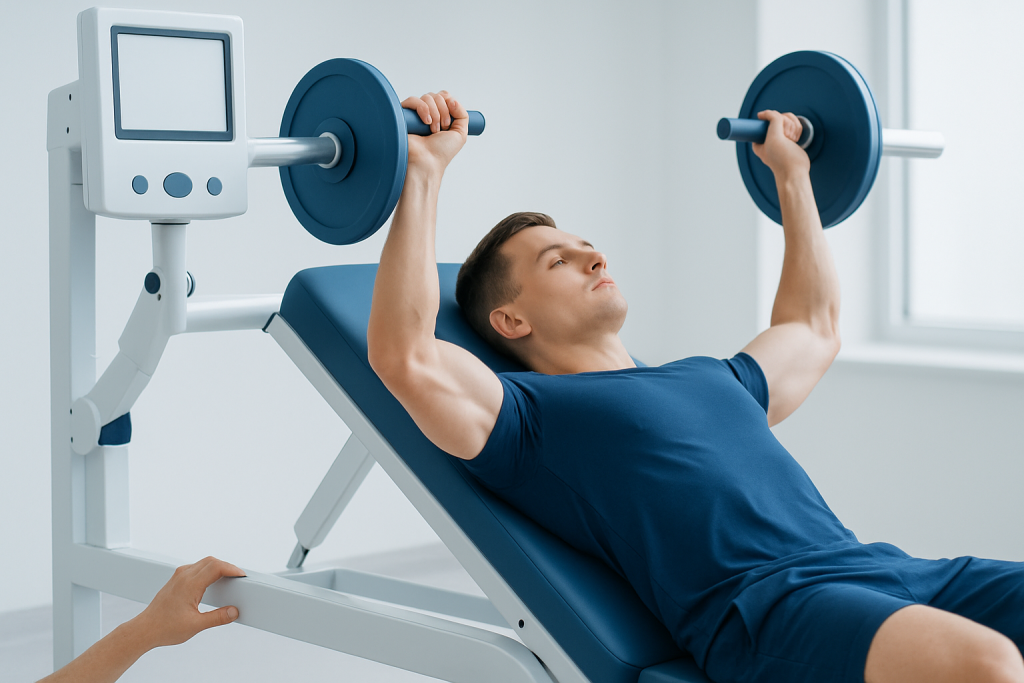
The incline bench press primarily works the upper portion of the chest, especially the clavicular fibers of the pectoralis major. It also involves the anterior deltoids, which are the muscles at the front of the shoulders, and the triceps, which help straighten the elbows during the press.
Other muscles contribute in a supporting role. The upper back helps stabilize the shoulder blades, the core keeps the torso steady, and the forearms help control the bar or dumbbells. When these supporting muscles are not doing their part, the movement can feel unstable or unusually stressful on the shoulders.
The exact emphasis changes with the bench angle, grip width, arm path, and equipment used. A steeper incline usually shifts more work toward the shoulders, while a moderate angle tends to keep the chest more involved. That is one reason experienced trainers often adjust the bench rather than using a single fixed setup for everyone.
Common Benefits and Training Uses

People often include the incline bench press because it adds variety to pressing patterns and can help develop a more balanced upper body. For some lifters, it is also more comfortable than a flat bench press, especially when shoulder mobility is limited or when the flat position feels awkward.
In a well-designed program, the incline press may support everyday strength tasks such as pushing, lifting objects overhead, or returning to sports that require force through the arms and chest. It can also help correct a training routine that overemphasizes one angle of pressing while neglecting others.
There are also practical reasons to use it during rehabilitation or conditioning planning, provided a clinician or qualified trainer agrees it is appropriate. For example, a controlled dumbbell incline press may allow a gradual return to load, with a smaller step between easy and challenging ranges of motion than some barbell variations.
How to Perform It Safely
A safe setup begins before the first repetition. The bench angle is usually moderate rather than extreme, and the lifter should lie back so the head, upper back, and hips are secure. The feet should stay planted, and the shoulder blades should be gently set back and down to create a stable base.
During the press, the bar or dumbbells should travel in a controlled line rather than bouncing off the chest or drifting too far forward. The wrists should stay aligned over the forearms, and the elbows should not flare aggressively to the sides. A smooth descent and a steady press usually protect the shoulders better than rushed repetitions.
Helpful technique cues include the following:
- Choose a load that allows controlled movement, not just survival through the last rep.
- Keep the neck relaxed instead of pushing the chin forward.
- Lower the weight only as far as the shoulders can comfortably tolerate.
- Stop if form breaks down, especially if the back arches excessively or the shoulders shift forward.
For people training without direct supervision, recording a set on a phone can be useful. Small technical issues are easier to see from the side than they are to feel in the moment.
Common Mistakes and Why They Matter
One frequent mistake is using too steep an incline. When the bench angle climbs too high, the exercise begins to resemble a shoulder press, which can be fine in the right program but is not the same movement. For many lifters, this also increases strain in the front of the shoulder.
Another common issue is poor shoulder positioning. If the shoulders roll forward or the chest collapses during the lift, the joint may take more stress than intended. People often notice this as a pinching sensation, loss of control, or discomfort when lowering the weight.
Other avoidable errors include bouncing the bar off the chest, using a grip that is too wide or too narrow for the body, and choosing loads that are too heavy to control. None of these habits reliably build strength better; they usually just make the exercise less precise and less comfortable.
Causes of Pain or Discomfort During the Exercise
Not every ache during pressing means a serious injury, but discomfort should always be interpreted carefully. The most common reason for pain is a mismatch between the exercise setup and the person’s current mobility, strength, or training tolerance. In many cases, a small adjustment in angle, grip, or range of motion makes a meaningful difference.
Shoulder pain during the incline bench press can also reflect pre-existing issues such as rotator cuff irritation, impingement-like symptoms, or irritation of the tendons around the shoulder. Elbow discomfort may arise when the triceps are overloaded or when the wrists and elbows are not aligned well. Neck tightness sometimes appears when the lifter strains upward or braces awkwardly.
People returning after a musculoskeletal injury may be more sensitive to these problems, especially if they resume pressing too soon or increase weight too quickly. The exercise itself is not the enemy; the main concern is loading tissues beyond what they can currently tolerate.
Adjustment, Prevention, and Self-care
Prevention starts with selecting the right variation. Dumbbells may allow a more natural arm path for some people, while a barbell can provide stability for others. A moderate bench angle, a controlled tempo, and a manageable number of repetitions often make the exercise more sustainable over time.
Training should also be balanced. Pressing muscles do better when they are supported by rows, rear-shoulder work, and mobility exercises for the chest, shoulders, and upper back. Rest days matter as well, because repetitive pressing without recovery can turn a useful exercise into an overuse pattern.
Simple self-care steps may help after a workout when the muscles feel worked but not injured: light movement, good hydration, and adequate sleep. If soreness is local, persistent, sharp, or worsening, the plan should be reassessed rather than continued unchanged. For international patients training before or after travel, it is wise to allow extra recovery time, especially after long flights, altered sleep, or unfamiliar gym equipment.
When to See a Doctor
Medical advice is appropriate when pain is sharp, sudden, or clearly linked to a specific repetition, especially if it persists beyond the workout. It is also important to seek assessment if the shoulder feels unstable, if there is visible swelling, if range of motion becomes limited, or if symptoms interfere with daily activities such as dressing, reaching, or sleeping.
A clinician should also be consulted when the lifter has a history of shoulder dislocation, rotator cuff injury, neck problems, or repeated elbow pain. In those situations, a targeted examination can help determine whether the exercise should be modified, paused, or replaced for a period of time.
People traveling for care often want a clear, efficient plan. That may include an orthopedic or sports medicine evaluation, physiotherapy guidance, and a gradual return-to-training roadmap. At Acibadem Health Point, multidisciplinary specialists and JCI-accredited hospitals diagnose and treat musculoskeletal concerns for international patients, with follow-up plans that can be coordinated across borders.
How It Fits Into a Bigger Training Picture
The incline bench press works best as part of a broader routine rather than a stand-alone chest exercise. A balanced plan usually includes horizontal pressing, pulling movements, shoulder stability work, and mobility training so that no single pattern dominates the upper body.
That broader view is especially important for people who train with a performance goal, return from injury, or are restarting exercise after a long break. Progress tends to be more reliable when the body is given time to adapt, technique is reviewed regularly, and discomfort is addressed early instead of ignored.
For many people, the most productive approach is not to chase the heaviest possible incline press, but to build a version of the movement that is strong, repeatable, and pain-free enough to support long-term training.
Frequently asked questions
What does the incline bench press train most?
The incline bench press mainly trains the upper chest, front shoulders, and triceps. The exact emphasis changes with bench angle and technique, but it is generally more shoulder-involved than a flat bench press.
Is the incline bench press better than the flat bench press?
Neither exercise is universally better. The better choice depends on the person’s goals, shoulder comfort, and overall program balance. Many training plans use both rather than choosing only one.
Why do my shoulders hurt during incline bench press?
Shoulder pain may come from an angle that is too steep, a load that is too heavy, poor shoulder positioning, or an underlying shoulder issue. If the pain is sharp, persistent, or recurrent, the exercise should be reviewed by a clinician or qualified trainer.
Can beginners do the incline bench press?
Yes, beginners can learn it if the setup is simple and the weight is kept light enough to control. Dumbbells or a moderate incline may be easier to manage at first than a heavy barbell.
How often should the incline bench press be done?
That depends on the training program and recovery ability. Many people press one to two times per week, leaving enough time between sessions for the muscles and joints to recover.
Should someone stop the exercise if it feels uncomfortable?
Mild muscle effort is normal, but joint pain, pinching, or instability are not signs to push through. It is usually better to stop, reduce the load, or adjust the setup and get advice if the discomfort continues.
References
- American College of Sports Medicine
- National Strength and Conditioning Association
- American Academy of Orthopaedic Surgeons
- Mayo Clinic
- Cleveland Clinic
This article is for general information only and is not a substitute for professional medical advice. Please consult a qualified doctor about your individual situation.