

Incentive Spirometer

Key Takeaways
- An incentive spirometer helps a person practice deep breaths and may reduce the risk of shallow breathing during recovery.
- It is commonly recommended after surgery, especially when pain, bed rest, or reduced activity can affect lung expansion.
- Correct technique matters more than force; the goal is a slow, steady inhale and a brief pause at the top of the breath.
- The device supports recovery, but it does not replace walking, pain control, coughing when appropriate, or following the care team’s instructions.
- New shortness of breath, fever, chest pain, or worsening symptoms should be discussed with a doctor promptly.
An incentive spirometer is a simple breathing device that encourages slow, deep inhalation and can help keep the lungs open during recovery. It is often used after surgery or periods of limited movement to support safer, easier breathing.
Overview
An incentive spirometer is a small handheld device that gives a visual target for breathing in slowly and deeply. As the person inhales, a marker or piston rises, showing how much air is being taken in. The purpose is not to “train the lungs” in a competitive sense, but to encourage a calm, full breath when recovery may otherwise lead to shallow breathing.
Many people first encounter the device after an operation, especially procedures involving the abdomen, chest, or lungs. Pain, anesthesia, and reduced activity can make it easier to take quick, shallow breaths. Over time, that pattern may allow parts of the lungs to partially collapse or may make it harder to clear mucus, so a simple breathing tool can become an important part of the recovery plan.
For international patients, the device is often introduced before discharge so that the same routine can continue at home or in a hotel, during a flight, or while staying with family abroad. That continuity matters: the usefulness of an incentive spirometer depends less on where the person is and more on whether the instructions are clear, realistic, and followed consistently.
How It Works
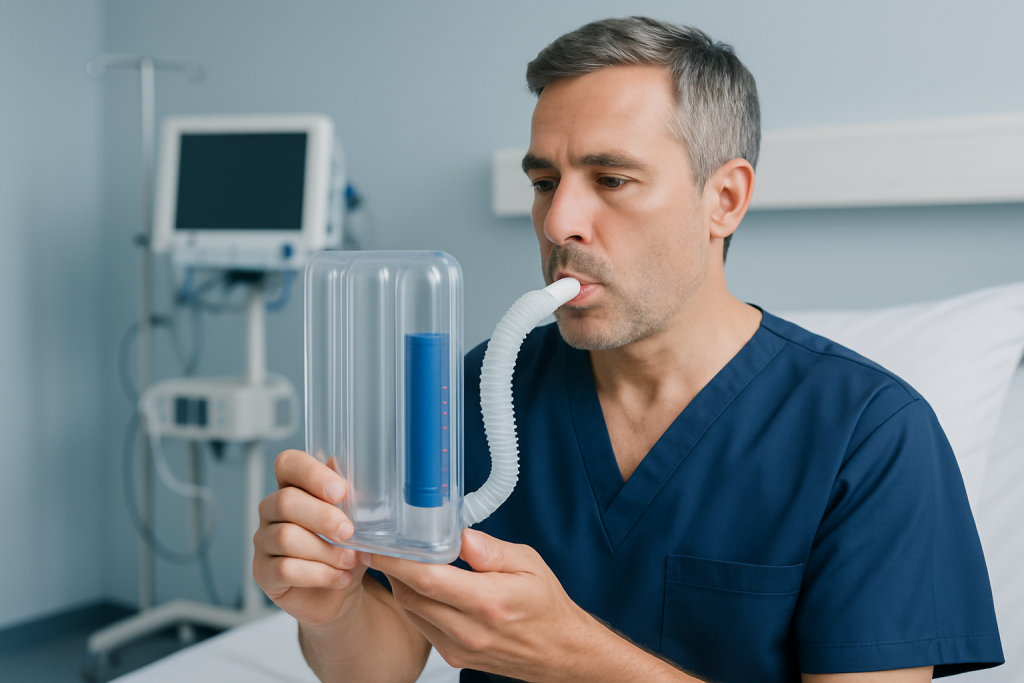
The device works by creating a measurable breathing goal. A person places the mouthpiece in the mouth, seals the lips around it, and inhales slowly enough to lift the indicator. The effort should be gradual, not sudden. A long, controlled breath helps the lungs open more fully than a quick gasp.
Many incentive spirometers include volume markings or a movable piston, while others use small balls or chambers that respond to airflow. The design can differ, but the principle is the same: the device provides feedback that helps the person notice how deeply they are breathing. That feedback can be especially useful when pain or fatigue makes it hard to judge whether the breath is truly deep.
After reaching the target, the person usually holds the breath briefly before exhaling normally. This pause gives the air a chance to spread through the lungs. In many care plans, the device is used several times a day along with walking, position changes, and cough exercises when recommended by the care team.
When It Is Commonly Used

Incentive spirometers are most often used after surgery, particularly when anesthesia, pain medicine, or abdominal discomfort might limit deep breathing. They may also be recommended after an injury, during prolonged bed rest, or in situations where a person is recovering from a lung-related illness and needs to keep the lungs moving gently.
Some hospitals include the device in preoperative teaching, so patients know what to expect before leaving the operating room or recovery area. That preparation can be especially helpful for travelers who may need to manage their recovery away from home. A clear plan for device use, walking, and follow-up gives the person a sense of structure during a period that can otherwise feel unfamiliar.
Not every patient will need an incentive spirometer. The decision depends on the procedure, overall health, and the clinician’s assessment of breathing risk. When it is prescribed, it usually forms one part of a broader recovery approach rather than a stand-alone treatment.
Benefits and What It Can Help Prevent
The main benefit of an incentive spirometer is encouraging lung expansion during a time when a person may naturally take smaller breaths. That can help reduce the chance of mucus building up in the airways and may lower the risk of breathing complications related to shallow breathing.
For many patients, the device also provides reassurance. Recovery can make people hesitant to breathe deeply because it feels uncomfortable or they worry they are doing it wrong. A simple visual device can make the process less abstract and help the person see that each slow inhale is part of healing rather than a test of strength.
Used correctly and consistently, it may support:
- Deeper lung inflation after surgery or inactivity
- Better movement of air through the lower parts of the lungs
- More effective clearance of secretions when combined with coughing as advised
- Greater confidence with breathing exercises during recovery
How to Use It Correctly
Good technique is usually more important than speed or force. The person is generally instructed to sit upright if possible, hold the device level, and breathe out normally before placing the mouthpiece in the mouth. The lips should form a gentle seal so that air does not leak out.
The next step is a slow, steady inhale through the mouthpiece. The goal is to raise the marker smoothly rather than quickly. If the person inhales too fast, the indicator may move well but the exercise may be less effective. After inhaling to the target suggested by the care team, the breath is often held for a few seconds before a relaxed exhale.
Many clinicians advise repeating the exercise several times, with short rests between breaths to avoid lightheadedness. If coughing is recommended, it is usually done after the breathing cycle. Patients who have had surgery should follow their own surgeon’s or respiratory therapist’s instructions, since the schedule may vary depending on the procedure and pain level.
Common Mistakes and Troubleshooting
It is common for people to worry that they are not using the device well enough. One frequent issue is inhaling too forcefully. The best breath is usually slow and controlled; a rushed inhale can make the effort less effective and may cause dizziness or discomfort.
Another common problem is poor seal around the mouthpiece. If air escapes, the device may not respond correctly. Dry mouth, fatigue, nausea, and pain can also make the exercise harder. In those cases, it may help to wait a few minutes, sit more upright, and try again when more comfortable.
It is also important to keep expectations realistic. The device supports recovery, but it does not replace movement, prescribed pain management, hydration when allowed, or medical review if symptoms are worsening. If the person cannot use the spirometer as instructed, the care team can often adjust the plan or suggest alternative breathing exercises.
Prevention & Self-care During Recovery
The incentive spirometer works best as part of daily recovery habits. Short walks, gentle position changes, and regular use of the device often work together to keep the lungs active. For many patients, the practical challenge is not understanding the instructions but fitting them into a day that already includes rest, medications, and limited energy.
Self-care also includes making the exercise manageable. It may help to set reminders, keep the device within reach, and use it at predictable times such as after waking, before meals, or after taking pain medicine if the care team approves. Some people find it easier to use the device when family members or caregivers are present, especially after travel or when language differences make instructions harder to remember.
Other supportive habits may include:
- Staying as mobile as the clinician allows
- Using prescribed pain relief so breathing is less restricted by discomfort
- Drinking fluids if permitted, to help keep secretions thinner
- Practicing cough and deep-breath techniques exactly as instructed
When to See a Doctor
A clinician should be contacted if the person has trouble using the incentive spirometer, cannot take deep breaths because of pain, or seems unable to improve despite repeated practice. This is especially important after surgery or if the patient is recovering far from the original hospital and needs guidance from a local or treating team.
More urgent review is appropriate if breathing becomes noticeably harder, if chest pain develops, if fever appears, or if there is a new or worsening cough, wheezing, or confusion. These symptoms do not always mean a serious problem, but they deserve professional assessment rather than guesswork.
Patients who are traveling internationally should also know how to reach their care team, which documents to carry, and when to seek help locally. At Acibadem Health Point, multidisciplinary specialists and JCI-accredited hospitals diagnose and treat breathing-related recovery concerns for international patients with coordinated follow-up and patient-centered support.
Frequently asked questions
What is the main purpose of an incentive spirometer?
Its main purpose is to encourage slow, deep breathing so the lungs expand well during recovery. It is often used after surgery or periods of limited activity when people tend to breathe more shallowly.
How often should an incentive spirometer be used?
The schedule depends on the procedure and the care team’s instructions. Many patients are told to use it several times throughout the day, but they should follow their own clinician’s guidance rather than a generic schedule.
Can an incentive spirometer prevent pneumonia?
It may help lower the risk of breathing complications by encouraging lung expansion and better airflow, especially when used with walking and other recovery measures. However, it does not guarantee prevention, and any new symptoms should still be checked by a doctor.
Should the breath be forced as hard as possible?
No. The breath should be slow and steady, not forceful. A controlled inhale usually gives better lung expansion and is less likely to cause dizziness or discomfort.
What if the device is uncomfortable to use after surgery?
Mild discomfort can happen, but severe pain should not be ignored. If pain is making it hard to breathe deeply, the patient should speak with the care team, since pain control may need to be adjusted.
Do patients need a prescription for an incentive spirometer?
In many settings, the device is provided by the hospital or recommended by a clinician after an assessment. Whether it is needed depends on the person’s surgery, health status, and recovery plan.
References
- Mayo Clinic
- Cleveland Clinic
- American Lung Association
- National Heart, Lung, and Blood Institute
This article is for general information only and is not a substitute for professional medical advice. Please consult a qualified doctor about your individual situation.
More from the Health Library



Related Specialists
Dyt. Dietician Zehra Mevce Abatay Bıkmaz
Nutrition and Dietetics
Dr. Sema Selim Kechagia
Emergency Service
Prof. Dr. Nail Suat Ünver
Internal Medicine
Murat Özel
Pediatric Rehabilitation