Forensic Pathologist
Key Takeaways
- Forensic pathologists are medically trained doctors who investigate unexplained, sudden, or suspicious deaths.
- Their work often includes reviewing medical records, examining the body, and performing autopsies when needed.
- Findings can help identify disease, injury, poisoning, or other factors that contributed to death.
- The process is structured and respectful, with chain-of-custody and documentation standards that support legal reliability.
- Families may seek explanations, but the final conclusion can take time because testing and review are often detailed.
A forensic pathologist is a physician who helps determine why and how a person died by combining medical knowledge with careful examination and evidence review. Their work supports families, public health, and legal investigations with clear, objective findings.
Overview
A forensic pathologist is a licensed physician who specializes in investigating deaths that need medical and legal clarification. The work sits at the intersection of pathology, public health, and the justice system, and it is guided by careful observation rather than assumption.
In practical terms, the specialty asks a series of precise questions: What was the immediate cause of death? Was there an underlying illness or injury? Did anything external, such as trauma, toxins, or neglect, contribute? The answer may come from a full postmortem examination, review of hospital records, toxicology testing, imaging, or a combination of these steps.
For families, the role can be unfamiliar and emotionally difficult. Yet the process is designed to provide clarity when a death is unexpected, disputed, or medically complex. In international care settings, especially when a patient has traveled for treatment, forensic findings may also help coordinate documentation across countries and support follow-up communication with local clinicians or authorities.
Symptoms
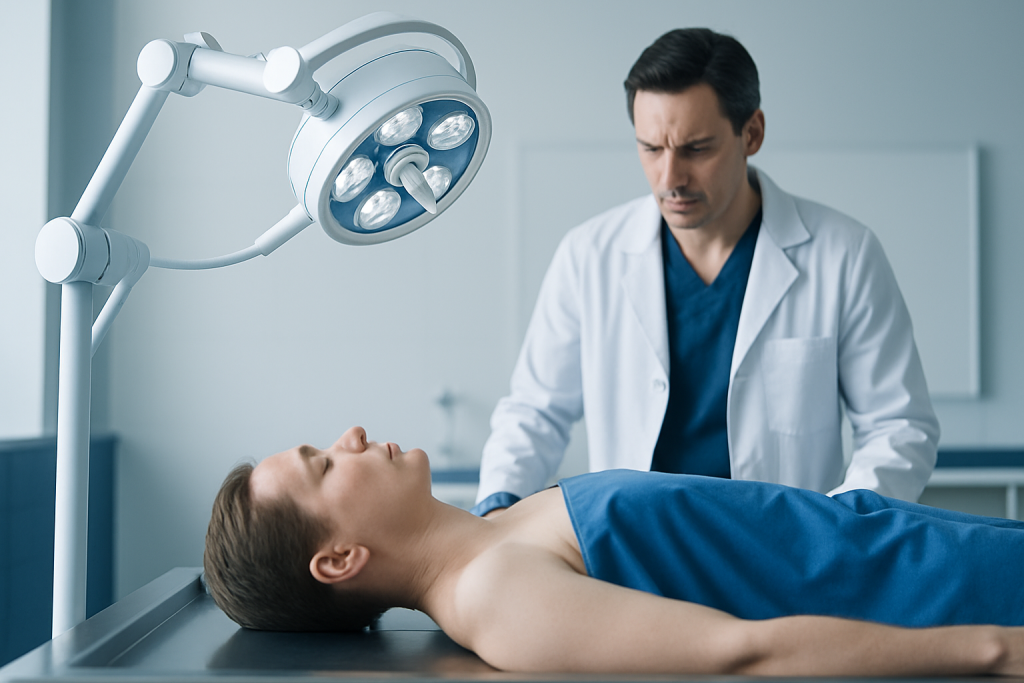
A forensic pathologist does not diagnose symptoms in the usual clinic sense, because the specialty begins after death or in cases where the circumstances of death must be explained. Still, the situations that lead to a forensic review often follow recognizable patterns.
These may include sudden collapse, unexplained death during sleep, death after an accident or injury, suspected poisoning, death in custody, or death that appears inconsistent with the known medical history. In some cases, the issue is not a single symptom but a mismatch between what was expected and what actually occurred.
Families may notice that the person had recent chest pain, shortness of breath, fever, confusion, seizures, or another change that did not fully explain the outcome. The forensic pathologist uses these details, along with the body examination and laboratory tests, to build a medically grounded explanation.
- Sudden or unexpected death
- Death after trauma, falls, or accidents
- Possible overdose or toxin exposure
- Death with unclear medical history
- Questions about timing, injury pattern, or contributing disease
Causes & Risk Factors
Forensic pathology focuses on deaths with a broad range of causes, from natural illness to injury or environmental exposure. A person may die from heart disease, stroke, infection, bleeding, airway compromise, poisoning, complications of surgery, or a combination of factors. The goal is not only to name a cause, but also to show how the chain of events unfolded.
Risk factors for a forensic investigation are not the same as risk factors for disease. Instead, they are circumstances that make an unclear death more likely to require specialist review. These include a sudden death in someone who seemed stable, a death without a witness, a history of substance exposure, poor access to medical care, or concern that an injury may not match the reported event.
When travel is involved, additional factors can matter. A patient may have received care in one country and died after returning home, or records may be spread across multiple systems. In those situations, a forensic pathologist may need translated documents, operative reports, medication lists, or imaging studies to understand what happened medically and to produce a reliable conclusion.
Diagnosis
In forensic pathology, diagnosis means determining the cause and manner of death through medical investigation. The work usually begins with a scene review or a detailed history, followed by external examination of the body and, when appropriate, an internal examination, often called an autopsy.
The pathologist looks for injuries, disease changes, surgical findings, signs of infection, natural organ failure, and evidence of poisoning or drug exposure. Samples may be sent for toxicology, histology, microbiology, or other laboratory studies. Medical records, witness accounts, police reports, and imaging studies can be just as important as the physical findings.
After the review is complete, the pathologist prepares a report that explains the medical findings in plain terms. In many cases, the report distinguishes between the cause of death, such as a ruptured artery, and the manner of death, such as natural, accidental, suicidal, homicidal, or undetermined. This distinction matters because it helps courts, families, and public agencies interpret the result correctly.
- External examination and documentation
- Internal examination or autopsy when indicated
- Toxicology and laboratory testing
- Review of records, imaging, and circumstances
- Formal report with medical conclusions
Treatment Options
There is no treatment for the deceased, but there is a process of care for the questions left behind. The “treatment” in this field is really an investigative pathway that aims to identify what happened, document it accurately, and provide answers that are medically and legally useful.
When the person died in hospital, the forensic pathologist may work alongside attending physicians, nurses, and sometimes specialists such as cardiologists, neurologists, or infectious disease doctors. When the death occurred outside the hospital, collaboration may also include law enforcement, coroners, medical examiners, and occasionally embassy or consular teams if documentation must cross borders.
For families, the most important part of this process is often communication. While the investigation is underway, they may need updates about testing timelines, the expected report format, release of the body, and how findings will be shared. If the person received Varicose Vein Treatment Abroad: When Stockings Are Enough and When Procedures Help More" class="ahp-ilk">treatment abroad, a clear handover of records can be especially helpful so that the final medical explanation is not lost between systems.
Prevention & Self-care
Forensic pathology itself cannot prevent every death, but its findings often point to ways future deaths may be avoided. Patterns identified through autopsies and death investigations can highlight medication errors, workplace hazards, missed diagnoses, unsafe substances, or untreated disease.
For individuals and families, self-care mainly means reducing avoidable risks and keeping important medical information organized. A concise record of diagnoses, allergies, medicines, operations, and recent test results can help clinicians make better decisions in emergencies. For people traveling for care, carrying these records in both paper and digital form can make follow-up much smoother.
It is also sensible to seek timely medical attention for chest pain, severe headache, breathing difficulty, sudden weakness, repeated fainting, or major injury. While these symptoms are not specific to forensic pathology, addressing them quickly may prevent a crisis from becoming a death investigation.
- Keep an up-to-date medication and diagnosis list
- Share relevant records before travel or surgery
- Follow discharge instructions closely after hospital treatment
- Seek urgent care for sudden or severe symptoms
- Discuss substance safety and overdose prevention when relevant
When to See a Doctor
Forensic pathologists are usually not seen in a routine clinic visit. Instead, they become involved after a death that is unexpected, medically unclear, or legally significant. Families, hospitals, and authorities may request their input when there is no straightforward explanation.
A doctor or hospital team should be contacted promptly if a person has died unexpectedly, if there are concerns about trauma or poisoning, or if the medical story does not fit the circumstances. The earlier accurate records and information are gathered, the easier it is for the pathologist to reach a well-supported conclusion.
If a family member died after receiving treatment elsewhere, including abroad, it can help to ask for discharge summaries, imaging, operative notes, pathology reports, and medication lists. Acibadem Health Point’s multidisciplinary specialists and JCI-accredited hospitals diagnose and treat patients for a wide range of complex conditions, and they can also help international patients navigate the medical documentation needed for coordinated care and follow-up.
Frequently asked questions
What does a forensic pathologist do?
A forensic pathologist is a doctor who investigates deaths that are sudden, unexpected, or medically unclear. They review medical records, examine the body, and may perform an autopsy to determine the cause and manner of death.
Is a forensic pathologist the same as a medical examiner?
Not always, although the roles can overlap. A medical examiner is an official position in many places, while forensic pathologist describes the medical specialty; in some systems, one person may serve in both capacities.
Do all unexplained deaths require an autopsy?
Not all, but many do when the cause of death is not clear or when legal review is needed. The decision depends on local laws, the circumstances, and the information already available from records and examination.
How long does a forensic investigation take?
It can take days to weeks, and sometimes longer if laboratory testing is needed. Families often receive preliminary information first, followed by a more complete report after all findings are reviewed.
Can a forensic pathologist tell the exact time of death?
Sometimes an estimated time range can be suggested, but exact timing is often not possible. The estimate depends on the circumstances, body changes, environmental conditions, and available evidence.
Why are toxicology tests important?
Toxicology can detect medicines, alcohol, drugs, or poisons that may have contributed to death. These results are often essential when the external examination alone does not explain what happened.
References
- National Association of Medical Examiners
- Centers for Disease Control and Prevention
- College of American Pathologists
- World Health Organization
This article is for general information only and is not a substitute for professional medical advice. Please consult a qualified doctor about your individual situation.